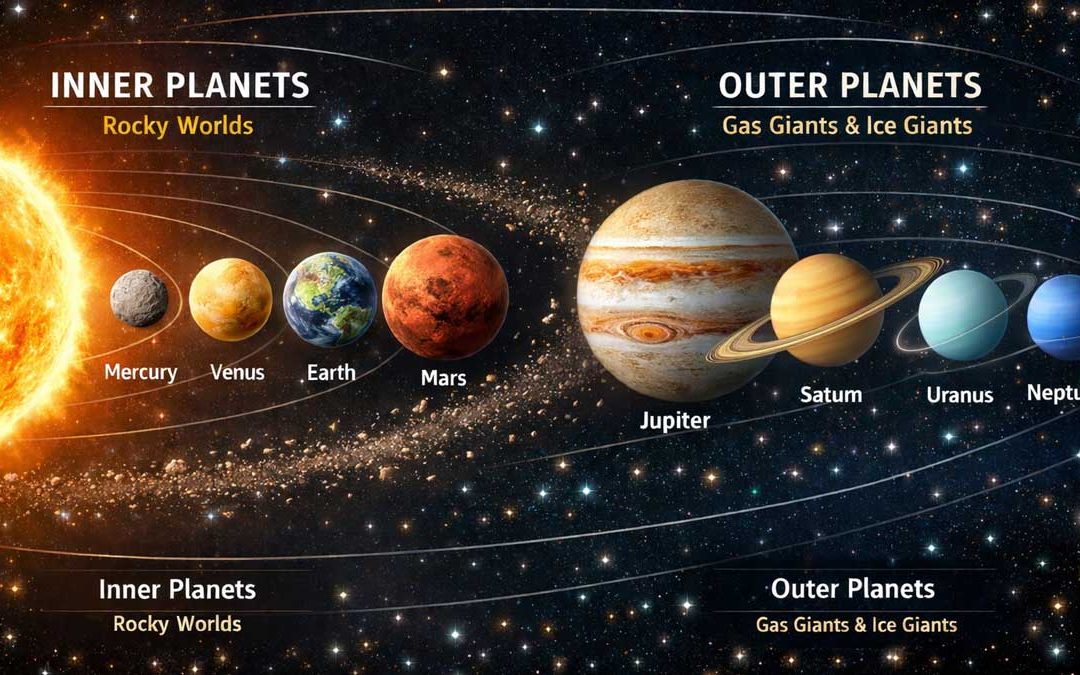
 The planets in our solar system are commonly divided into two groups: inner planets and outer planets. These groups differ significantly in size, composition, atmosphere, and distance from the Sun. The four planets closest to the Sun are called inner planets, while...
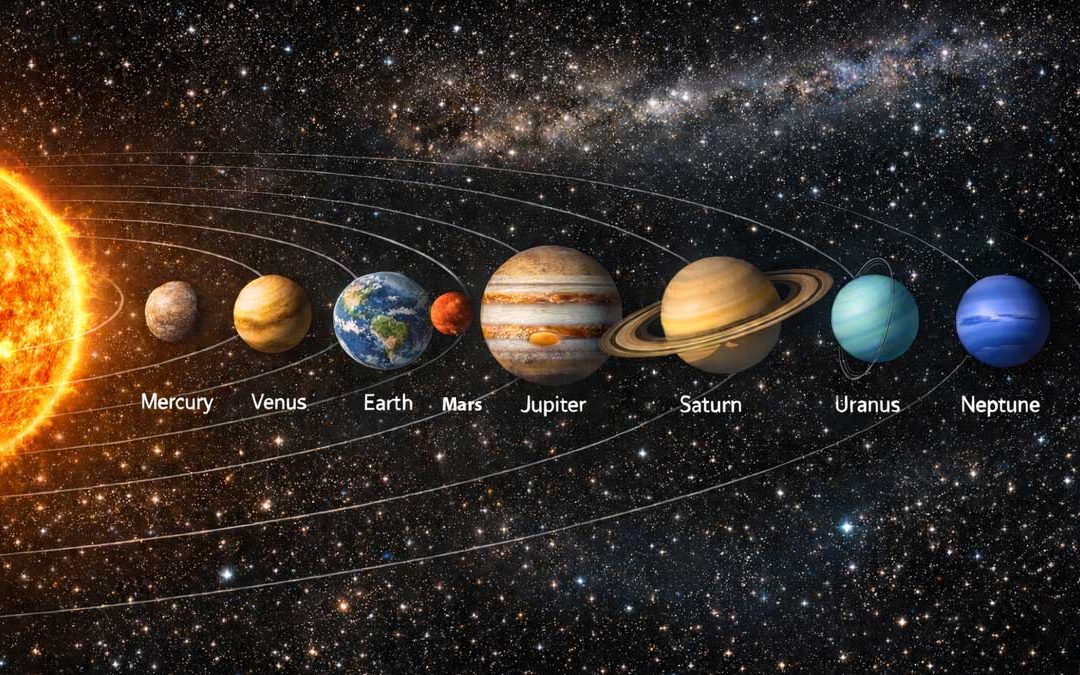 The planets in our solar system orbit the Sun at different distances. These distances influence each planet’s temperature, atmosphere, and orbital period. Scientists measure planetary distances using astronomical units (AU), where 1 AU equals the average distance...
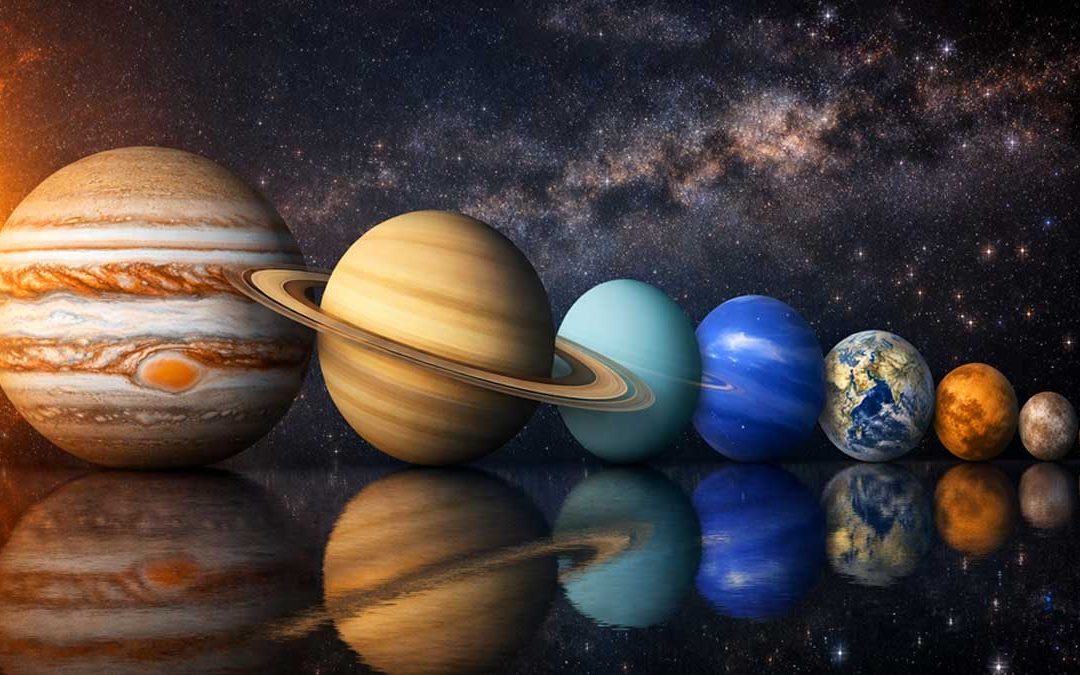 The planets in our solar system vary greatly in size. Some planets are massive gas giants, while others are small rocky worlds. Jupiter is the largest planet in the solar system, while Mercury is the smallest. Understanding the size differences between planets helps...
 Neptune is the eighth and farthest planet from the Sun in our solar system. It is known for its deep blue color, powerful winds, and extreme weather. Neptune belongs to a group of planets called ice giants, along with Uranus. These planets contain large amounts of...
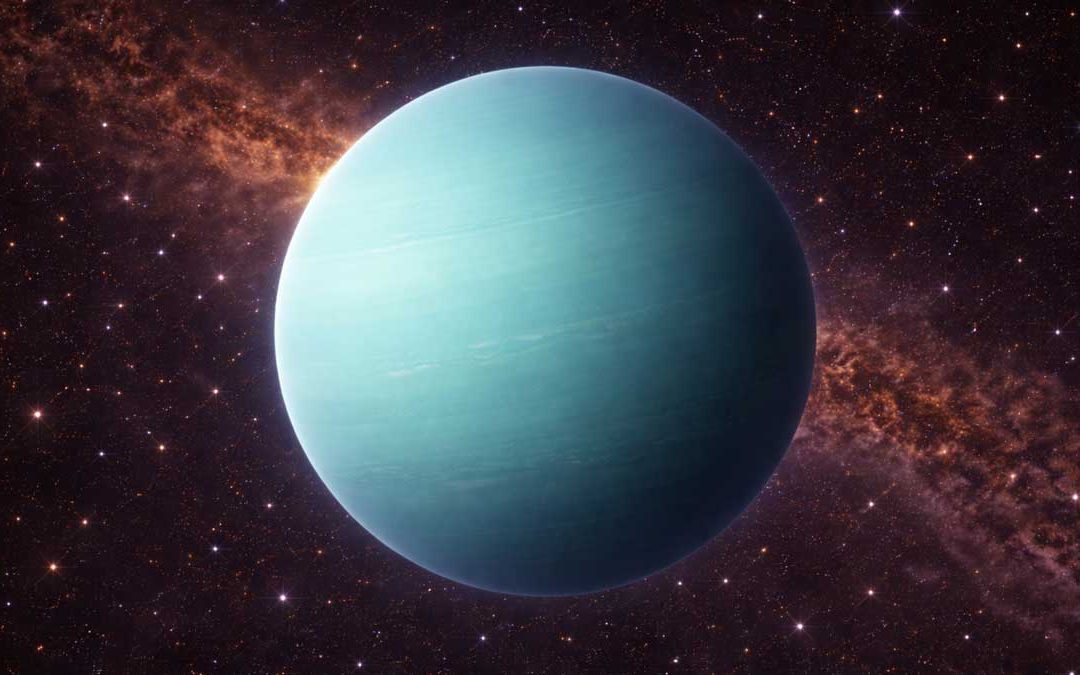 Uranus is the seventh planet from the Sun and one of the most unusual planets in the solar system. It is known for its unique sideways rotation, which makes it appear as if the planet is rolling along its orbit. Uranus is classified as an ice giant, meaning it...
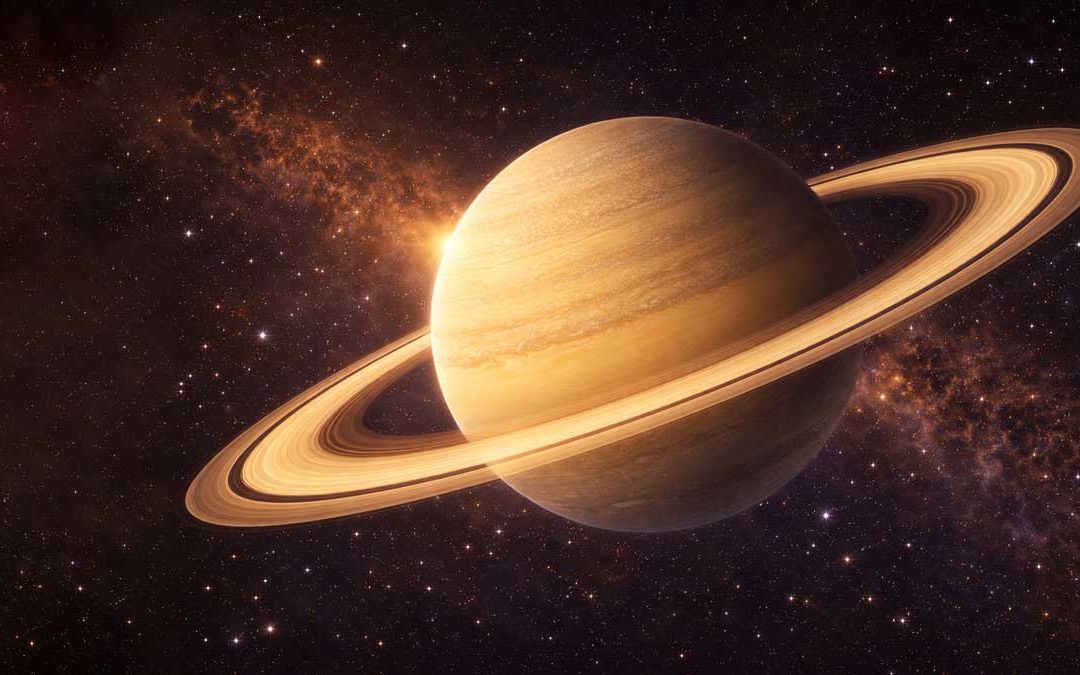 Saturn is the sixth planet from the Sun and the second-largest planet in the solar system. It is best known for its spectacular system of rings, which makes Saturn one of the most visually striking planets. Like Jupiter, Saturn is a gas giant made mostly of hydrogen...
