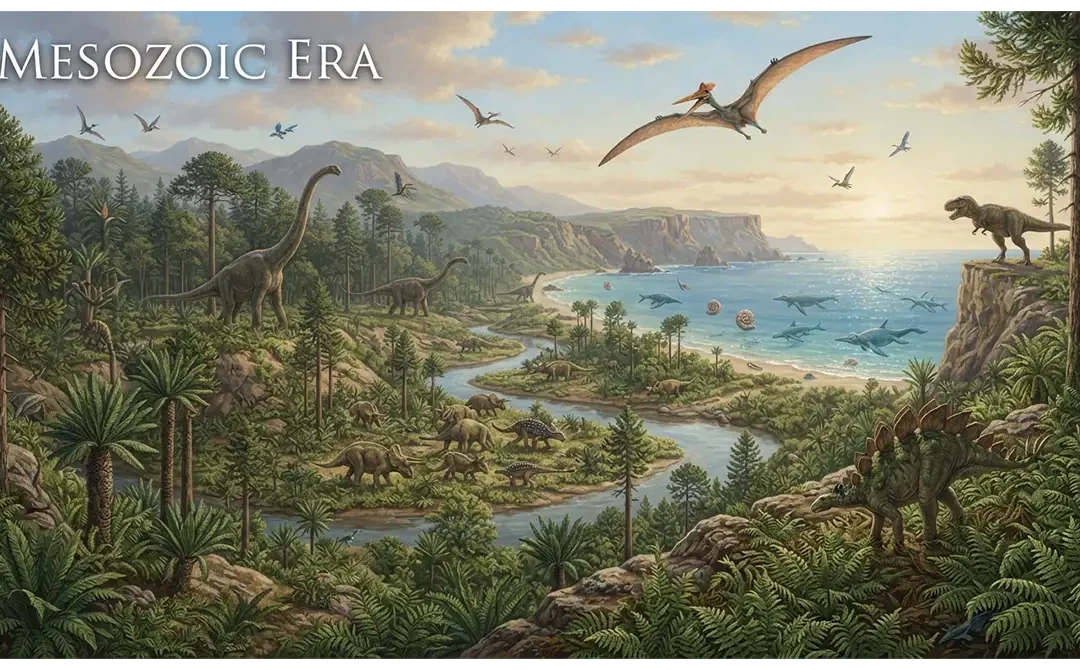
 The Mesozoic Era was a long period of geological and biological change that shaped many of the ecosystems known from the fossil record. It included the Triassic, Jurassic, and Cretaceous periods and witnessed major changes in Earth’s landscapes, oceans, climate,...
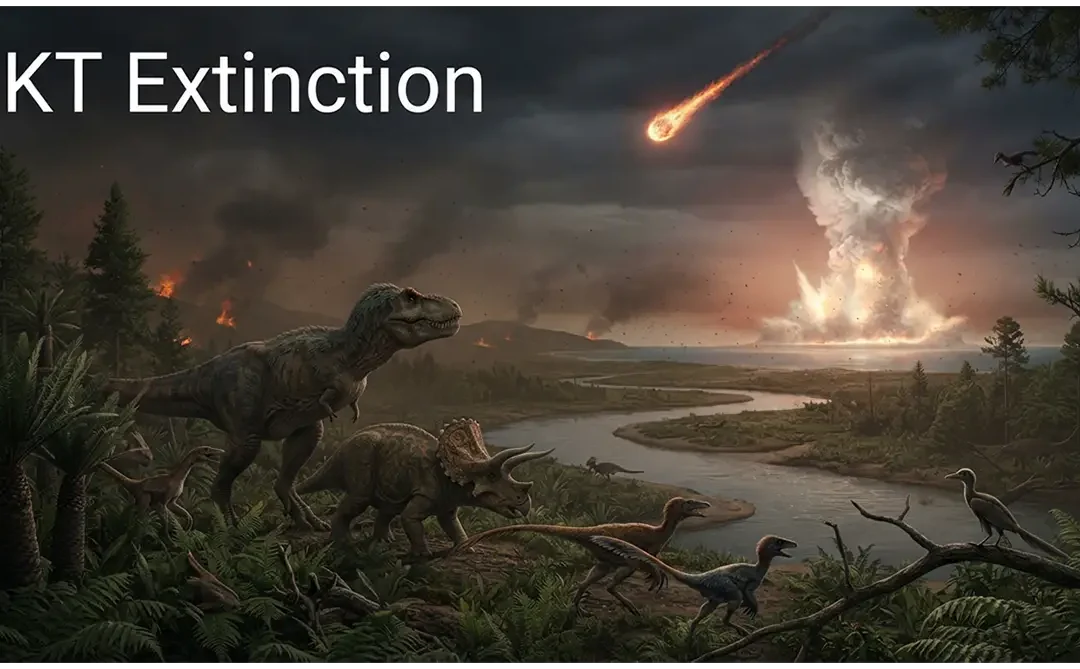 KT Extinction was one of the most important mass extinction events in Earth’s history, occurring about 66 million years ago at the boundary between the Cretaceous and Paleogene periods. It ended the age of non-avian dinosaurs and caused major losses in marine...
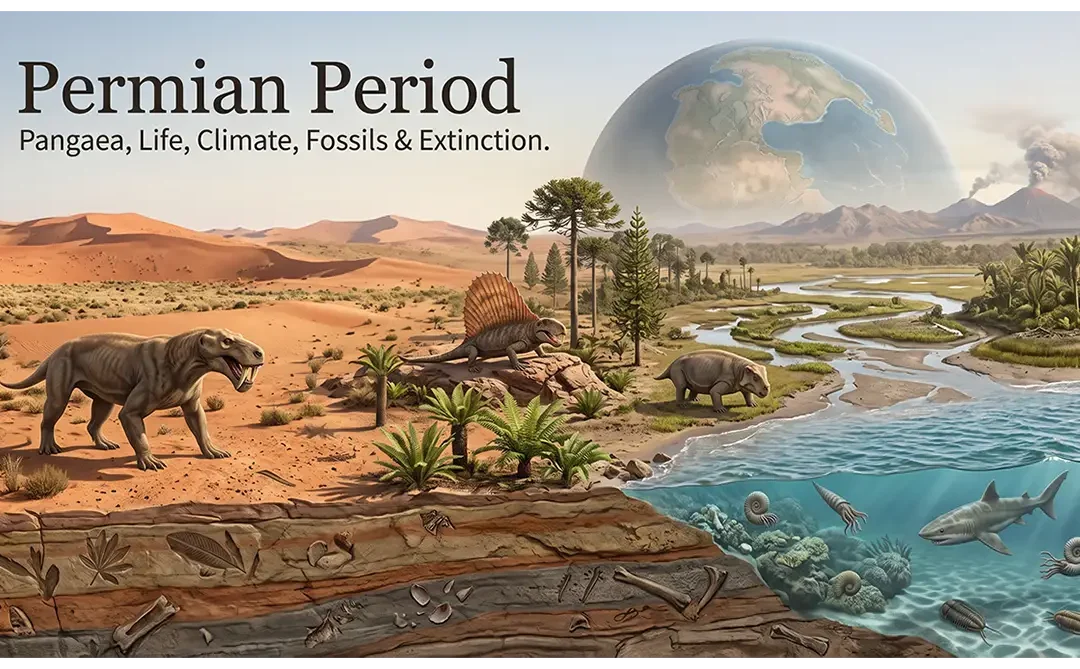 Permian Period was the final period of the Paleozoic Era and a time of major changes in Earth’s climate, geography, and life. It lasted from about 298.9 million to 251.9 million years ago. During the Permian, most of Earth’s major landmasses were joined...
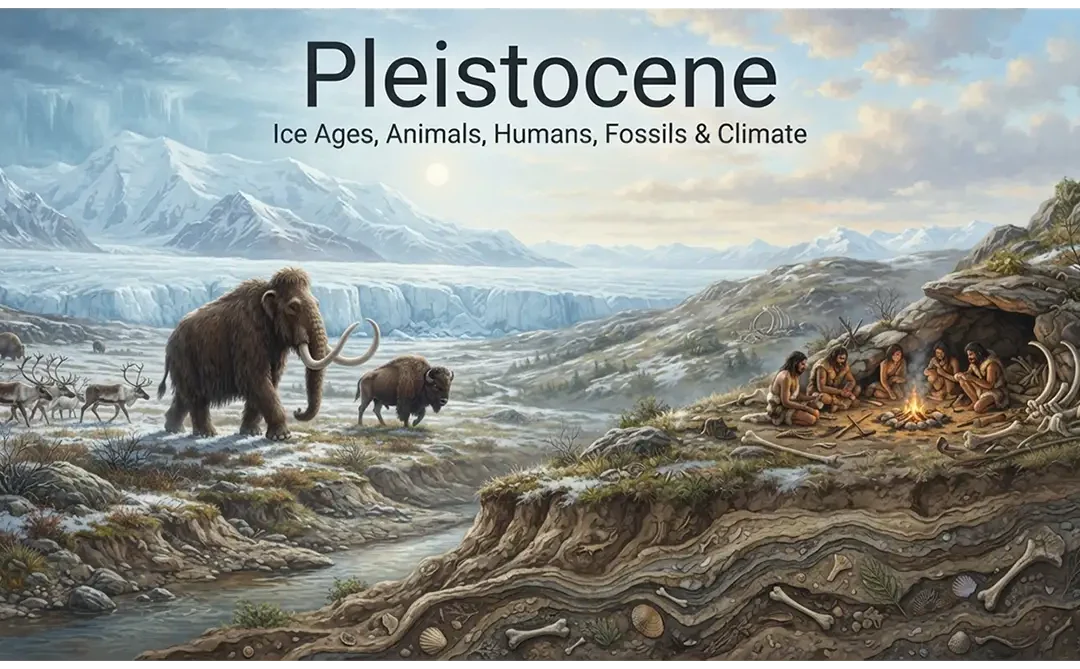 Pleistocene was a major geological epoch known for repeated ice ages, changing climates, large mammals, expanding glaciers, and important stages of human evolution. It lasted from about 2.58 million years ago to 11,700 years ago and formed the first part of the...
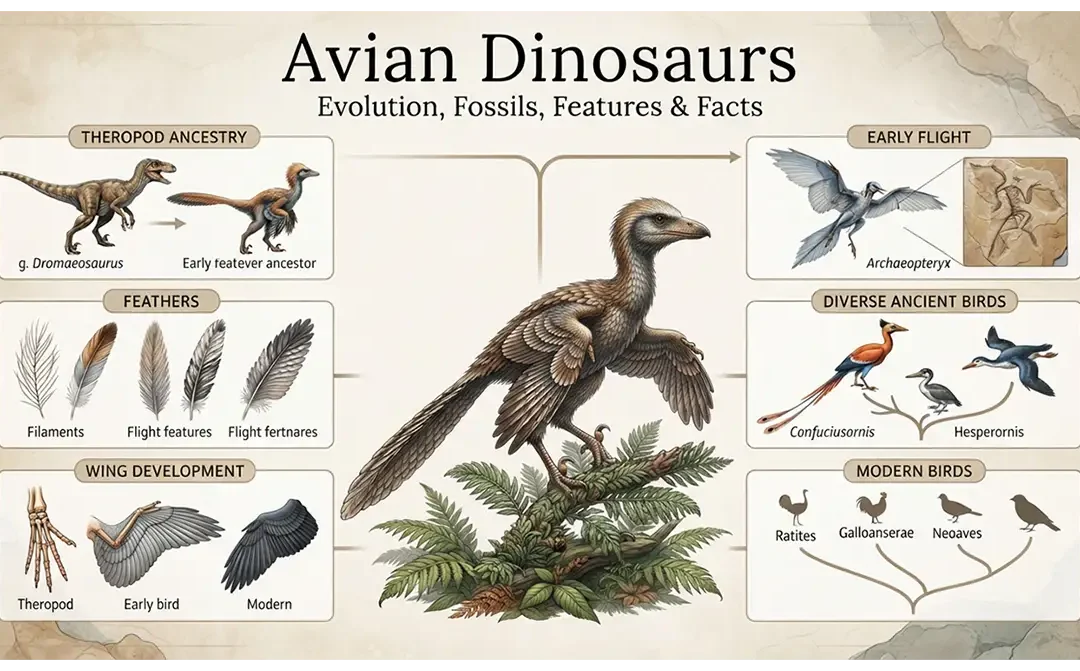 Avian dinosaurs are the group of dinosaurs that includes modern birds and their extinct bird-line relatives. They evolved from small theropod dinosaurs and developed a combination of features that helped them become increasingly suited to life in the air. Their...
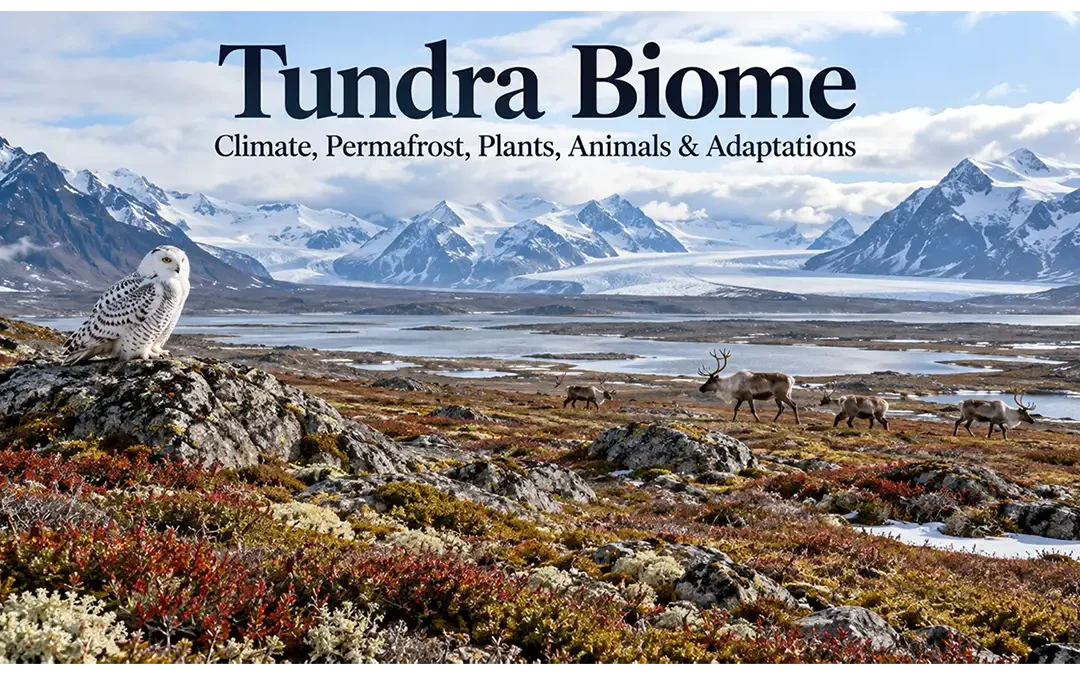 Tundra Biome is a cold terrestrial ecosystem where low temperatures, short growing seasons, limited precipitation, and frozen ground create challenging conditions for life. Unlike forests and grasslands, tundra landscapes are largely treeless and are dominated by...
