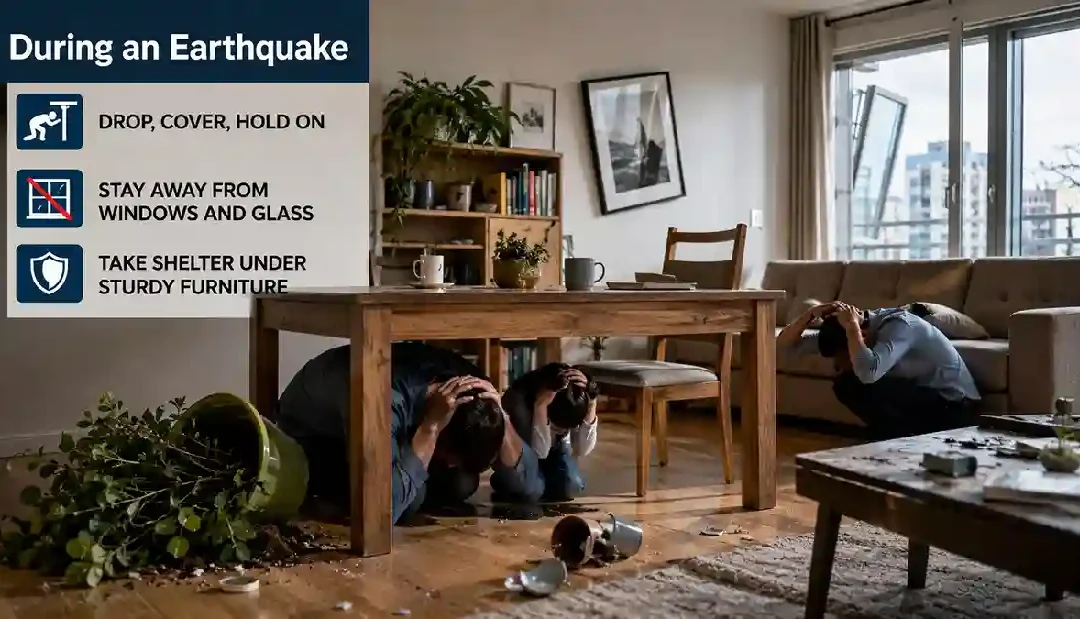
 When an earthquake begins, choosing the right location can make a major difference in safety. During strong shaking: glass may shatter shelves can collapse ceiling materials may fall furniture may slide across floors The safest places are usually locations that:...
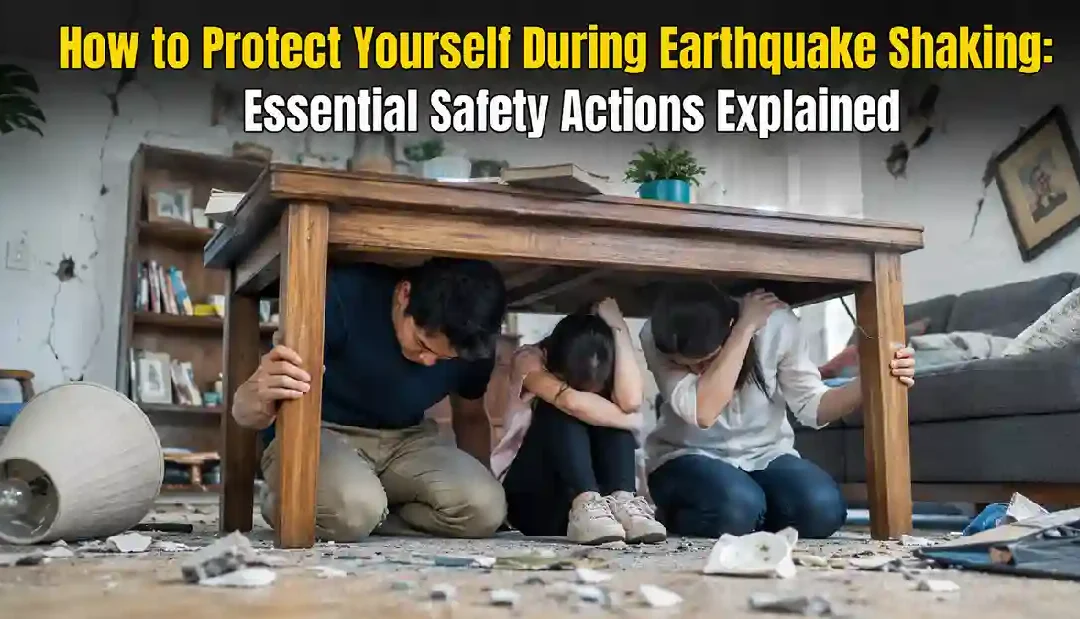 When an earthquake starts, every second matters. Strong shaking can: throw people to the ground break glass topple furniture collapse ceilings block exits The safest response is usually quick protective action — not panic. Understanding how to protect yourself during...
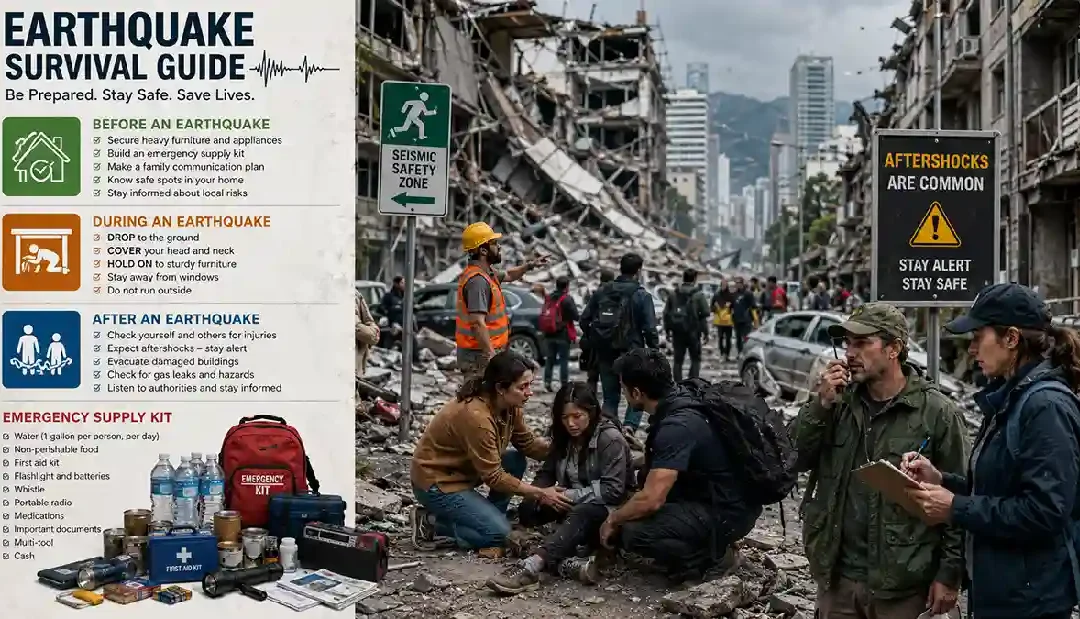 Earthquakes are among the most sudden natural disasters on Earth. Within seconds, they can: damage buildings disrupt communication trigger fires and landslides create dangerous aftershocks The good news is that proper preparation and fast safety actions can save...
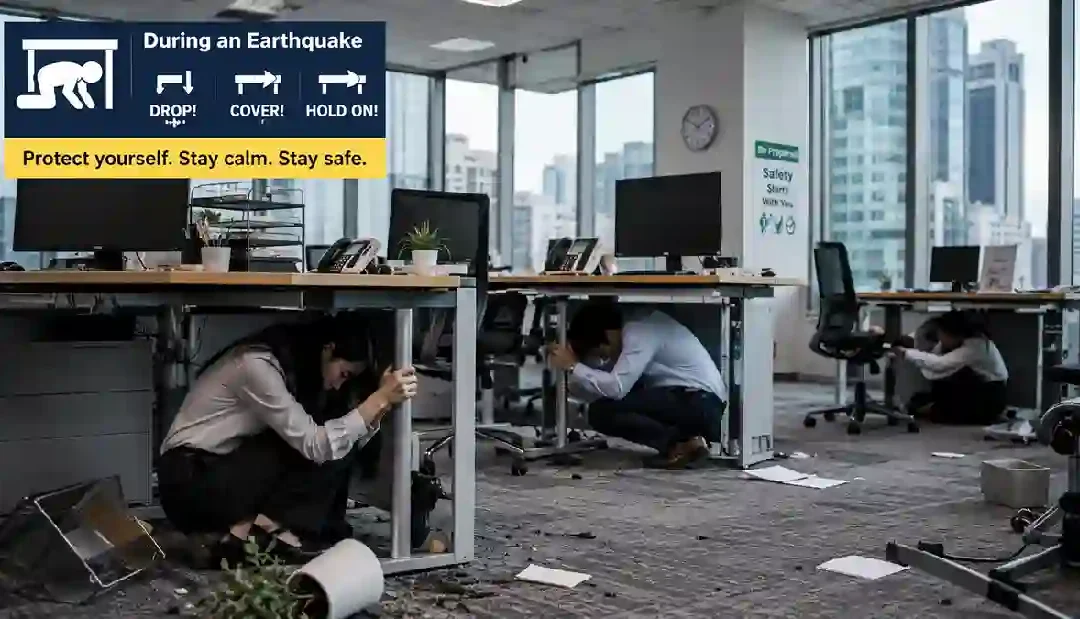 Office buildings can become dangerous during strong earthquakes. Inside workplaces: furniture may topple ceiling materials may fall windows can shatter elevators may stop working panic may spread quickly Earthquake preparedness helps offices: protect employees reduce...
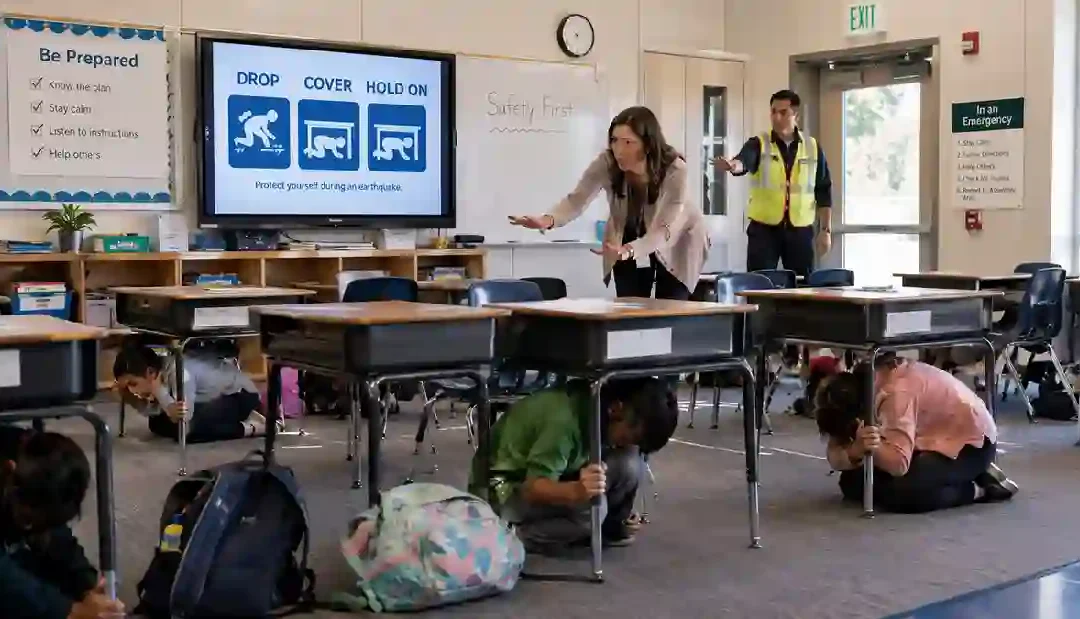 Schools must be prepared for earthquakes because large numbers of students and staff may be inside buildings when shaking begins. During strong earthquakes: classroom objects may fall windows can shatter power systems may fail panic can spread quickly Proper...
 During major earthquakes, buildings experience powerful forces from shaking ground motion. Some structures collapse quickly. Others bend, absorb energy, and remain standing. The difference often comes down to earthquake-resistant design and structural safety. Modern...
