
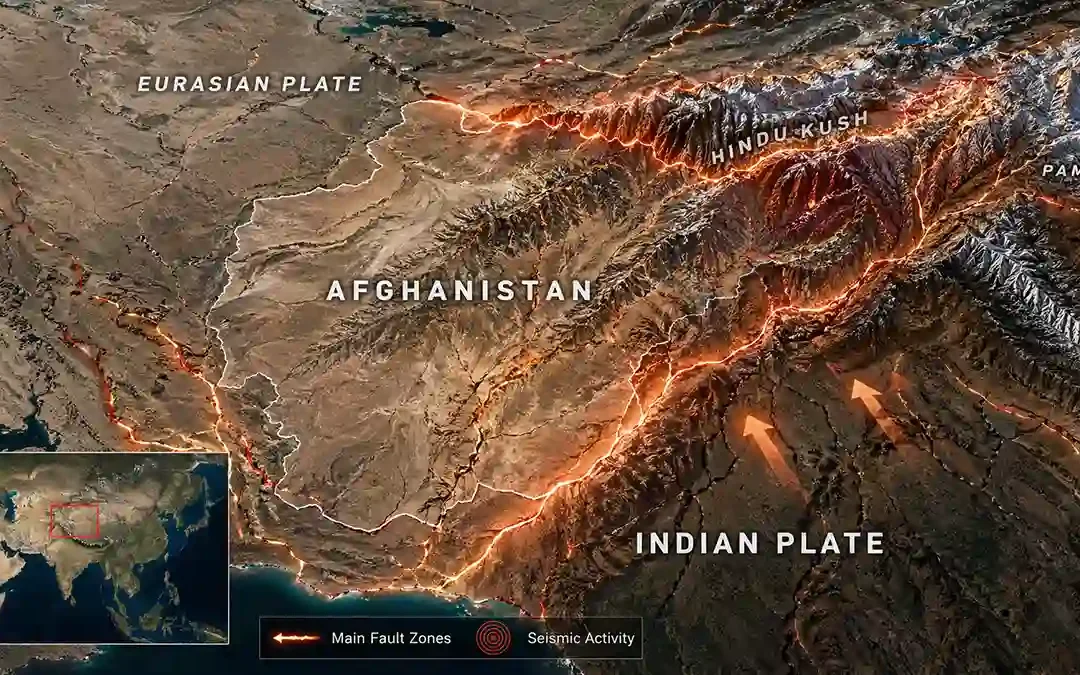
Afghanistan experiences earthquakes in a way that’s slightly different from many other countries.
Here, you don’t just get shallow earthquakes — you also get deep earthquakes, especially beneath the Hindu Kush mountains. That combination makes seismic activity in Afghanistan both complex and sometimes unpredictable.
If you’re new to earthquakes, start here → what is an earthquake
Afghanistan’s Seismic Zones (Quick Overview)
| Region | Risk Level | What’s Happening |
|---|---|---|
| Hindu Kush Mountains | Very High | Deep and shallow earthquakes |
| Northeastern Afghanistan | Very High | Plate collision stress |
| Western Afghanistan | High | Fault systems |
| Central Afghanistan | Moderate | Distributed stress |
| Southern Afghanistan | Low–Moderate | Relatively stable |
Afghanistan’s earthquakes come from both deep and shallow sources
To understand how faults work → fault lines
What Causes Earthquakes in Afghanistan?
Afghanistan lies near the boundary where the Indian Plate collides with the Eurasian Plate.
In simple terms:
- The Indian Plate moves north
- It pushes into Eurasia
- The crust compresses
- Stress builds along faults
- Earthquakes occur when this stress is released
This is the same tectonic process that forms the Himalayas.
Learn more → causes of earthquakes
Afghanistan’s Three Earthquake Patterns (Unique Insight)
Hindu Kush Deep Earthquakes (Unique Feature)
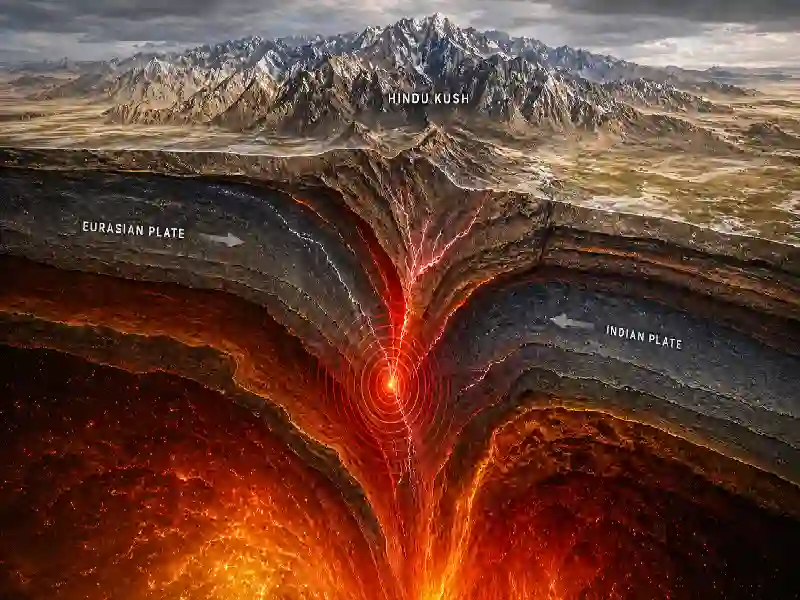
The Hindu Kush region is famous for deep earthquakes.
- Occur far below the surface
- Felt across large distances
- Less surface damage compared to shallow quakes
These deep earthquakes are relatively rare globally, but common here.
Explore earthquake types
Shallow Fault Earthquakes (Higher Damage Risk)
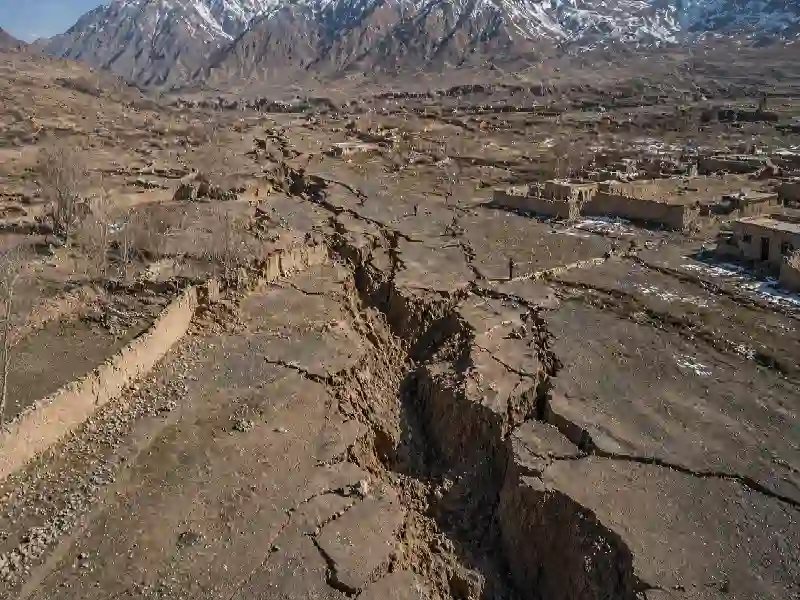
Afghanistan also experiences shallow earthquakes.
- Occur closer to the surface
- More destructive
- Often affect populated areas
These are the earthquakes that typically cause the most damage.
Western Fault Systems (Lateral Movement)
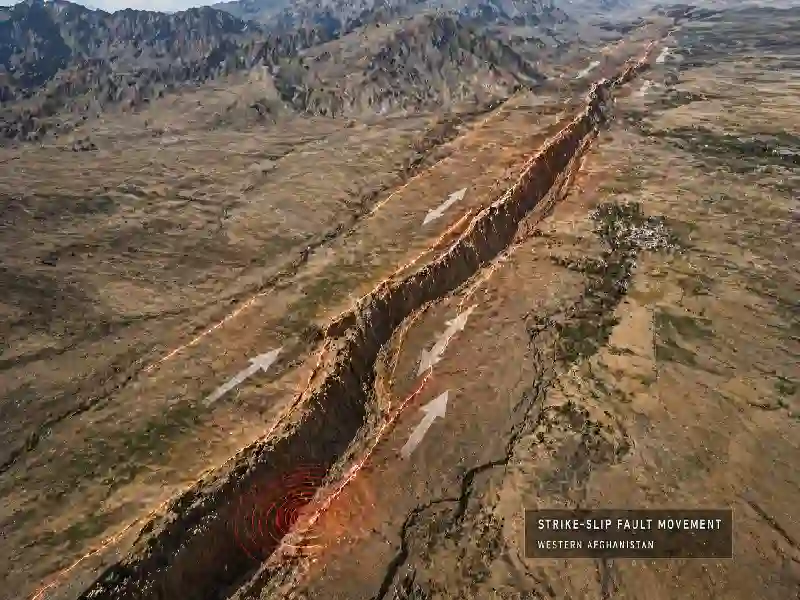
Western Afghanistan has active fault systems.
- Strike-slip and reverse faults
- Moderate earthquake frequency
- Complex tectonic interactions
Recent Earthquake Activity in Afghanistan
Afghanistan experiences earthquakes regularly.
Recent patterns show:
- Frequent activity in the Hindu Kush region
- Deep earthquakes felt across neighboring countries
- Occasional shallow earthquakes causing local damage
This mix makes seismic activity both widespread and varied.
Notable Earthquakes in Afghanistan
Past events highlight the risks.
- 2015 Hindu Kush Earthquake (M7.5)
A deep earthquake felt across South Asia. - 1998 Afghanistan Earthquakes (M6.6–7.1)
Series of earthquakes causing significant damage. - 2022 Paktika Earthquake (M6.1)
A shallow earthquake with severe local impact.
Understand magnitude vs impact
Afghanistan vs Other Earthquake Regions
Afghanistan’s seismic behavior is unique.
- Afghanistan → deep + shallow earthquakes combined
- Pakistan → collision + fault + subduction
- Nepal → pure collision zone
- California → transform faults like the San Andreas Fault
The presence of deep earthquakes sets Afghanistan apart
Can Earthquakes in Afghanistan Be Predicted?
No — earthquakes cannot be predicted precisely.
Scientists can:
- monitor seismic activity
- study fault systems
- estimate long-term risk
But exact timing remains unknown.
Learn more about can earthquakes be predicted
Because of the collision between the Indian and Eurasian plates.
The presence of deep earthquakes in the Hindu Kush region.
Northeastern Afghanistan and the Hindu Kush mountains.
Yes — especially deep earthquakes.
Final Thoughts
Afghanistan shows how earthquakes can vary not just by location, but by depth. With both deep and shallow earthquakes, the region provides a unique view into how tectonic forces work beneath the surface.
Understanding this helps explain why earthquakes here can be felt across large areas — even when the source is far below.