
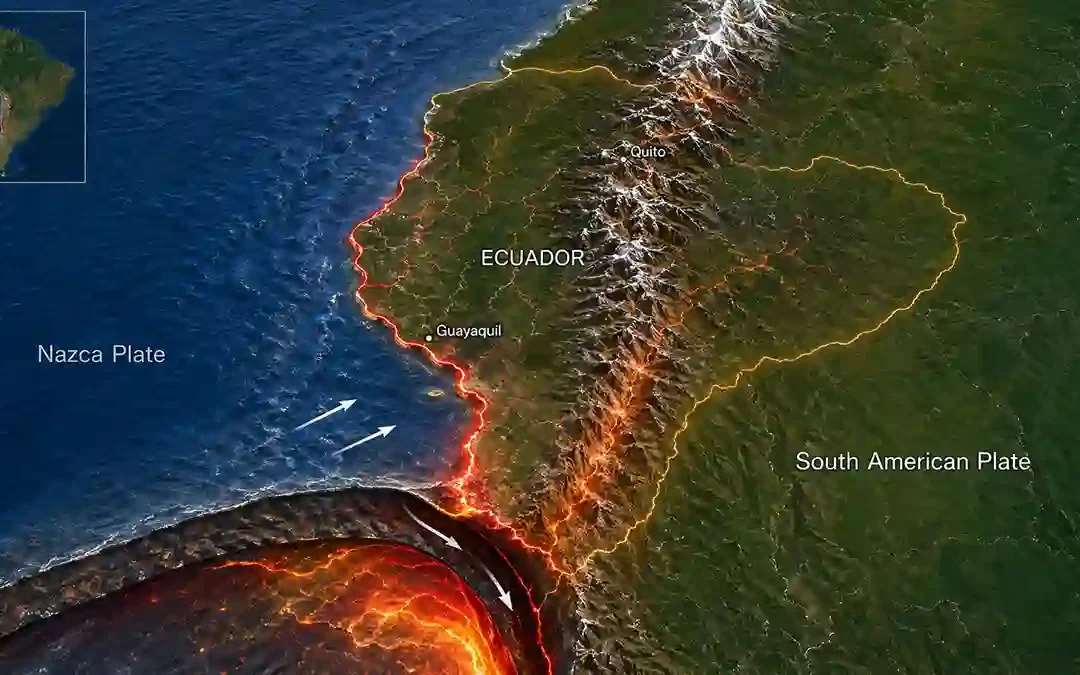
Ecuador may be a relatively small country, but it sits in one of the most tectonically active regions in the world. The same forces that created the Andes Mountains and volcanic landscapes also generate frequent earthquakes beneath the country.
What makes Ecuador especially interesting is how quickly seismic conditions can change between the coast, mountains, and inland regions.
If you’re new to earthquakes, start here → what is an earthquake
Ecuador’s Seismic Zones (Quick Overview)
| Region | Risk Level | What’s Happening |
|---|---|---|
| Pacific Coast | Very High | Subduction earthquakes |
| Northern Ecuador | High | Active fault systems |
| Andes Mountains | High | Crust deformation |
| Amazon Region | Moderate | Distant tectonic stress |
| Southern Ecuador | Moderate | Mixed tectonic influence |
Ecuador’s strongest earthquakes usually begin offshore but affect inland mountain regions too.
To understand how stress builds underground → fault lines
Why Do Earthquakes Happen in Ecuador?
Ecuador’s earthquakes are mainly caused by the movement of the Nazca Plate beneath the South American Plate.
Here’s the process in simple terms:
- The Nazca Plate moves eastward
- It dives beneath South America
- Pressure builds at the boundary
- Faults and crustal stress increase
- Earthquakes release the stored energy
This tectonic process also contributes to volcanic activity across the Andes.
Learn more → causes of earthquakes
Ecuador’s Three Main Earthquake Behaviors (Unique Insight)
Coastal Subduction Earthquakes
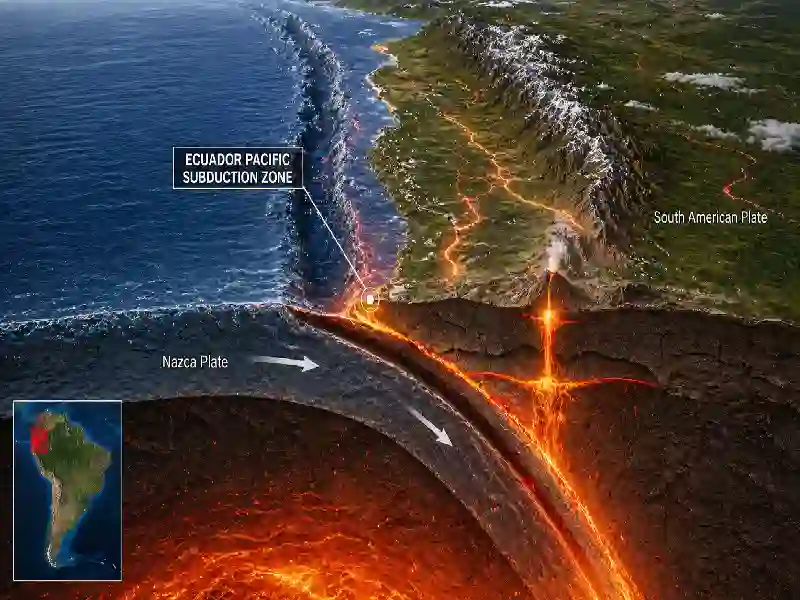
Most of Ecuador’s largest earthquakes begin offshore.
- Major subduction boundary
- Strong coastal earthquakes
- Tsunami potential exists
These earthquakes can affect large parts of the country even when the epicenter is offshore.
Explore earthquake types
Andes Mountain Fault Systems
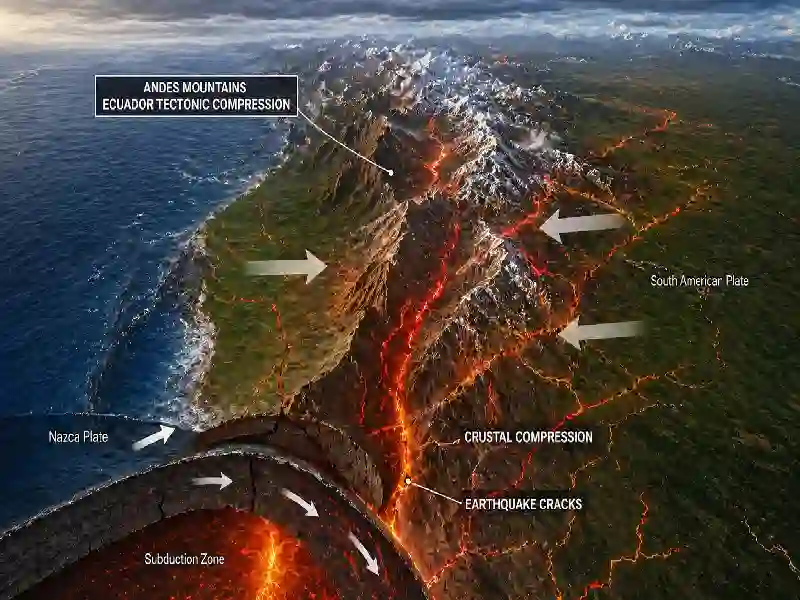
The Andes region experiences earthquakes linked to crustal deformation.
- Compression and uplift
- Active mountain faults
- Moderate but damaging earthquakes
This shows how mountain-building and seismic activity often occur together.
Volcano-Earthquake Interaction
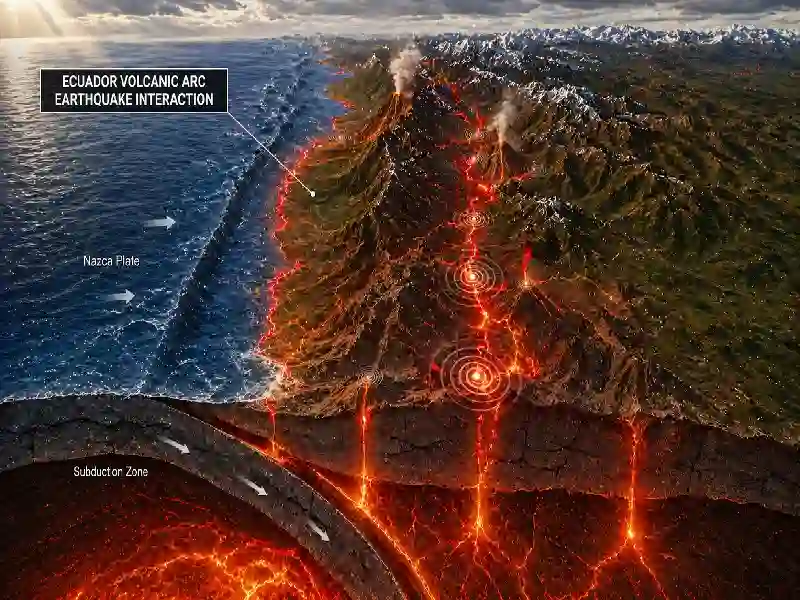
Ecuador also experiences interaction between tectonic activity and volcanoes.
- Subduction creates magma
- Volcanoes form along the Andes
- Earthquakes sometimes accompany volcanic activity
This makes Ecuador part of the Pacific Ring of Fire system.
Recent Earthquake Activity in Ecuador
Ecuador experiences earthquakes regularly.
Recent patterns show:
- Frequent offshore earthquakes
- Moderate inland seismic activity
- Aftershocks following larger coastal events
Most activity remains concentrated near the Pacific margin.
Notable Earthquakes in Ecuador
Past earthquakes highlight Ecuador’s seismic risks.
- 2016 Ecuador Earthquake (M7.8)
A major coastal earthquake causing widespread destruction. - 1949 Ambato Earthquake (M6.8)
One of Ecuador’s most destructive inland earthquakes. - 1906 Ecuador–Colombia Earthquake (M8.8)
One of the largest earthquakes ever recorded in the region.
Understand magnitude vs impact
Ecuador vs Other Earthquake Regions
Ecuador shares similarities with neighboring countries but has its own patterns.
- Ecuador → coastal subduction + volcanic interaction
- Peru → larger coastal trench system
- Chile → stronger subduction dominance
- California → transform faults like the San Andreas Fault
Ecuador combines mountain, coastal, and volcanic seismic behavior
Can Earthquakes in Ecuador Be Predicted?
No — earthquakes cannot be predicted precisely.
Scientists can:
- monitor seismic activity
- track tectonic movement
- estimate long-term risk
But exact timing remains uncertain.
Learn more → Can earthquakes be predicted
Because of subduction between the Nazca and South American plates.
The Pacific coastal region and Andes zone.
Yes — especially large offshore earthquakes.
Yes — both are linked to tectonic activity and subduction.
Final Thoughts
Ecuador’s earthquakes are closely tied to the forces shaping the Andes and the Pacific coast. From offshore subduction to mountain faults and volcanic systems, the country provides a clear example of how connected Earth’s geological processes really are.
Understanding Ecuador helps reveal how tectonic movement influences entire landscapes over time.