
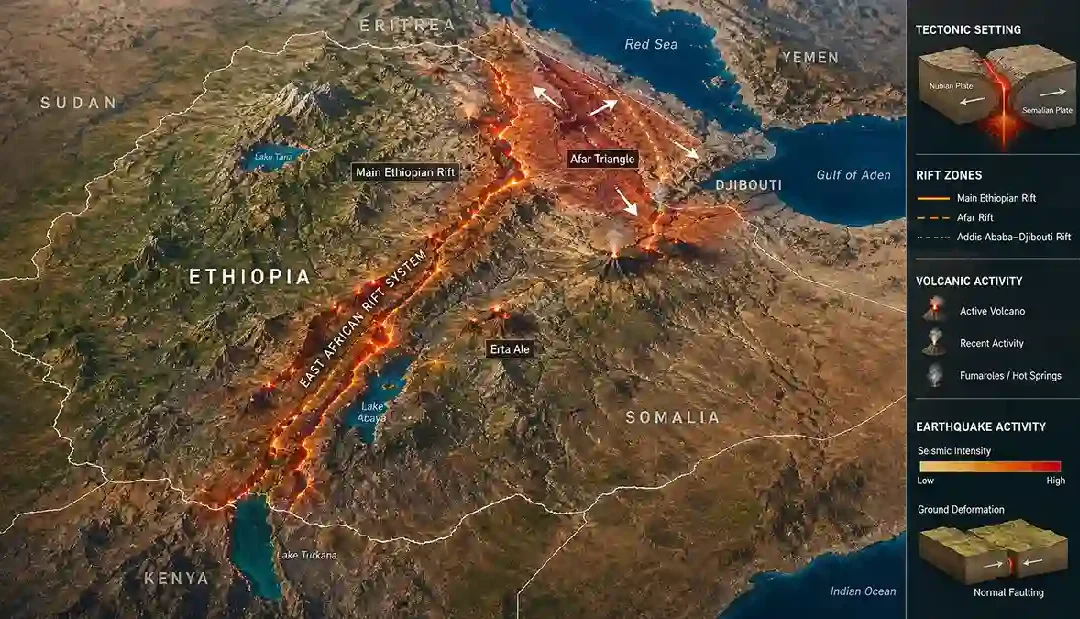
Ethiopia sits in one of the most geologically unusual places on Earth. Instead of tectonic plates colliding, the ground here is slowly stretching apart. That stretching creates earthquakes, volcanic activity, and massive rift valleys across the country. In simple terms, Ethiopia is part of a region where Africa is gradually splitting.
If you’re new to earthquakes, begin here → what is an earthquake
Ethiopia’s Main Seismic Regions
| Region | Risk Level | Main Cause |
|---|---|---|
| Afar Triangle | Very High | Tectonic spreading + volcanism |
| Main Ethiopian Rift | High | Rift fault movement |
| Northern Ethiopia | Moderate–High | Crust deformation |
| Central Highlands | Moderate | Fault adjustment |
| Western Ethiopia | Low | Stable crust |
Ethiopia’s earthquakes are strongly linked to continental rifting. To understand how tectonic stress forms → fault lines
Why Do Earthquakes Happen in Ethiopia?
Ethiopia lies within the East African Rift System.
Here’s the simple explanation:
- The African continent is slowly stretching apart
- The crust becomes thinner and weaker
- Rift valleys form
- Faults break as the land separates
- Earthquakes occur during this movement
Volcanic activity also contributes to seismic activity in several regions.
Learn more → causes of earthquakes
Ethiopia’s Four Distinct Earthquake Systems
The East African Rift (Main Earthquake System)
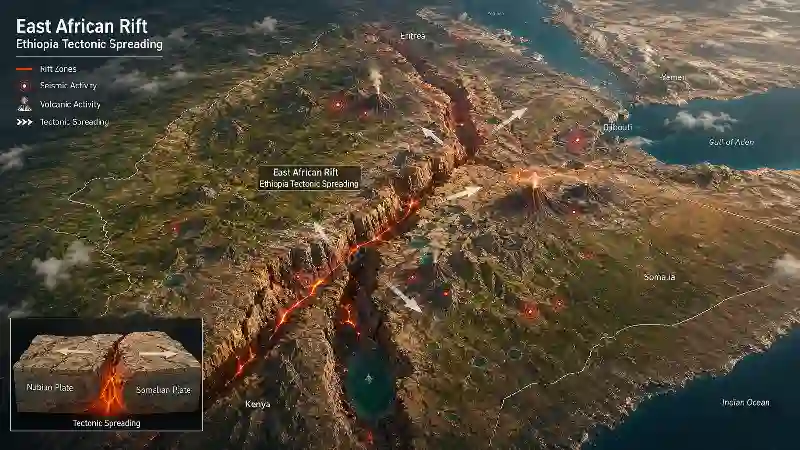
The East African Rift is Ethiopia’s main seismic system.
- The crust slowly stretches apart
- Rift valleys continue forming
- Fault movement creates earthquakes
This is one of the few places on Earth where continental splitting can be observed clearly.
Explore earthquake types
Afar Triangle (Triple Junction Zone)
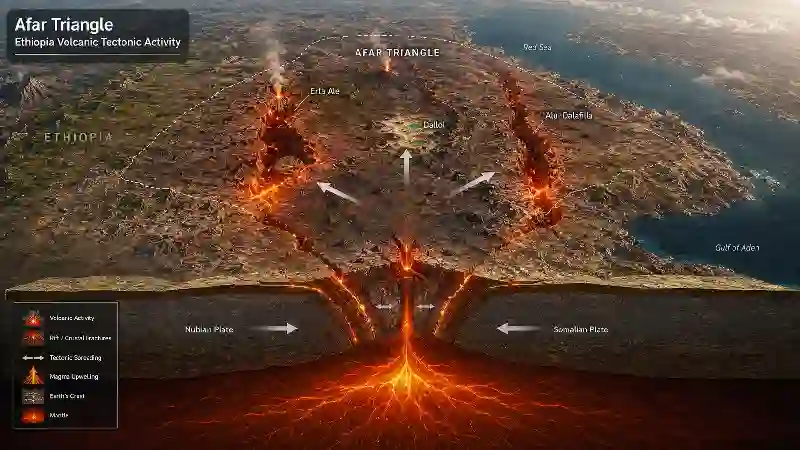
The Afar Triangle is one of the world’s most unusual tectonic regions.
- Multiple tectonic plates interact here
- Volcanic activity is common
- Earthquakes and magma movement occur together
Scientists consider this region an early-stage ocean basin in formation.
Rift Valley Fault Earthquakes
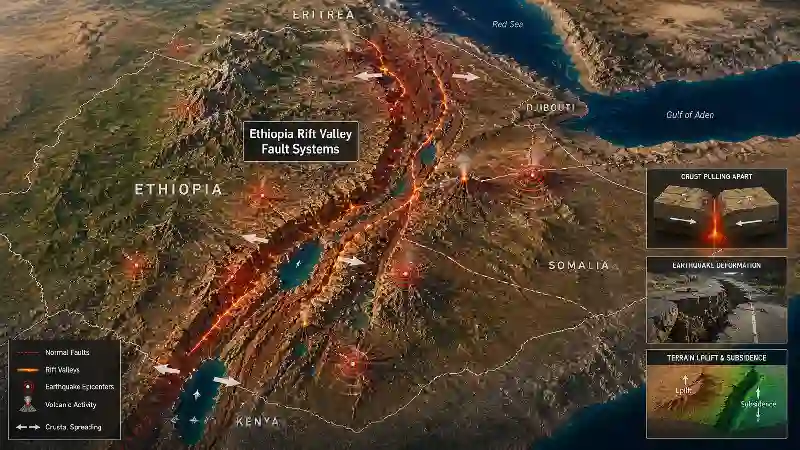
Large fault systems extend across Ethiopia’s Rift Valley.
- Crustal stretching continues
- Faults remain active
- Moderate earthquakes occur regularly
Stable Western Ethiopia
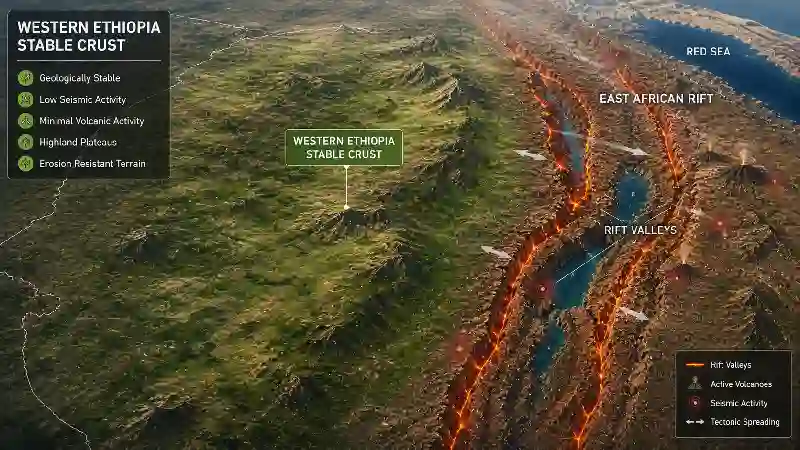
Western Ethiopia is relatively stable compared to rift regions.
- Lower tectonic stress
- Fewer earthquakes
- More stable crustal conditions
Recent Earthquake Activity in Ethiopia
Ethiopia experiences earthquakes regularly, especially in rift zones.
Recent patterns show:
- Frequent small earthquakes in the Rift Valley
- Volcanic-related seismic swarms
- Ongoing tectonic stretching activity
Most earthquakes are moderate, but larger events are still possible.
Notable Earthquakes in Ethiopia
Several important earthquakes have affected Ethiopia historically.
- 1961 Kara Kore Earthquake
One of Ethiopia’s stronger recorded earthquakes. - Afar Rift Seismic Swarms
Frequent earthquake sequences linked to magma movement. - Recent Rift Valley Earthquakes
Continued seismic activity across tectonic spreading zones.
Understand magnitude vs impact
Ethiopia vs Other Earthquake Regions
Ethiopia’s earthquakes are very different from collision zones.
- Ethiopia → continental rifting + volcanic activity
- Iceland → similar tectonic spreading system
- Morocco → tectonic compression
- California → transform faults like the San Andreas Fault
Ethiopia is one of the few places where a continent is actively splitting apart.
Can Earthquakes in Ethiopia Be Predicted?
No — earthquakes cannot be predicted precisely.
Scientists can:
- monitor rift activity
- track magma movement
- study crustal deformation
But exact timing remains uncertain.
Learn more → Can earthquakes be predicted
Because the East African Rift is slowly pulling the crust apart.
The Rift Valley and Afar Triangle.
Yes — especially in the Afar region.
Very slowly, yes — and Ethiopia is one of the clearest places where this process is happening.
Final Thoughts
Ethiopia’s earthquakes are part of one of Earth’s largest geological transformations. Deep beneath the Rift Valley, the African continent is slowly stretching and reshaping itself. That process creates earthquakes, volcanic activity, and enormous tectonic changes that scientists continue to study closely today.