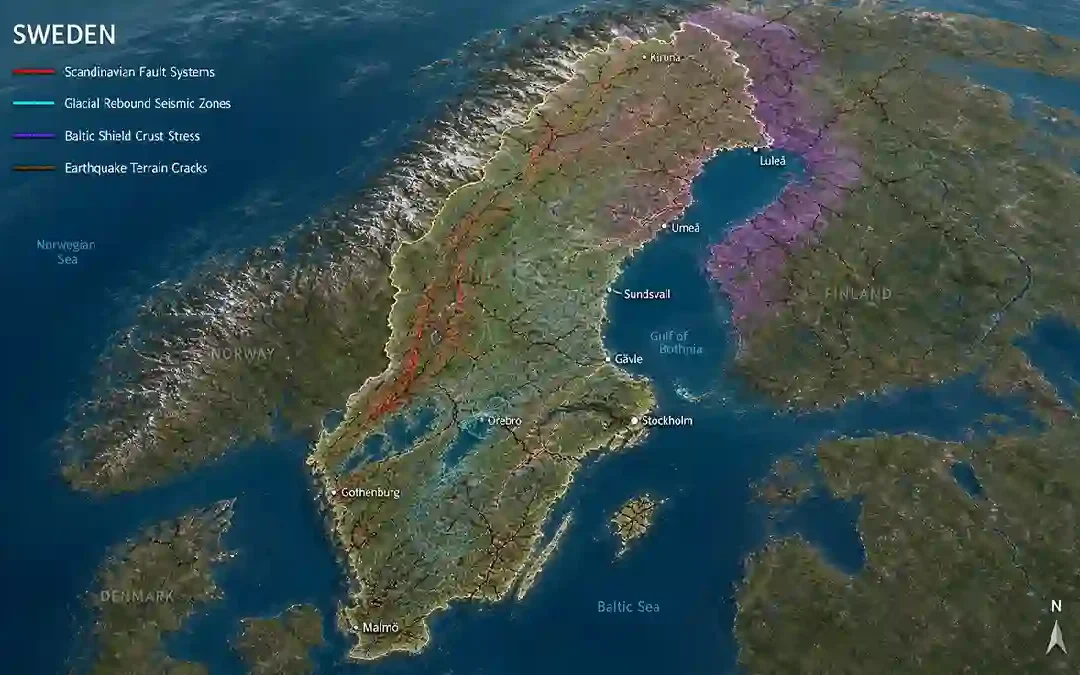
 Sweden is often considered one of Europe’s most geologically stable countries. Yet earthquakes still happen here every year. Most are small, but they reveal something important: The Scandinavian crust is still adjusting after the Ice Age. Unlike countries near active...
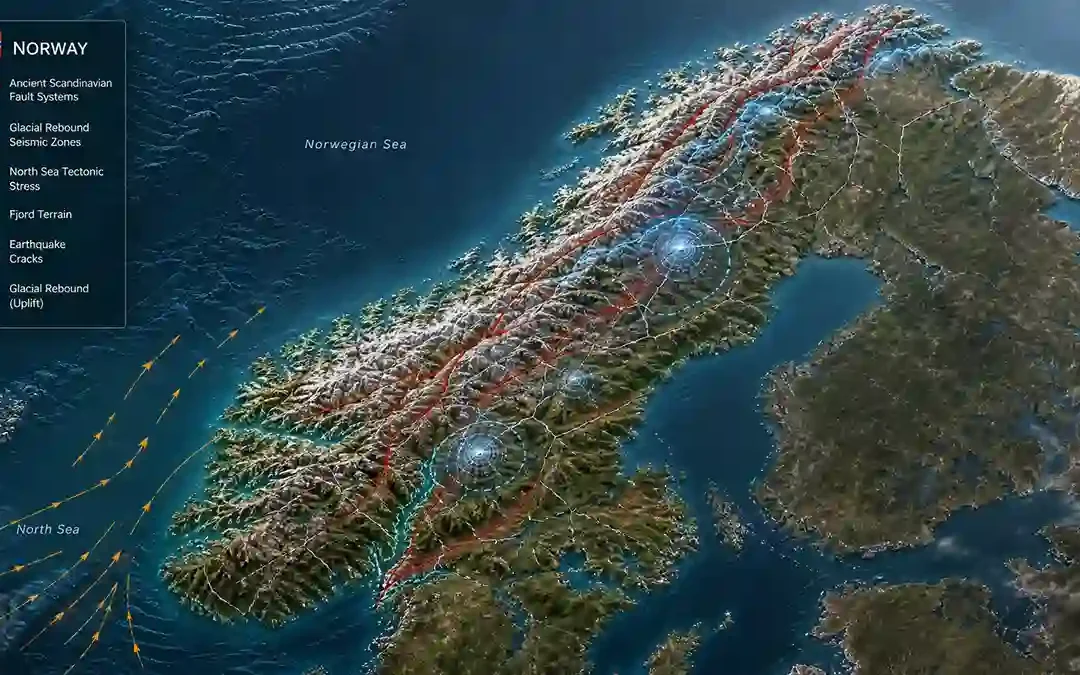 Norway is not located near a major tectonic plate boundary. Yet earthquakes still happen here. The reason is surprisingly connected to something ancient: the Ice Age. Thousands of years ago, massive glaciers covered Scandinavia. When those glaciers melted, the land...
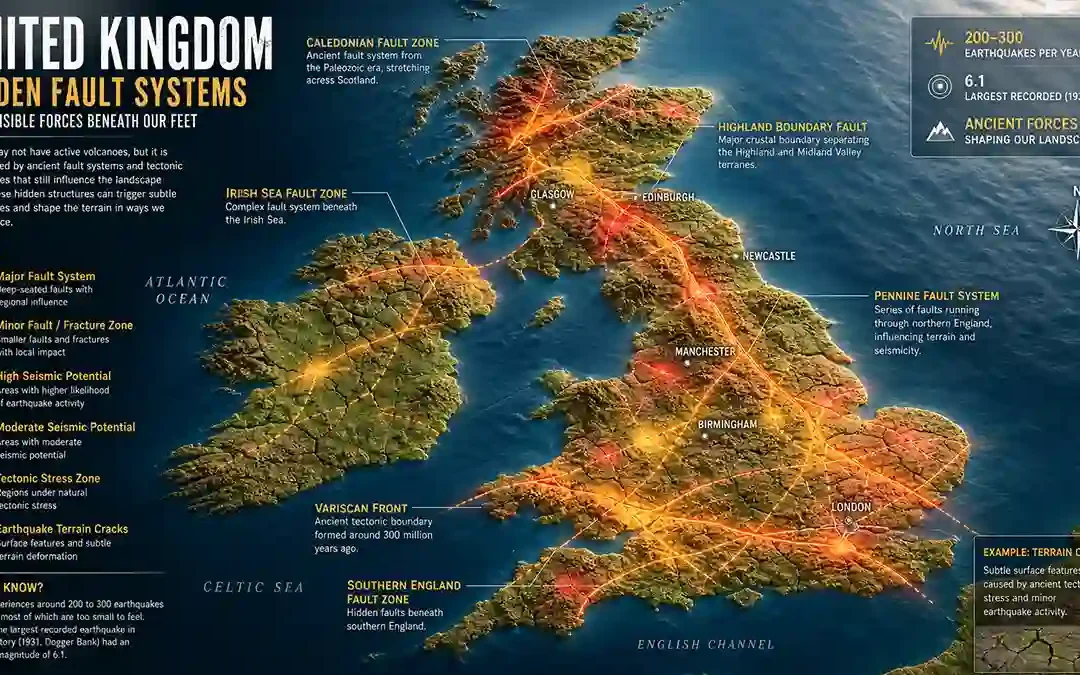 The United Kingdom is not known for major earthquakes. But the ground beneath Britain is not completely still. Every year, the UK experiences small earthquakes caused by ancient fault systems that continue to reactivate under slow tectonic pressure. Most are minor —...
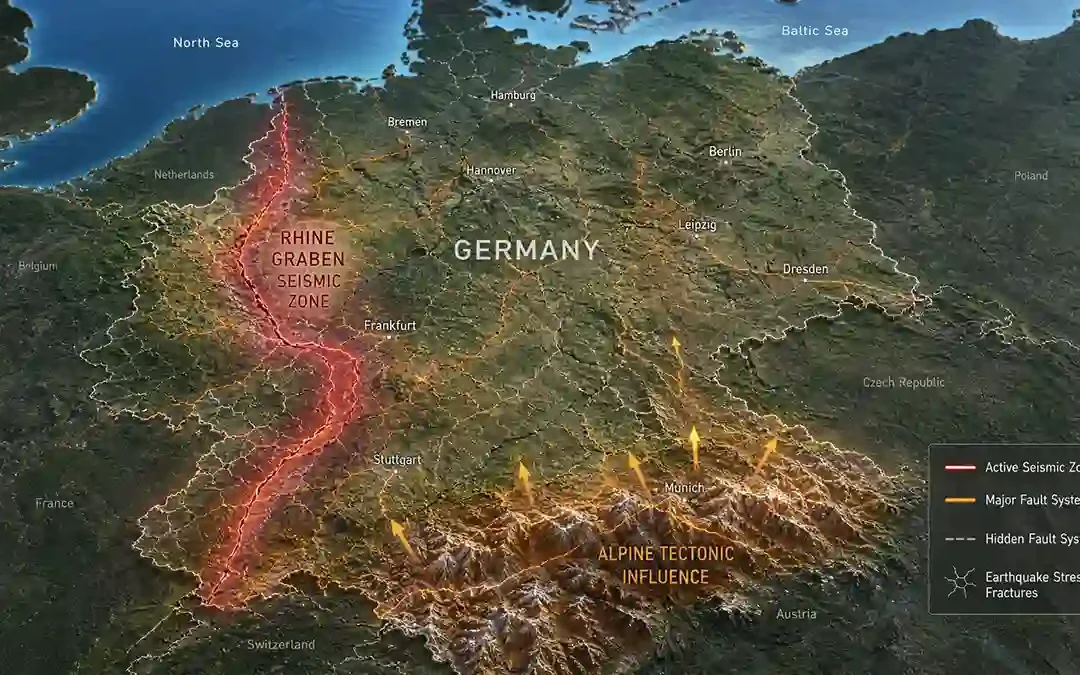 Germany is often seen as geologically stable compared to countries like Italy or Japan. But beneath the surface, several fault systems are still active. Most earthquakes in Germany are small, yet certain regions continue to experience measurable tectonic stress and...
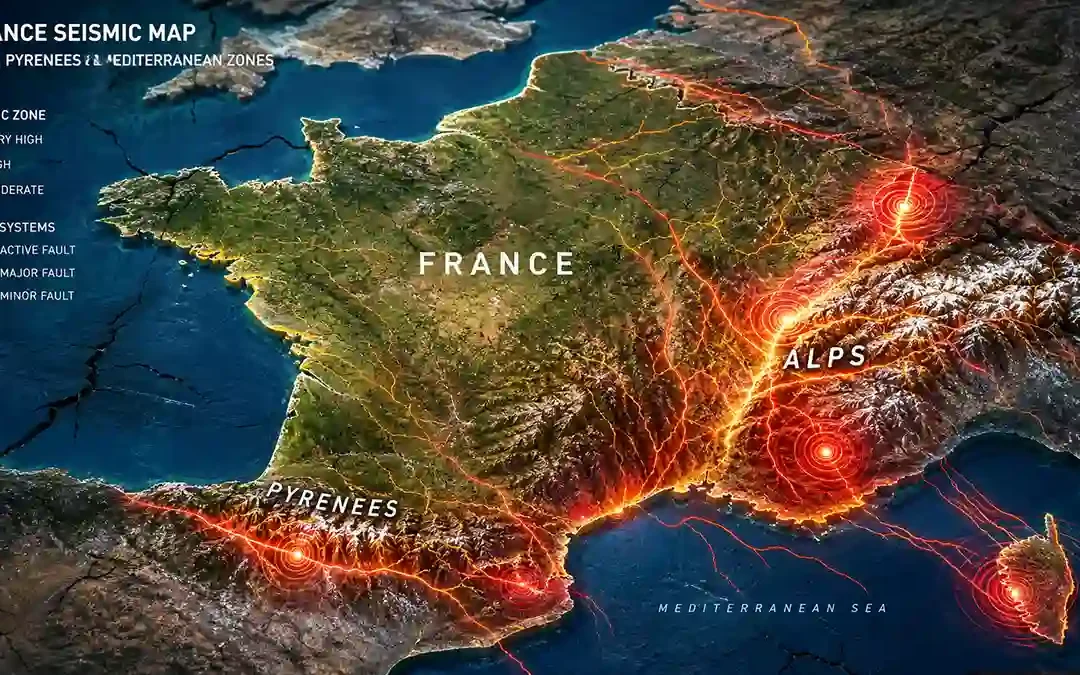 France is not usually associated with major earthquakes. But that doesn’t mean the country is completely stable. Several regions of France still experience ongoing tectonic stress — especially near mountain ranges and the Mediterranean coast. What makes France...
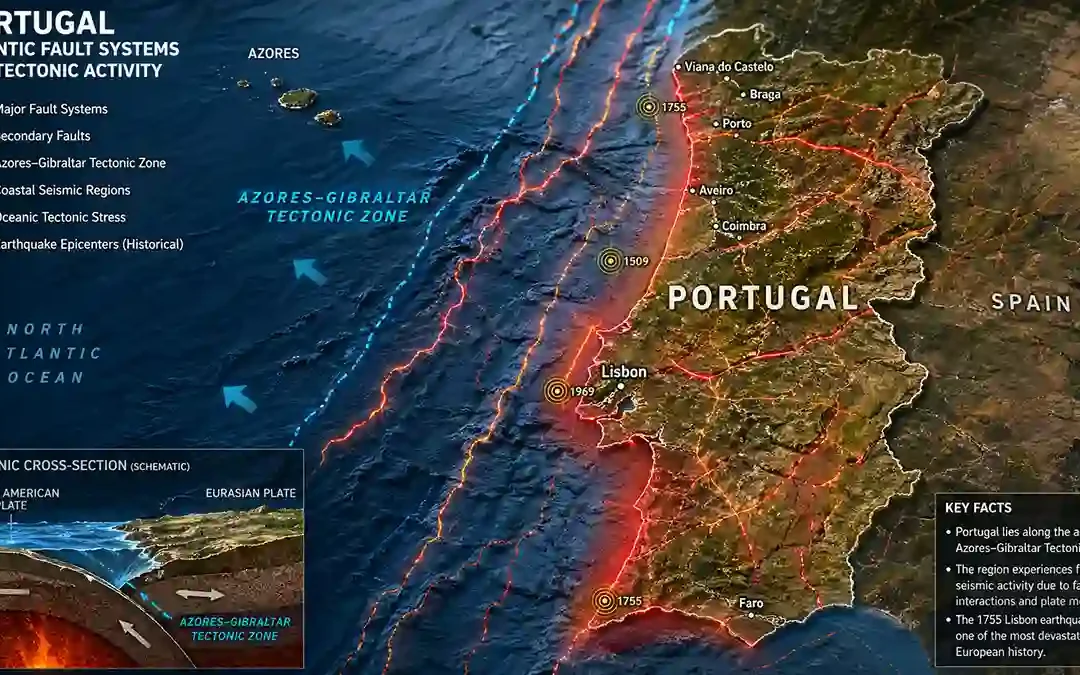 Portugal is not one of Europe’s most active earthquake countries today, but its history tells a very different story. The country sits near an important tectonic boundary in the Atlantic Ocean — and that boundary has produced some of Europe’s most powerful...
