
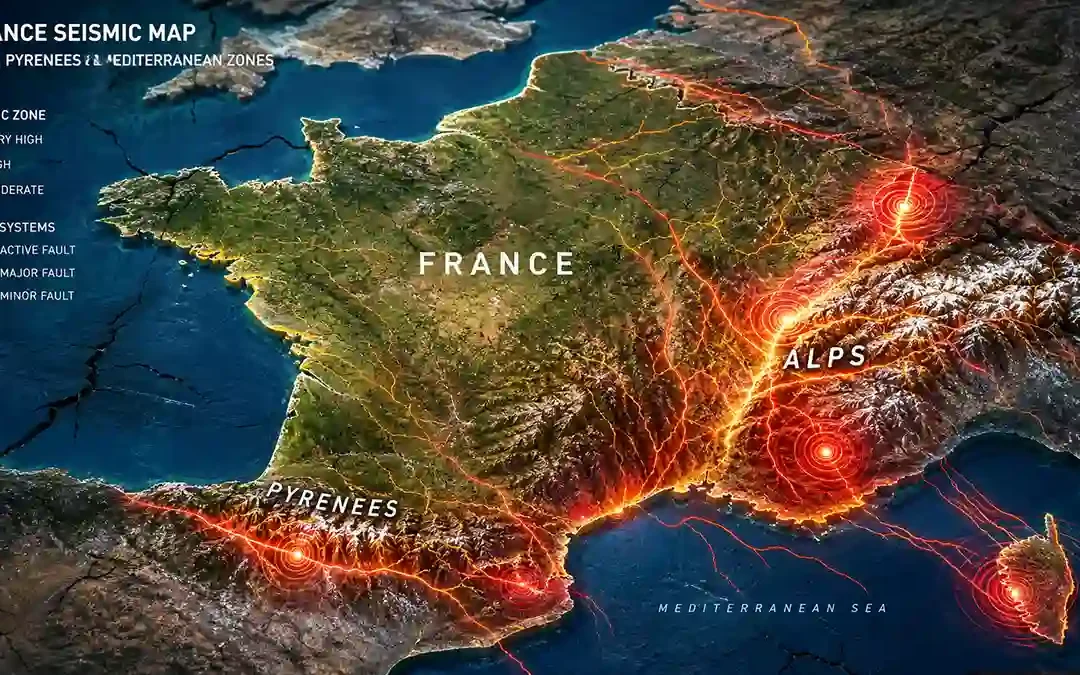
France is not usually associated with major earthquakes. But that doesn’t mean the country is completely stable. Several regions of France still experience ongoing tectonic stress — especially near mountain ranges and the Mediterranean coast.
What makes France interesting is that earthquake risk changes significantly depending on the region.
If you’re new to earthquakes, start here → what is an earthquake
France’s Main Seismic Regions
| Region | Risk Level | Main Cause |
|---|---|---|
| Southeastern France | High | Mediterranean tectonic stress |
| Alps Region | High | Mountain compression |
| Pyrenees Mountains | Moderate–High | Crust deformation |
| Western France | Low | Stable crust |
| Northern France | Very Low | Minimal tectonic activity |
France’s strongest earthquakes usually occur in the south. To understand how tectonic stress builds → fault lines
Why Do Earthquakes Happen in France?
France’s earthquakes are mainly connected to tectonic pressure affecting southern Europe.
Here’s the simplified process:
- The African Plate slowly moves northward
- Pressure spreads through southern Europe
- Mountain regions compress over time
- Fault systems accumulate stress
- Earthquakes occur when faults suddenly move
Most seismic activity is concentrated near the Alps and Mediterranean regions.
Learn more → causes of earthquakes
France’s Four Main Earthquake Zones
The Alps Region (France’s Most Active Mountain Zone)
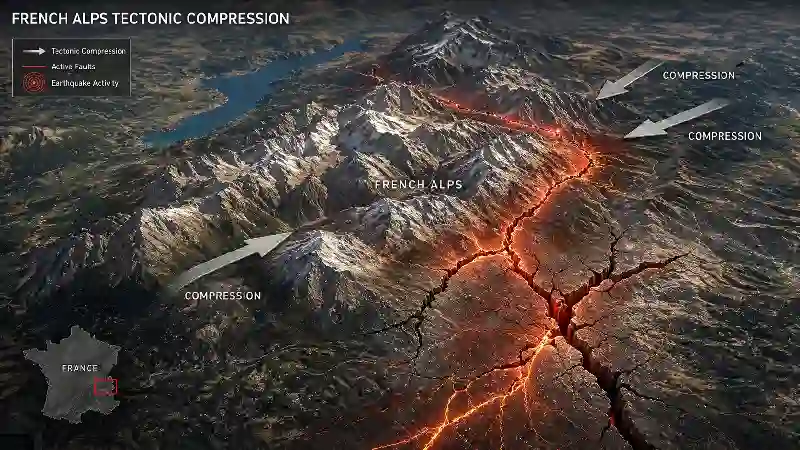
The French Alps experience ongoing tectonic compression.
- Active mountain fault systems
- Moderate earthquakes possible
- Crustal pressure continues beneath the region
This is one of France’s most seismically active areas.
Explore earthquake types
Mediterranean Coast & Southern France
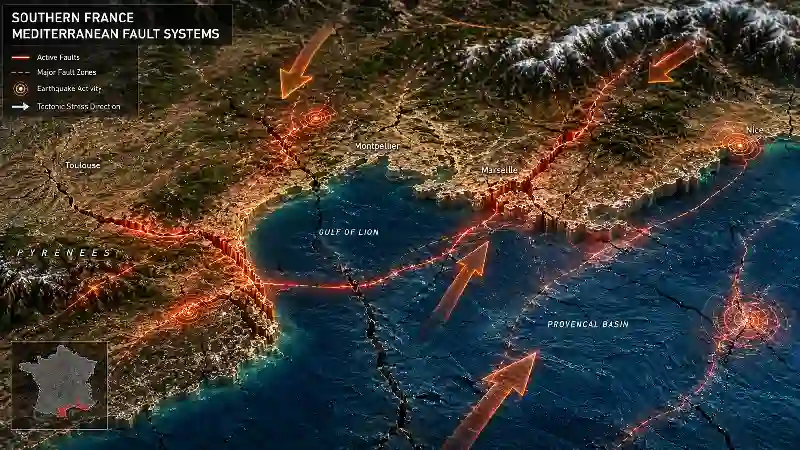
Southern France experiences seismic activity linked to Mediterranean tectonics.
- Shallow earthquakes
- Active regional faults
- Moderate seismic risk near coastal areas
Pyrenees Mountains
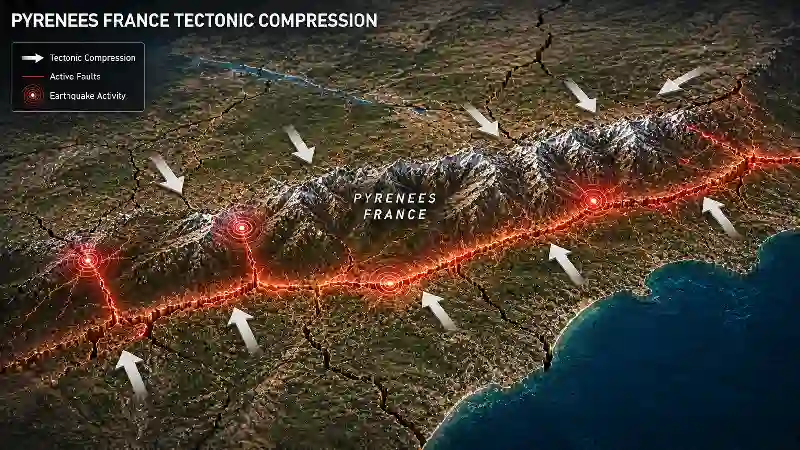
The Pyrenees region near the Spanish border also experiences earthquakes.
- Mountain-building stress
- Crustal deformation
- Less active than the Alps
Inland & Northern France
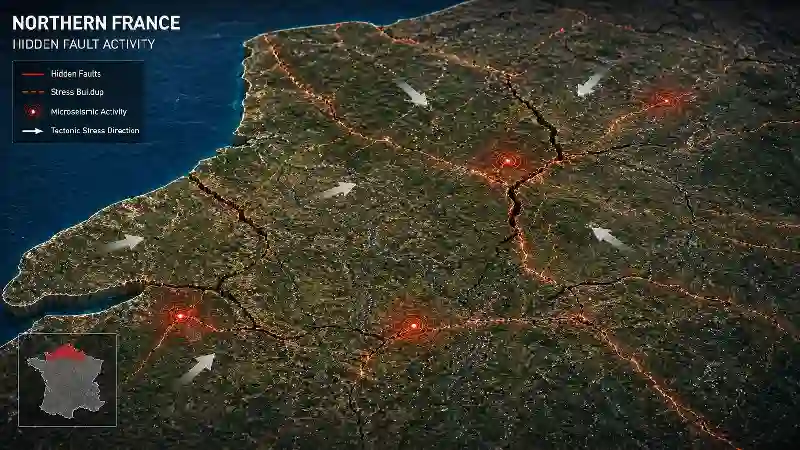
Northern and western France are relatively stable.
- Lower tectonic stress
- Occasional small earthquakes
- Older faults may reactivate occasionally
This shows that even low-risk regions can still experience seismic activity.
Recent Earthquake Activity in France
France experiences small earthquakes regularly.
Recent patterns show:
- Activity concentrated in southeastern regions
- Small to moderate earthquakes in mountain zones
- Occasional offshore Mediterranean earthquakes
Most earthquakes are minor, but stronger events remain possible in southern France.
Notable Earthquakes in France
France has experienced several significant earthquakes throughout history.
- 1909 Provence Earthquake (M6.2)
One of the strongest recorded earthquakes in France. - 2019 Le Teil Earthquake (M5.0)
A shallow earthquake causing local damage. - 1967 Arette Earthquake (M5.3)
A significant Pyrenees earthquake.
Understand magnitude vs impact
France vs Other Earthquake Regions
France’s earthquakes are moderate compared to major seismic countries.
- France → mountain and Mediterranean fault activity
- Italy → more active shallow fault systems
- Spain → Mediterranean seismic interaction
- California → transform faults like the San Andreas Fault
France’s earthquake risk is regional rather than nationwide.
Can Earthquakes in France Be Predicted?
No — earthquakes cannot be predicted precisely.
Scientists can:
- monitor seismic zones
- study active faults
- estimate long-term risk
But exact timing remains uncertain.
Learn more → Can earthquakes be predicted
Southern France, especially near the Alps and Mediterranean coast.
Most are small, but moderate earthquakes still occur.
Because of tectonic pressure linked to southern Europe and the Mediterranean region.
Yes — especially shallow earthquakes in southern regions.
Final Thoughts
France may appear relatively stable compared to countries like Japan or Chile, but tectonic pressure still affects parts of the country. From the Alps to the Mediterranean coast, several regions continue to experience active fault movement beneath the surface.
Understanding these patterns helps explain why earthquake risk in France is concentrated in certain areas rather than evenly spread across the country.