
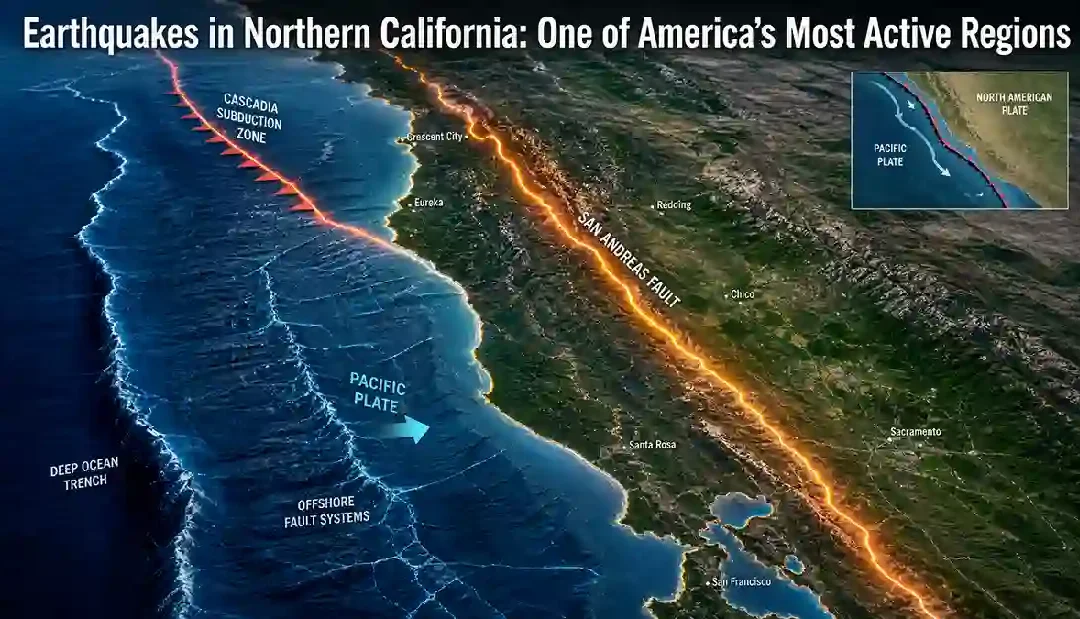
Northern California is one of the most earthquake-prone regions in the United States.
The reason is simple:
Multiple powerful tectonic systems meet here. Unlike Southern California, which is dominated by one major fault, Northern California combines several different earthquake sources — both on land and offshore.
If you’re new to earthquakes, begin here → what is an earthquake
Northern California Seismic Zones
| Zone | Risk Level | Main Cause |
|---|---|---|
| San Andreas Fault | Extremely High | Transform plate movement |
| Cascadia Subduction Zone | Extremely High | Plate diving (subduction) |
| Mendocino Triple Junction | Extremely High | Multiple plate interaction |
| Offshore Fault Systems | High | Ocean tectonic stress |
| Inland Faults | Moderate–High | Regional fault activity |
Northern California is one of the few places where multiple tectonic systems interact.
To understand how faults work → fault lines
Why Do Earthquakes Happen in Northern California?
Northern California sits at the boundary of several tectonic plates.
Here’s the simple explanation:
- The Pacific Plate moves northwest
- The North American Plate moves southeast
- Another plate system interacts offshore
- Stress builds along multiple faults
- Earthquakes occur when faults slip
This makes Northern California more complex than most regions.
Learn more → causes of earthquakes
Four Major Earthquake Systems in Northern California
San Andreas Fault (Major Plate Boundary)
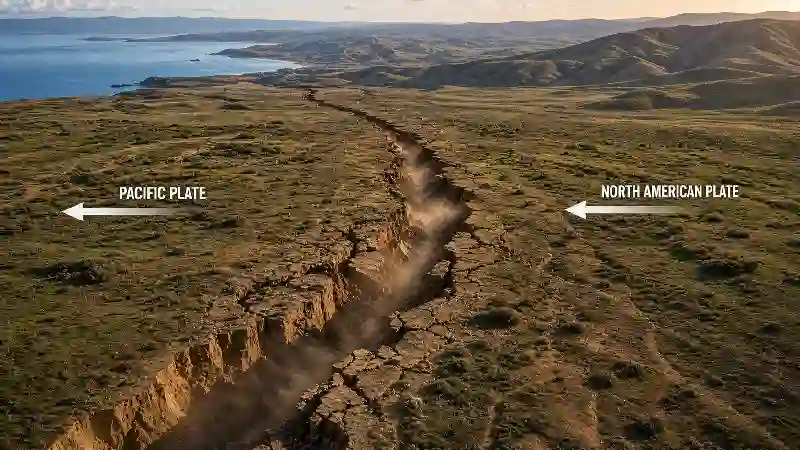
The San Andreas Fault runs through Northern California.
- Major transform fault
- Capable of large earthquakes
- Continuous plate movement
Explore earthquake types
Cascadia Subduction Zone (Hidden Giant)
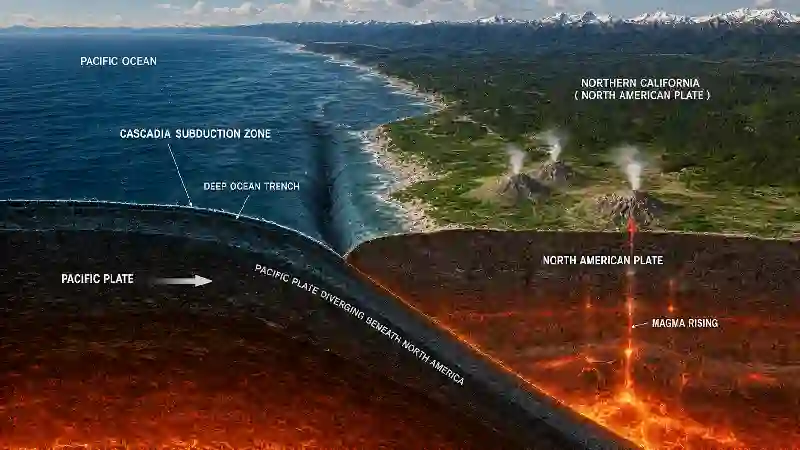
Offshore Northern California lies the Cascadia Subduction Zone.
- One plate dives beneath another
- Capable of massive earthquakes (M8–M9)
- Tsunami risk is significant
Mendocino Triple Junction (Unique Feature)
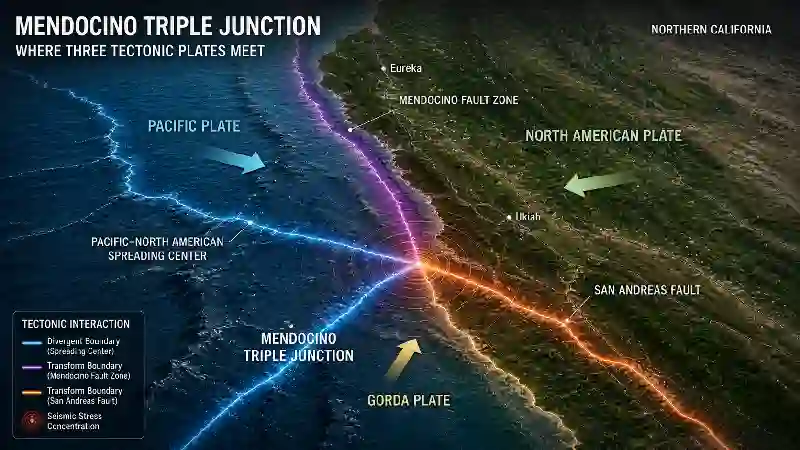
The Mendocino Triple Junction is one of the most complex tectonic areas in the world.
- Three tectonic plates meet
- High seismic activity
- Complex earthquake behavior
This is a key reason Northern California is so active.
Offshore Fault Systems
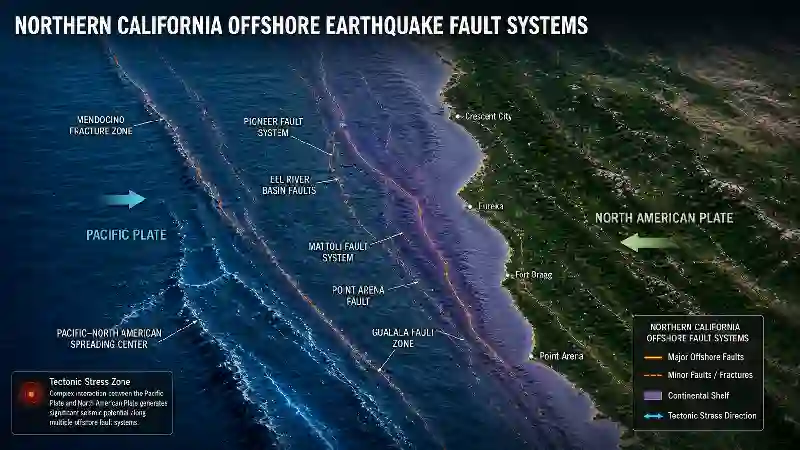
Many earthquakes occur offshore.
- Submerged fault systems
- Strong seismic activity beneath the ocean
- Some earthquakes felt along the coast
Recent Earthquake Activity in Northern California
Northern California experiences frequent earthquakes.
Recent patterns show:
- Regular small earthquakes
- Occasional moderate earthquakes
- Offshore seismic activity
- Continuous tectonic stress buildup
Most earthquakes are small, but large events are expected over time.
Notable Earthquakes in Northern California
Northern California has experienced some of the most famous earthquakes in US history.
- 1906 San Francisco Earthquake (M7.9)
One of the most devastating earthquakes in US history. - 1989 Loma Prieta Earthquake (M6.9)
A major earthquake affecting the Bay Area. - Cascadia Megathrust (1700)
A massive earthquake that triggered a Pacific-wide tsunami.
Understand magnitude vs impact
Northern California vs Other Regions
Northern California stands out because of its complexity.
- Northern California → transform + subduction + triple junction
- Southern California → mainly transform faults
- Japan → subduction zones
- Chile → plate collision
Few regions combine so many seismic systems.
Can Earthquakes in Northern California Be Predicted?
No — earthquakes cannot be predicted precisely.
Scientists can:
- monitor fault movement
- measure tectonic stress
- estimate long-term risk
But exact timing remains uncertain.
Learn more → Can earthquakes be predicted
Because multiple tectonic systems interact in the region.
Large earthquakes from the San Andreas Fault or Cascadia subduction zone.
Yes — small earthquakes happen frequently.
Yes — especially from the Cascadia subduction zone.
Final Thoughts
Northern California is one of the most complex earthquake regions in the world. With transform faults, subduction zones, and triple plate interactions, the region experiences a wide range of seismic activity.
Understanding this area helps explain how multiple tectonic systems can work together to shape earthquake behavior.