
Latest Post & Case Study
Recent Post
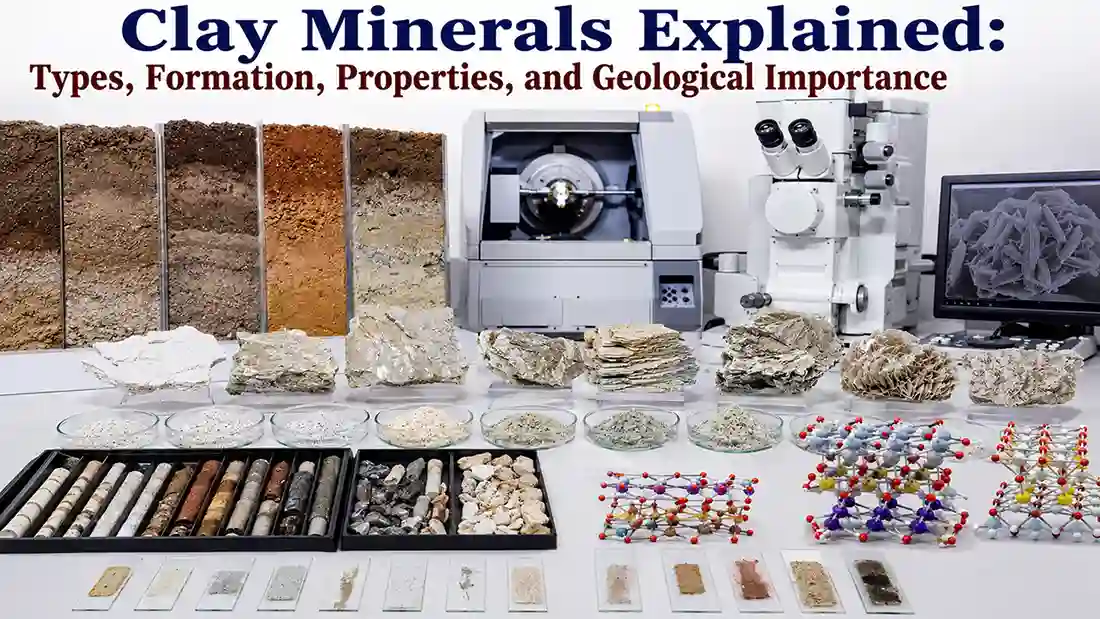
Clay Minerals Explained: Types, Formation, Properties, and Geological Importance
Clay minerals are extremely fine-grained, sheet-like silicate minerals that form primarily through the chemical...
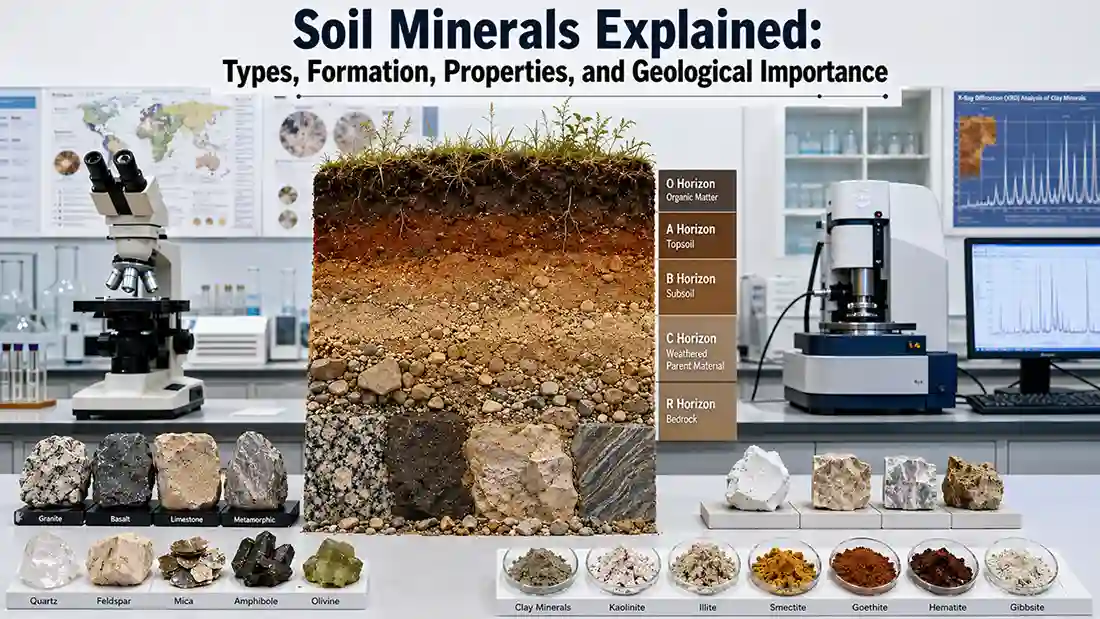
Soil Minerals Explained: Types, Formation, Properties, and Geological Importance
Soil minerals are the inorganic components of soil formed through the weathering of rocks and minerals over thousands...

Weathering and Mineral Formation Explained: Processes, Types, and Geological Importance
Weathering is one of the most important geological processes shaping Earth's surface. It breaks down rocks and...
Mineralogy & Petrology
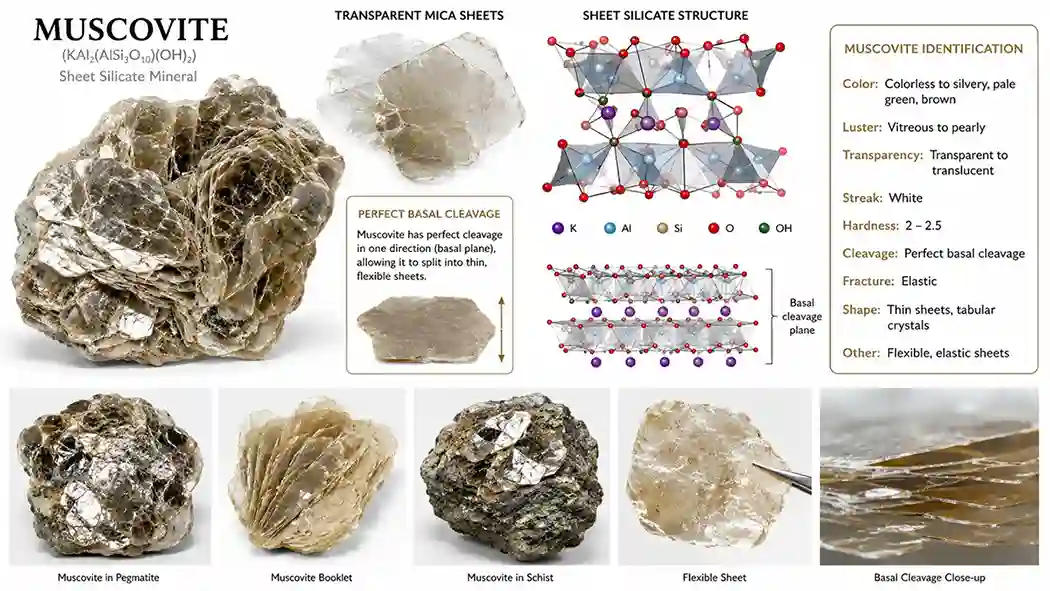
Muscovite Mineral Explained: Properties, Formation, and Uses
Muscovite is the most common mineral in the mica group and is easily recognized by its thin, transparent sheets and...
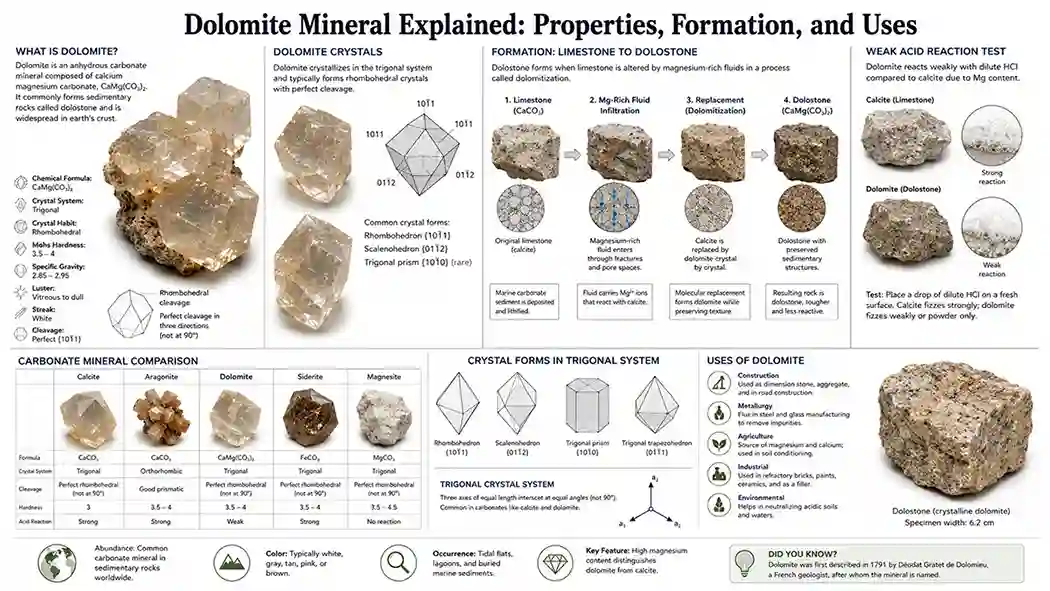
Dolomite Mineral Explained: Properties, Formation, and Uses
Dolomite is an important carbonate mineral composed of calcium magnesium carbonate. It is a major rock-forming mineral...
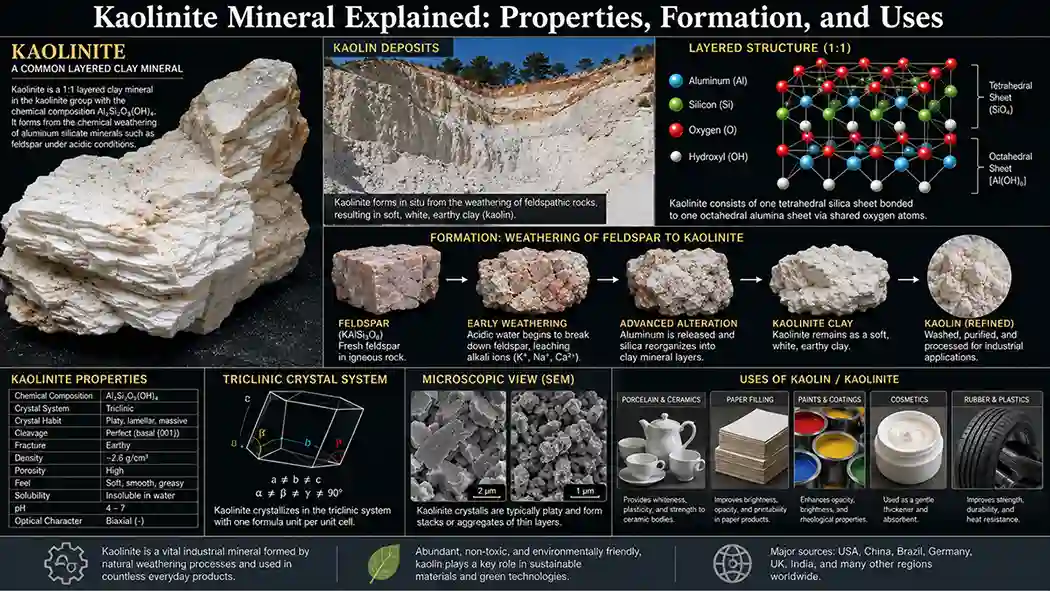
Kaolinite Mineral Explained: Properties, Formation, and Uses
Kaolinite is one of the most important clay minerals on Earth. It forms through the weathering of feldspar-rich rocks...
Geology & Earth Science
No Results Found
The page you requested could not be found. Try refining your search, or use the navigation above to locate the post.
Paleontology
No Results Found
The page you requested could not be found. Try refining your search, or use the navigation above to locate the post.
Solar System
No Results Found
The page you requested could not be found. Try refining your search, or use the navigation above to locate the post.