 What is Kerogen? Kerogen is defined as the organic material in sedimentary rocks that is insoluble in organic solvents because of the huge molecular weight of its component compounds. The soluble portion is known as bitumen. Chemically, it consists of carbon,...
 Hydrocarbon: Chemically, hydrocarbons are organic compounds composed entirely of hydrogen and carbon. What are the forms of hydrocarbon occurrence? There are many forms of occurrence of hydrocarbon. Physically, hydrocarbon grades from gases, via liquids and plastic...
 Natural Gas: Natural gas is a mixture of hydrocarbon (lower) that occurs in nature and exits in a gaseous state at ordinary pressure and temperature. It mainly contains methane (CH4 ), a small amount of ethane (C2H6), Propane (C3H8), and higher hydrocarbons like...
 Petroleum is an essential fossil fuel composed of a natural mixture of hydrocarbons, including crude oil, natural gas, and asphalt. Its form can range from gas to solid, influenced by the complexity of its carbon structure. This resource is crucial for energy...
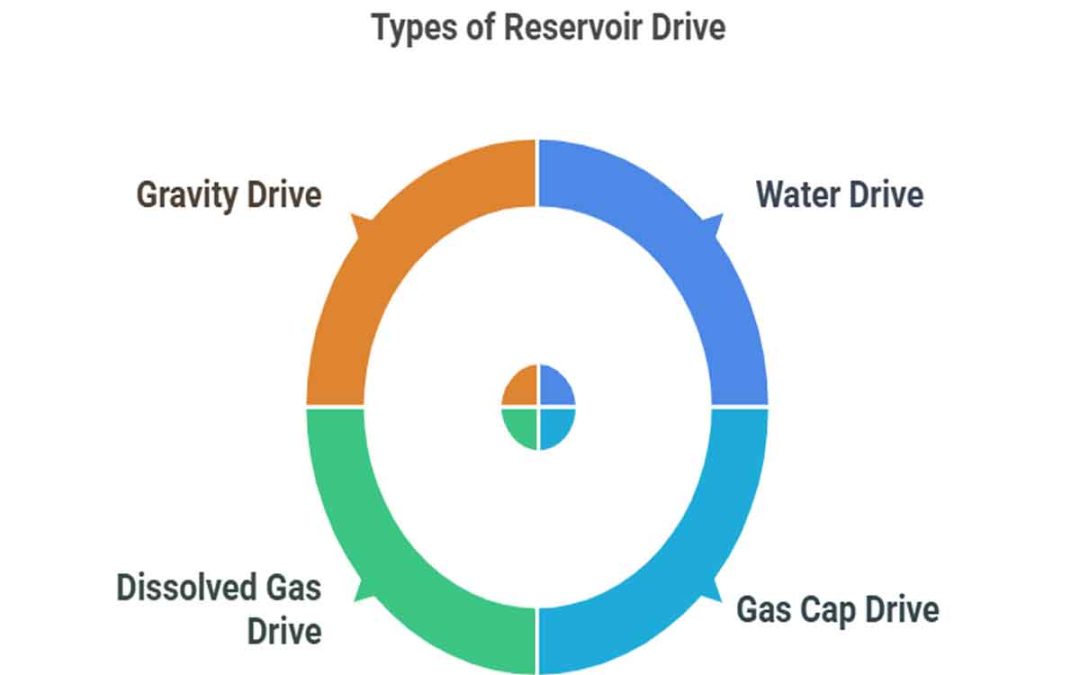 The types of reservoir drives—Water Drive, Gas Cap Drive, Dissolved Gas Drive, and Gravity Drive—are natural forces that push hydrocarbons to the surface. Water Drive is the most efficient (up to 60% recovery), while Dissolved Gas Drive is the least (7-15%)....