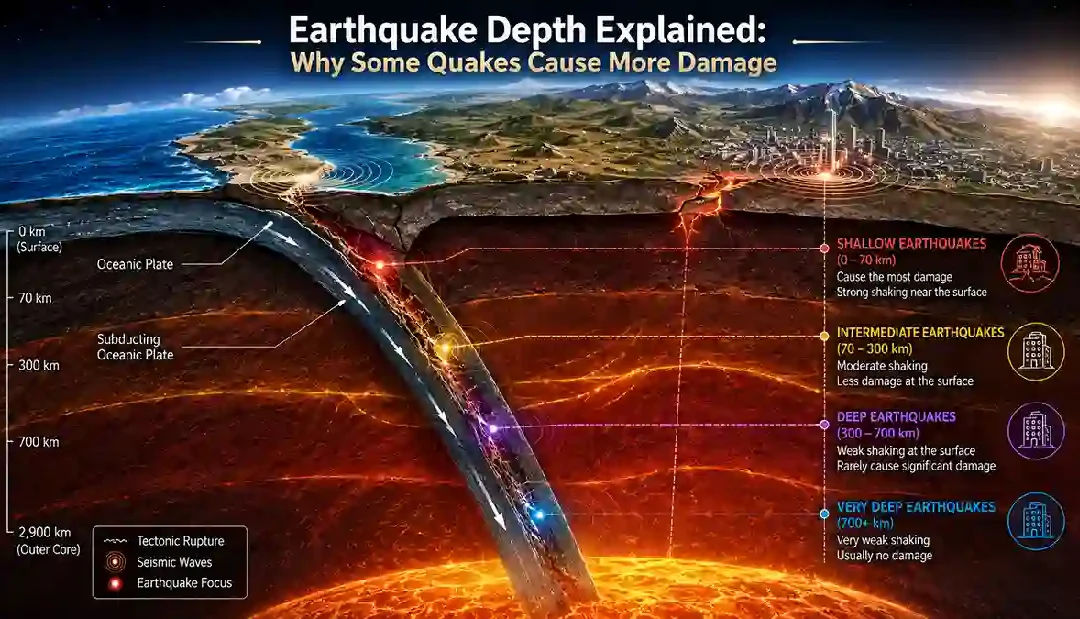
 Not all earthquakes happen near Earth’s surface. Some occur only a few kilometers underground, while others happen hundreds of kilometers deep inside Earth. This underground location is called earthquake depth. Depth plays a major role in: shaking intensity damage...
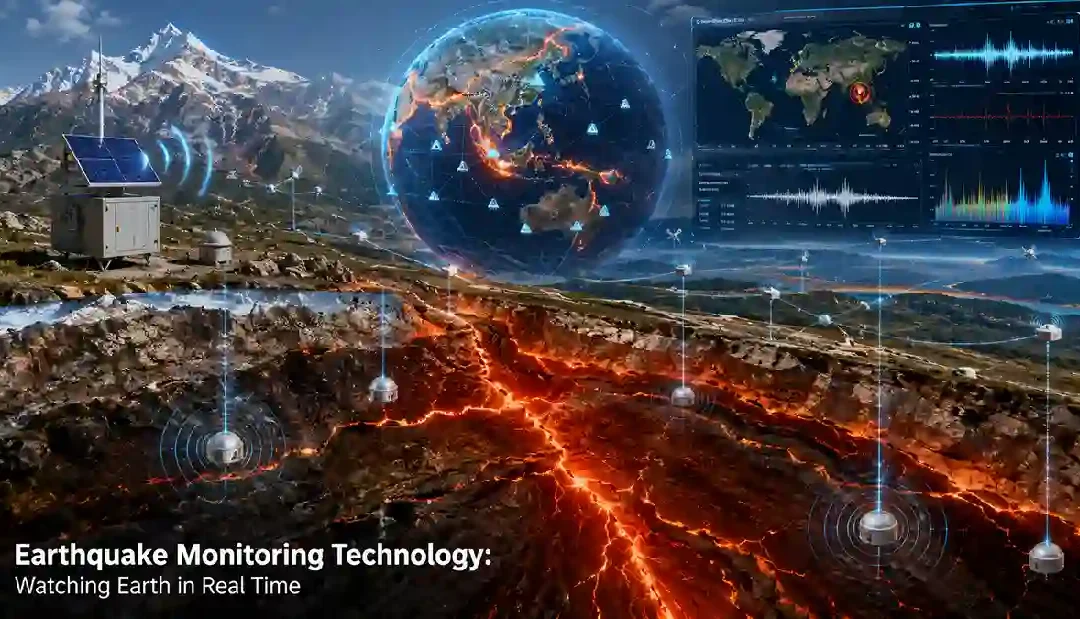 Earth’s crust is constantly moving. Most of these movements are too small for humans to feel — but modern technology can detect even tiny vibrations underground. That’s the role of earthquake monitoring technology. Today, scientists use global sensor networks,...
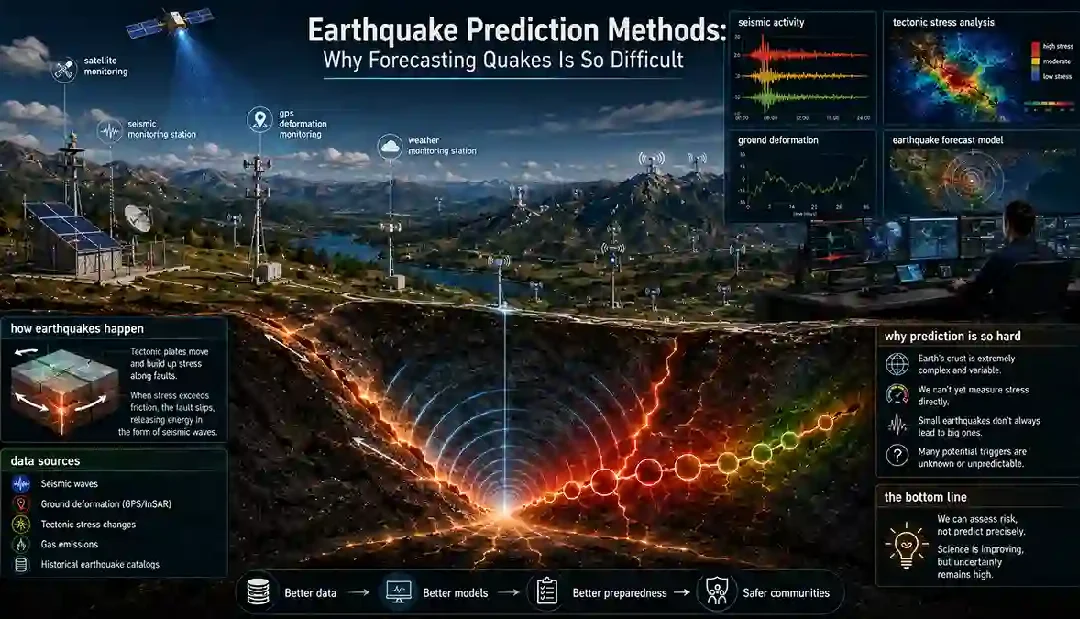 Humans have tried to predict earthquakes for centuries. Ancient civilizations watched: unusual animal behavior changes in water levels strange ground movements Modern scientists now use satellites, seismic sensors, and advanced computer systems. Yet despite huge...
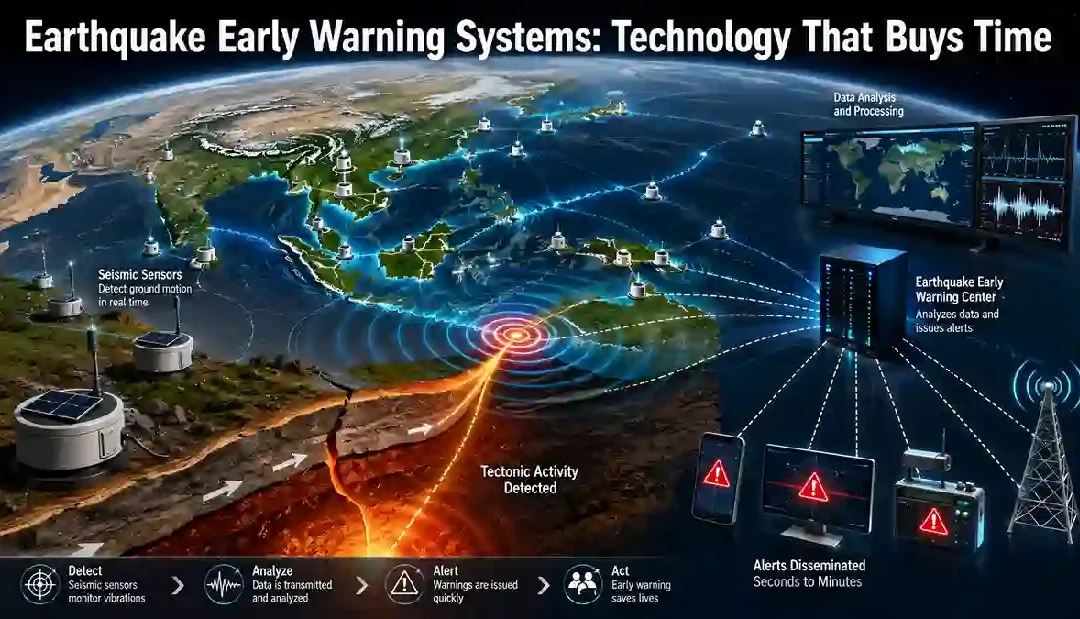 Earthquakes happen suddenly. But modern technology can sometimes detect an earthquake before the strongest shaking arrives. That’s the idea behind earthquake early warning systems. These systems cannot predict earthquakes days or hours in advance. Instead, they detect...
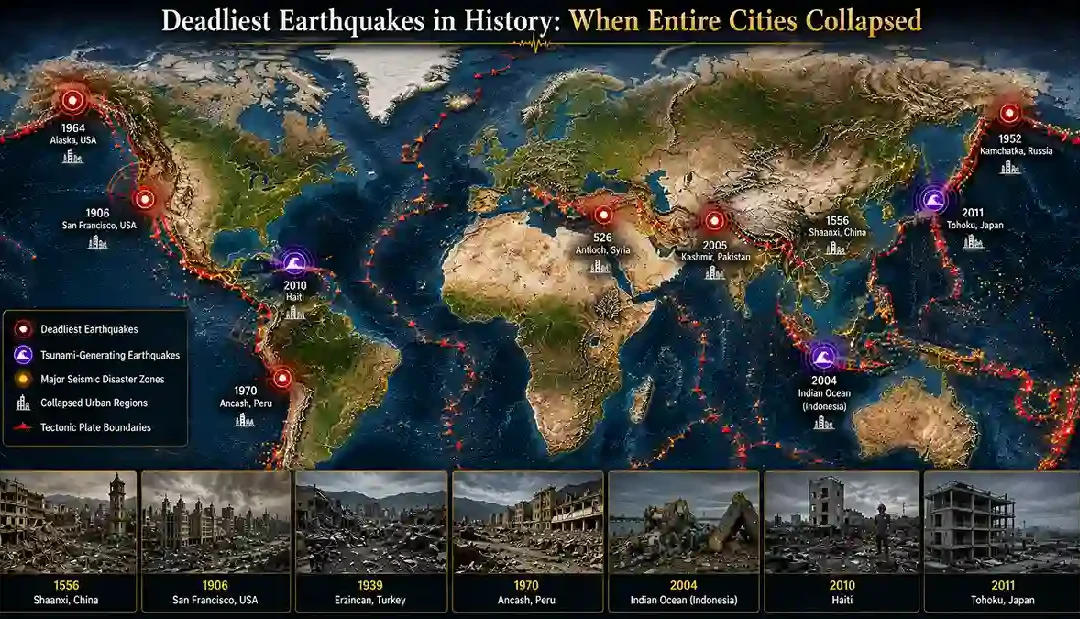 Not all earthquakes become disasters. Some occur in remote regions with limited damage. Others strike densely populated cities, trigger tsunamis, or collapse vulnerable infrastructure — turning seismic events into humanitarian catastrophes. The deadliest earthquakes...
