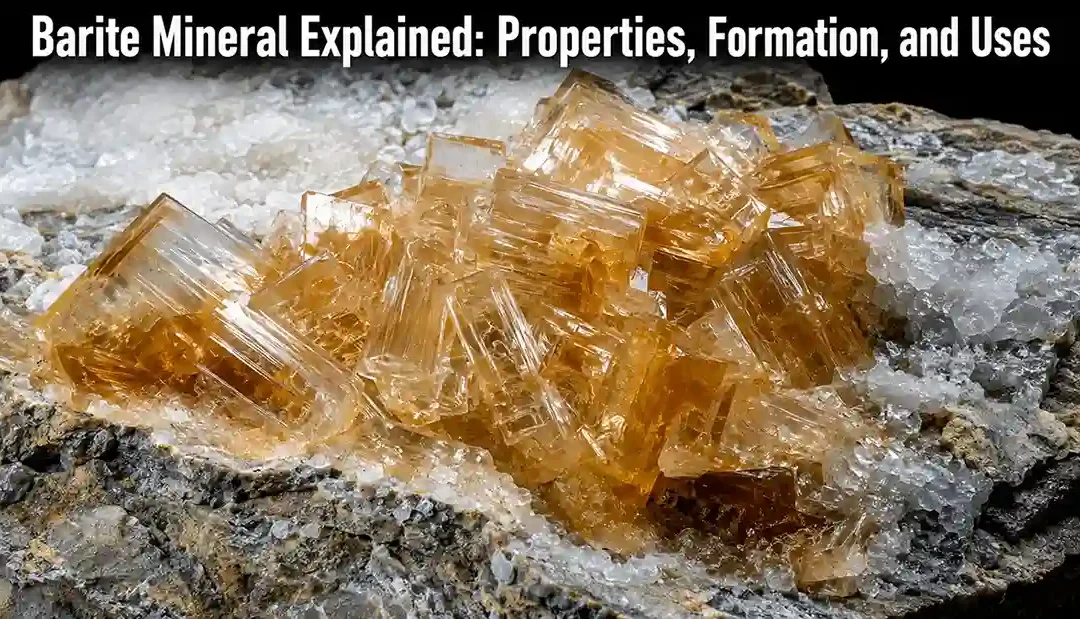
 Barite is a barium sulfate mineral best known for its exceptionally high density. It is one of the heaviest common non-metallic minerals and is widely used in oil and gas drilling, manufacturing, medicine, and scientific research. Barite commonly occurs in:...
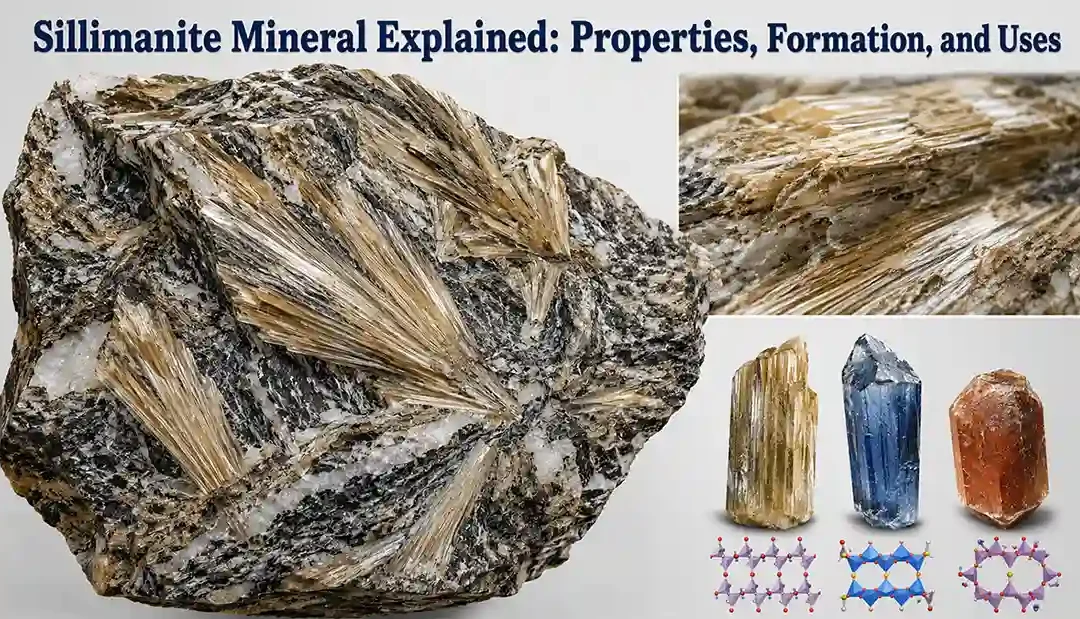 Sillimanite is an aluminum silicate mineral that forms under high-temperature metamorphic conditions. It is one of the three important aluminum silicate polymorphs, alongside kyanite and andalusite, and serves as a key indicator mineral for determining metamorphic...
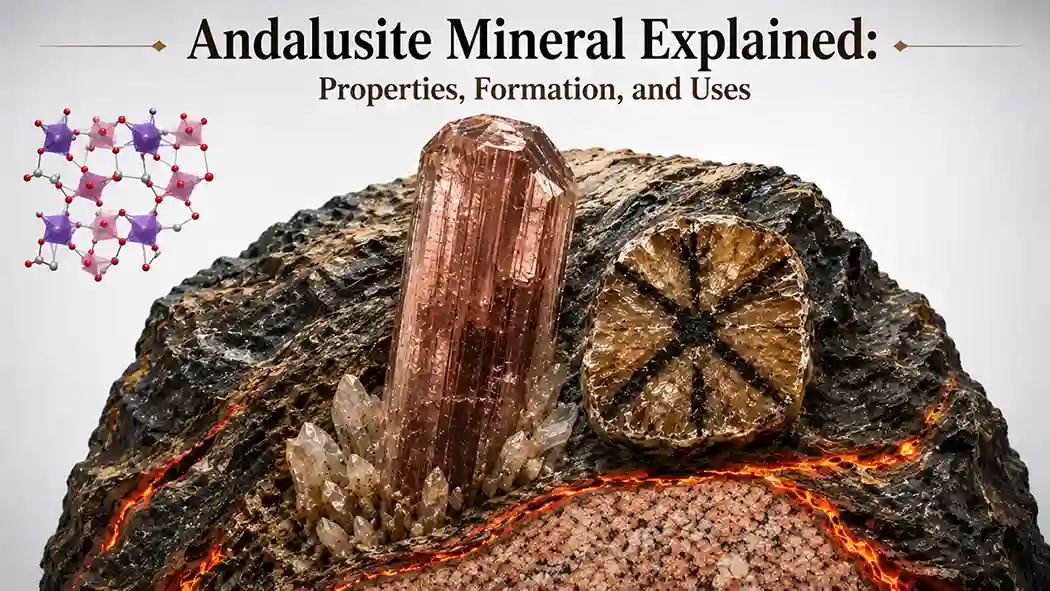 Andalusite is an aluminum silicate mineral commonly found in metamorphic rocks formed under relatively low-pressure conditions. It is one of the three famous aluminum silicate polymorphs, alongside kyanite and sillimanite. Andalusite is particularly valued because it...
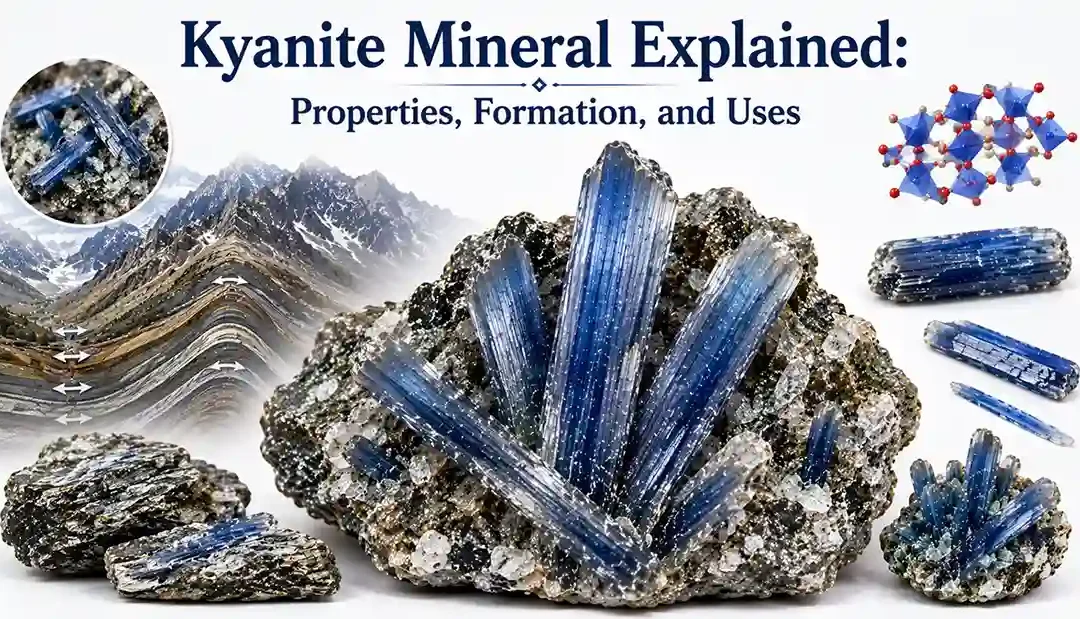 Kyanite is a distinctive blue aluminum silicate mineral commonly found in metamorphic rocks. It is especially important because it forms under high-pressure metamorphic conditions and helps geologists reconstruct the temperature and pressure history of rocks. Kyanite...
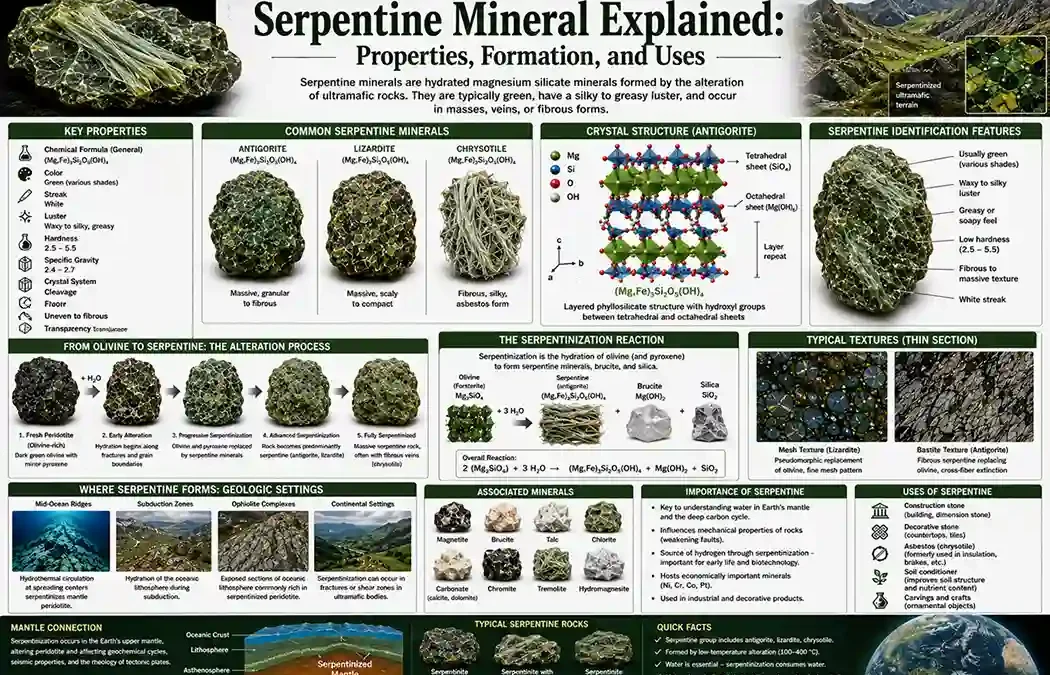 Serpentine is a group of green hydrated magnesium silicate minerals commonly formed by the alteration of ultramafic rocks such as peridotite and dunite. These minerals are important indicators of hydrothermal activity and play a major role in the transformation of...
