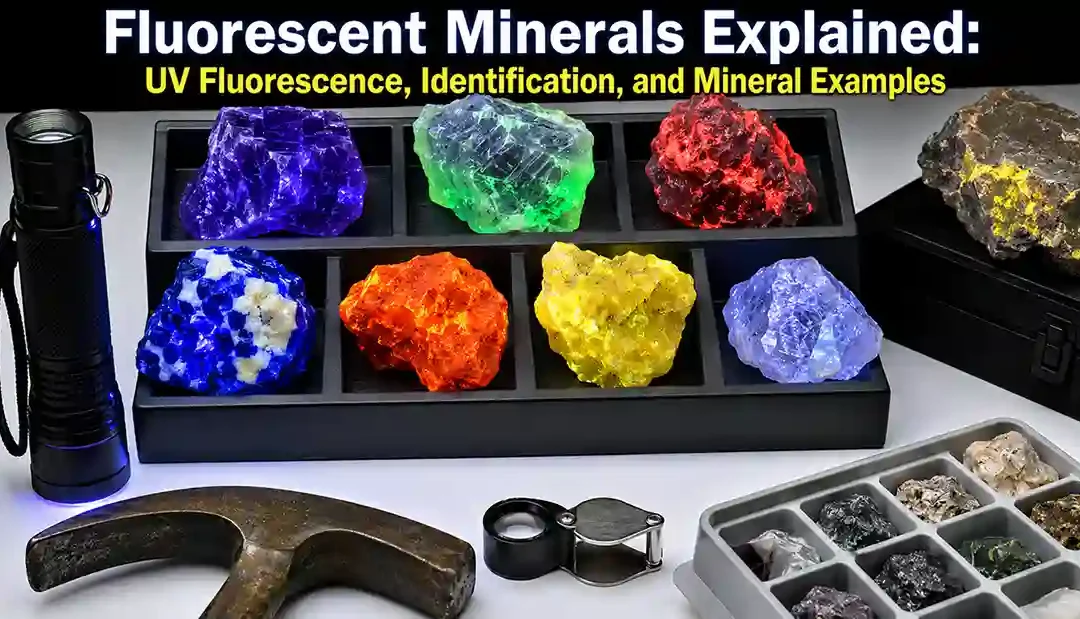
 Fluorescence is one of the most fascinating optical properties observed in minerals. Some minerals appear ordinary under visible light but produce brilliant blue, green, red, yellow, orange, or white colors when exposed to ultraviolet (UV) light. This phenomenon,...
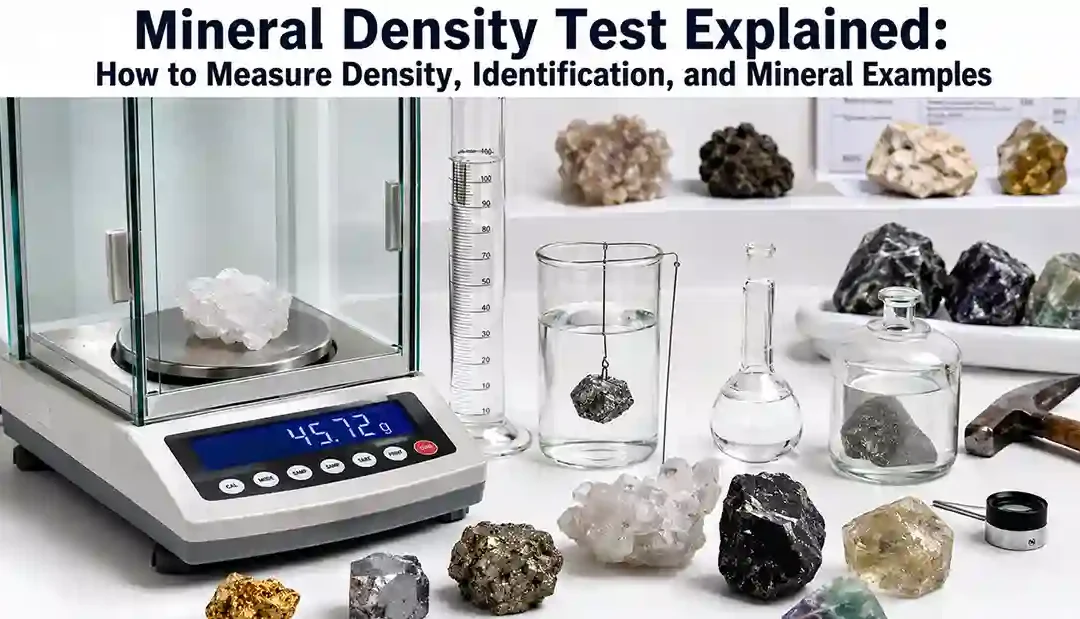 The mineral density test is one of the most reliable methods used to identify minerals because every mineral has a characteristic density determined by its chemical composition and crystal structure. Dense minerals such as gold and galena feel noticeably heavier than...
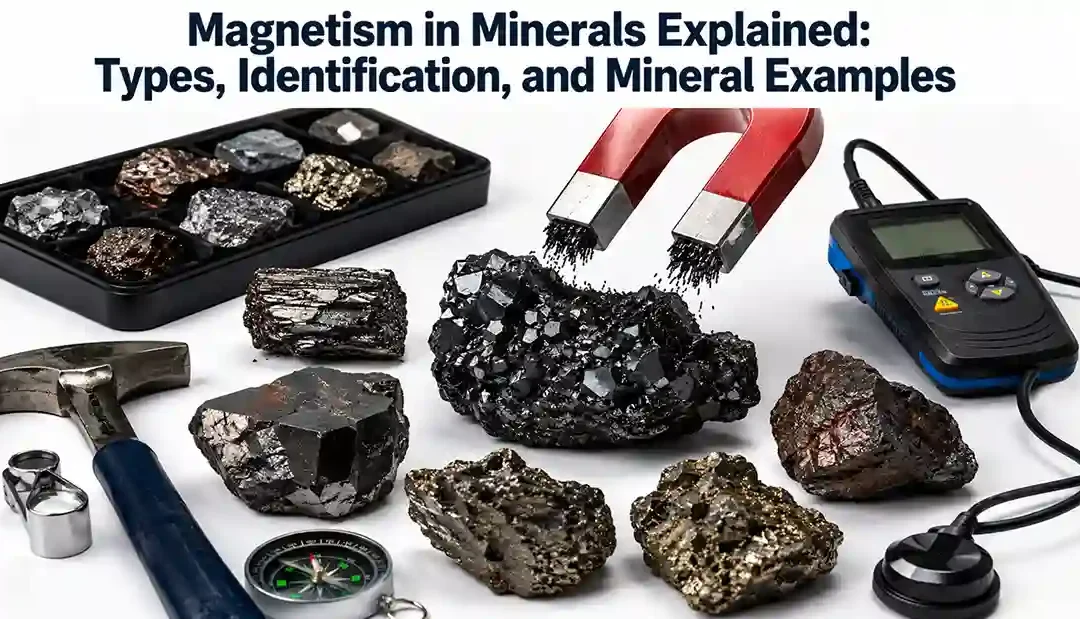 Magnetism is one of the most distinctive physical properties used in mineral identification. While most minerals show little or no magnetic behavior, a small number respond strongly to magnets because of their chemical composition and crystal structure. The most...
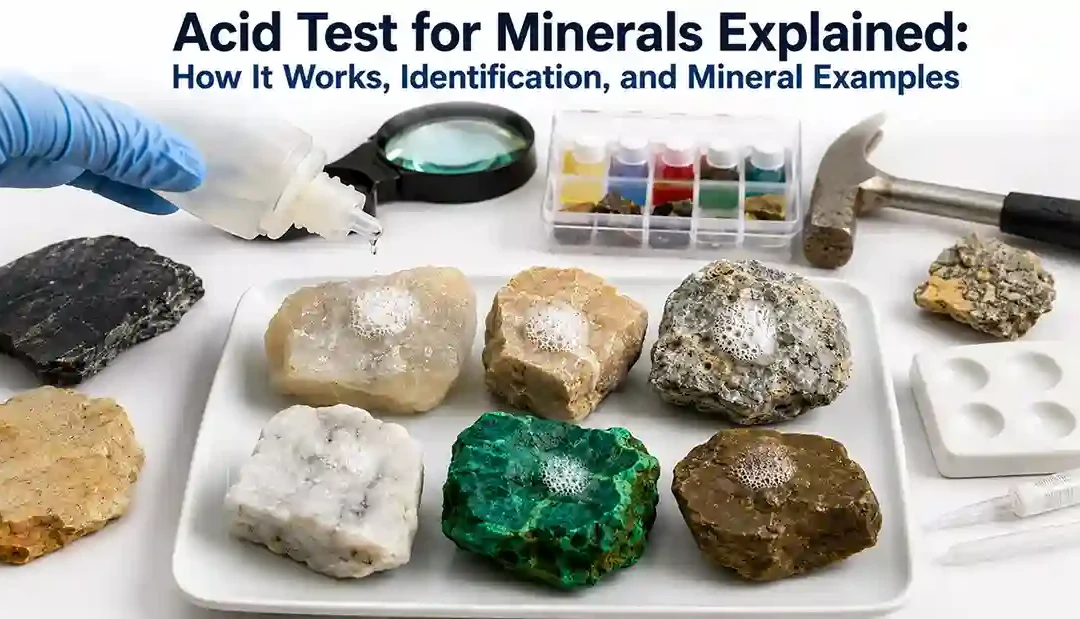 The acid test is one of the quickest and most reliable methods used to identify carbonate minerals in geology and mineralogy. By placing a small drop of dilute hydrochloric acid (HCl) on a mineral’s surface, geologists can determine whether the specimen contains...
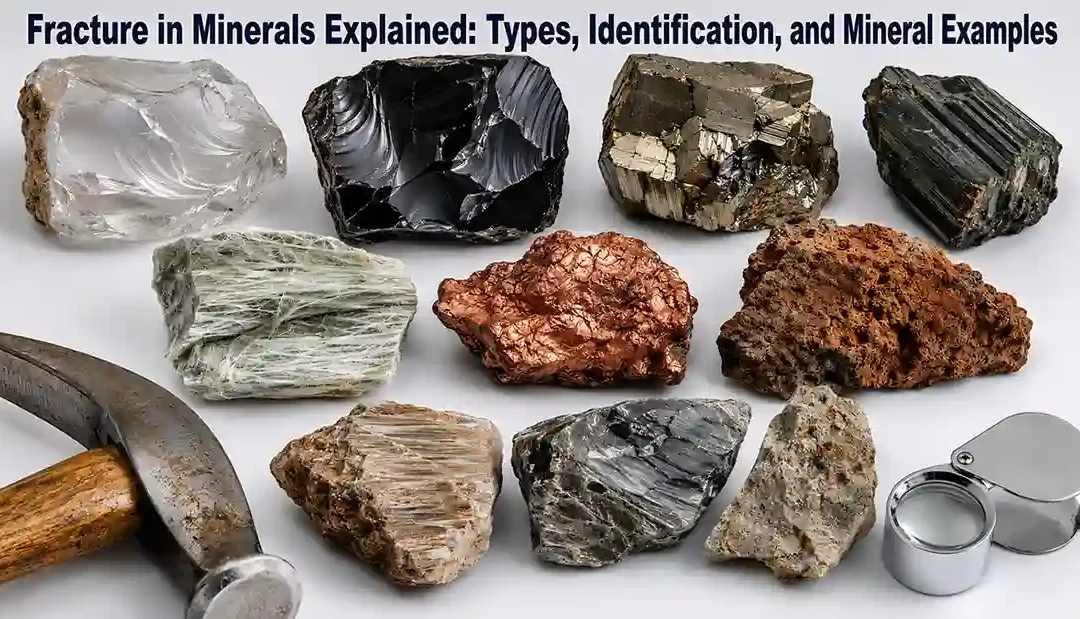 Fracture is one of the most important physical properties used in mineral identification. Unlike cleavage, which produces smooth and predictable breakage along planes of weakness, fracture describes how a mineral breaks when no cleavage planes are present. The shape...
