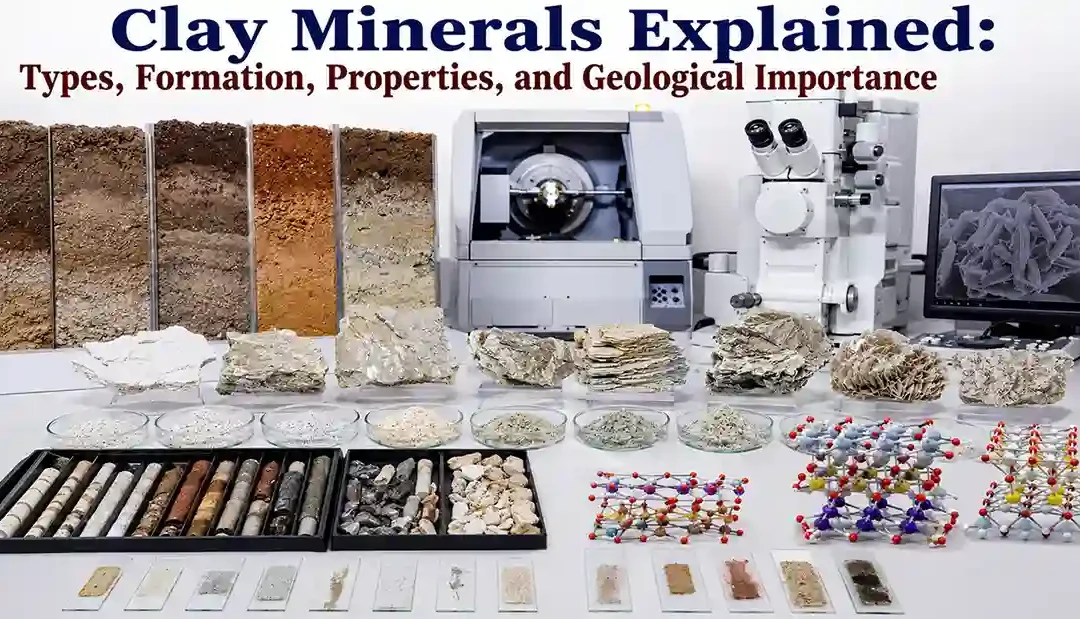
 Clay minerals are extremely fine-grained, sheet-like silicate minerals that form primarily through the chemical weathering and alteration of rocks and primary minerals. Although they are usually less than 2 micrometers (µm) in size, clay minerals have an enormous...
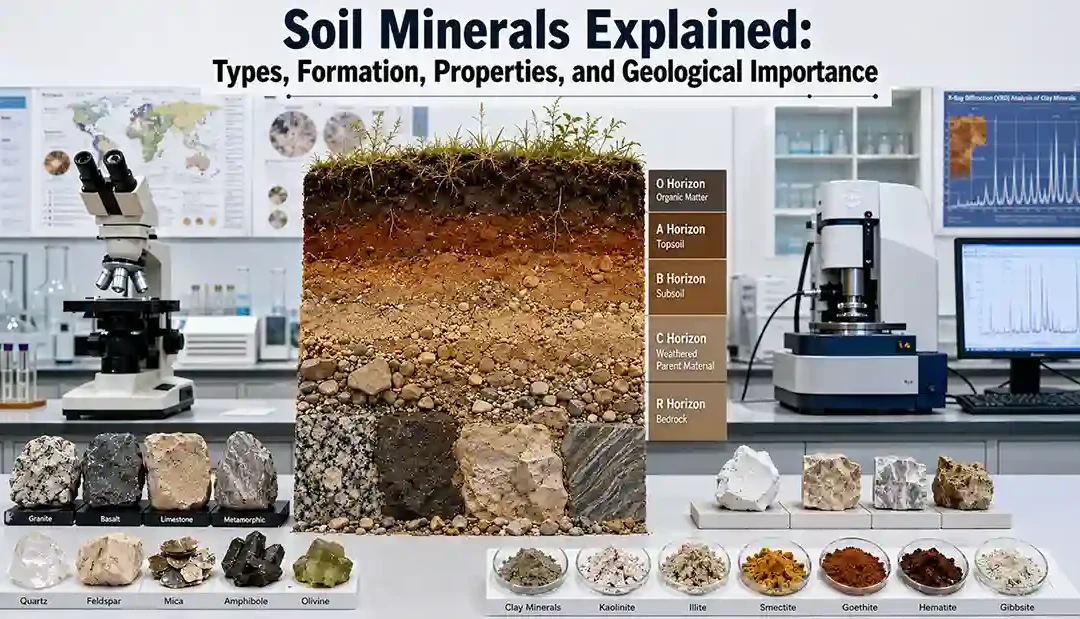 Soil minerals are the inorganic components of soil formed through the weathering of rocks and minerals over thousands to millions of years. They provide the structural framework of soils, influence nutrient availability, control water retention, regulate soil...
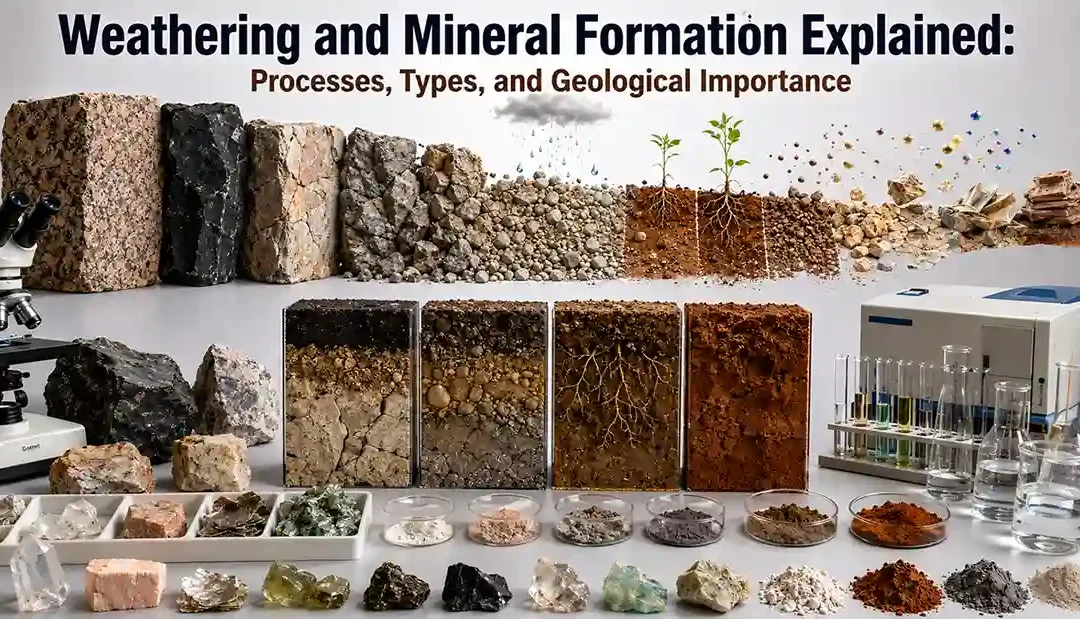 Weathering is one of the most important geological processes shaping Earth’s surface. It breaks down rocks and minerals through physical, chemical, and biological processes, producing sediments, soils, dissolved ions, and new minerals. While physical weathering...
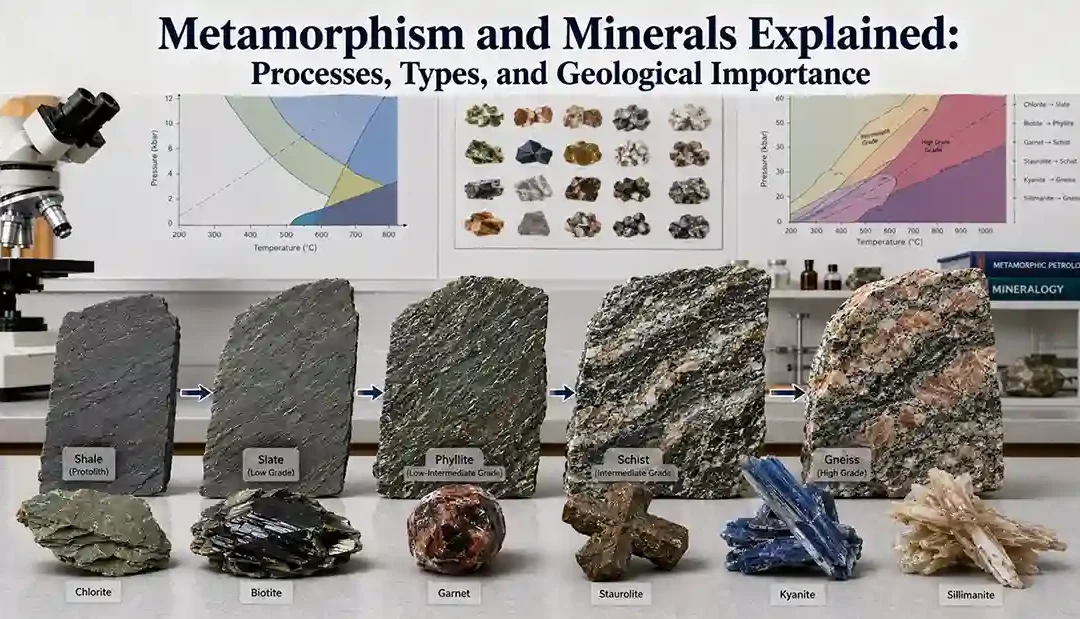 Metamorphism is the geological process in which existing rocks and minerals are transformed by increasing temperature, pressure, and chemically active fluids without completely melting. During metamorphism, minerals become unstable under new conditions and...
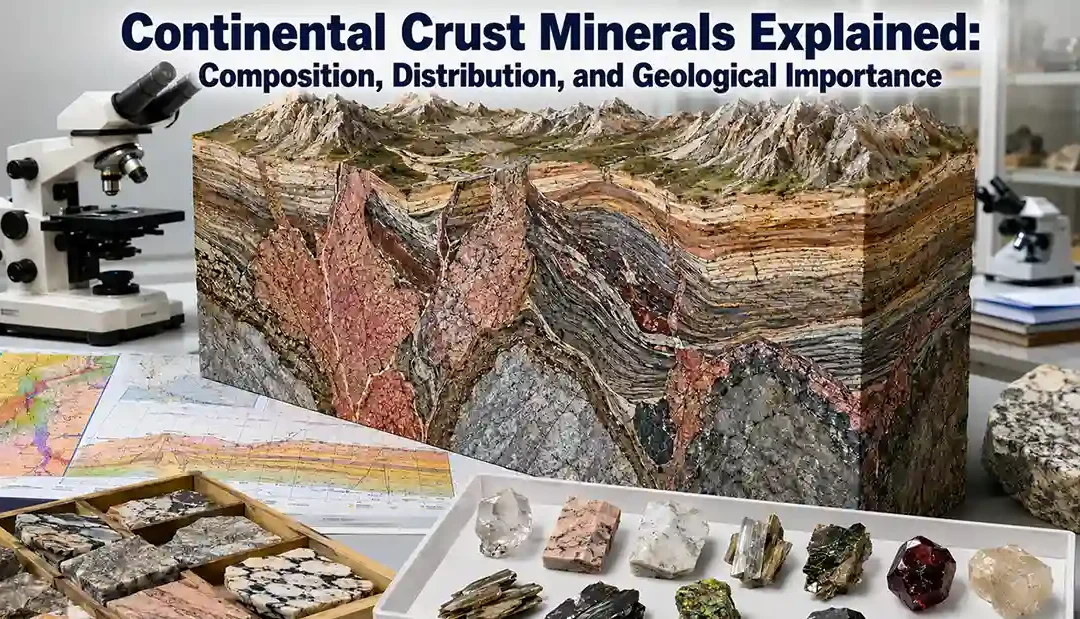 The continental crust is the thick, buoyant outer layer that forms Earth’s continents and continental shelves. Unlike the denser oceanic crust, continental crust is composed mainly of silica-rich (felsic to intermediate) rocks, making it less dense and capable...
