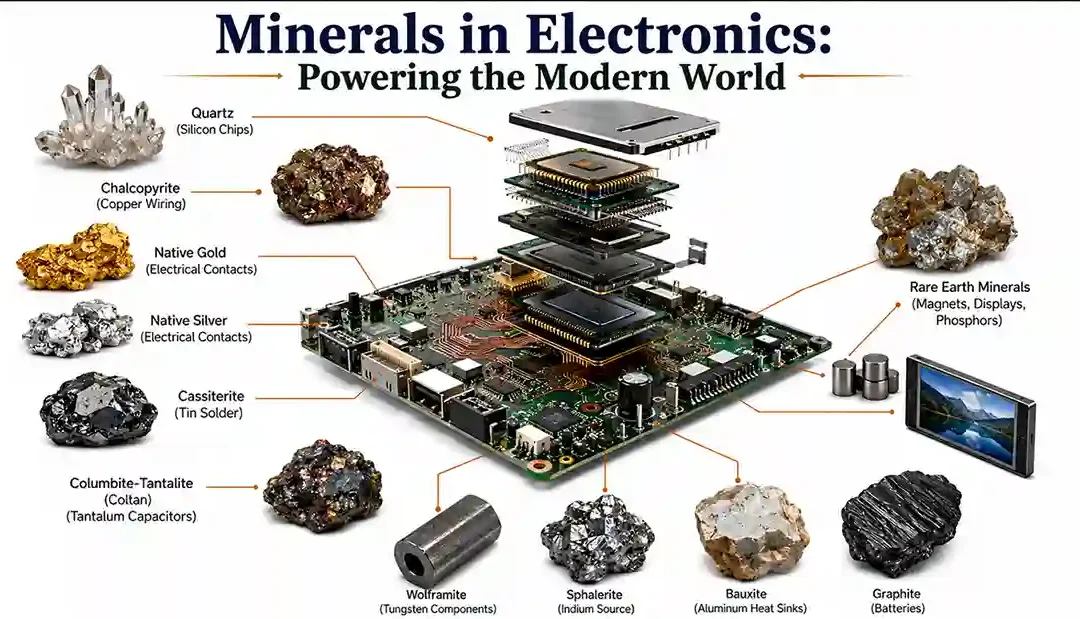
 Modern electronics are built from an extraordinary range of minerals extracted from Earth’s crust. Smartphones, computers, televisions, medical devices, satellites, communication systems, and industrial equipment all rely on carefully selected minerals that...
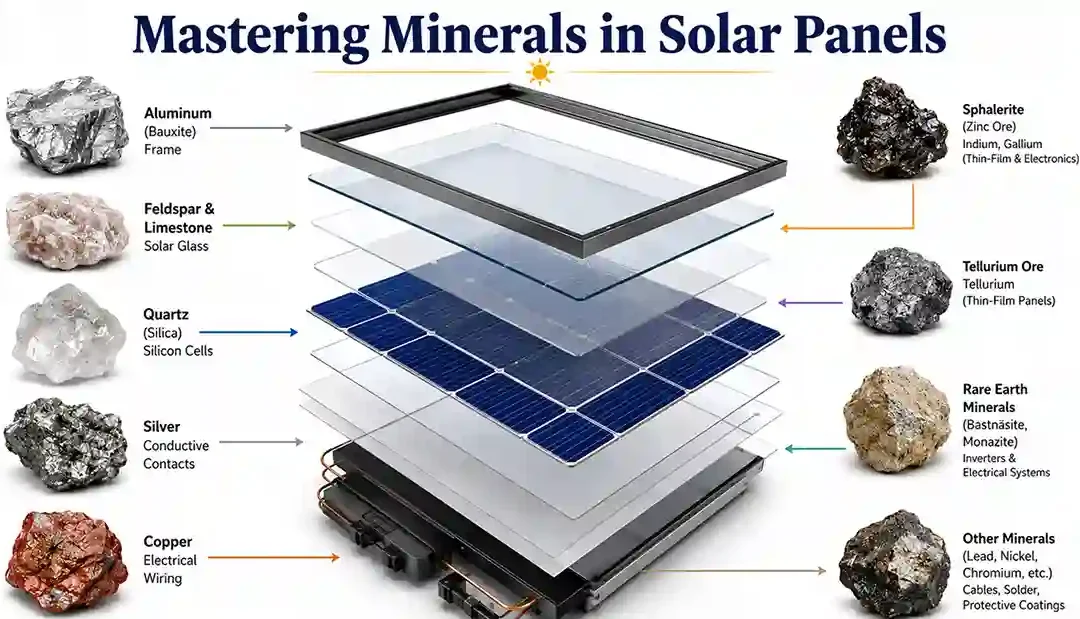 Solar panels convert sunlight into electricity, making them one of the most important technologies in the global transition toward clean and renewable energy. While they appear to be simple sheets of glass and metal, solar panels are actually built from a wide variety...
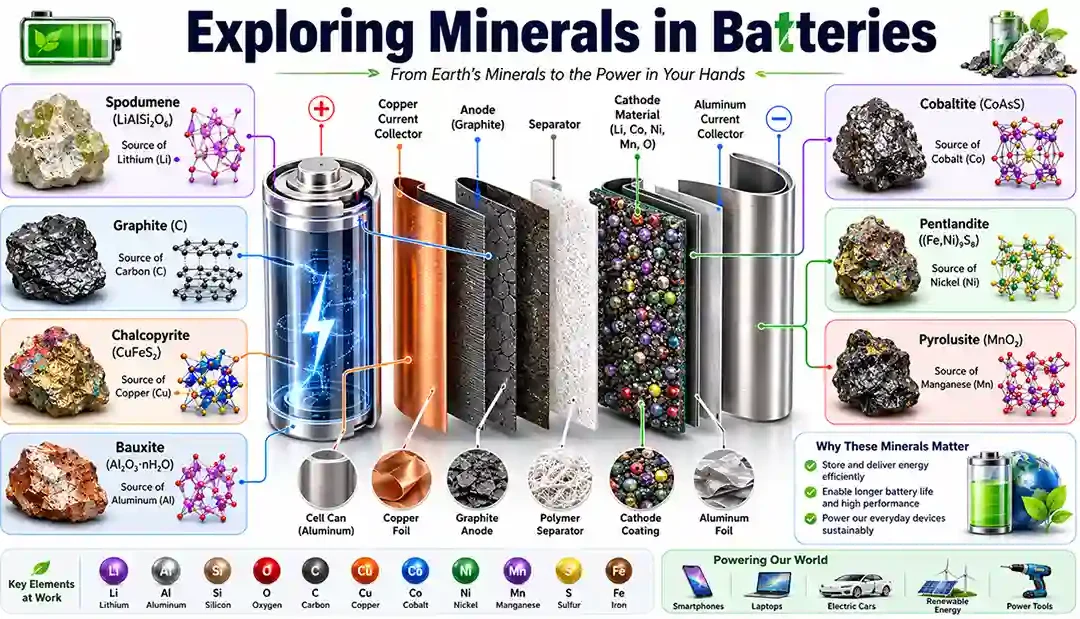 Modern batteries power smartphones, laptops, electric vehicles (EVs), renewable energy storage systems, drones, and countless portable electronic devices. Behind every rechargeable battery lies a combination of carefully selected minerals that store and release...
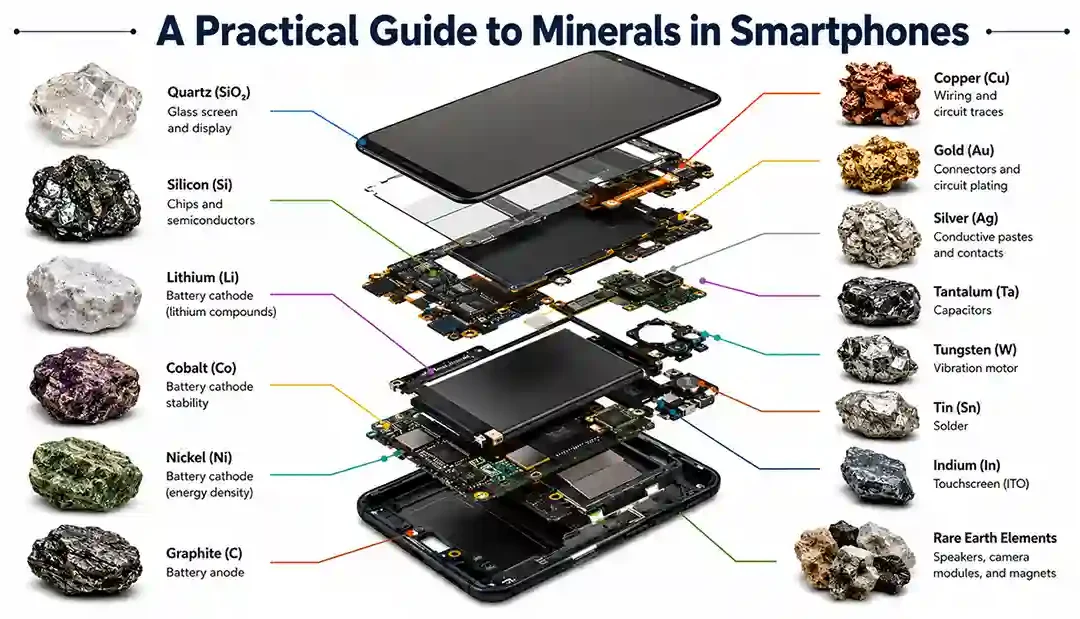 A modern smartphone is much more than glass, plastic, and metal. Hidden inside every device are dozens of minerals and chemical elements that make communication, photography, navigation, and computing possible. From the battery and touchscreen to the processor and...
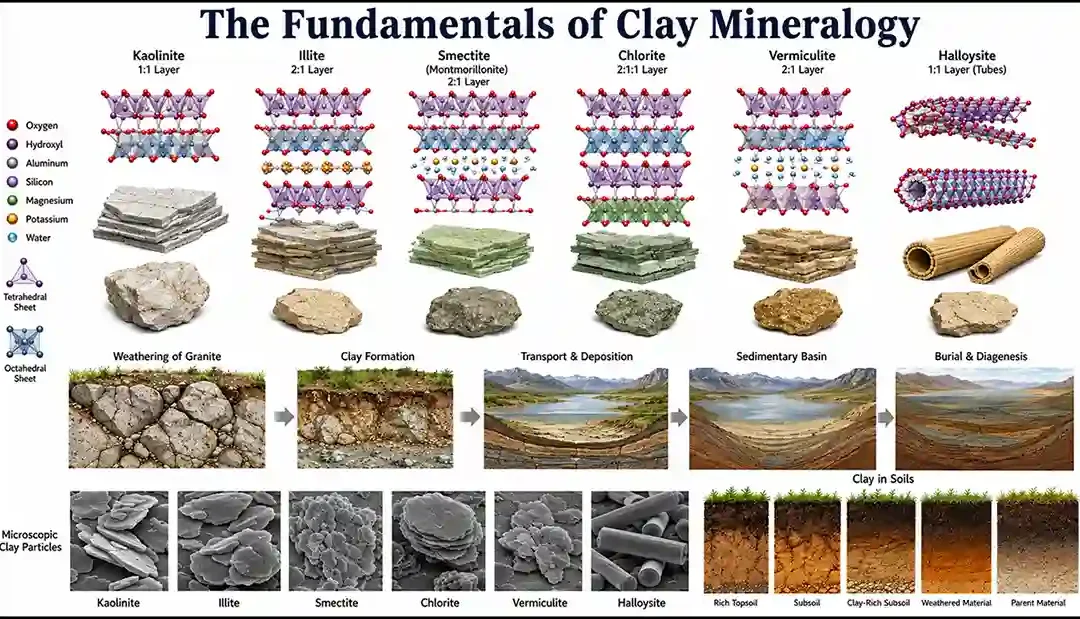 Clay minerals are among the most abundant and scientifically important minerals on Earth. They form through the weathering of rocks and are major components of soils, sediments, sedimentary rocks, and hydrothermal alteration zones. Although individual clay particles...
