
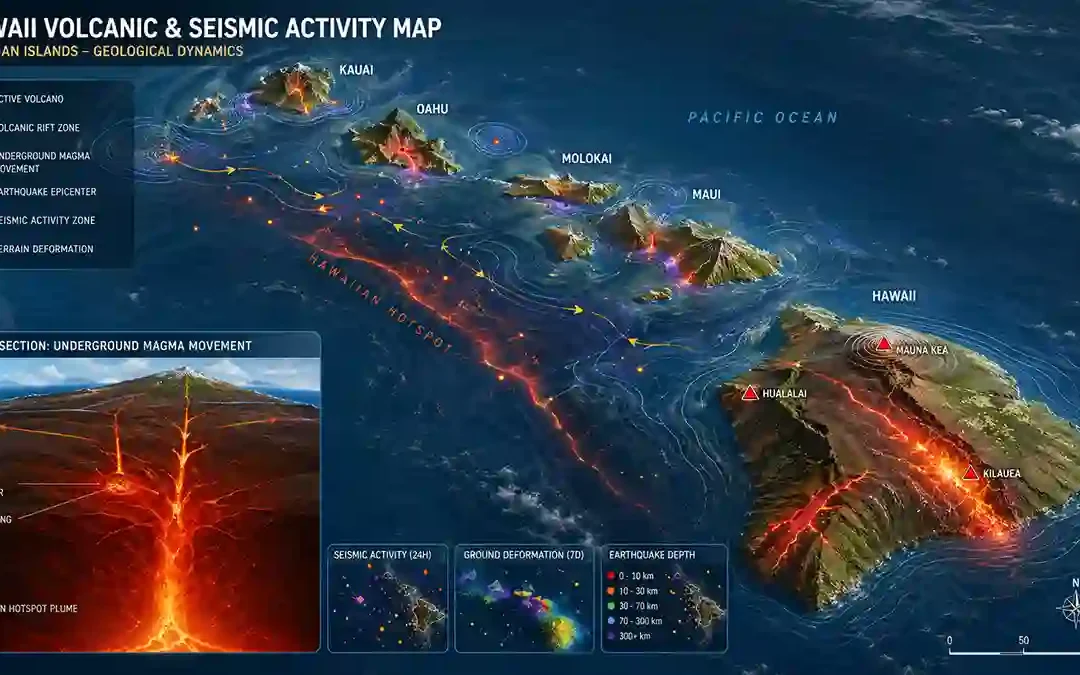
Hawaii’s earthquakes are very different from earthquakes in places like California, Chile, or Japan. Most Hawaiian earthquakes are not caused by tectonic plate collisions.
Instead, they are closely connected to:
- volcanoes
- underground magma movement
- the weight and movement of the islands themselves
That makes Hawaii one of the most unique earthquake regions on Earth.
If you’re new to earthquakes, start here → what is an earthquake
Hawaii’s Seismic Zones (Quick Overview)
| Region | Risk Level | Main Cause |
|---|---|---|
| Big Island (Hawaii Island) | Very High | Volcanoes + magma movement |
| Kīlauea Region | Very High | Active volcanic systems |
| Mauna Loa Area | High | Crust deformation |
| Maui & Nearby Islands | Moderate | Regional stress |
| Northwestern Islands | Low | Limited activity |
Most Hawaiian earthquakes occur on the Big Island. To understand how stress builds underground → fault lines
Why Do Earthquakes Happen in Hawaii?
Hawaii sits above a volcanic hotspot deep beneath the Pacific Ocean.
Here’s the basic process:
- Hot magma rises from deep underground
- Volcanoes grow over time
- The crust bends and cracks
- Magma movement creates seismic activity
- Earthquakes occur as rocks break under pressure
Unlike many regions, Hawaii’s earthquakes are mainly volcanic rather than plate-boundary driven.
Learn more → causes of earthquakes
Hawaii’s Three Main Earthquake Behaviors (Unique Insight)
Volcanic Earthquakes (Most Common)
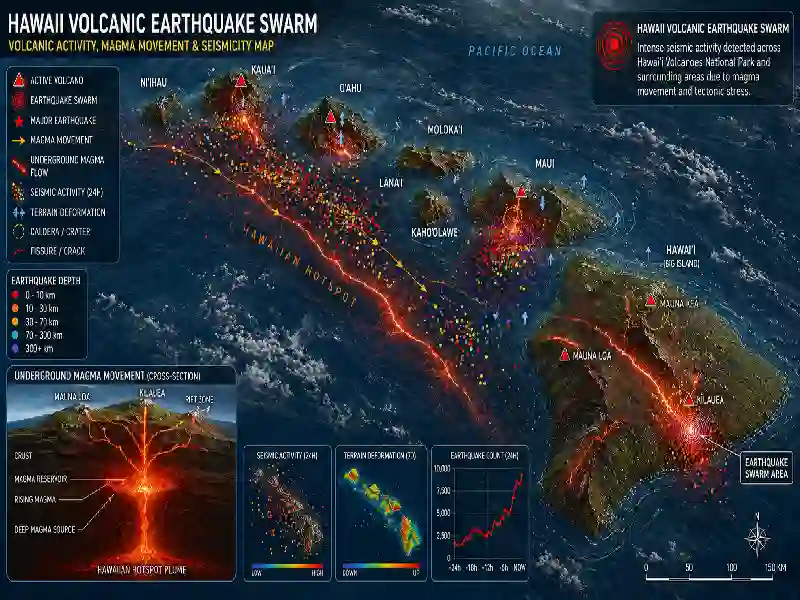
Most earthquakes in Hawaii are linked to volcanoes.
- Magma pushes through rock
- Pressure creates earthquake swarms
- Activity often increases before eruptions
These earthquakes are usually smaller but happen frequently.
Explore earthquake types
Flank Collapse & Crust Movement
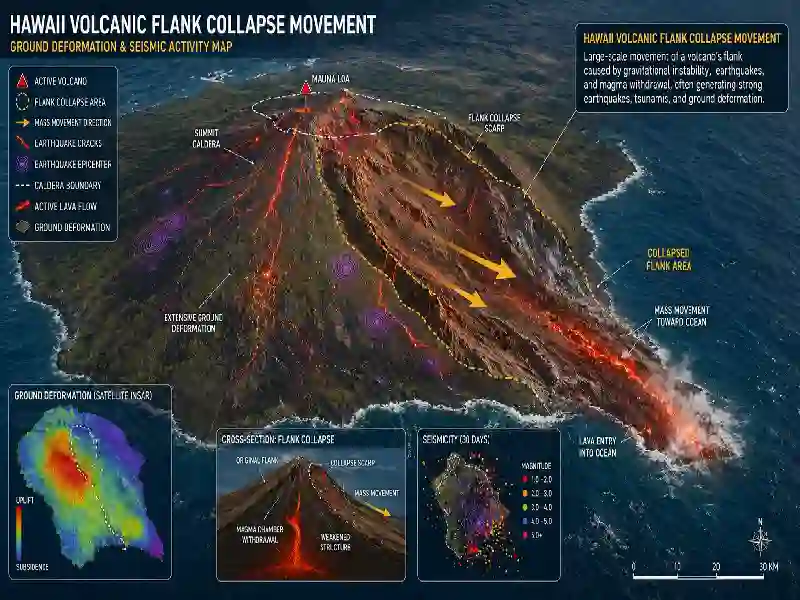
Parts of Hawaii slowly move outward toward the ocean.
- Volcano slopes shift over time
- Crust fractures under stress
- Strong earthquakes can occur suddenly
This type of seismic activity is unusual compared to most tectonic regions.
Deep Mantle & Structural Earthquakes
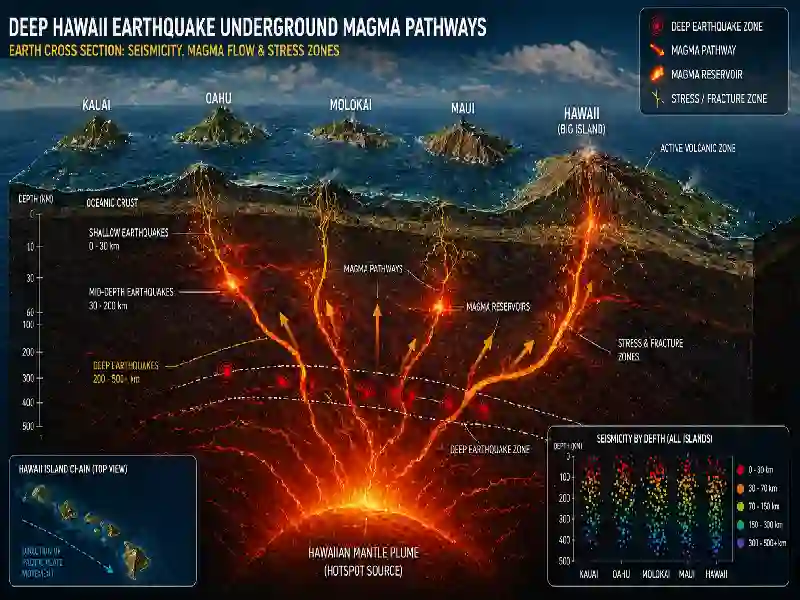
Some Hawaiian earthquakes occur deeper underground.
- Linked to magma pathways
- Associated with the hotspot system
- Often felt across multiple islands
Recent Earthquake Activity in Hawaii
Hawaii experiences earthquakes regularly, especially on the Big Island.
Recent patterns show:
- Frequent small earthquakes near Kīlauea
- Earthquake swarms before volcanic eruptions
- Occasional stronger earthquakes linked to crust movement
Most earthquakes are small, but activity can increase quickly during volcanic events.
Notable Earthquakes in Hawaii
Past earthquakes reveal Hawaii’s volcanic seismic behavior.
- 1975 Kalapana Earthquake (M7.7)
One of Hawaii’s strongest recorded earthquakes. - 1868 Great Kaʻū Earthquake (M7.9)
A major earthquake linked to volcanic flank movement. - 2018 Kīlauea Eruption Earthquakes
Intense seismic activity during volcanic eruption sequences.
Understand magnitude vs impact
Hawaii vs Other Earthquake Regions
Hawaii’s earthquakes are unlike many other seismic regions.
- Hawaii → volcanic + magma-driven earthquakes
- Iceland → volcano + tectonic spreading
- Chile → subduction earthquakes
- California → transform faults like the San Andreas Fault
Hawaii’s earthquakes are shaped more by volcanoes than tectonic plate collisions.
Can Earthquakes in Hawaii Be Predicted?
No — earthquakes cannot be predicted precisely.
However, scientists closely monitor:
- magma movement
- volcanic deformation
- earthquake swarms
Because these patterns can sometimes signal volcanic eruptions.
Learn more → Can earthquakes be predicted
Mostly because of volcanic activity and magma movement underground.
The Big Island of Hawaii.
Yes — many are directly linked to volcanic systems.
Yes — although less frequently, strong earthquakes can occur.
Final Thoughts
Hawaii shows that earthquakes are not always caused by colliding tectonic plates. Here, volcanic activity, magma pressure, and crust movement work together to create a completely different style of seismic activity. That’s what makes Hawaii one of the most fascinating earthquake regions in the world.