
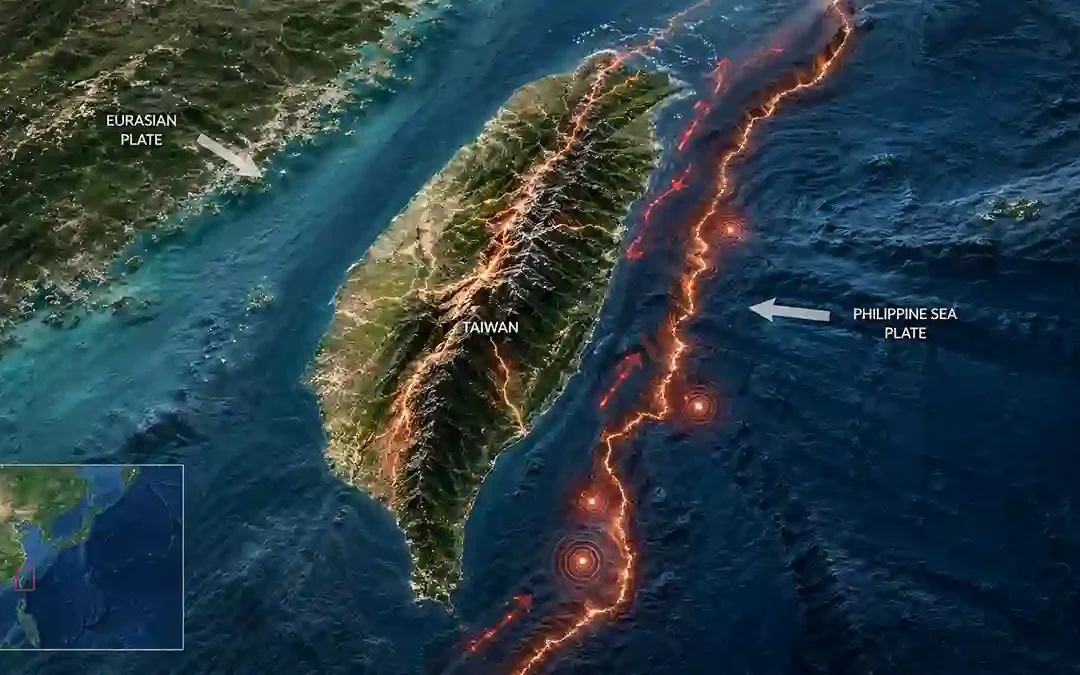
Taiwan is one of the most earthquake-active places in East Asia.
The reason is simple:
The island sits where two major tectonic systems collide directly beneath the surface. That collision continues to push Taiwan upward, forming steep mountains, active faults, and frequent earthquakes.
Unlike some regions where earthquakes are mostly offshore, Taiwan experiences both coastal and inland seismic activity.
If you’re new to earthquakes, begin here → what is an earthquake
Taiwan’s Seismic Zones (Quick Overview)
| Region | Risk Level | Main Cause |
|---|---|---|
| Eastern Taiwan | Very High | Plate collision + subduction |
| Central Mountain Region | Very High | Crust deformation |
| Western Taiwan | Moderate | Distributed tectonic stress |
| Southern Taiwan | High | Fault interaction |
| Offshore Northeast | High | Subduction activity |
Taiwan’s mountains themselves are evidence of active tectonic pressure. To understand how fault systems work → fault lines
Why Do Earthquakes Happen in Taiwan?
Taiwan lies between the Philippine Sea Plate and the Eurasian Plate.
Here’s the basic process:
- The Philippine Sea Plate moves northwest
- It collides with Eurasia
- The crust compresses and uplifts
- Faults accumulate stress
- Earthquakes release the pressure
This tectonic interaction is one of the fastest mountain-building processes on Earth.
Learn more → causes of earthquakes
Taiwan’s Three Main Earthquake Behaviors (Unique Insight)
Mountain Collision Earthquakes
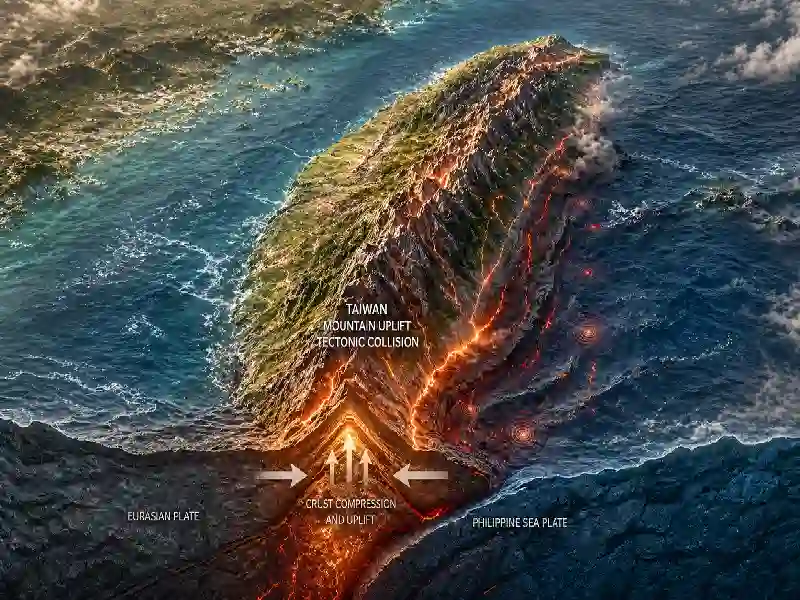
Taiwan’s mountains are still actively forming.
- Crust compression continues today
- Active mountain faults exist
- Earthquakes frequently occur inland
This is why Taiwan experiences strong ground shaking despite its small size.
Explore earthquake types
Offshore Subduction Earthquakes
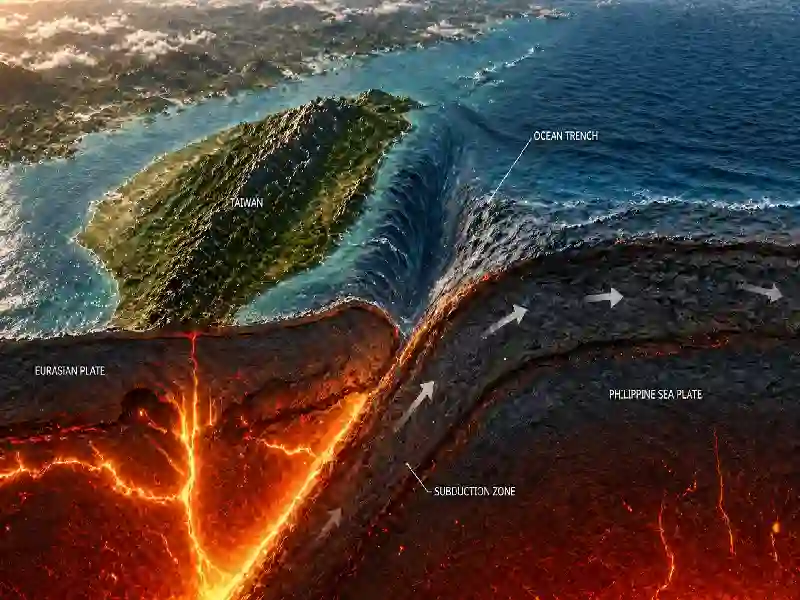
Offshore regions near Taiwan also experience major seismic activity.
- Subduction processes offshore
- Potential for strong earthquakes
- Tsunami risk exists in some areas
Shallow Fault Earthquakes

Taiwan also experiences shallow earthquakes along active faults.
- Strong local shaking
- Urban impact potential
- Frequent aftershocks
These earthquakes can cause significant damage even at moderate magnitudes.
Recent Earthquake Activity in Taiwan
Taiwan experiences earthquakes regularly throughout the year.
Recent patterns show:
- Frequent small earthquakes offshore
- Moderate inland earthquakes
- Aftershock sequences after larger events
The island’s seismic monitoring systems track thousands of small events annually.
Notable Earthquakes in Taiwan
Past earthquakes show the scale of Taiwan’s seismic risk.
- 1999 Chi-Chi Earthquake (M7.6)
One of Taiwan’s most destructive modern earthquakes. - 2024 Hualien Earthquake
Strong shaking affecting eastern Taiwan. - 1935 Hsinchu–Taichung Earthquake (M7.1)
A major inland earthquake event.
Understand magnitude vs impact
Taiwan vs Other Earthquake Regions
Taiwan’s seismic behavior combines multiple tectonic processes.
- Taiwan → mountain collision + offshore subduction
- Japan → multiple plate boundaries
- Nepal → continental collision earthquakes
- California → transform faults like the San Andreas Fault
Taiwan’s earthquakes are strongly connected to rapid mountain uplift
Can Earthquakes in Taiwan Be Predicted?
No — earthquakes cannot be predicted precisely.
Scientists can:
- monitor seismic activity
- map active faults
- estimate long-term risk
But exact timing remains uncertain.
Learn more → Can earthquakes be predicted
Because two tectonic plates collide beneath the island.
Eastern Taiwan and the mountain regions.
Yes — small earthquakes occur frequently.
Yes — offshore earthquakes may generate tsunamis.
Final Thoughts
Taiwan is a powerful example of how tectonic forces shape landscapes in real time. The same pressure that builds mountains also creates earthquakes beneath the island. That’s why Taiwan remains one of the most geologically dynamic regions in Asia.