
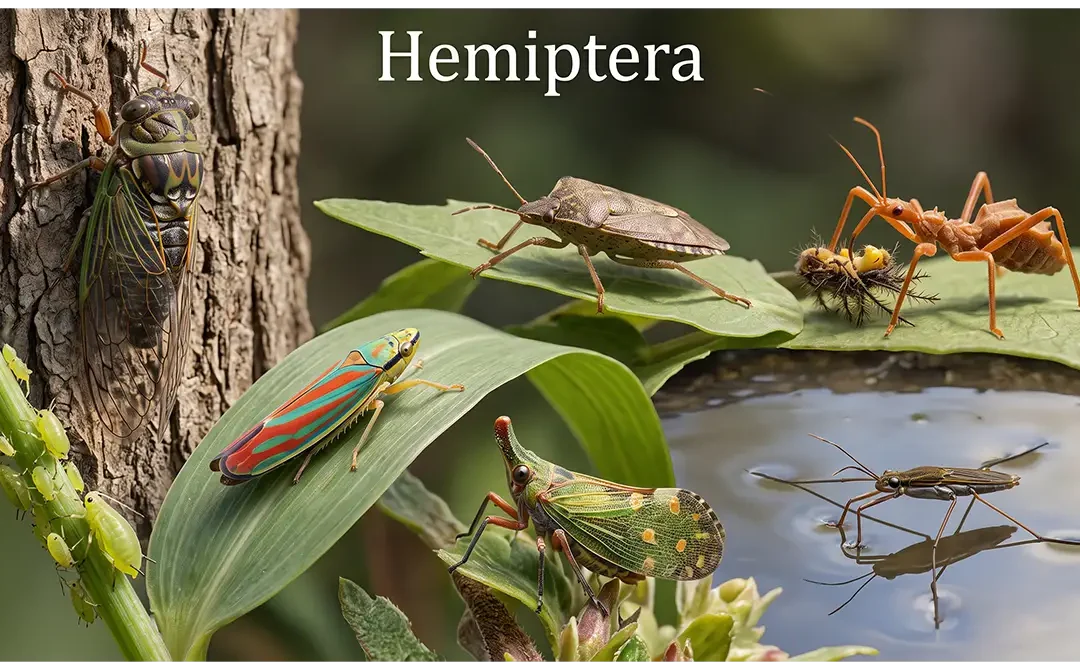
Hemiptera is a large and diverse order of insects that includes aphids, cicadas, leafhoppers, planthoppers, whiteflies, scale insects, and true bugs. They are best known for their specialized piercing and sucking mouthparts, which allow many species to feed on plant fluids or other organisms. Hemipterans live in almost every major terrestrial environment, and some species are also associated with freshwater and other aquatic habitats.
They play important roles in food webs, plant communities, nutrient cycling, pollination, and agriculture. Their long evolutionary history is also important to paleontology. Fossil hemipterans preserved in sedimentary rocks and amber provide evidence about ancient insects, plants, ecosystems, and environmental change.
What Is Hemiptera?
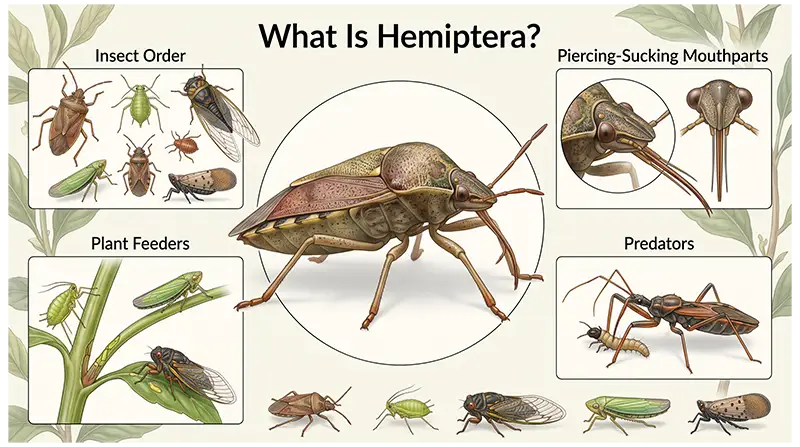
Hemiptera is an order of insects belonging to the class Insecta. The order contains thousands of species with a remarkable variety of body shapes, sizes, colors, habitats, and feeding behaviors.
Common hemipterans include:
- Aphids
- Cicadas
- Leafhoppers
- Planthoppers
- Whiteflies
- Scale insects
- Stink bugs
- Assassin bugs
- Water bugs
- Bed bugs
The name Hemiptera comes from Greek words associated with “half” and “wing.” The name was originally linked to the wing structure of some members of the group, particularly true bugs. However, Hemiptera includes many insects with very different wing forms, so the name does not describe every species equally well.
One of the most important characteristics of the order is its piercing-sucking feeding system. Many species use a long, slender mouthpart called a proboscis or rostrum to reach fluids inside plants or animals. Not all hemipterans have the same diet. Some feed on plant sap, while others are predators, scavengers, or parasites.
What Are the Main Characteristics of Hemiptera?
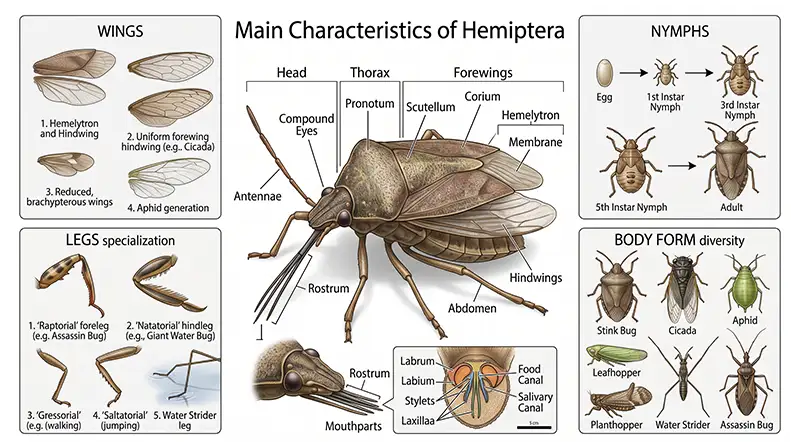
Hemipterans share several important features, although the order is extremely diverse.
Piercing and Sucking Mouthparts
Most hemipterans have specialized mouthparts called stylets. These structures can penetrate plant tissues or animal surfaces. Plant-feeding species use them to reach fluids such as phloem or xylem sap. Predatory species can use similar structures to pierce prey and obtain internal fluids.
Two Pairs of Wings in Many Species
Many hemipterans have two pairs of wings, but wing structure varies considerably. Some true bugs have forewings that are partly hardened and partly membranous. Aphids and other small hemipterans may have delicate membranous wings, while some species are completely wingless.
Incomplete Metamorphosis in Many Groups
Many hemipterans develop through incomplete metamorphosis. Their young stages are called nymphs and generally resemble smaller versions of adults. However, development differs among the major groups. Aphids, for example, can have complex life cycles involving both winged and wingless forms.
Diverse Body Forms
Hemiptera includes insects that are:
- Tiny and soft-bodied
- Broad and shield-shaped
- Long and slender
- Highly elongated
- Heavily armored
- Camouflaged like leaves or plant stems
This diversity reflects their adaptation to many different ecological roles.
Specialized Feeding
Their feeding structures allow hemipterans to use food sources that many other insects cannot access easily. This has helped the group become highly diverse.
What Does a Hemipteran Look Like?
There is no single body shape that represents every hemipteran. A typical hemipteran has a head, thorax, abdomen, legs, and often wings. The exact shape of these structures depends on the group and lifestyle.
True bugs can have broad or elongated bodies, while aphids are usually much smaller and softer. Cicadas have large bodies and strong wings, while scale insects can become highly specialized and may lose obvious insect-like features during parts of their life cycle.
Important Body Features
Common features include:
- Compound eyes
- Antennae
- Three pairs of legs
- Piercing-sucking mouthparts
- Wings in many species
- Segmented abdomen
- Specialized structures for feeding and reproduction
The mouthparts are particularly important because they distinguish hemipterans from many other insect groups. Their legs can also be highly specialized. Some species have legs adapted for jumping, while others have legs suited for walking, swimming, grasping prey, or remaining attached to plants.
How Do Hemiptera Feed?
Feeding is one of the most important characteristics of Hemiptera. Many plant-feeding species use their stylets to penetrate plant tissues. Depending on the species, they may feed from phloem, xylem, or other plant fluids.
When feeding, the insect inserts its mouthparts into the plant and draws out liquid food.
Plant Feeding
Aphids are well-known phloem feeders. Phloem carries sugars and other organic substances produced by plants. Cicadas, spittlebugs, leafhoppers, and some other hemipterans often feed on xylem or other plant fluids. Because plant sap can contain large amounts of water but relatively limited amounts of certain nutrients, some sap-feeding insects process large quantities of fluid.
Predatory Feeding
Not every hemipteran is a plant feeder. Predatory species such as assassin bugs and some stink bugs can capture insects and other small animals. They use their piercing mouthparts to penetrate prey and consume internal fluids. This makes Hemiptera ecologically diverse because members of the same order can occupy both plant-feeding and predator roles.
Feeding and Plant Damage
Large populations of some plant-feeding hemipterans can damage crops and other plants.
Feeding may cause:
- Reduced plant growth
- Leaf curling
- Yellowing
- Wilting
- Reduced crop production
- Plant tissue damage
Some species can also transmit plant pathogens while feeding.
What Are the Main Groups of Hemiptera?
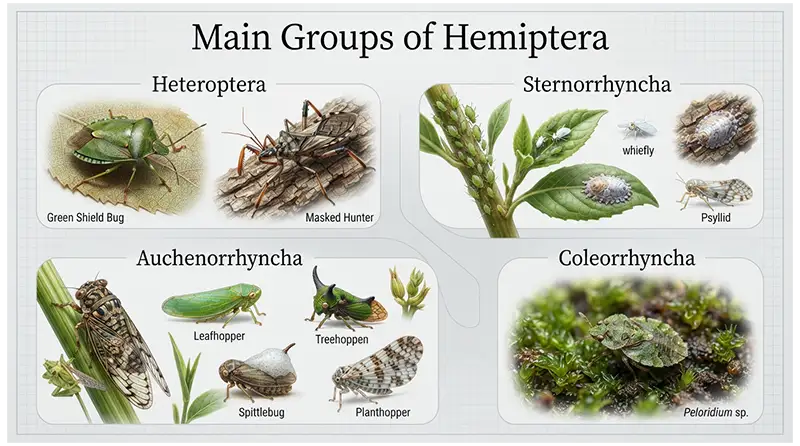
Hemiptera contains several major evolutionary lineages. Modern classification is based on anatomical, developmental, molecular, and fossil evidence. The broad groups commonly discussed include Heteroptera, Sternorrhyncha, Auchenorrhyncha, and Coleorrhyncha.
Heteroptera
Heteroptera contains the insects commonly called true bugs.
Examples include:
- Stink bugs
- Assassin bugs
- Bed bugs
- Water bugs
- Seed bugs
- Plant bugs
Many heteropterans have distinctive forewings in which part of the wing is thickened while the tip remains membranous. Their feeding habits are diverse. Some feed on plants, while others are predators or have other specialized diets.
Sternorrhyncha
Sternorrhyncha includes several familiar plant-feeding insects:
- Aphids
- Whiteflies
- Scale insects
- Psyllids
Many are small and specialized for feeding on plant fluids. Some species have complicated life cycles involving different forms or host plants.
Auchenorrhyncha
Auchenorrhyncha includes groups such as:
- Cicadas
- Leafhoppers
- Treehoppers
- Spittlebugs
- Planthoppers
Many members are plant feeders. Some are famous for their ability to jump, while cicadas are particularly well known for their loud mating calls.
Coleorrhyncha
Coleorrhyncha is a small group of specialized hemipterans commonly associated with mosses and certain southern land environments. Although they are much less familiar than aphids or cicadas, they are important for understanding hemipteran evolution and relationships.
Where Do Hemiptera Live?
Hemiptera occurs in a wide variety of environments around the world.
They can be found in:
- Forests
- Grasslands
- Deserts
- Agricultural fields
- Wetlands
- Gardens
- Freshwater environments
- Coastal habitats
- Mountain regions
- Tropical ecosystems
- Temperate ecosystems
Many species live directly on plants because their food source is located there. Others live on soil surfaces, beneath bark, in leaf litter, in water, or on other animals.
Aquatic Hemiptera
Some hemipterans are adapted to life in or on freshwater. Examples include water striders, backswimmers, water boatmen, giant water bugs, and other aquatic or semiaquatic true bugs. These insects have specialized body structures and behaviors that allow them to move across or through water. Their presence demonstrates that Hemiptera is not limited to terrestrial plant habitats.
How Do Hemiptera Reproduce and Develop?
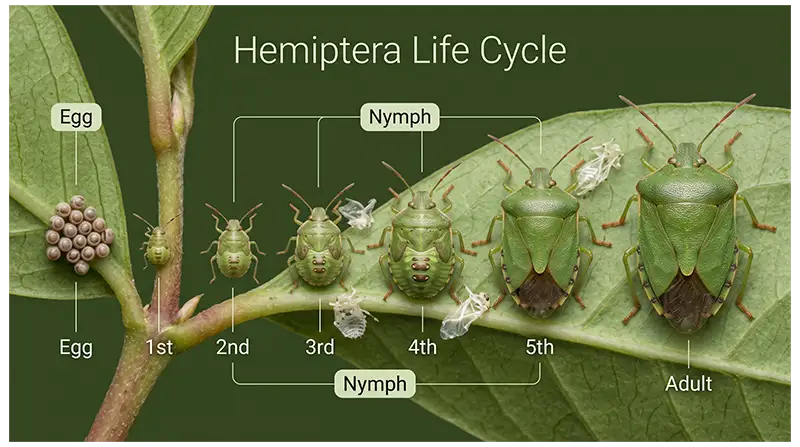
Hemipteran reproduction varies among groups, but many species reproduce sexually and lay eggs. In many hemipterans, development involves three main stages:
Egg → Nymph → Adult
This is called incomplete metamorphosis.
Eggs
Females deposit eggs on plants, soil, bark, or other suitable surfaces depending on the species. The location of the eggs can be important because young insects often begin feeding soon after hatching.
Nymphs
Nymphs generally resemble adults but are smaller and lack fully developed reproductive organs. In winged species, wings develop gradually during successive molts. Nymphs may pass through several stages before becoming adults.
Adults
Adult hemipterans are sexually mature and can reproduce. Adults may be winged or wingless depending on the species and environmental conditions. Some species can produce different forms during different seasons, which allows them to respond to changing food availability and environmental conditions.
Unusual Reproductive Strategies
Some hemipterans have particularly complex reproductive systems. Aphids, for example, can reproduce rapidly under favorable conditions, and some species alternate between sexual and asexual reproduction during different parts of their life cycle.
These strategies allow populations to increase quickly when food is abundant.
What Do Hemiptera Eat?
The diet of Hemiptera varies greatly between groups. Many species are herbivores, while others are predators or have specialized feeding habits.
Common food sources include:
- Plant sap
- Leaves and plant tissues
- Xylem fluids
- Phloem fluids
- Small insects
- Other arthropods
- Animal fluids
- Fungi or other organic material in some specialized cases
Plant-Sap Feeders
Aphids, scale insects, whiteflies, leafhoppers, and many other hemipterans obtain nutrients from plants. Some species are highly specialized and feed mainly on particular plant groups.
Predators
Predatory hemipterans can help control populations of other insects and arthropods. Assassin bugs, for example, can capture and consume other insects. This makes them important members of many food webs.
Nectar and Other Food Sources
Some hemipterans may also use nectar or other plant-derived resources at particular stages or under certain conditions. Their feeding ecology therefore depends strongly on the species and its environment.
What Role Do Hemiptera Play in Ecosystems?
Hemiptera plays many different roles in ecosystems. Because the order contains both plant feeders and predators, its members participate in several levels of food webs.
Herbivores
Plant-feeding hemipterans consume plant fluids and influence plant growth. They can also transfer nutrients between plants and higher levels of the food web.
Predators
Predatory species consume insects and other small organisms. They can help regulate populations of other arthropods.
Food for Other Animals
Hemipterans are also important prey for many animals, including:
- Birds
- Spiders
- Amphibians
- Reptiles
- Fish
- Other insects
- Small mammals
This makes them an important source of energy within many ecosystems.
Pollination and Plant Relationships
Some hemipterans interact closely with plants and other organisms. Although they are not primarily known as major pollinators, their relationships with plants can influence plant communities and ecological interactions. Some sap-feeding species also have important relationships with ants and microorganisms.
Why Are Some Hemiptera Important to Agriculture and Humans?
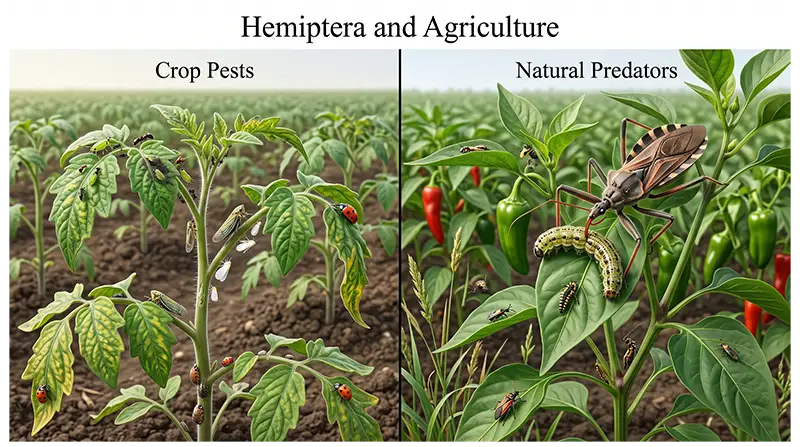
Hemiptera has both harmful and beneficial effects on human activities. Some species are serious agricultural pests, while others can be useful predators of crop pests.
Agricultural Pests
Aphids, whiteflies, leafhoppers, planthoppers, and scale insects can damage crops by feeding on plant tissues or fluids. Heavy infestations can reduce plant growth and crop yields. Some hemipterans also transmit plant pathogens, making their impact greater than the physical damage caused by feeding alone.
Beneficial Species
Not all hemipterans are harmful. Predatory species can consume agricultural pests and may contribute to natural biological control. This means that understanding the biology of Hemiptera is important for developing more effective and environmentally responsible pest-management strategies.
Economic Importance
Hemipterans can affect:
- Food production
- Forestry
- Horticulture
- Crop protection
- Plant health
- Biological control
- Ecosystem management
Their economic importance depends on the species and the ecosystem in which it occurs.
What Do Hemiptera Fossils Reveal About Ancient Life?
Hemipteran fossils provide evidence about the evolution and diversification of insects through geological time. Fossils can preserve important features such as wings, body outlines, legs, antennae, and sometimes feeding structures. Scientists have found fossil hemipterans in several types of deposits, including sedimentary rocks and amber. Amber can be especially valuable because it may preserve small insects in remarkable three-dimensional detail.
Fossil Hemiptera and Ancient Plants
Many hemipterans are closely associated with plants, so their fossils can provide clues about ancient plant–insect relationships. A fossil insect preserved alongside plant material may help researchers investigate how insects and plants interacted in ancient ecosystems.
What Fossils Can Show
Hemipteran fossils can help scientists study:
- Ancient insect diversity
- Evolution of feeding structures
- Changes in wing form
- Plant–insect relationships
- Ancient ecosystems
- Geographic distribution
- Extinction and diversification
- Evolutionary relationships
However, the fossil record is incomplete. Small and delicate insects are much less likely to become fossils than organisms with hard shells or large bones.
How Did Hemiptera Evolve Through Geological Time?
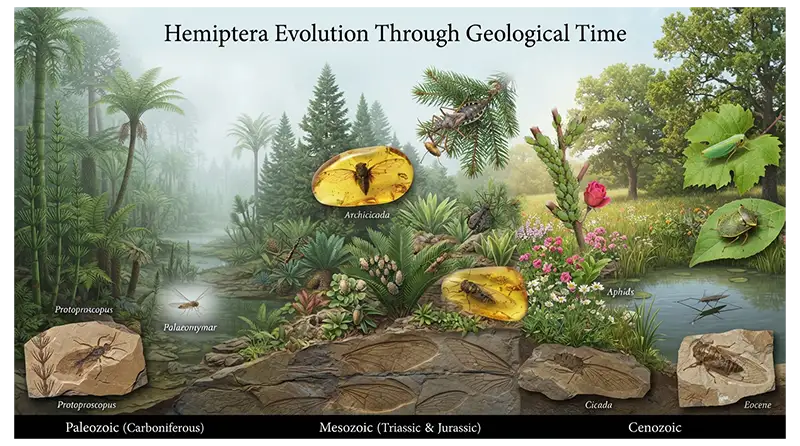
Hemiptera has a long evolutionary history extending deep into the Paleozoic and Mesozoic fossil record. Early members and close relatives of the group were already present hundreds of millions of years ago, while later geological periods saw increasing diversification into many of the lineages recognized today.
Their evolutionary success is closely connected to their specialized feeding structures and relationships with plants and other organisms.
Early Evolution
The early history of Hemiptera is reconstructed using a combination of fossil evidence and molecular studies. Fossil insects preserved in ancient sediments provide direct evidence of past forms, while genetic comparisons among living species help researchers investigate relationships between different lineages.
Plant–Insect Evolution
The diversification of plants through geological time created new ecological opportunities for insects. As flowering plants became increasingly important during the Cretaceous and later periods, many insect groups developed new relationships with them.
Hemipterans became part of these changing plant–insect ecosystems through specialized feeding strategies and ecological interactions.
Fossils and Evolutionary Change
Changes in fossil hemipterans can reveal how their:
- Wings changed
- Body shapes diversified
- Feeding structures evolved
- Plant associations developed
- Geographic ranges changed
The fossil record does not provide a complete history of the order, but it provides important pieces of evidence for understanding its long evolutionary story.
Conclusion
Hemiptera is one of the most diverse insect orders, containing familiar insects such as aphids, cicadas, leafhoppers, planthoppers, whiteflies, scale insects, and true bugs.
Their specialized piercing and sucking mouthparts allow many species to feed on plant fluids, while other members have evolved predatory or specialized feeding strategies. They occupy terrestrial, freshwater, and other environments and participate in many different ecological relationships.
Hemipterans are important to ecosystems as herbivores, predators, and prey. Some species can damage crops or transmit plant diseases, while others can help control agricultural pests.
Their fossil record adds another important dimension to their story. Fossil wings, bodies, and insects preserved in amber provide evidence about ancient ecosystems, plant–insect interactions, and the long evolutionary history of the group.
Together, modern biology and fossil evidence show that Hemiptera is not simply a group of common insects. It is a diverse evolutionary lineage that has played important roles in ecosystems, plant relationships, agriculture, and Earth's biological history.
No. Many species feed on plants, but some hemipterans are predators, and others have specialized diets.
Yes. Aphids belong to Hemiptera and are part of the group Sternorrhyncha.
Yes. Cicadas are hemipterans and belong to Auchenorrhyncha.
No. “True bugs” is commonly used for Heteroptera, which is only one major lineage within Hemiptera.
Yes. Some species are major crop pests and can transmit plant pathogens, while predatory species can help control other pests.