
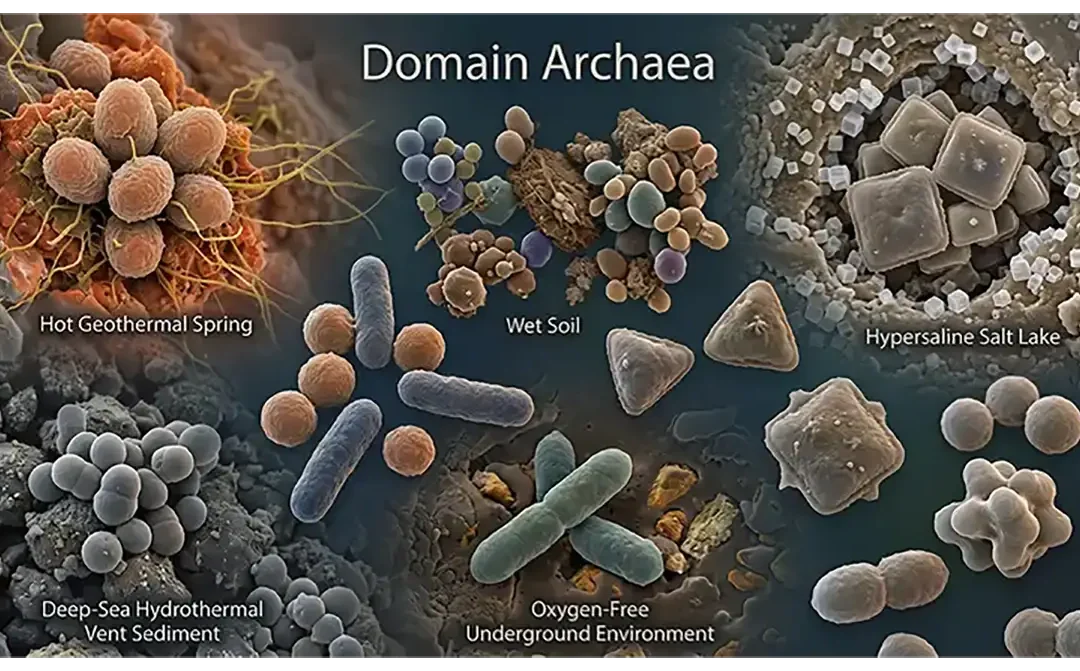
Domain Archaea is one of the three major domains of life and includes microscopic organisms with distinctive cell structures, membranes, genes, and metabolic pathways. Although Archaea are often associated with extreme environments such as hot springs and salt lakes, they are also widespread in oceans, soils, sediments, wetlands, and living organisms.
Archaea are especially interesting because some can produce methane, transform nitrogen and sulfur compounds, survive extreme temperatures or salinity, and function without oxygen. Their biology also provides important clues about the early evolution of cellular life and the deep evolutionary relationship between Archaea and eukaryotes.
What Is Domain Archaea?
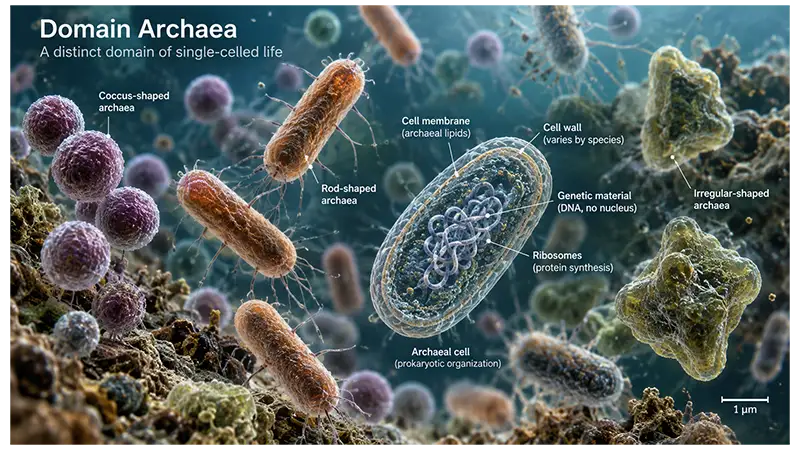
Domain Archaea contains a diverse collection of mostly single-celled microorganisms. Their cells do not have a membrane-bound nucleus, so they are classified as prokaryotes. However, Archaea are fundamentally different from bacteria in several aspects of their chemistry, genetics, and cell structure.
For a long time, scientists grouped Archaea with bacteria because both have small cells without nuclei. Research into their molecular characteristics later showed that Archaea form a distinct domain of life. Archaeal cells have several unusual features, including specialized membrane lipids, distinctive cell walls, and information-processing systems with some similarities to those found in eukaryotes.
Archaea can use many different sources of energy. Some obtain energy from inorganic chemicals, some use organic compounds, and certain groups use light-driven processes. Methanogenic Archaea have a particularly distinctive metabolism that produces methane. Archaea are therefore not simply unusual bacteria. They represent a separate and highly diverse branch of cellular life.
What Are the Main Characteristics of Archaea?
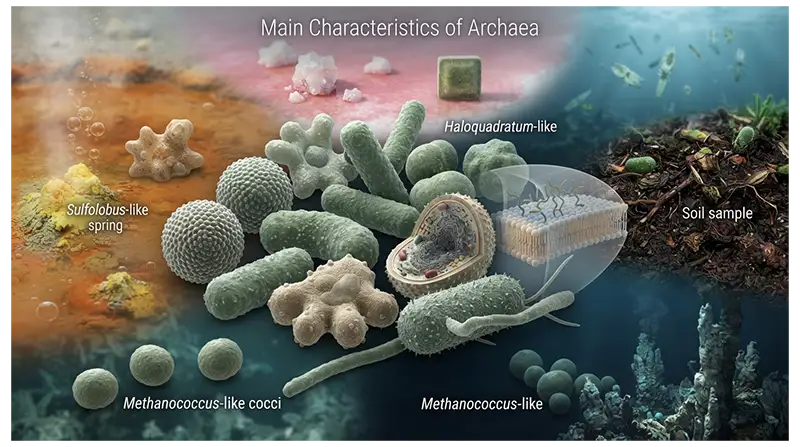
Archaea are microscopic, single-celled organisms with several biological features that distinguish them from bacteria and eukaryotic organisms. Although they do not have a membrane-bound nucleus, their cell chemistry and genetic machinery are distinctive. These characteristics allow Archaea to live in environments ranging from ordinary soils and oceans to extremely hot, salty, acidic, or oxygen-free habitats.
Single-Celled Organization
Most Archaea are single-celled organisms. Their cells are generally small and contain genetic material, ribosomes, cytoplasm, and a cell membrane. Unlike eukaryotic cells, archaeal cells do not contain a membrane-bound nucleus or organelles such as mitochondria.
Their simple cellular organization allows many Archaea to grow and reproduce efficiently under conditions where more complex organisms may struggle.
Distinctive Cell Membranes
One of the most important characteristics of Archaea is their unusual cell membrane chemistry. Archaeal membranes contain lipids with ether bonds, while bacterial and eukaryotic membranes generally use ester-linked lipids.
Many archaeal membranes also contain branched hydrocarbon chains. In some species, these molecules can form unusually stable membrane structures that help maintain cell integrity under high temperatures, extreme acidity, or high salinity.
Unique Cell Wall Structure
Archaea do not have the peptidoglycan cell walls found in most bacteria. Instead, their outer cell layers can contain different materials, including proteins, glycoproteins, or specialized polysaccharides. This difference is useful for distinguishing Archaea from bacteria and reflects the separate evolutionary history of the two groups.
Diverse Metabolic Abilities
Archaea have remarkably diverse ways of obtaining energy. Some use organic compounds, while others obtain energy from inorganic chemicals such as hydrogen, sulfur compounds, ammonia, or iron.
One especially distinctive process is methanogenesis, in which certain Archaea produce methane as part of their energy metabolism. Methanogenic Archaea are important in wetlands, sediments, oxygen-free environments, and the digestive systems of some animals.
Other Archaea participate in processes involving nitrogen and sulfur, making them important components of global biogeochemical cycles.
Ability to Live in Extreme Environments
Some Archaea are extremophiles, meaning they can survive conditions that are physically or chemically challenging for many other organisms. Examples include:
- Thermophiles that grow at very high temperatures
- Halophiles that tolerate extremely salty environments
- Acidophiles that live in highly acidic conditions
- Archaea adapted to environments with little or no oxygen
- Microorganisms capable of living under high pressure in deep marine environments
However, not all Archaea are extremophiles. Many species live in ordinary environments such as seawater, soils, sediments, wetlands, and animal-associated habitats.
Specialized Genetic and Molecular Machinery
Archaea have genetic systems that share some important characteristics with bacteria but also contain features that resemble those of eukaryotes. Their enzymes involved in DNA replication, transcription, and translation provide important information about the evolution of cellular life.
These molecular similarities are one reason scientists study Archaea when investigating the evolutionary relationship between Archaea and eukaryotes.
Simple Cells With Major Ecological Roles
Although archaeal cells are microscopic, their environmental influence can be substantial. Archaea participate in carbon, nitrogen, and sulfur cycling, influence the chemistry of soils and sediments, and contribute to nutrient transformations in marine and terrestrial ecosystems.
Their combination of unusual cell chemistry, metabolic diversity, environmental tolerance, and evolutionary significance makes Archaea an important branch of life on Earth.
Where Do Archaea Live?
Archaea occur across a remarkably wide range of environments. Some are famous for living under extreme conditions, while others occupy ordinary habitats.
Hot Springs and Geothermal Environments
Thermophilic and hyperthermophilic Archaea can survive at very high temperatures. They are found in geothermal springs and other hot environments. Some also occur around deep-sea hydrothermal systems, where hot fluids interact with cold seawater.
Highly Salty Environments
Halophilic Archaea are adapted to environments with very high concentrations of salt. Salt lakes, salt ponds, and hypersaline sediments can contain large populations of these microorganisms.
Oxygen-Free Habitats
Many Archaea thrive where oxygen is absent or very limited. Methanogens are especially important in these environments. They occur in wetlands, sediments, sewage systems, landfills, and the digestive systems of certain animals.
Oceans and Marine Sediments
Archaea are widespread throughout the oceans. Some live in the water column, while others occur within marine sediments. Marine Archaea contribute to important carbon and nitrogen transformations.
Soils and Ordinary Environments
Archaea are also found in soils, forests, agricultural environments, freshwater systems, and other habitats that are not considered extreme. This broad distribution has changed the way scientists view Archaea. They are not simply organisms that live in unusual places; they are widespread members of Earth's microbial communities.
How Do Archaea Get Energy and Nutrients?
Archaea use many different metabolic strategies. Their energy sources vary according to their evolutionary lineage and environment. Some use inorganic chemicals, while others consume organic material. Certain groups can use light-driven processes to create energy gradients across their membranes.
Methanogenesis
One of the most distinctive archaeal processes is methanogenesis. Methanogenic Archaea produce methane during anaerobic metabolism. Many use carbon dioxide and hydrogen or other simple carbon-containing compounds as substrates.
Methanogens can be found in:
- Wetland sediments
- Lake and marine sediments
- Sewage systems
- Landfills
- Animal digestive systems
- Other oxygen-free environments
The methane they produce can then be consumed by other microorganisms or, under some conditions, eventually reach the atmosphere.
Sulfur Metabolism
Some Archaea use sulfur compounds as part of their energy metabolism. These organisms can be important in sulfur-rich environments such as geothermal systems and sediments.
Ammonia Oxidation
Certain archaeal groups oxidize ammonia, making them important participants in the nitrogen cycle. This process contributes to the conversion of nitrogen between different chemical forms in marine and terrestrial environments.
Light-Driven Energy
Some Archaea use light-sensitive proteins called rhodopsins to help generate energy. This process is different from plant photosynthesis because it does not use chlorophyll to carry out photosynthetic carbon fixation.
What Are the Main Groups of Archaea?
Modern archaeal classification is based increasingly on genetic and evolutionary relationships. Therefore, terms such as methanogens, halophiles, and thermophiles are useful descriptions of lifestyles or physiological characteristics, but they should not all be treated as equivalent formal taxonomic groups.
Several important archaeal lineages and ecological groups are widely studied.
Methanogenic Archaea
Methanogens are Archaea that produce methane as part of their energy metabolism. They are especially common in oxygen-free environments such as wetlands, sediments, sewage systems, and animal digestive systems.
Halophilic Archaea
Halophilic Archaea are adapted to highly saline environments. Their cellular systems allow them to maintain proper protein function and internal balance despite very high external salt concentrations.
Thermophilic and Hyperthermophilic Archaea
These Archaea are adapted to high temperatures. They occur in geothermal environments and some deep-sea hydrothermal systems. Their heat-stable proteins have also attracted attention in biotechnology.
Ammonia-Oxidizing Archaea
Some archaeal lineages obtain energy by oxidizing ammonia. They are widespread in marine and terrestrial environments and can make important contributions to nitrogen cycling.
Other Archaeal Lineages
Genomic research has revealed many archaeal lineages that do not fit neatly into familiar categories based on extreme habitats. Some live in ordinary ocean waters, sediments, soils, and other environments. Their diverse genes and metabolic pathways continue to expand our understanding of archaeal biology.
What Makes Archaea Different From Bacteria?
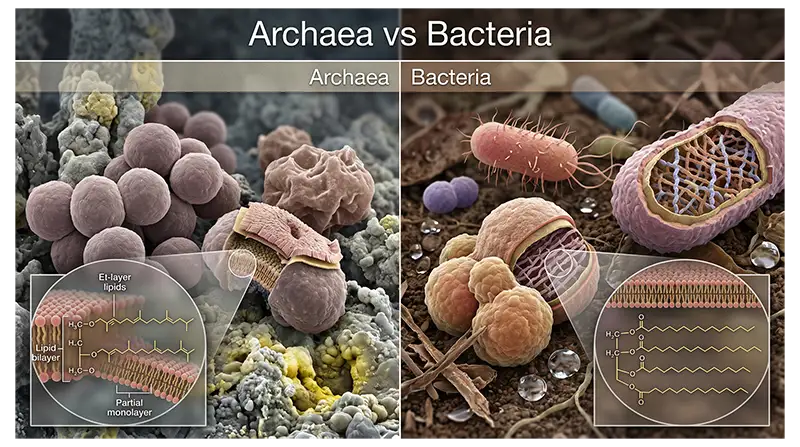
Archaea and bacteria share a basic prokaryotic organization, but their molecular biology is different. One of the clearest differences occurs in their cell membranes. Archaeal membranes contain distinctive ether-linked lipids, whereas bacterial and eukaryotic membranes generally contain ester-linked lipids. Some archaeal membranes can form highly stable structures that are particularly useful under extreme conditions.
Their cell walls are also different. Bacterial cell walls commonly contain peptidoglycan, while Archaea lack true peptidoglycan. Different archaeal groups instead use structures such as protein-based surface layers or other types of cell-wall material.
Archaea also have distinctive systems for copying genetic information and producing RNA and proteins. Some components of their transcription machinery are more closely related to those of eukaryotes than to those of bacteria.
| Feature | Archaea | Bacteria |
|---|---|---|
| Cell type | Prokaryotic | Prokaryotic |
| Membrane-bound nucleus | Absent | Absent |
| Cell membrane | Distinctive ether-linked lipids | Mainly ester-linked lipids |
| Peptidoglycan | Absent | Usually present |
| Genetic machinery | Distinctive, with some eukaryote-like features | Characteristically bacterial |
| Methanogenesis | Found in certain Archaea | Not known as a bacterial metabolism |
| Extreme environments | Many specialized examples | Also includes many extremophiles |
These differences show why Archaea are classified separately even though their cells may look similar to bacterial cells under a microscope.
How Do Archaea Survive Extreme Conditions?
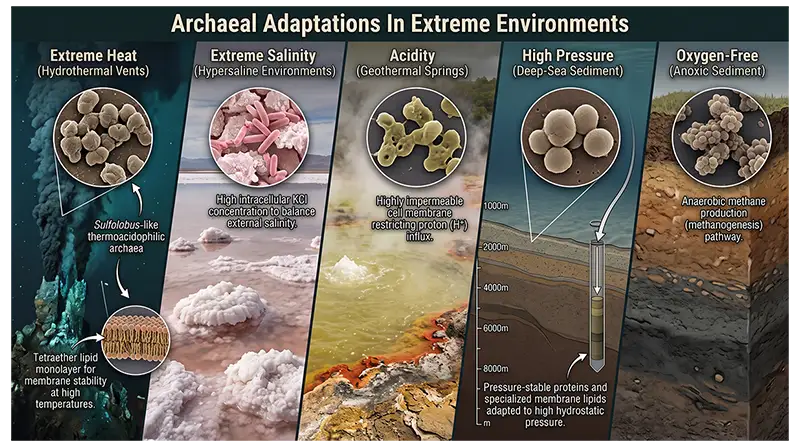
Some Archaea have highly specialized adaptations that allow them to function in environments that would damage many other organisms.
High Temperatures
Thermophilic Archaea have proteins, membranes, and other cellular components that remain stable at high temperatures. Their enzymes are particularly interesting to researchers because some remain functional under conditions that would quickly damage ordinary proteins.
High Salt
Halophilic Archaea have adaptations that help their proteins and cells function in highly saline environments. They regulate their internal chemistry and use specialized proteins that remain stable under high salt concentrations.
Acidic Conditions
Some acidophilic Archaea live in environments with very low pH. Their cell membranes and internal regulatory systems help protect the cell from extreme acidity.
High Pressure
Some Archaea living in deep marine environments experience pressures far greater than those at Earth's surface. Their cellular systems can remain functional under these high-pressure conditions.
Lack of Oxygen
Many archaeal lineages are adapted to anaerobic environments. Methanogens are a major example because their metabolism depends on conditions where oxygen is absent. These adaptations demonstrate the remarkable range of conditions under which cellular life can function.
What Role Do Archaea Play in Earth's Ecosystems?
Archaea are important participants in Earth's biogeochemical cycles. Their activities help move carbon, nitrogen, sulfur, and other elements through organisms, soils, sediments, oceans, and the atmosphere.
Carbon Cycle
Methanogenic Archaea convert simple carbon compounds into methane in oxygen-free environments. Methane can then be used by other microorganisms, linking archaeal metabolism with wider carbon-cycle processes.
Nitrogen Cycle
Ammonia-oxidizing Archaea contribute to an important step in the nitrogen cycle. By converting ammonia into other nitrogen compounds, they influence the availability and movement of nitrogen in soils and aquatic environments.
Decomposition and Nutrient Transformation
Some Archaea participate in the transformation of organic and inorganic compounds. Their activities can be especially important in oxygen-poor environments where other microbial processes dominate less strongly.
Marine Ecosystems
Marine Archaea are abundant in many ocean environments. They contribute to carbon processing and nitrogen transformations and can influence the availability of nutrients within marine ecosystems.
Animal Digestive Systems
Methanogenic Archaea can live alongside bacteria and other microorganisms in the digestive systems of animals such as cattle and other ruminants. They use compounds produced by other microbes and release methane as a metabolic product. Through these activities, Archaea connect microscopic processes with large-scale Earth-system cycles.
How Did Archaea Evolve?
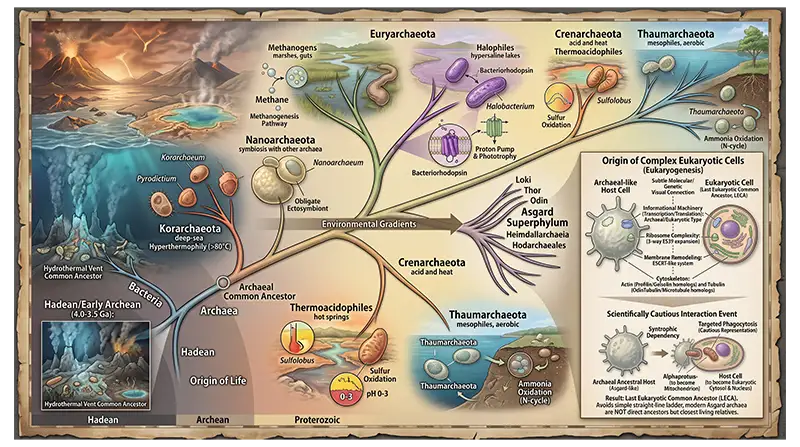
The evolutionary history of Archaea is one of the most important areas of modern microbial biology. Archaea and Bacteria are both prokaryotic, but they represent distinct evolutionary lineages. Differences in membrane chemistry, cellular machinery, genes, and metabolism provide evidence for this separation.
Archaea are also central to research into the origin of eukaryotic cells. Modern genomic studies have identified archaeal lineages that share important molecular characteristics with eukaryotes. This evidence supports models in which the ancestor of eukaryotic cells was closely related to an archaeal lineage.
A widely studied evolutionary model proposes that an archaeal-related host cell formed a close association with a bacterial cell that eventually became the mitochondrion. This relationship played an important role in the emergence of eukaryotic cells. The precise details of this transition are still being investigated.
The fossil record of Archaea is difficult to interpret because individual microbial cells are extremely small and are rarely preserved in a form that can be identified with confidence. As a result, researchers rely heavily on genomic comparisons, molecular biology, geochemistry, sedimentary evidence, and ancient biomarkers when studying their deep evolutionary history.
Why Are Archaea Important to Science and Human Life?
Archaea have importance far beyond their role as microscopic organisms. They help scientists understand evolution, ecosystems, biotechnology, environmental processes, and the limits of life.
Understanding the Evolution of Life
Archaea provide valuable information about the early diversification of cellular life and the evolutionary history of eukaryotes. Their molecular characteristics help scientists investigate how complex cells may have developed from simpler ancestral systems.
Biotechnology
Some archaeal enzymes remain stable under high temperatures, strong acidity, high salt concentrations, or other demanding conditions. These properties make certain archaeal proteins useful in biotechnology and laboratory research.
Environmental Research
Methanogenic Archaea are important sources of biological methane, while other archaeal groups influence carbon and nitrogen cycling. Studying them helps scientists understand wetlands, soils, oceans, sediments, and greenhouse-gas processes.
Agriculture
Archaea living in soils can participate in nitrogen cycling and other nutrient transformations. Their activities can therefore influence soil chemistry and agricultural ecosystems.
Animal Microbiomes
Methanogenic Archaea can form part of the microbial communities living in animal digestive systems. Studying these communities helps researchers understand how different microorganisms interact and exchange metabolic products.
Astrobiology
Some Archaea can survive extreme heat, acidity, salinity, pressure, or oxygen-free conditions. Their adaptations provide useful models for studying the possible environmental limits of life beyond Earth.
This does not mean that Archaea are extraterrestrial organisms. Instead, their biology helps scientists understand which physical and chemical conditions may be compatible with microbial life.
Conclusion
Domain Archaea represents one of the three major branches of cellular life and contains microorganisms with remarkable diversity in structure, metabolism, and habitat. Although some Archaea are famous for living in hot springs, salt lakes, acidic environments, and other extreme conditions, many also live in ordinary oceans, soils, sediments, wetlands, and animal-associated environments.
Their distinctive membranes and molecular systems separate them from bacteria, while their diverse metabolisms allow them to participate in methane production, nitrogen cycling, carbon processing, and other important ecological processes.
Archaea are also important for understanding the evolution of complex cells. Their close evolutionary relationship with the ancestry of eukaryotes has made them central to research into how complex cellular life emerged.
From microscopic communities in ocean sediments to methane-producing organisms in wetlands and animal digestive systems, Archaea demonstrate how organisms that are invisible to the naked eye can have a major influence on Earth's ecosystems, chemistry, and evolutionary history.
No. Archaea and bacteria are both prokaryotic, but they have major differences in their membranes, cell walls, genetics, and metabolism.
No. Some Archaea live in extreme environments, but many are found in ordinary oceans, soils, sediments, wetlands, and other habitats.
No. Archaeal cells are prokaryotic and therefore lack a membrane-bound nucleus.
Different Archaea use different energy sources. Depending on the species, they may use organic compounds, hydrogen, carbon dioxide, sulfur compounds, ammonia, or light-driven processes.
Archaea contribute to carbon and nitrogen cycling, methane production, nutrient transformation, ecosystem processes, biotechnology, and research into the evolution of life.