
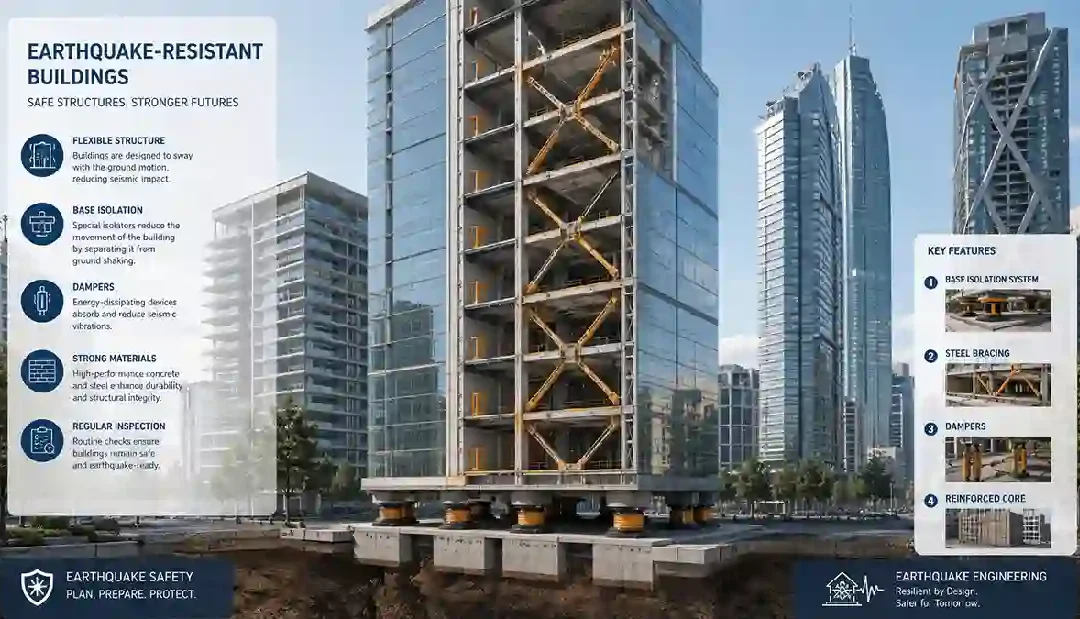
During major earthquakes, buildings experience powerful forces from shaking ground motion. Some structures collapse quickly. Others bend, absorb energy, and remain standing. The difference often comes down to earthquake-resistant design and structural safety.
Modern seismic engineering helps buildings:
- resist shaking
- reduce collapse risk
- protect occupants
- improve survival during earthquakes
If you’re new to earthquakes, begin here → what is an earthquake
Main Goals of Earthquake-Safe Buildings
Goals of Earthquake-Resistant Buildings
Most important priorities in seismic building safety.
| Goal | Importance |
|---|---|
| Protect human life | 10 |
| Prevent collapse | 10 |
| Reduce structural damage | 8 |
| Maintain emergency access | 7 |
| Limit repair costs | 6 |
Why Earthquakes Damage Buildings
Earthquakes create:
- horizontal shaking
- vertical motion
- twisting structural forces
Buildings are stressed when seismic waves move the ground beneath them.
Common Damage Causes
- weak structural connections
- poor construction materials
- soft soil amplification
- outdated building standards
Learn more → earthquake intensity scale comparison
What Makes a Building Earthquake-Resistant?
Modern earthquake-resistant buildings are designed to:
- flex during shaking
- absorb seismic energy
- prevent sudden collapse
Important Features
- reinforced frames
- flexible structural systems
- strong foundations
- energy-dissipating materials
Earthquake-resistant buildings are designed to move safely rather than remain completely rigid.
Flexible Structural Design
Flexible structures handle earthquakes better than rigid ones.
Why?
Rigid buildings may crack or collapse under sudden stress.
Flexible buildings can:
- sway safely
- distribute forces
- absorb energy more effectively
Many modern skyscrapers are intentionally designed to move slightly during earthquakes.
Reinforced Structural Materials
Modern buildings often use:
- reinforced concrete
- structural steel
- shock-absorbing systems
Reinforcement Helps:
- prevent collapse
- strengthen joints
- improve stability during shaking
Older unreinforced buildings are usually far more vulnerable.
Base Isolation Technology
Some advanced buildings use base isolation systems.
These systems place flexible supports between:
- the building
and - the ground.
Main Benefit
Reduce the transfer of seismic energy into the structure. Base isolation is used in:
- hospitals
- skyscrapers
- bridges
- emergency facilities
Shock Absorbers & Dampers
Some tall buildings use giant dampers to reduce movement.
These systems:
- absorb vibration
- reduce swaying
- stabilize structures during shaking
They work similarly to shock absorbers in vehicles.
Earthquake Safety Tips Inside Buildings
During an earthquake inside a building:
DO:
- Drop, Cover, and Hold On
- Stay away from windows
- Protect your head and neck
- Stay indoors during shaking
DO NOT:
- use elevators
- run outside immediately
- stand near shelves or glass
Most injuries come from falling debris and shattered glass.
Learn more → what to do during an earthquake
Tall Buildings vs Small Buildings During Earthquakes
| Building Type | Typical Behavior |
|---|---|
| Tall skyscrapers | Sway more slowly |
| Small rigid buildings | Shake more sharply |
| Older structures | Higher collapse risk |
| Modern engineered towers | Better seismic performance |
Building height changes how structures respond to seismic waves.
Why Older Buildings Are More Vulnerable
Older buildings may lack:
- reinforced frames
- modern seismic codes
- flexible engineering systems
High-Risk Older Structures
- unreinforced masonry
- weak concrete buildings
- poorly maintained structures
Many earthquake disasters involve older vulnerable buildings.
Countries Known for Strong Seismic Building Engineering
Several countries invest heavily in earthquake-safe construction.
Examples include:
- Japan
- New Zealand
- Chile
- United States (California)
These regions use:
- strict seismic building codes
- advanced engineering research
- earthquake-resistant designs
Japan has some of the world’s most advanced seismic architecture.
Explore → earthquakes Tokyo region
Can Earthquake-Resistant Buildings Stop All Damage?
No.
Earthquake-resistant buildings are mainly designed to:
- prevent collapse
- save lives
- reduce catastrophic failure
Some damage may still occur after very large earthquakes. The goal is survival and structural stability.
Earthquake Safety for Apartments and Offices
People living or working in large buildings should:
- know emergency exits
- avoid blocking evacuation routes
- secure heavy furniture
- practice earthquake drills
Prepared occupants respond faster during emergencies.
Future Earthquake Building Technology
Engineers are developing:
- smarter seismic materials
- AI-based structural monitoring
- self-adjusting dampers
- improved shock isolation systems
Future buildings may become:
- safer
- more flexible
- more earthquake-adaptive
Learn more → earthquake monitoring technology
Flexible design, reinforced materials, and seismic engineering systems.
Modern skyscrapers are often designed to sway safely during shaking.
Construction quality and seismic design make a major difference.
Usually no — staying protected indoors is often safer during shaking.
Final Thoughts
Earthquake safety in buildings depends on strong engineering, flexible structural systems, and proper preparedness. Modern seismic design helps buildings absorb earthquake energy, reduce collapse risk, and protect lives during major earthquakes.
Understanding how buildings respond to seismic forces helps explain why engineering plays one of the most important roles in earthquake disaster safety.