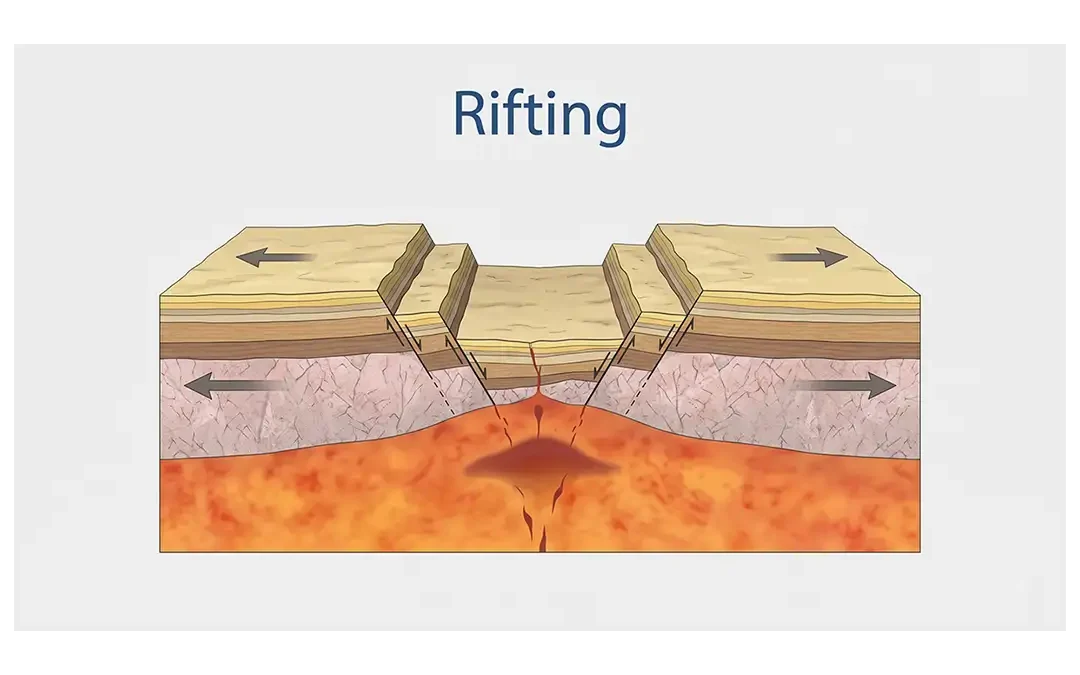
 Rifting is a geological process in which the Earth’s lithosphere is stretched and pulled apart. As the crust extends, it becomes thinner and may develop faults, earthquakes, volcanic activity, and elongated depressions called rift valleys. Rifting commonly...
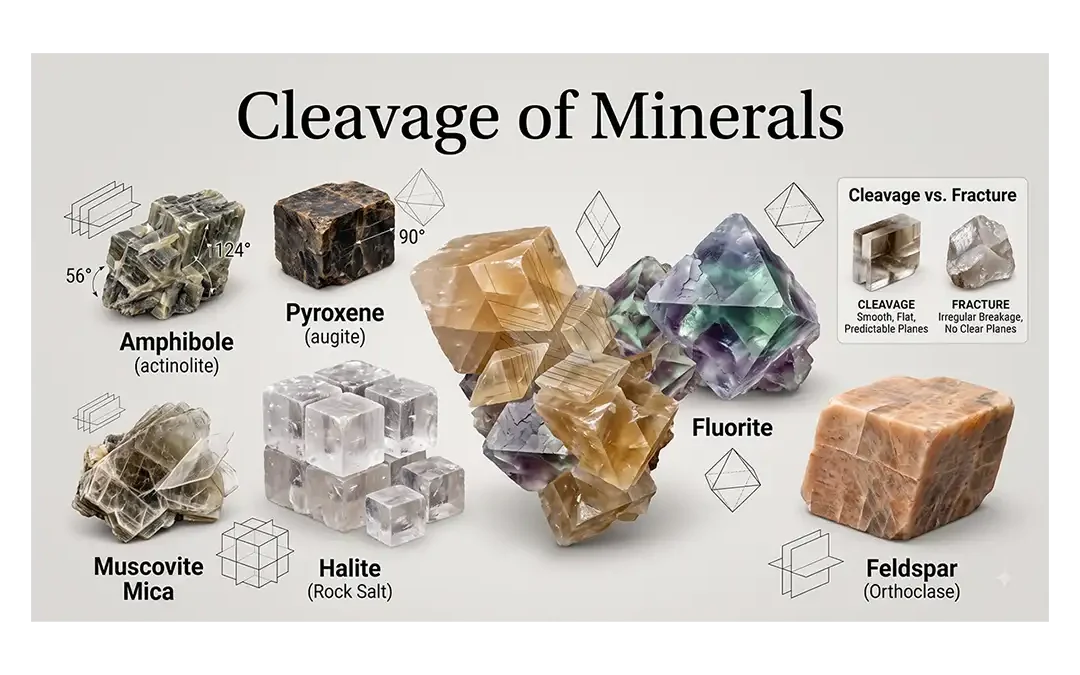 Cleavage of minerals is an important physical property that describes how a mineral breaks along specific planes of weakness within its crystal structure. When a mineral has cleavage, it tends to split or break in a predictable direction, producing relatively smooth...
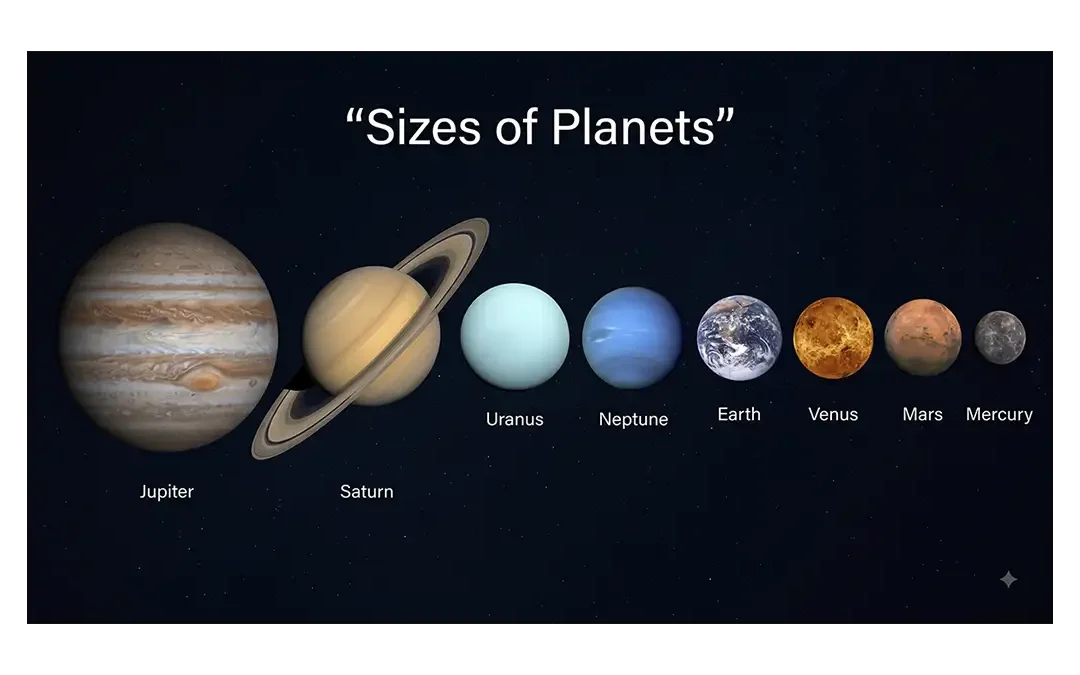 The sizes of planets vary greatly, from tiny Mercury to enormous Jupiter. Although all eight planets orbit the Sun, they are very different in diameter, volume, mass, and composition. Comparing their sizes helps us understand how different the planets are from one...
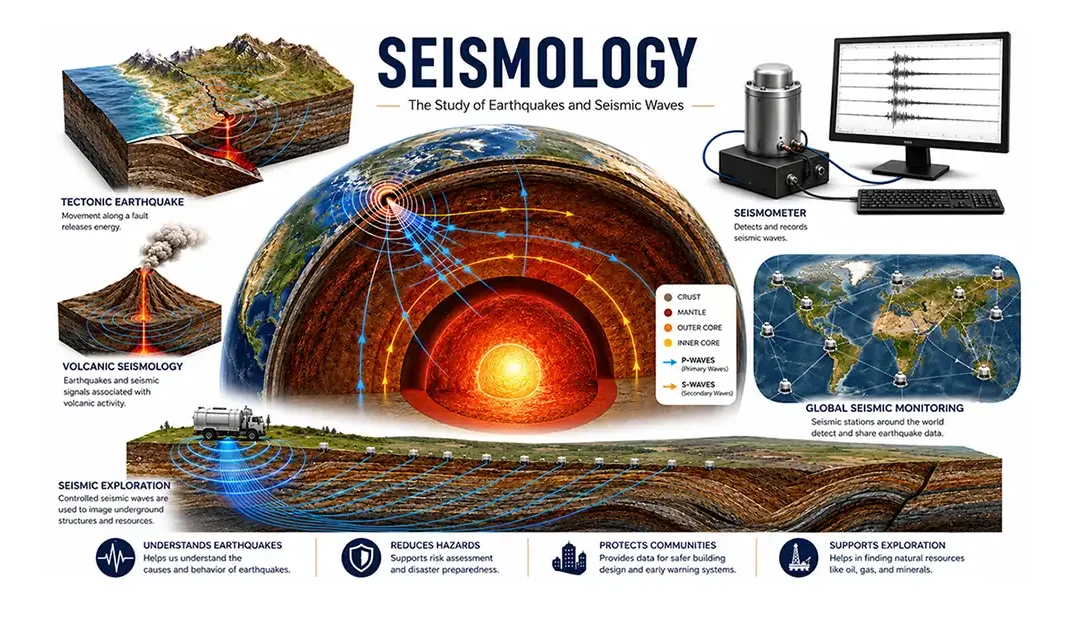 Seismology is the study of earthquakes. Much of the information about the nature of faulting during an earthquake comes from the resulting seismograms. Most earthquakes occur due to plate motion, and understanding the direction and magnitude of this movement helps...
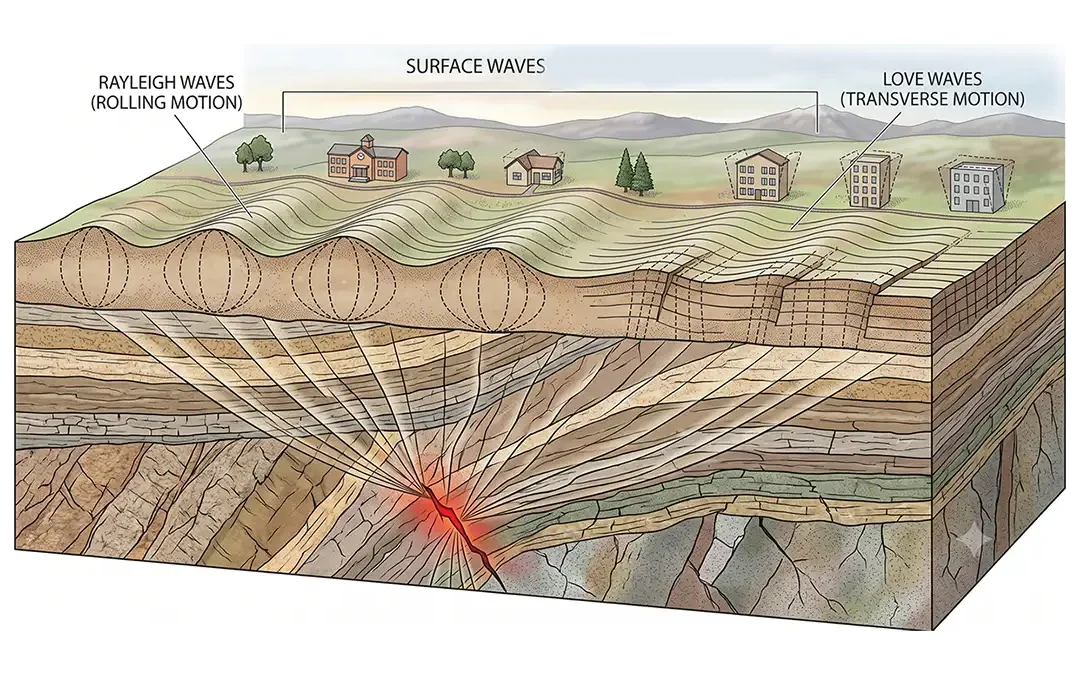 Surface waves are seismic waves that travel along or close to Earth’s surface. They are produced by earthquakes and other seismic events and are different from body waves, which travel through Earth’s interior. Surface waves are important because they can produce...
