
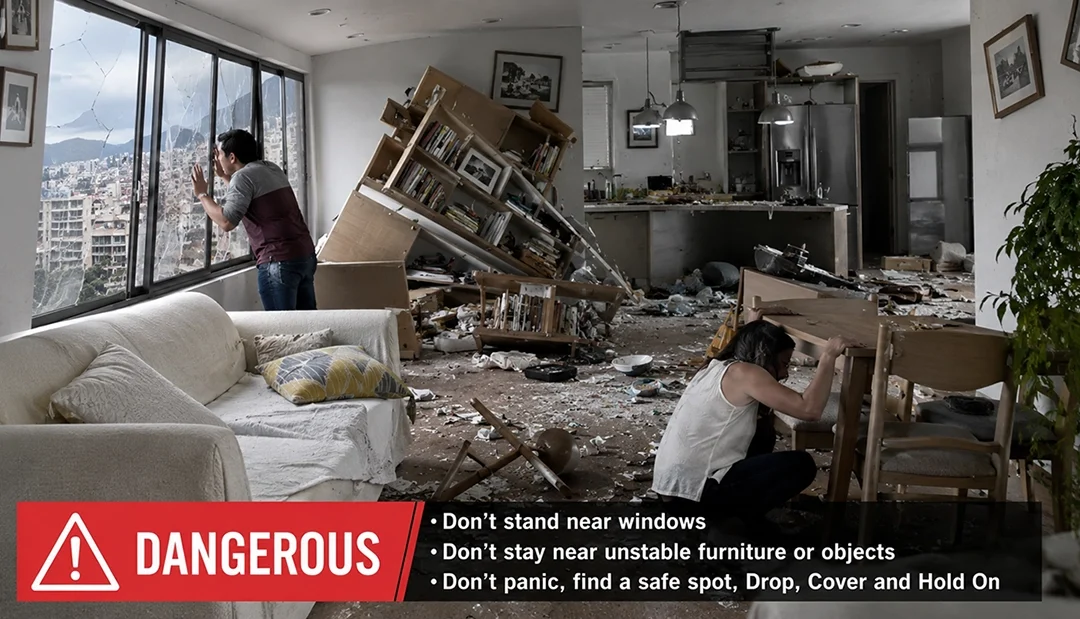
During an earthquake, panic and wrong decisions can lead to serious injuries. Many earthquake-related injuries happen not because of the earthquake itself, but because people:
- run in unsafe directions
- stand near dangerous objects
- use elevators
- ignore protective actions
Understanding what NOT to do during an earthquake is just as important as knowing the correct safety steps.
If you’re new to earthquakes, begin here → what is an earthquake
Most Dangerous Earthquake Mistakes
Most Dangerous Earthquake Mistakes
Common unsafe actions that increase injury risk during earthquakes.
| Mistake | Risk |
|---|---|
| Running outside during shaking | 10 |
| Standing near windows | 9 |
| Using elevators | 9 |
| Ignoring falling debris | 8 |
| Panicking | 8 |
1. Do NOT Run Outside During Strong Shaking
Many people instinctively try to run outdoors. But this is often extremely dangerous because:
- glass may fall from buildings
- bricks and debris can collapse onto sidewalks
- signs and power lines may fall
In most situations, it is safer to: Drop, Cover, and Hold On indoors.
2. Do NOT Stand Near Windows or Glass
Windows and mirrors can shatter violently during earthquakes.
Dangerous Areas Include:
- large windows
- glass walls
- mirrors
- glass shelves
Broken glass causes many earthquake injuries. Move away from glass immediately if possible.
3. Do NOT Use Elevators
Elevators are dangerous during earthquakes because:
- power may fail
- systems may malfunction
- occupants can become trapped
Safer Option
Use stairs after shaking stops if evacuation is necessary. Never rush toward elevators during shaking.
4. Do NOT Stand Near Tall Furniture or Shelves
Tall furniture may:
- tip over
- slide across floors
- drop heavy objects
Dangerous Items
- bookshelves
- cabinets
- televisions
- hanging decorations
Move toward safer shelter locations instead.
5. Do NOT Panic
Panic can cause:
- dangerous decisions
- blocked exits
- injuries during evacuation
- slower reactions
Calm Actions Improve Safety
Prepared people react faster and make safer decisions.
Staying calm is one of the most important earthquake survival skills.
6. Do NOT Ignore Falling Debris
During strong earthquakes:
- ceiling materials may fall
- lights may collapse
- objects may fly from shelves
Important Safety Action
Protect:
- your head
- neck
- face
Learn more → how to protect yourself during shaking
7. Do NOT Stop Under Bridges or Power Lines While Driving
If driving during an earthquake:
Avoid Stopping Near:
- bridges
- overpasses
- tunnels
- power lines
Safer Option
Pull over in open areas and remain inside the vehicle.
8. Do NOT Rush Back Into Damaged Buildings
After earthquakes:
- buildings may remain unstable
- aftershocks can trigger collapse
- gas leaks and fires may exist
Wait for official safety guidance before re-entering damaged structures.
Learn more → what to do after an earthquake
9. Do NOT Ignore Tsunami Risk Near Coastlines
After strong coastal earthquakes do not stay near beaches or harbors. Large offshore earthquakes may trigger tsunamis.
Warning Signs
- sudden ocean retreat
- strong prolonged shaking
- official tsunami alerts
Move to higher ground immediately if tsunami danger exists.
Common Earthquake Safety Myths
| Myth | Reality |
|---|---|
| Doorways are always safest | Modern guidance favors sturdy furniture |
| Running outside is safest | Falling debris makes this dangerous |
| Small earthquakes cannot be dangerous | Shallow quakes may still cause injuries |
| Earthquakes can be predicted exactly | Exact prediction is not currently possible |
Understanding real safety guidance improves survival.
Why Prepared People React More Safely
People who practice earthquake drills are more likely to:
- stay calmer
- react faster
- avoid dangerous mistakes
Preparedness improves:
- confidence
- decision-making
- emergency response
Learn more → earthquake survival guide
Countries That Teach Earthquake Safety Widely
Countries with frequent earthquakes often promote strong public safety education.
Examples include:
- Japan
- New Zealand
- Chile
- United States (California)
These regions commonly teach:
- Drop, Cover, and Hold On
- evacuation planning
- emergency drills
Public awareness reduces injuries.
Why Modern Earthquake Safety Changed Over Time
Older advice sometimes recommended:
- standing in doorways
- running outdoors immediately
Modern seismic research now shows:
- falling debris is a major danger
- indoor protection is often safer during shaking
Earthquake safety recommendations continue improving through scientific research.
Can Early Warning Systems Reduce Dangerous Reactions?
Some regions use:
- earthquake early warning systems
- mobile alerts
- automated alarms
These systems may provide:
- a few seconds of warning
- enough time to take cover safely
Learn more → earthquake early warning systems
Usually no — falling debris outside is dangerous.
Power failures and mechanical damage can trap occupants.
Yes — shattered glass causes many injuries.
Aftershocks may trigger collapse.
Final Thoughts
Knowing what NOT to do during an earthquake can greatly reduce injuries and improve survival during strong shaking. Avoiding dangerous mistakes like running outdoors, using elevators, or standing near glass helps people stay safer during one of nature’s most sudden emergencies.
Preparedness, calm thinking, and proper protective actions remain some of the best earthquake survival tools available.