
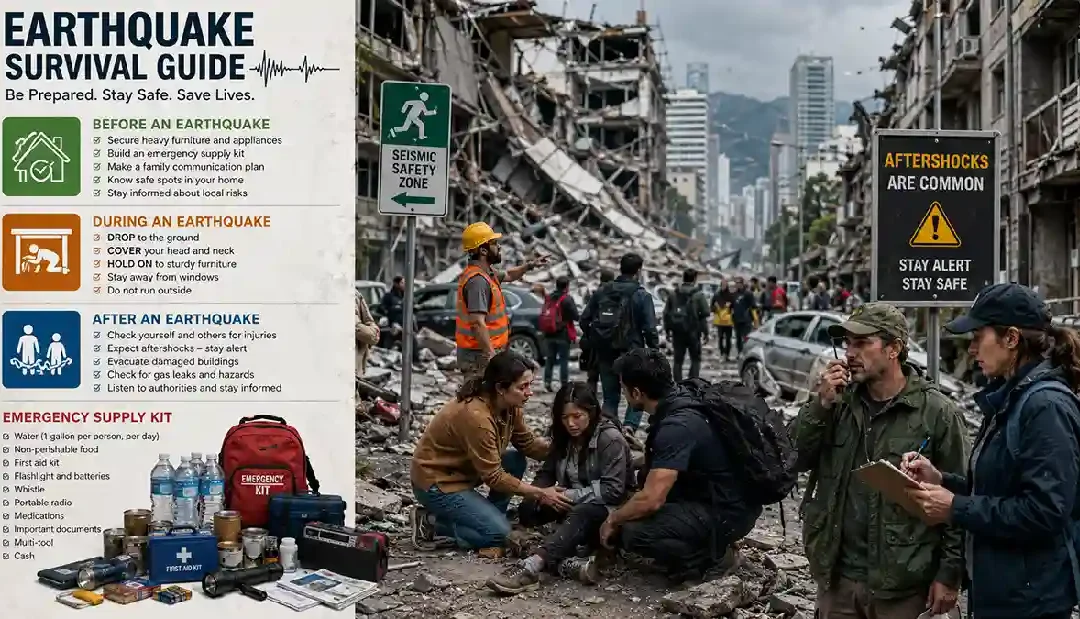
Earthquakes are among the most sudden natural disasters on Earth.
Within seconds, they can:
- damage buildings
- disrupt communication
- trigger fires and landslides
- create dangerous aftershocks
The good news is that proper preparation and fast safety actions can save lives.
This earthquake survival guide explains:
- how to prepare before earthquakes
- what to do during shaking
- how to stay safe afterward
If you’re new to earthquakes, begin here → what is an earthquake
Core Earthquake Survival Priorities
Main Earthquake Survival Priorities
Most important survival actions during earthquake emergencies.
| Priority | Importance |
|---|---|
| Protect head and neck | 10 |
| Take cover quickly | 10 |
| Prepare emergency supplies | 9 |
| Stay calm | 8 |
| Avoid damaged structures | 8 |
Prepare Before an Earthquake Happens
Preparation is one of the best earthquake survival tools.
Build an Emergency Kit
Important supplies include:
- water
- non-perishable food
- flashlight
- batteries
- first aid kit
- medications
- phone chargers
Learn more → earthquake emergency kit checklist
Make Your Home Safer
Secure:
- bookshelves
- cabinets
- heavy furniture
- TVs and appliances
Safety Tip
Keep heavy objects away from beds and exits.
Learn more → earthquake safety tips at home
Create a Family Emergency Plan
Everyone should know:
- emergency meeting locations
- evacuation routes
- emergency contacts
- tsunami evacuation zones if needed
Planning reduces panic during disasters.
What To Do During an Earthquake
The most important earthquake survival action is
- Drop,
- Cover, and
- Hold On
If You Are Indoors
DO:
- get under sturdy furniture
- protect your head and neck
- stay away from windows
- remain indoors during shaking
DO NOT:
- run outside during shaking
- use elevators
- stand near shelves or glass
Most earthquake injuries come from falling debris.
If You Are Outdoors
Move to:
- open areas
- spaces away from buildings
- locations away from power lines and bridges
Stay clear of falling debris.
If You Are Driving
Safety Tips
- pull over safely
- avoid bridges and overpasses
- stay inside the vehicle until shaking stops
Roads may become dangerous during major earthquakes.
Earthquake Survival Near the Coast
Strong offshore earthquakes may trigger tsunamis.
After Coastal Earthquakes:
- move to higher ground immediately
- follow tsunami warnings
- avoid beaches and shorelines
Tsunamis may arrive within minutes.
What To Do After the Shaking Stops
After earthquakes:
- aftershocks may continue
- buildings may remain unstable
- fires and gas leaks may occur
Important Survival Steps
- check for injuries
- avoid damaged buildings
- listen to emergency information
- prepare for aftershocks
Learn more → what to do after an earthquake
Common Earthquake Survival Mistakes
| Mistake | Why It’s Dangerous |
|---|---|
| Running outside during shaking | Falling debris injuries |
| Using elevators | Power failure risk |
| Ignoring aftershocks | Additional collapse danger |
| Blocking evacuation routes | Delayed escape |
| Panic | Slower decision-making |
Calm actions improve survival.
Earthquake Survival in Buildings
Inside buildings:
- stay away from windows
- avoid elevators
- take cover quickly
Modern earthquake-resistant buildings are often safer than running outdoors during shaking.
Learn more → earthquake safety in buildings
Earthquake Survival Lessons From Real Disasters
Major earthquakes in:
- Japan
- Chile
- New Zealand
- California
have shown that:
- preparedness saves lives
- drills improve reaction speed
- strong building codes reduce casualties
Communities with better preparedness usually recover faster.
Why Earthquake Drills Matter
Regular drills help people:
- react automatically
- stay calmer
- remember evacuation routes
- protect themselves faster
Common Drill Actions
- Drop, Cover, and Hold On
- evacuation procedures
- emergency communication practice
Repetition improves survival readiness.
Can Earthquakes Be Predicted?
Scientists cannot predict exact earthquakes.
However:
- earthquake monitoring systems track seismic activity
- early warning systems may provide seconds of notice
Learn more → earthquake prediction methods
Drop, Cover, and Hold On.
Usually no — falling debris outside is dangerous.
Because weakened structures may collapse afterward.
Emergency planning and preparedness before earthquakes occur.
Final Thoughts
Earthquake survival depends on preparation, fast protective actions, and calm decision-making during emergencies.
Knowing how to respond before, during, and after earthquakes can greatly reduce injuries and improve survival during one of nature’s most sudden disasters.
Preparedness, awareness, and practice remain some of the strongest tools for staying safe when the ground begins to shake.