
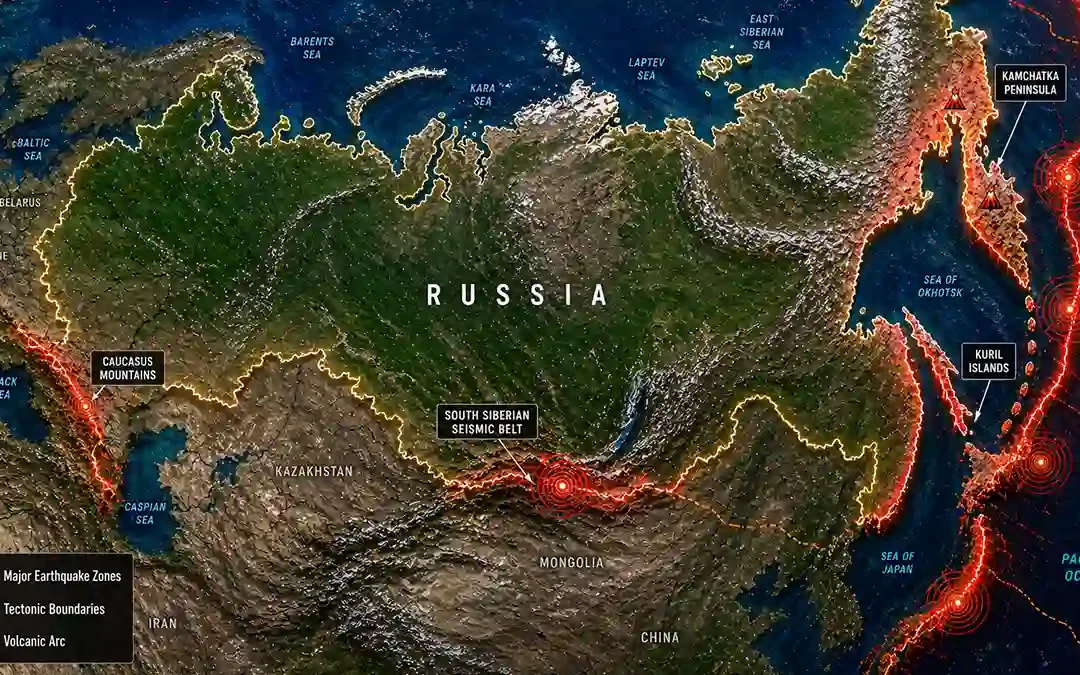
Russia is enormous — and its earthquakes are not concentrated in just one place. Some parts of Russia are extremely active and experience powerful earthquakes regularly. Other regions remain relatively stable for long periods.
What makes Russia interesting is how different its seismic regions are from one another.
If you’re new to earthquakes, start here → what is an earthquake
Russia’s Main Earthquake Regions (Quick Overview)
| Region | Risk Level | Main Cause |
|---|---|---|
| Kamchatka Peninsula | Extremely High | Subduction zone |
| Kuril Islands | Very High | Pacific Plate movement |
| Caucasus Region | High | Continental collision |
| Lake Baikal Region | Moderate–High | Rift activity |
| Central Russia | Low | Stable crust |
Russia’s earthquake activity is mostly concentrated in the east and south. To understand how tectonic stress builds → fault lines
Why Do Earthquakes Happen in Russia?
Russia’s earthquakes happen for different reasons depending on the region.
The main tectonic processes include:
- subduction along the Pacific coast
- continental collision in the Caucasus
- crust stretching near Lake Baikal
This creates several distinct seismic systems across the country.
Learn more → causes of earthquakes
Russia’s Five Major Earthquake Regions
Kamchatka Peninsula (Russia’s Strongest Earthquakes)
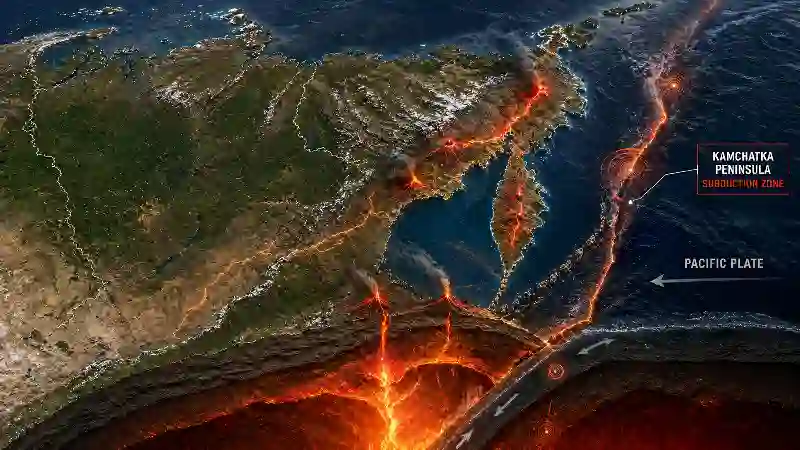
The Kamchatka Peninsula is Russia’s most active seismic region.
- Pacific Plate subduction
- Frequent large earthquakes
- Active volcanoes
- Tsunami potential
This region is part of the Pacific Ring of Fire.
Explore earthquake types
Kuril Islands (Volcanoes & Offshore Earthquakes)
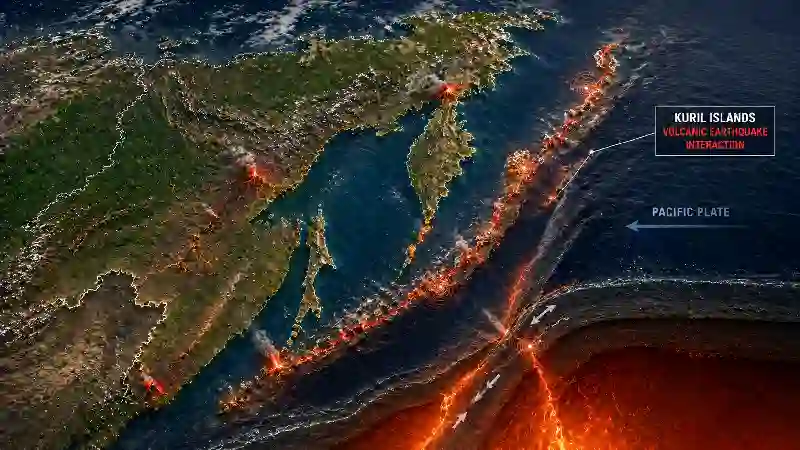
The Kuril Islands experience strong offshore earthquakes.
- Island arc system
- Subduction-related earthquakes
- Frequent volcanic activity
This is one of the most active seismic belts in the northern Pacific.
Caucasus Mountains (Compression Zone)
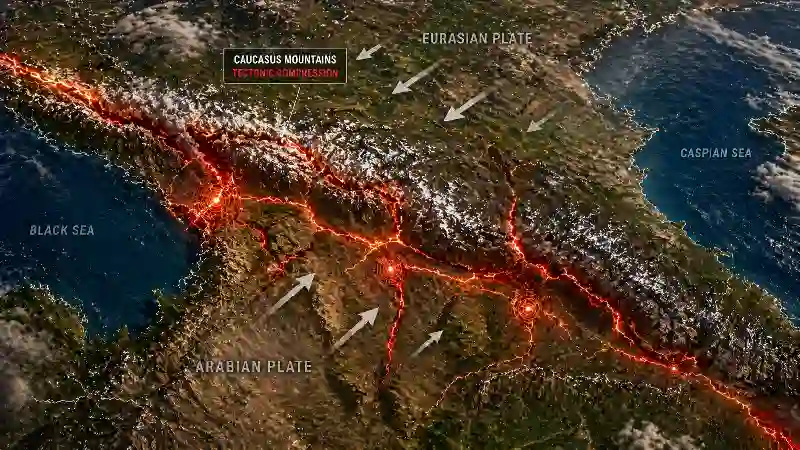
Southern Russia experiences earthquakes linked to tectonic compression.
- Crustal shortening
- Active mountain faults
- Moderate to strong earthquakes possible
This region behaves differently from Russia’s Pacific coast zones.
Lake Baikal Rift Zone (A Rare Feature)
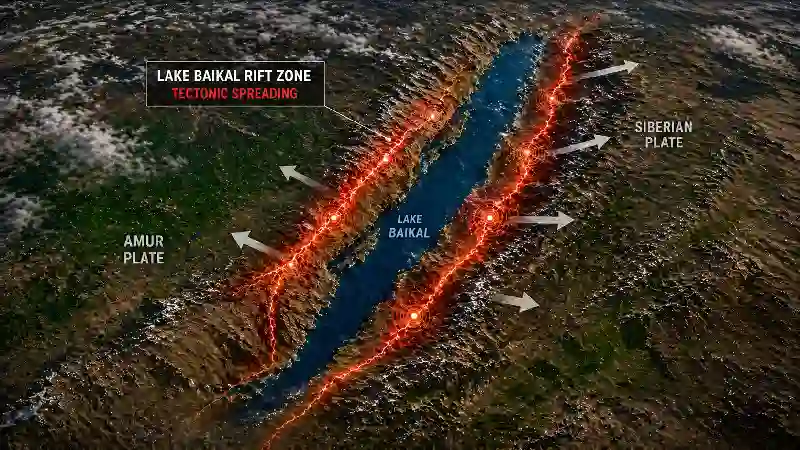
Lake Baikal is geologically unusual.
- The crust is slowly pulling apart
- Rift activity creates earthquakes
- One of the world’s rare continental rift zones
This is very different from collision or subduction regions.
Sakhalin & Far Eastern Russia
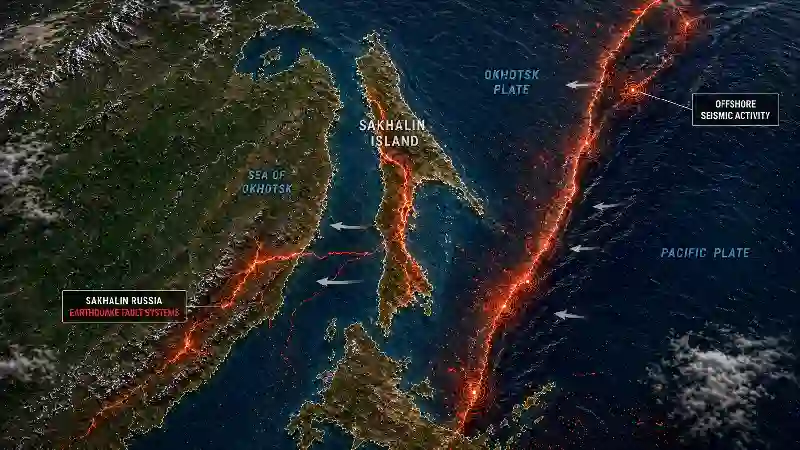
Far Eastern Russia also experiences active fault movement.
- Offshore earthquakes common
- Moderate seismic activity
- Linked to Pacific tectonic systems
Recent Earthquake Activity Across Russia
Russia experiences earthquakes regularly across several regions.
Recent patterns show:
- Frequent offshore earthquakes near Kamchatka
- Seismic swarms in volcanic areas
- Moderate earthquakes in southern regions
Most strong earthquakes remain concentrated in eastern Russia.
Major Earthquakes in Russia
Past earthquakes reveal Russia’s seismic history.
- 1952 Kamchatka Earthquake (M9.0)
One of the strongest earthquakes ever recorded. - 1995 Neftegorsk Earthquake (M7.1)
A devastating earthquake on Sakhalin Island. - 2003 Altai Earthquake (M7.3)
A major inland Russian earthquake.
Understand magnitude vs impact
Russia vs Other Earthquake Regions
Russia’s seismic activity varies greatly by region.
- Russia → subduction + collision + rift systems
- Japan → multiple plate boundaries
- Iceland → tectonic spreading + volcanoes
- California → transform faults like the San Andreas Fault
Few countries have as many different earthquake systems as Russia
Can Earthquakes in Russia Be Predicted?
No — earthquakes cannot be predicted precisely.
Scientists can:
- monitor seismic zones
- track tectonic movement
- estimate long-term risk
But exact timing remains uncertain.
Learn more → Can earthquakes be predicted
The Kamchatka Peninsula and Kuril Islands.
Very rarely — most seismic activity occurs in eastern and southern regions.
Yes — especially in Kamchatka and the Kuril Islands.
Yes — major offshore earthquakes can generate tsunamis.
Final Thoughts
Russia’s earthquakes are shaped by several completely different tectonic systems. From Pacific subduction zones to continental rifts and mountain compression, the country provides one of the broadest examples of seismic diversity on Earth.
Understanding Russia’s regions helps explain how earthquake behavior can vary dramatically across a single country.