
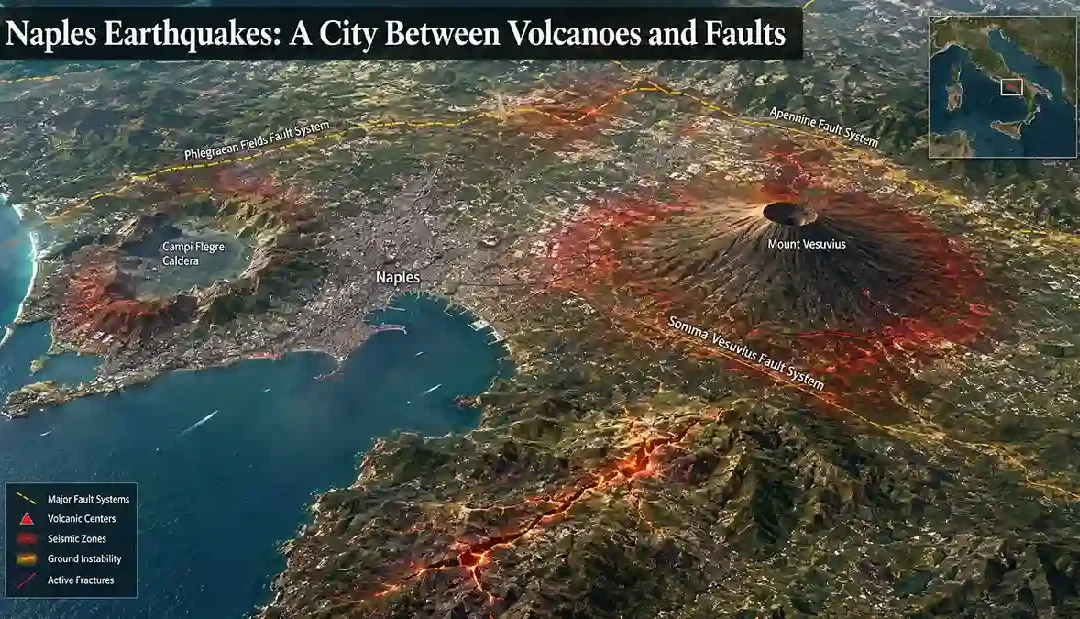
Naples is one of Europe’s most geologically complex cities. Unlike many earthquake regions that are driven mainly by tectonic plate movement, Naples faces a unique combination of volcanic activity + tectonic stress.
The city sits between two major volcanic systems:
- Mount Vesuvius
- Campi Flegrei
This creates a very different type of earthquake risk compared to most cities.
If you’re new to earthquakes, begin here → what is an earthquake
Naples Seismic Zones
| Zone | Risk Level | Main Cause |
|---|---|---|
| Campi Flegrei Caldera | Extremely High | Volcanic activity |
| Mount Vesuvius Region | Extremely High | Magma movement |
| Southern Italy Faults | High | Tectonic stress |
| Campania Region | Very High | Mixed volcanic + tectonic |
| Offshore Tyrrhenian Sea | Moderate–High | Seismic activity |
Naples is influenced by both volcanic and tectonic processes.
To understand how faults work → fault lines
Why Do Earthquakes Happen in Naples?
Earthquakes in Naples are caused by a mix of geological processes.
Here’s the simple explanation:
- Magma moves beneath volcanic systems
- Pressure builds underground
- The ground cracks and shifts
- Fault systems also accumulate tectonic stress
- Earthquakes occur when this stress is released
This makes Naples different from typical plate-boundary regions.
Learn more → causes of earthquakes
Four Major Earthquake Systems Affecting Naples
Campi Flegrei Caldera (Most Unique Threat)
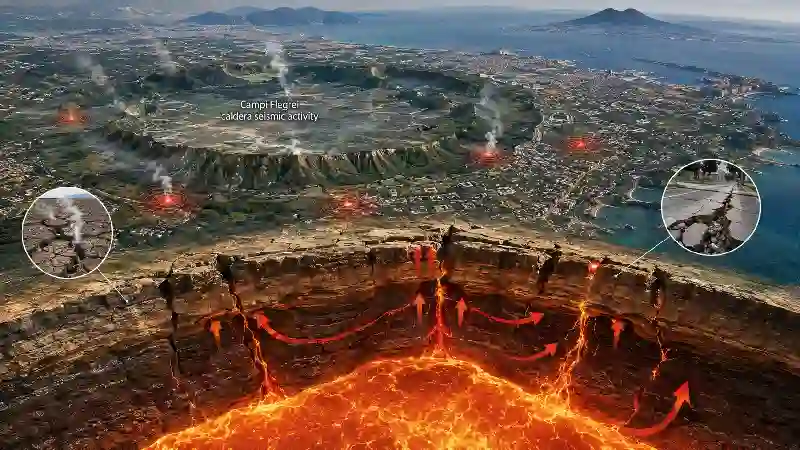
Campi Flegrei is one of the most dangerous volcanic systems near Naples.
- Large volcanic caldera
- Frequent seismic swarms
- Ground uplift and deformation
- Linked to magma movement
Explore earthquake types
Mount Vesuvius Volcanic Activity
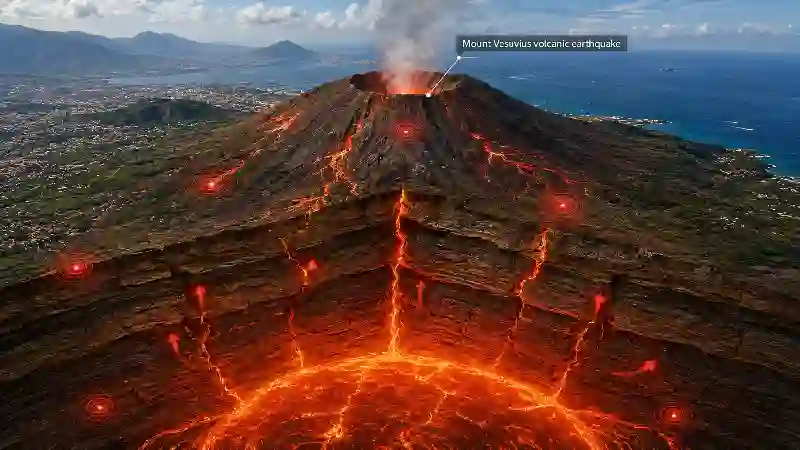
Mount Vesuvius also contributes to seismic activity.
- Magma movement beneath the volcano
- Small earthquakes often occur before eruptions
- Continuous monitoring by scientists
Southern Italy Fault Systems
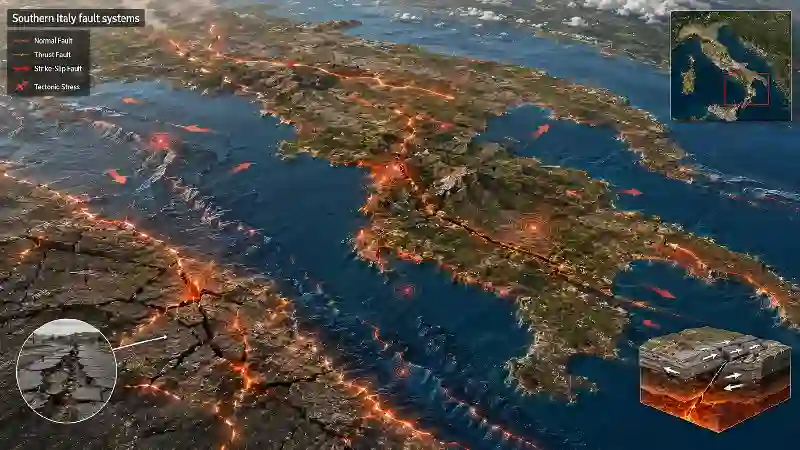
Naples is also affected by regional tectonic faults.
- Crustal stress from plate interaction
- Inland earthquakes across Italy
- Moderate seismic risk
Tyrrhenian Sea Seismic Activity
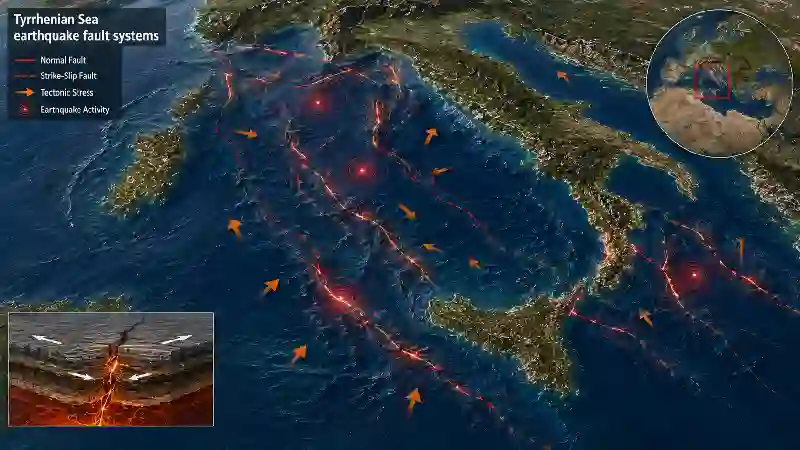
Offshore activity also contributes to earthquakes.
- Seismic zones beneath the sea
- Interaction with volcanic systems
- Occasional offshore earthquakes
Recent Earthquake Activity in Naples
Naples experiences frequent low-level seismic activity.
Recent patterns show:
- Seismic swarms in Campi Flegrei
- Small earthquakes near Vesuvius
- Ongoing volcanic monitoring
Most earthquakes are small but indicate active geological processes.
Notable Earthquakes Affecting Naples
Naples and southern Italy have experienced significant earthquakes.
- 1980 Irpinia Earthquake (M6.9)
A major earthquake affecting southern Italy. - Campi Flegrei Seismic Swarms
Repeated earthquake sequences linked to volcanic activity. - Historical Vesuvius Activity
Associated with seismic and volcanic events.
Understand magnitude vs impact
Naples vs Other Earthquake Regions
Naples has a unique earthquake profile.
- Naples → volcanic + tectonic earthquakes
- Iceland → similar volcanic + tectonic interaction
- California → transform fault earthquakes
- Japan → subduction zone earthquakes
Few cities combine volcanic and tectonic earthquake risks like Naples.
Can Earthquakes in Naples Be Predicted?
Not exactly — but volcanic-related earthquakes can sometimes be monitored more closely.
Scientists can:
- track magma movement
- monitor ground deformation
- detect seismic swarms
This helps provide early warnings for volcanic activity.
Learn more → Can earthquakes be predicted
Because of volcanic activity and regional fault systems.
Campi Flegrei caldera and Mount Vesuvius.
Yes — small earthquakes occur frequently.
Yes — many are caused by magma movement.
Final Thoughts
Naples is one of the most geologically complex cities in Europe. With active volcanoes, a large caldera, and regional fault systems, earthquakes are a natural part of the region’s behavior.
Understanding Naples earthquakes helps explain how volcanic systems and tectonic forces can combine to shape seismic activity.