
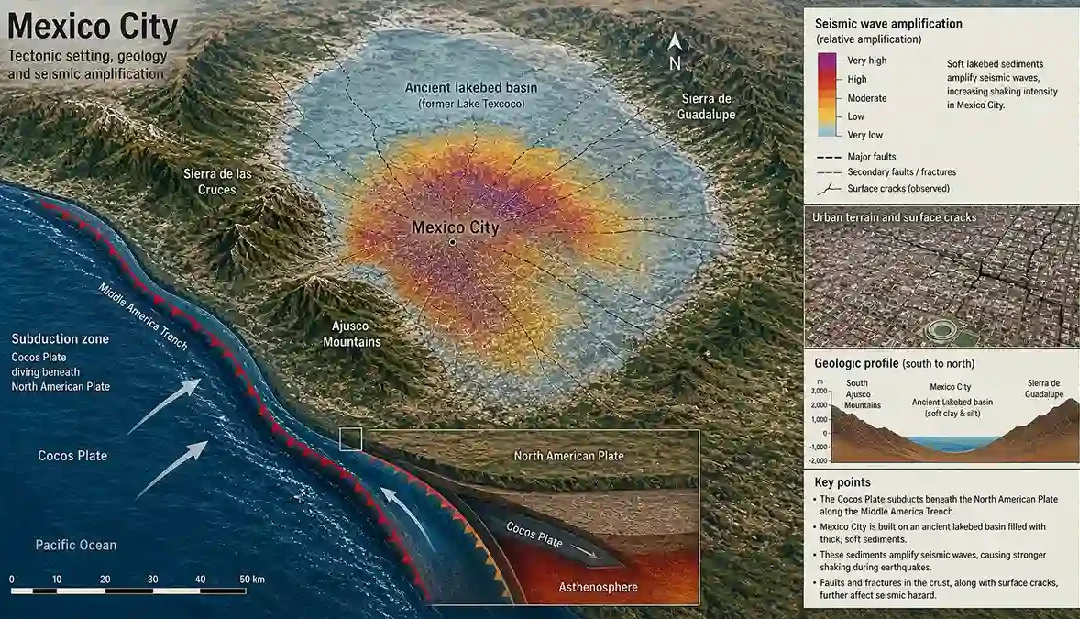
Mexico City is one of the most unusual earthquake zones in the world. Here’s the surprising fact: Many of the strongest earthquakes affecting the city don’t start there. Instead, they begin far offshore — yet still cause intense shaking in the city.
Why?
Because Mexico City sits on a former lakebed that amplifies seismic waves.
If you’re new to earthquakes, begin here → what is an earthquake
Mexico City Seismic Zones
| Zone | Risk Level | Main Cause |
|---|---|---|
| Subduction Zone (Pacific Coast) | Extremely High | Plate diving |
| Mexico City Basin | Extremely High | Soil amplification |
| Central Mexico Faults | Moderate | Crustal stress |
| Pacific Offshore Region | Extremely High | Megathrust earthquakes |
| Southern Mexico | High | Tectonic activity |
Mexico City’s risk comes from both distant earthquakes and local ground conditions.
To understand how faults work → fault lines
Why Do Earthquakes Affect Mexico City So Strongly?
Mexico City is influenced by a subduction zone far to the west.
Here’s the simple explanation:
- The Cocos Plate moves beneath the North American Plate
- Large earthquakes occur offshore
- Seismic waves travel inland
- Mexico City sits on soft lakebed sediments
- These sediments amplify shaking dramatically
This means earthquakes feel much stronger in the city than in nearby areas.
Learn more → causes of earthquakes
Four Key Earthquake Factors in Mexico City
Subduction Zone Earthquakes (Main Source)
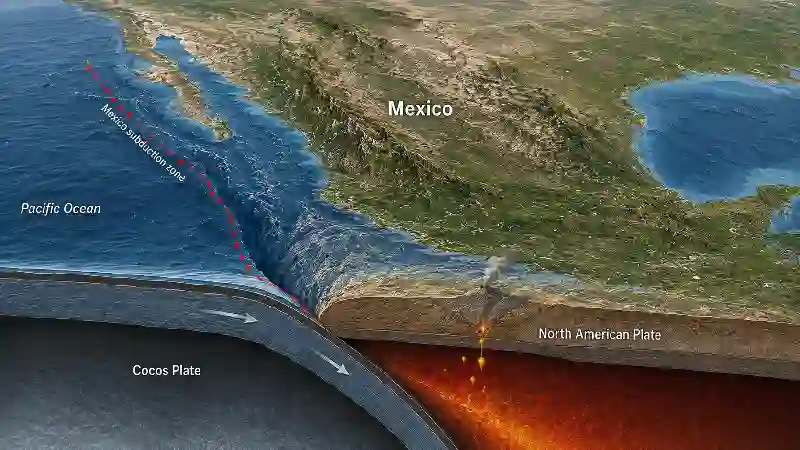
Most major earthquakes affecting Mexico City originate offshore.
- The Cocos Plate dives beneath the continent
- Large earthquakes (M7–M8+) occur
- Seismic waves travel long distances
Explore earthquake types
Lakebed Amplification Effect (Unique Feature)
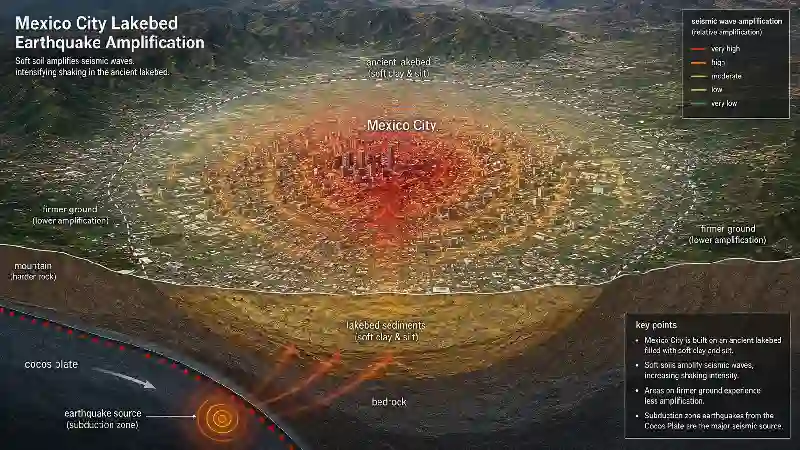
Mexico City’s ground amplifies shaking.
- Built on ancient lake sediments
- Soft soil traps seismic waves
- Shaking lasts longer and feels stronger
This is one of the most important factors in earthquake damage.
Basin Resonance Effect
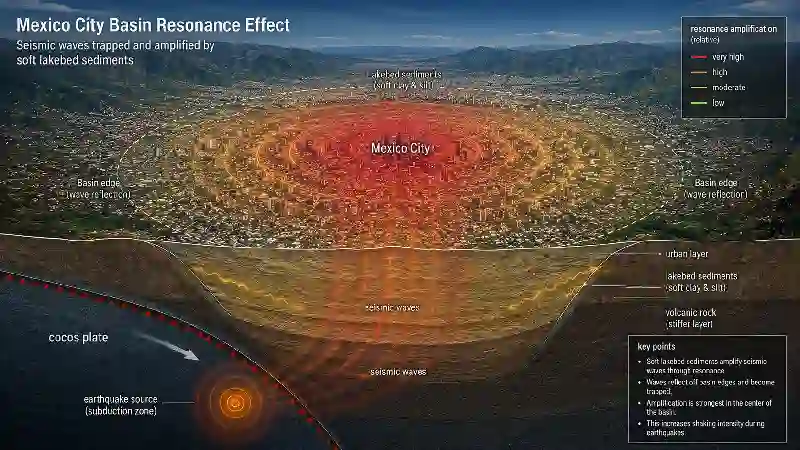
The city’s basin shape further intensifies shaking.
- Waves bounce inside the basin
- Energy concentrates in certain areas
- Buildings experience prolonged shaking
Local Fault Systems
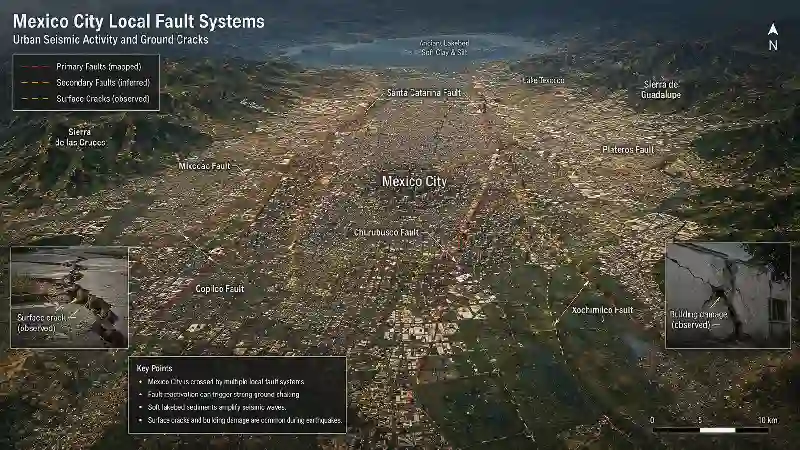
Mexico City also has local fault systems.
- Smaller earthquakes occur locally
- Usually less powerful than subduction earthquakes
- Still contribute to overall seismic risk
Recent Earthquake Activity Affecting Mexico City
Mexico City continues to experience strong shaking from distant earthquakes.
Recent patterns show:
- Offshore earthquakes affecting the city
- Repeated seismic events along the subduction zone
- Strong amplification of ground shaking
Even distant earthquakes can have serious impacts.
Notable Earthquakes in Mexico City
Mexico City has experienced devastating earthquakes.
- 1985 Mexico City Earthquake (M8.0)
One of the most destructive earthquakes in the city’s history. - 2017 Puebla Earthquake (M7.1)
Caused severe damage due to amplification effects. - Recurring Pacific Coast Earthquakes
Frequently affect the city despite distant origins.
Understand magnitude vs impact.
Mexico City vs Other Earthquake Regions
Mexico City is unique because of amplification effects.
- Mexico City → subduction + soil amplification
- Tokyo → multiple subduction zones
- California → transform faults
- Chile → plate collision earthquakes
Few cities experience such strong amplification of seismic waves.
Can Earthquakes in Mexico City Be Predicted?
No — earthquakes cannot be predicted precisely.
However, Mexico has an advanced early warning system.
Scientists can:
- detect earthquakes offshore
- send early alerts before shaking arrives
- monitor seismic activity
This system can provide a few seconds of warning.
Learn more → Can earthquakes be predicted
Because soft lakebed soils amplify seismic waves.
Most come from offshore subduction zones.
Strong shaking from large offshore earthquakes.
Yes — seismic risk remains high.
Final Thoughts
Mexico City is one of the most fascinating earthquake regions in the world. While the earthquakes often begin far away, the city’s unique geology turns distant shaking into powerful ground motion.
Understanding this region shows how local conditions can be just as important as tectonic forces in determining earthquake impact.