
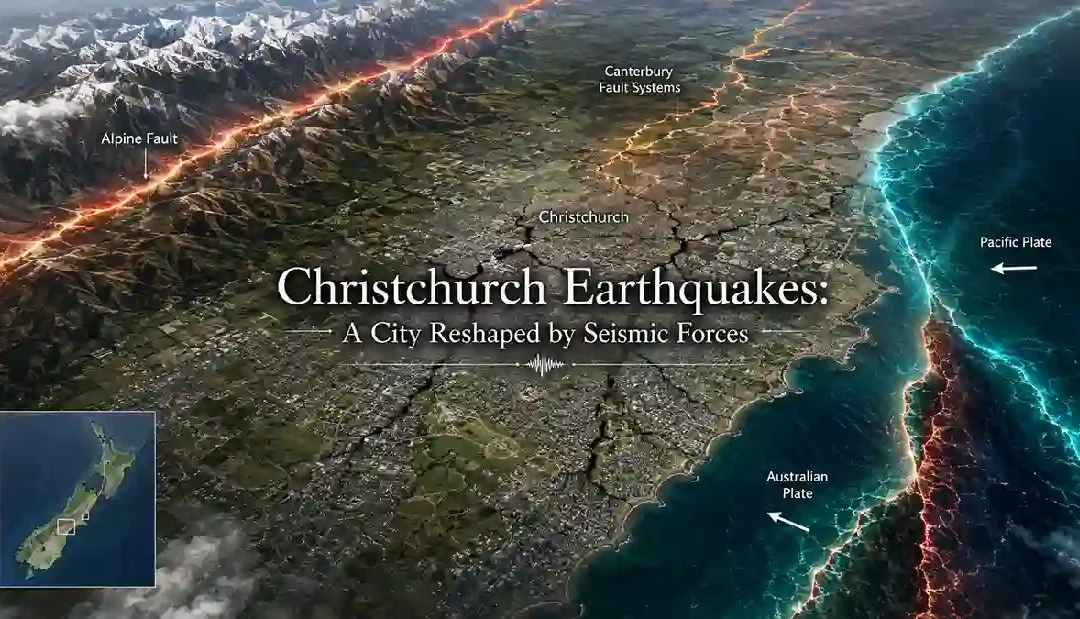
Christchurch became globally known after a devastating earthquake sequence transformed the city in the early 2010s. Today, it remains one of the most studied earthquake regions in New Zealand. Christchurch sits near the boundary between the Pacific Plate and the Australian Plate.
This plate interaction creates:
- active fault systems
- shallow earthquakes
- powerful ground shaking across the Canterbury region
If you’re new to earthquakes, begin here → what is an earthquake
Christchurch Seismic Zones
| Zone | Risk Level | Main Cause |
|---|---|---|
| Canterbury Fault Systems | Extremely High | Crustal fault movement |
| Alpine Fault Region | Extremely High | Plate boundary movement |
| Christchurch Basin | High | Soil amplification |
| Offshore Hikurangi Influence | Moderate–High | Plate interaction |
| Southern Alps Region | Very High | Tectonic compression |
Christchurch lies within one of New Zealand’s most active tectonic regions. To understand how faults work → fault lines
Why Do Earthquakes Happen in Christchurch?
Christchurch lies near the boundary of two major tectonic plates.
Here’s the simple explanation:
- The Pacific Plate moves relative to the Australian Plate
- Stress builds across faults in New Zealand
- The crust fractures and shifts
- Shallow earthquakes occur when faults rupture
Many Christchurch earthquakes happen at shallow depth, increasing damage potential.
Learn more → causes of earthquakes
Four Major Earthquake Systems Affecting Christchurch
Canterbury Fault Systems (Main Urban Threat)
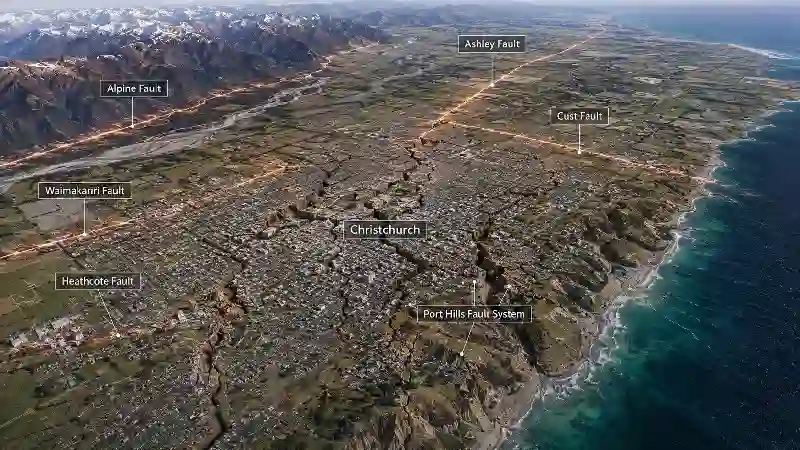
The Canterbury region contains several active faults.
- Shallow crustal earthquakes
- Strong local shaking
- Previously unknown faults discovered after major earthquakes
Explore earthquake types
Alpine Fault (Major Plate Boundary)
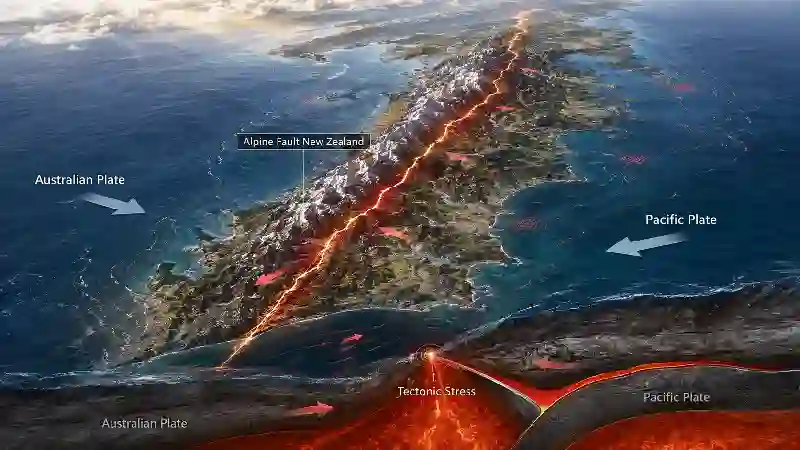
The Alpine Fault is New Zealand’s largest fault.
- Major transform fault system
- Runs along the South Island
- Capable of very large earthquakes
Christchurch Basin Amplification
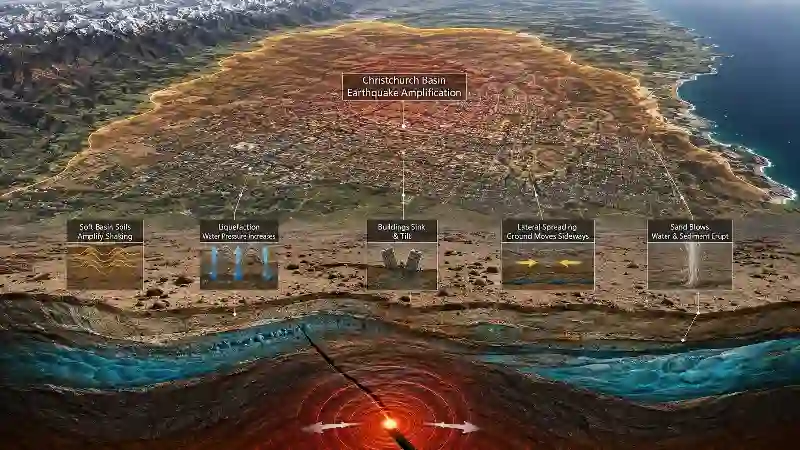
Christchurch’s ground conditions increase earthquake damage.
- Soft sediments beneath the city
- Amplified shaking
- Liquefaction during strong earthquakes
Liquefaction became one of the defining features of the Christchurch earthquakes.
Offshore & Regional Plate Interaction
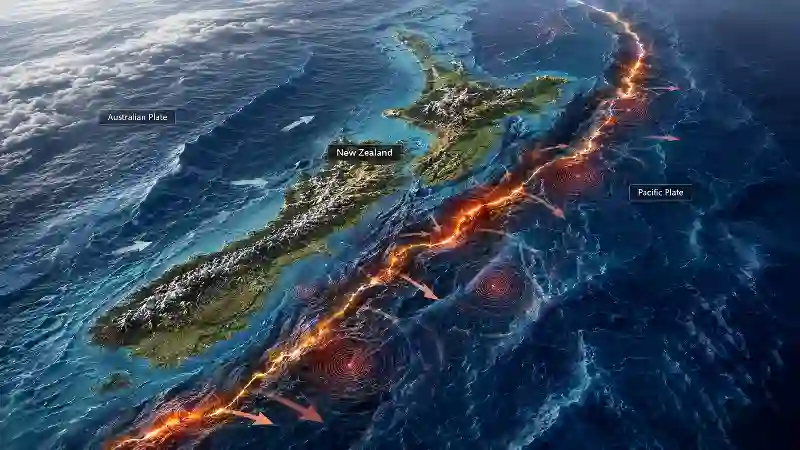
Regional tectonic forces continue affecting Christchurch.
- Plate boundary stress
- Offshore seismic activity
- Ongoing crustal deformation
Recent Earthquake Activity in Christchurch
Christchurch continues to experience seismic activity.
Recent patterns show:
- Aftershock sequences
- Small regional earthquakes
- Ongoing tectonic stress across Canterbury
New Zealand scientists closely monitor fault activity throughout the South Island.
Notable Earthquakes in Christchurch
Christchurch experienced one of New Zealand’s most destructive earthquake sequences.
- 2010 Darfield Earthquake (M7.1)
A major earthquake west of Christchurch. - 2011 Christchurch Earthquake (M6.2)
A shallow earthquake causing severe urban damage. - Canterbury Aftershock Sequence
Hundreds of earthquakes followed the main events.
Understand magnitude vs impact
Christchurch vs Other Earthquake Regions
Christchurch has a unique earthquake profile.
- Christchurch → shallow crustal earthquakes + transform boundary
- Tokyo → subduction zone earthquakes
- California → transform faults
- Mexico City → soil amplification effects
Christchurch earthquakes are especially dangerous because many occur at shallow depth.
Can Earthquakes in Christchurch Be Predicted?
No — earthquakes cannot be predicted precisely.
Scientists can:
- monitor active faults
- track tectonic stress
- study aftershock patterns
But exact timing remains uncertain.
Learn more → Can earthquakes be predicted
Because it lies near the Pacific–Australian plate boundary.
Shallow depth and strong ground amplification.
When water-saturated ground behaves like liquid during shaking.
Yes — the region remains tectonically active.
Final Thoughts
Christchurch is one of the clearest modern examples of how earthquakes can reshape a city. With active fault systems, shallow seismic activity, and complex ground conditions, the region remains an important case study in earthquake science.
Understanding Christchurch earthquakes helps explain how plate boundaries and local geology combine to influence seismic risk.