
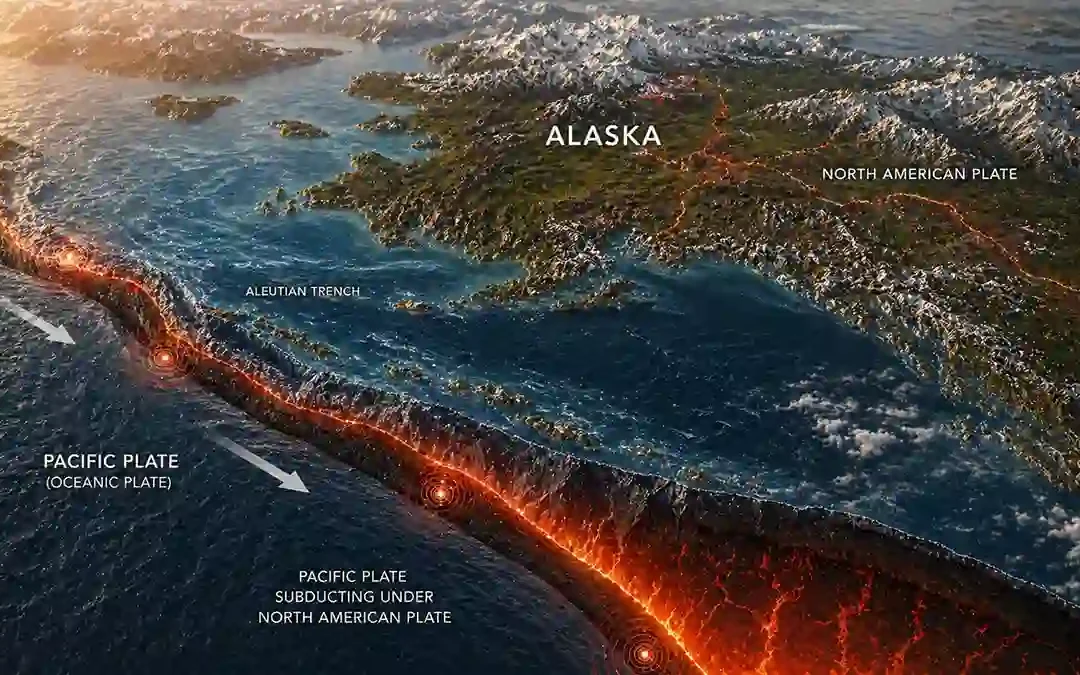
Alaska experiences more earthquakes than any other U.S. state — and not by a small margin.
This isn’t random. The state sits directly on one of the most active tectonic boundaries in the world, where massive plates are constantly interacting beneath the surface.
What’s interesting is that many of these earthquakes happen far from major cities, which is why they often go unnoticed outside the region.
If you’re new to earthquakes, start with the basics — you can explore what is an earthquake to understand how these events occur.
Earthquake Risk Zones in Alaska (Quick Overview)
| Region | Risk Level | Main Cause |
|---|---|---|
| Southern Alaska (Aleutian Arc) | Very High | Subduction zone |
| Anchorage Region | Very High | Plate boundary interaction |
| Interior Alaska | Moderate | Fault systems |
| Northern Alaska | Low | Stable crust |
| Aleutian Islands | Extremely High | Active tectonic boundary |
To understand how these zones form, you can explore fault lines
Why Do Earthquakes Happen in Alaska?
Alaska’s earthquakes are mainly caused by the interaction between the Pacific Plate and the North American Plate.
In simple terms:
- The Pacific Plate moves northward
- It is forced beneath the North American Plate
- Stress builds along the boundary
- Eventually, the energy is released as earthquakes
This process is known as subduction — one of the most powerful geological processes on Earth.
If you want a deeper explanation, see causes of earthquakes
Major Earthquake Zones in Alaska
Aleutian Subduction Zone (Highest Risk)
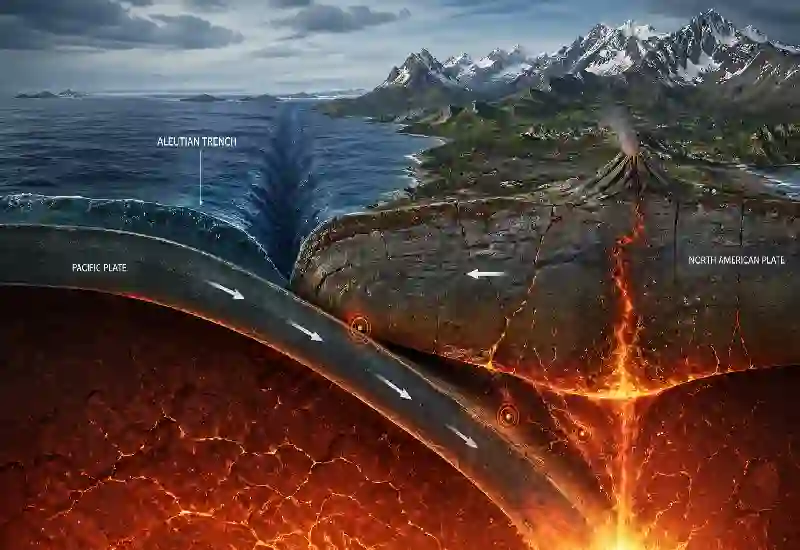
The Aleutian Trench is the most active earthquake zone in Alaska.
- Frequent large earthquakes
- Located along a major subduction boundary
- High tsunami potential
This region produces some of the strongest earthquakes in North America.
You can explore this further in types of earthquakes
Anchorage & Southern Alaska

Southern Alaska, including Anchorage, is highly exposed to seismic activity.
- Close to plate boundary
- Strong ground shaking potential
- History of major earthquakes
Interior Alaska Fault Systems
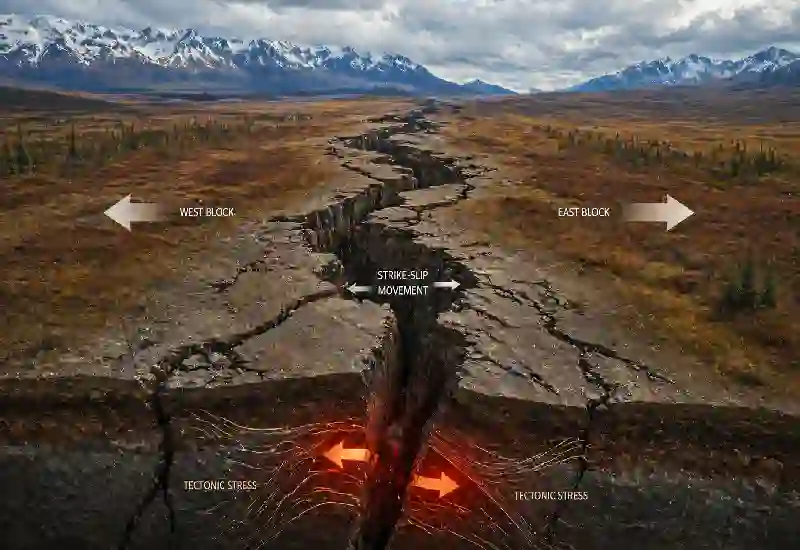
Interior Alaska experiences earthquakes from fault movement.
- Less frequent than coastal areas
- Moderate magnitude earthquakes
- Complex fault systems
Recent Earthquake Activity in Alaska
Alaska experiences earthquakes daily, although many are too small to be felt.
In recent years:
- Frequent small earthquakes occur along the Aleutian Arc
- Occasional large earthquakes affect southern regions
- Aftershocks can continue for extended periods
This constant activity reflects ongoing tectonic movement.
To understand why earthquakes repeat, explore causes of earthquakes
Notable Earthquakes in Alaska
Alaska has experienced some of the most powerful earthquakes in U.S. history.
- 1964 Alaska Earthquake (M9.2)
One of the strongest earthquakes ever recorded, causing massive damage and tsunamis. - 2018 Anchorage Earthquake (M7.1)
Caused widespread damage but limited casualties due to preparedness. - 2021 Alaska Peninsula Earthquake (M8.2)
A major offshore earthquake highlighting ongoing seismic risk.
To understand what these magnitudes mean, see magnitude vs intensity
Alaska vs Other Earthquake Regions
Alaska’s earthquake pattern is among the most intense globally.
- Alaska → powerful subduction earthquakes
- Chile → similar subduction-driven activity
- Turkey → fault-driven earthquakes
- California → transform faults like the San Andreas Fault
This makes Alaska one of the most seismically active regions in North America.
Can Earthquakes in Alaska Be Predicted?
No — earthquakes cannot be predicted precisely.
Scientists can:
- monitor seismic activity
- identify high-risk zones
- issue early warnings
But exact timing remains uncertain.
You can explore this further in can earthquakes be predicted
Because it lies on a major subduction zone between tectonic plates.
Southern Alaska and the Aleutian Islands.
Yes — Alaska experiences earthquakes daily.
Yes — especially along coastal subduction zones.
Final Thoughts
Alaska is a clear example of how powerful tectonic forces shape our planet. Earthquakes here are not rare — they are part of a continuous geological process driven by plate movement. Understanding Alaska’s seismic activity helps explain how some of the strongest earthquakes in the world occur.