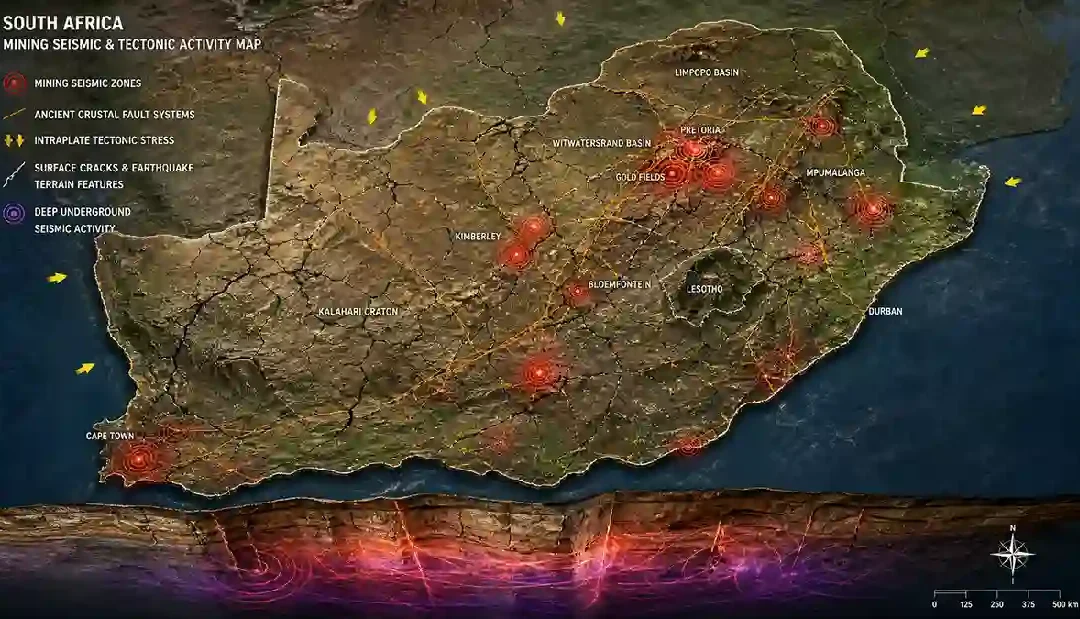
 South Africa is far from the world’s major tectonic plate boundaries. So many people are surprised to learn that earthquakes still happen here. But South Africa’s earthquakes are unusual. Some are natural earthquakes linked to ancient crustal stress, while others are...
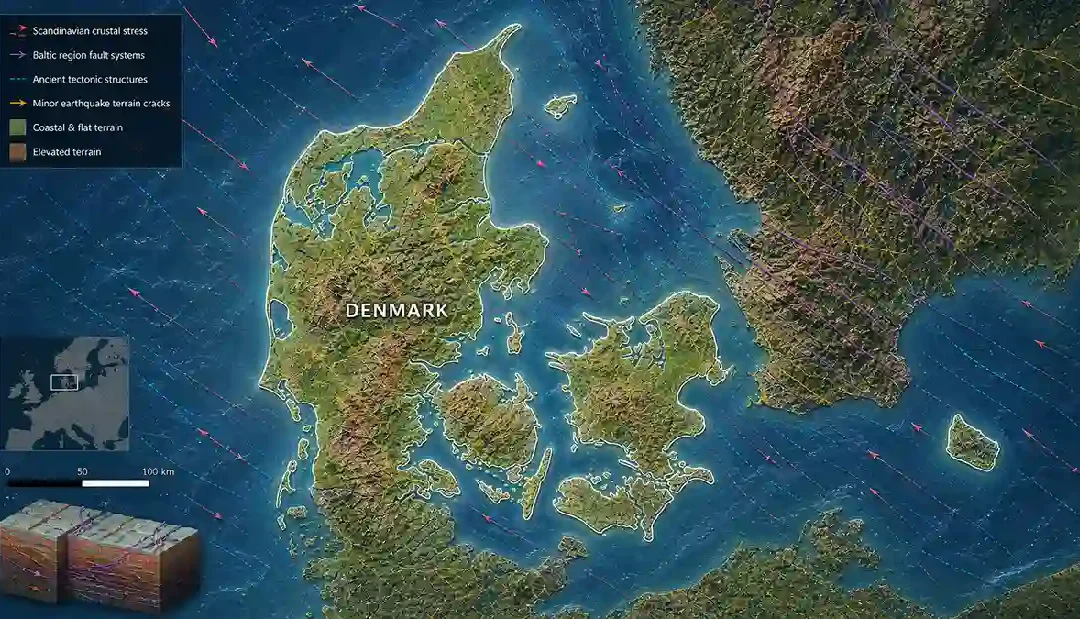 Denmark is one of Europe’s least earthquake-prone countries. Large earthquakes are extremely rare. But despite its calm geological appearance, small earthquakes still occur occasionally beneath Denmark and nearby offshore regions. Most of these earthquakes are linked...
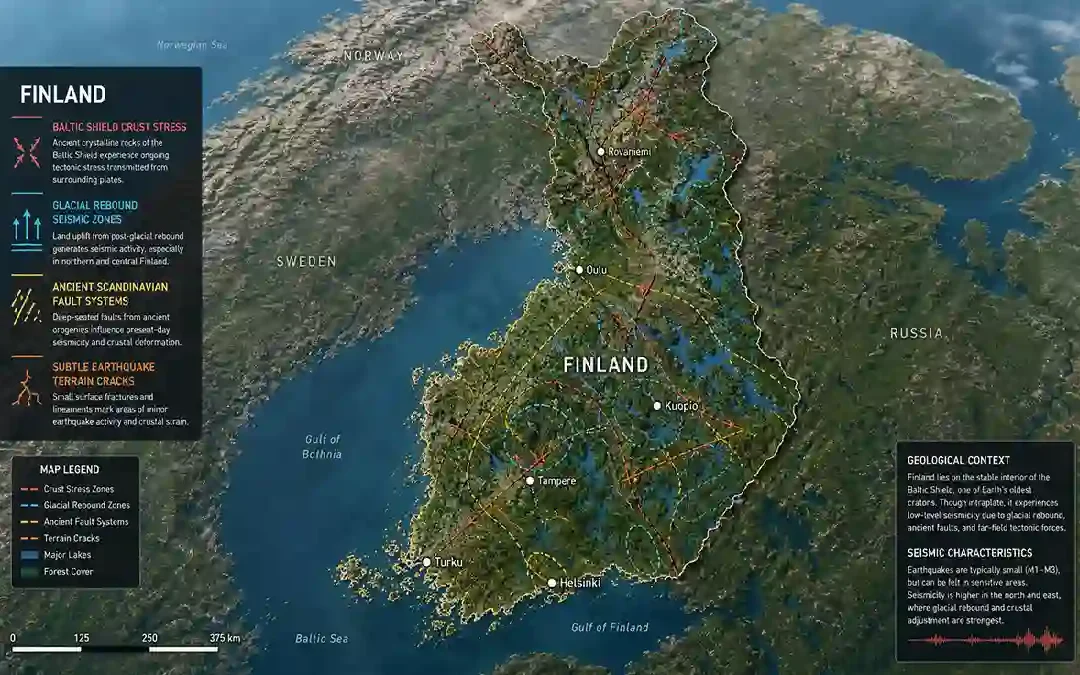 Finland is one of the quietest earthquake regions in Europe. Strong earthquakes are extremely rare here. But the ground beneath Finland is not completely motionless. Small earthquakes still happen because the Scandinavian crust is continuing to adjust after the Ice...
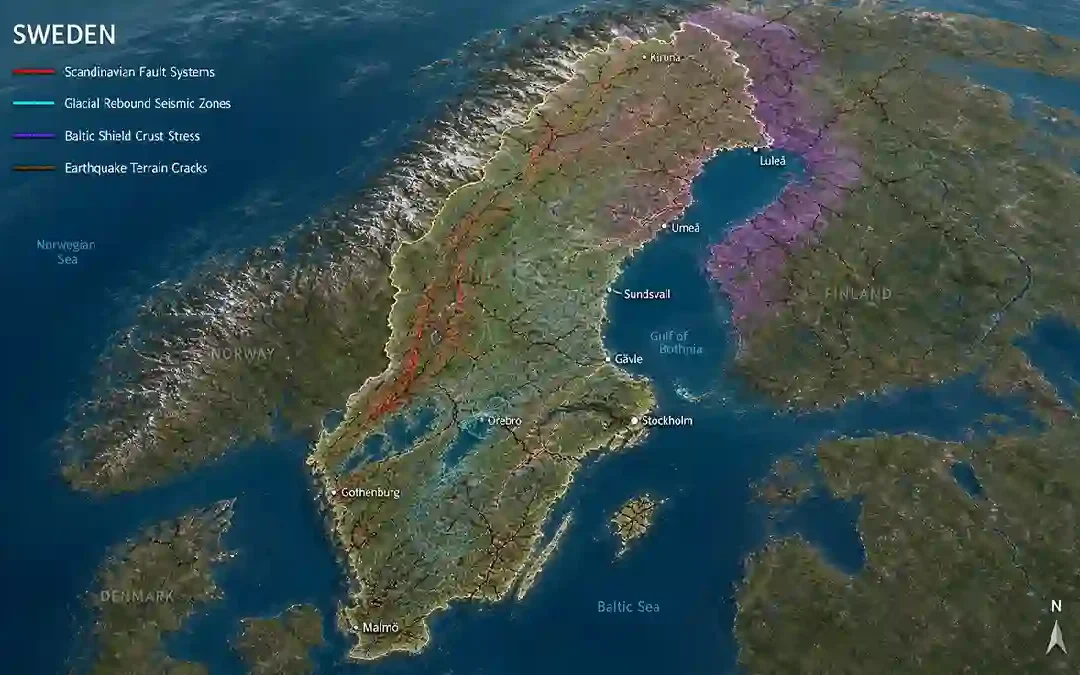 Sweden is often considered one of Europe’s most geologically stable countries. Yet earthquakes still happen here every year. Most are small, but they reveal something important: The Scandinavian crust is still adjusting after the Ice Age. Unlike countries near active...
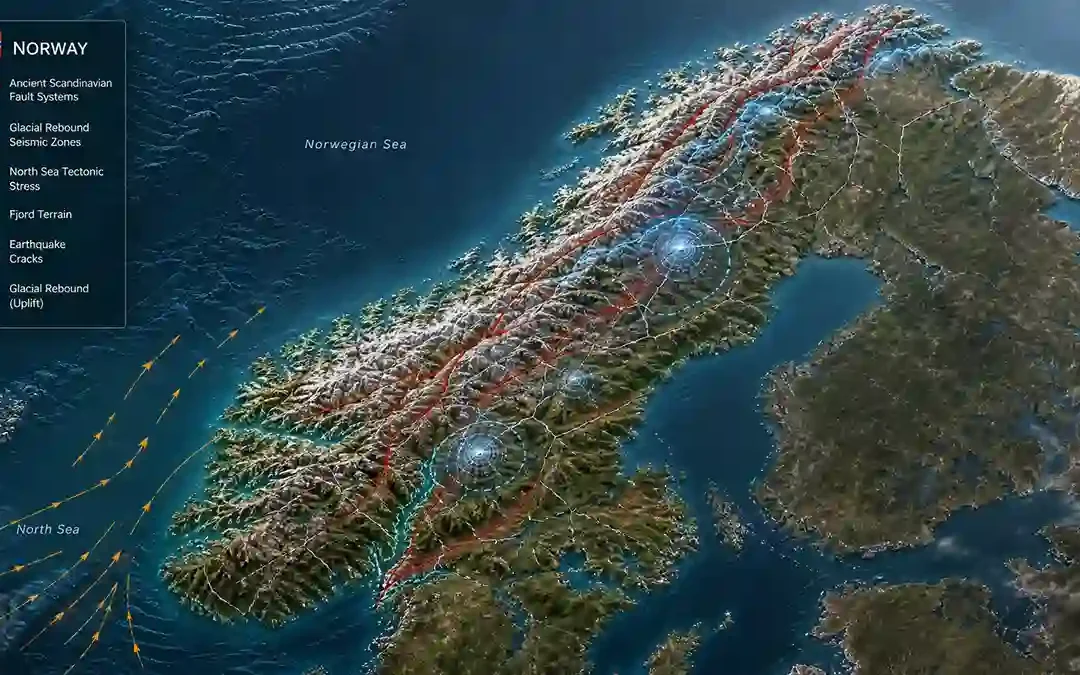 Norway is not located near a major tectonic plate boundary. Yet earthquakes still happen here. The reason is surprisingly connected to something ancient: the Ice Age. Thousands of years ago, massive glaciers covered Scandinavia. When those glaciers melted, the land...
