
When an earthquake starts, every second matters.
Strong shaking can:
- throw people to the ground
- break glass
- topple furniture
- collapse ceilings
- block exits
The safest response is usually quick protective action — not panic. Understanding how to protect yourself during an earthquake can greatly reduce injuries.
If you’re new to earthquakes, begin here → what is an earthquake
Most Important Earthquake Protection Actions
Top Personal Protection Priorities During Earthquakes
The most important actions during a strong earthquake are.
| Action | Importance |
|---|---|
| Protect head and neck | 10 |
| Take cover immediately | 10 |
| Stay away from glass | 9 |
| Remain calm | 8 |
| Avoid running during shaking | 8 |
The Most Important Safety Method
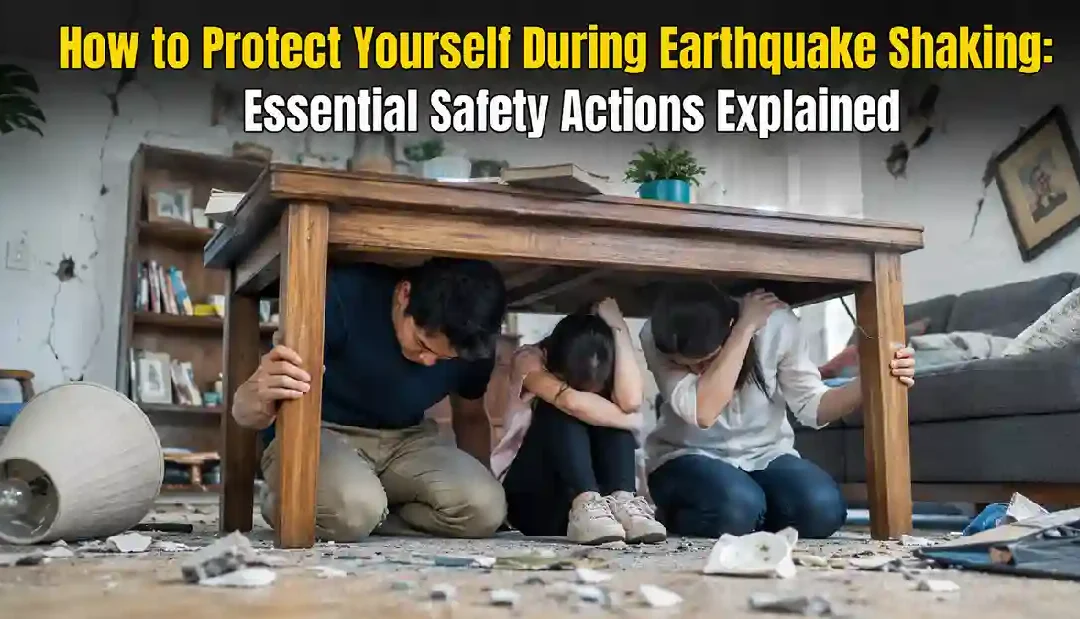
Drop, Cover, and Hold On
This is the most widely recommended earthquake safety action.
Drop
Get low to the ground immediately. Strong shaking can knock people over within seconds.
Cover
Take cover under:
- sturdy desks
- strong tables
- durable furniture
Protect:
- your head
- neck
- face
Falling debris causes many earthquake injuries.
Hold On
Hold onto your shelter until shaking stops. Furniture may move during strong earthquakes. Stay protected until the motion completely ends.
How To Protect Yourself Indoors
If you are inside a home or building:
DO:
- stay indoors during shaking
- move away from windows
- protect your head and neck
- stay under cover
DO NOT:
- run outside during shaking
- use elevators
- stand near shelves or mirrors
Most injuries happen from falling objects and broken glass.
How To Protect Yourself in Tall Buildings
Tall buildings may sway during earthquakes.
Important Tips
- stay inside
- avoid windows
- do not use elevators
- take cover immediately
Modern skyscrapers are often designed to flex safely during shaking.
How To Protect Yourself Outdoors
If you are outside:
Move Away From:
- buildings
- power lines
- bridges
- streetlights
Move Toward:
- open spaces
- clear ground
Falling debris is one of the biggest outdoor dangers.
How To Protect Yourself While Driving
If you are driving:
DO:
- pull over safely
- stop away from bridges and overpasses
- remain inside the vehicle
DO NOT:
- stop beneath power lines
- leave the vehicle during strong shaking unless necessary
Roads and structures may become unstable.
Coastal Earthquake Protection
After strong coastal earthquakes, move to higher ground if a tsunami risk exists.
Tsunami Warning Signs
- strong prolonged shaking
- sudden ocean retreat
- official warnings
Tsunamis can arrive quickly after major offshore earthquakes.
Protecting Children During Earthquakes
Children should learn:
- Drop, Cover, and Hold On
- safe shelter locations
- emergency evacuation routes
Practice Drills Help Children:
- react faster
- reduce panic
- improve safety awareness
Learn more → earthquake safety for schools
Common Dangerous Reactions During Earthquakes
| Dangerous Action | Why It’s Risky |
|---|---|
| Running outside | Falling debris danger |
| Standing near windows | Glass injuries |
| Using elevators | Power failure risk |
| Panicking | Slower decision-making |
| Ignoring aftershocks | Continued collapse danger |
Calm actions improve survival chances.
Why Head and Neck Protection Matters
The most vulnerable body areas during earthquakes are:
- head
- neck
- face
Protect Yourself Using:
- arms
- backpacks
- cushions
- sturdy furniture
Head injuries are common during structural collapse and falling debris events.
How Modern Preparedness Improves Survival
Countries with strong earthquake preparedness programs often experience:
- fewer injuries
- faster evacuations
- better emergency coordination
Examples include:
- Japan
- New Zealand
- California
Prepared populations react faster during emergencies.
Learn more → earthquake survival guide
Why Staying Calm Is So Important
Panic can lead to:
- dangerous decisions
- blocked exits
- slower reactions
Prepared people are more likely to:
- think clearly
- protect themselves correctly
- assist others safely
Mental preparedness is part of earthquake survival.
Can Early Warning Systems Help?
Some regions use:
- earthquake early warning systems
- mobile alerts
- automated alarms
These systems may provide:
- a few seconds of warning
- enough time to take protective action
Learn more → earthquake early warning systems
Drop, Cover, and Hold On.
Usually no — falling debris outside can be extremely dangerous.
Because falling objects often cause serious injuries.
Pull over safely and stay inside the vehicle.
Final Thoughts
Protecting yourself during an earthquake depends on fast action, awareness, and staying calm under pressure. Simple protective steps like Drop, Cover, and Hold On can greatly reduce injuries during strong seismic events.
Understanding how to respond during shaking helps people stay safer when earthquakes strike suddenly and without warning.