
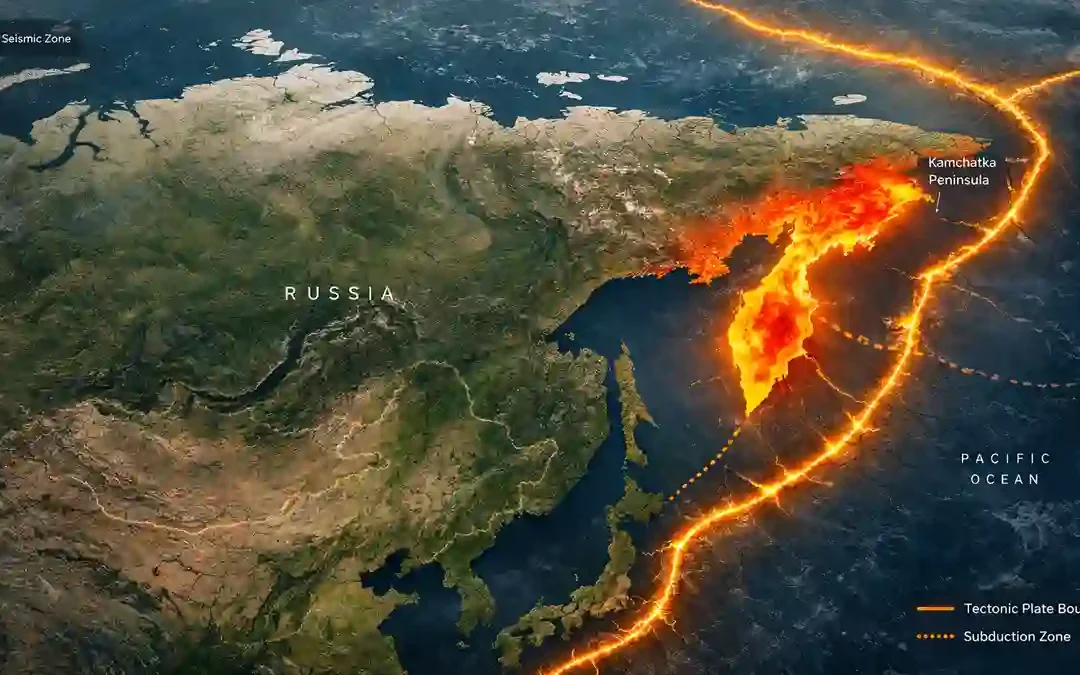
Most people don’t think of Russia as an earthquake-prone country — and in many areas, that’s true.
But the full picture is more interesting.
Russia is split between extremely stable land and highly active seismic zones, especially in the Far East. That contrast makes it one of the most uneven earthquake regions in the world.
If you're new to earthquakes, it’s worth starting with the basics — you can explore what is an earthquake to understand how these events begin.
Earthquake Risk Zones in Russia (Quick Overview)
| Region | Risk Level | Why It Happens |
|---|---|---|
| Kamchatka Peninsula | Very High | Subduction zone, Pacific Plate movement |
| Kuril Islands | Very High | Active offshore seismic activity |
| Siberia (Baikal Rift) | Low–Moderate | Crustal stretching |
| Caucasus Region | Moderate | Continental collision |
| Central Russia | Very Low | Stable tectonic region |
To understand how these zones form, you can explore fault lines which explains how stress builds inside the Earth.
Why Do Earthquakes Happen in Russia?
Earthquakes in Russia are mainly caused by interactions between massive tectonic plates, especially the Pacific Plate.
In simple terms:
- Plates move slowly over time
- Stress builds up along faults
- Eventually, the energy is released as an earthquake
This process is especially intense in eastern Russia, where the Pacific Plate is being forced beneath another plate — a process known as subduction.
If you want a deeper explanation, see causes of earthquakes
Main Earthquake Zones in Russia
Kamchatka Peninsula (Highest Risk Area)
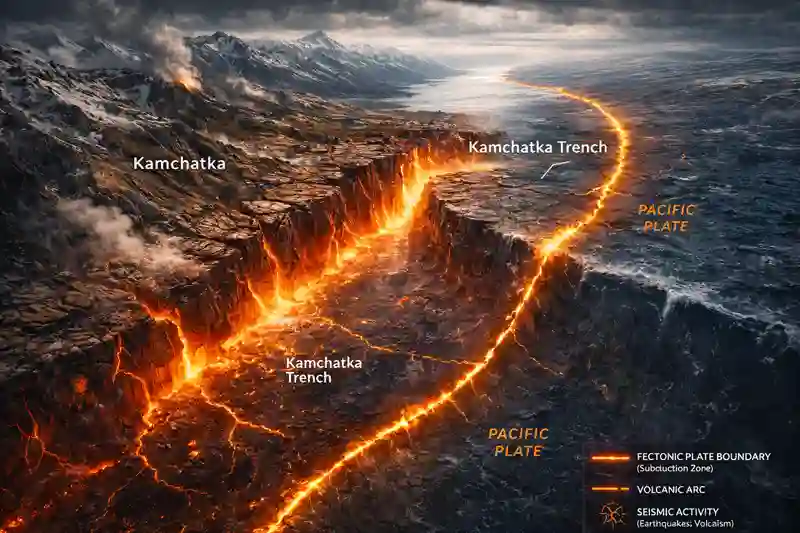
The Kamchatka Peninsula is one of the most seismically active regions in the world.
- Located along the Pacific Ring of Fire
- Frequent magnitude 6–8 earthquakes
- Active volcanoes and deep ocean trenches
This isn’t unusual for subduction zones — they tend to produce the strongest earthquakes on Earth.
You can learn more about these types in types of earthquakes
Siberia & Baikal Rift (Low–Moderate Activity)
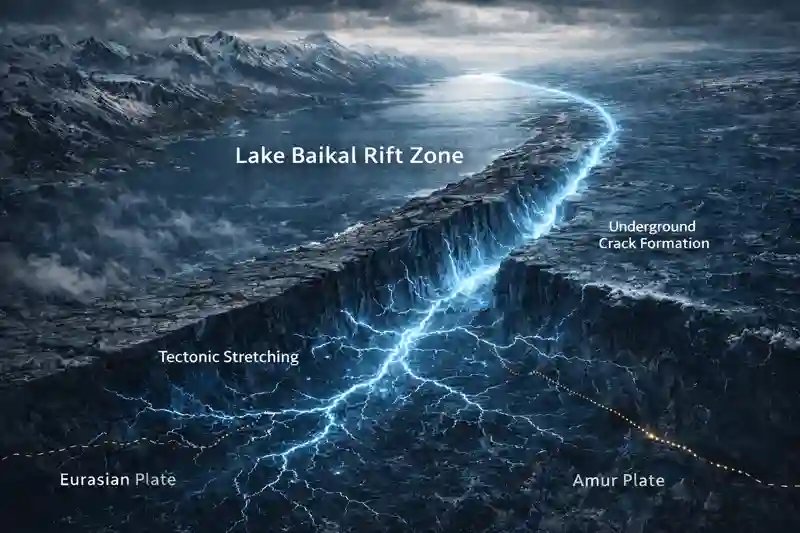
Much of Siberia is stable, but there are exceptions.
The Baikal Rift Zone is slowly pulling apart, which creates:
- occasional moderate earthquakes
- long-term crustal movement
Even though these earthquakes are less frequent, they are still important from a geological perspective.
Caucasus Region (Collision Zone)
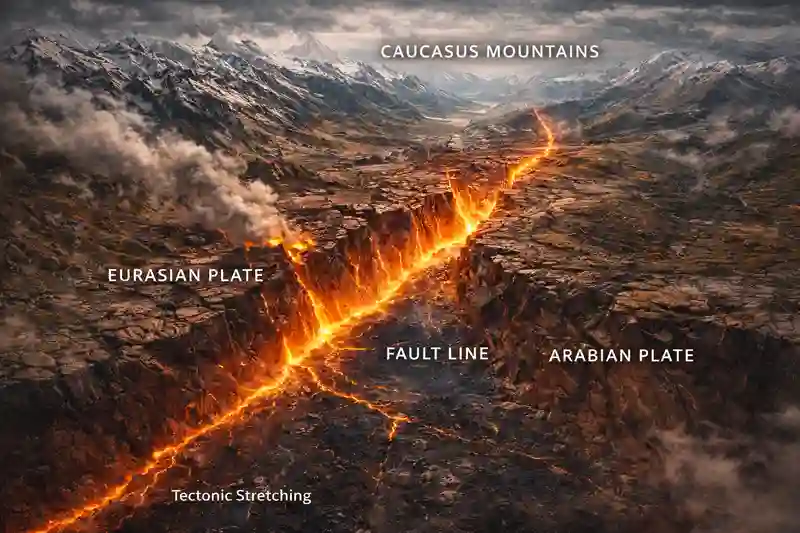
The Caucasus Mountains experience earthquakes due to continental plate collision.
- Moderate seismic activity
- Complex fault systems
- Ongoing mountain formation
If you're curious how these fractures develop, take a look at fault lines
Recent Earthquake Activity in Russia
Russia continues to experience earthquakes, particularly in its eastern regions.
In recent years, scientists have observed:
- frequent offshore earthquakes near Kamchatka
- ongoing seismic movement along the Kuril Islands
- deep earthquakes that can be felt across large distances
These patterns follow long-term tectonic behavior rather than random events.
For a clearer explanation, you can explore causes of earthquakes
Notable Earthquakes in Russia
Looking at past events helps understand the scale of risk.
- 1952 Kamchatka Earthquake (M9.0)
One of the most powerful earthquakes ever recorded, which generated a massive Pacific tsunami. - 2006 Kuril Islands Earthquake (M8.3)
A strong offshore event that highlighted the region’s ongoing activity. - 2013 Sea of Okhotsk Earthquake (M8.3)
A deep-focus earthquake felt across large distances.
If you're unsure what these magnitudes mean, see magnitude vs intensity
Russia vs Other Earthquake Regions
Russia’s earthquake pattern is quite different from other well-known regions.
- Russia → activity concentrated in the Far East
- Japan → widespread seismic activity across the country
- California → driven by fault systems like the San Andreas Fault
This means Russia isn’t highly active overall — but certain areas are extremely active.
Can Earthquakes in Russia Be Predicted?
Short answer: no.
Scientists can:
- identify high-risk zones
- monitor seismic activity
- estimate probabilities
But predicting the exact time of an earthquake is still not possible.
You can explore this further in can earthquakes be predicted
Only in specific regions like Kamchatka and the Kuril Islands.
The Kamchatka Peninsula.
No — it is located in a stable tectonic region.
Because it lies near tectonic plate boundaries and subduction zones.
Final Thoughts
Russia is a good example of how earthquakes are not evenly distributed.
You can travel across vast areas of stable land — and then reach one of the most active seismic zones on Earth.
That contrast is what makes understanding earthquakes so important.
If you want to build a complete understanding step by step, you can start with earthquake guide here.