
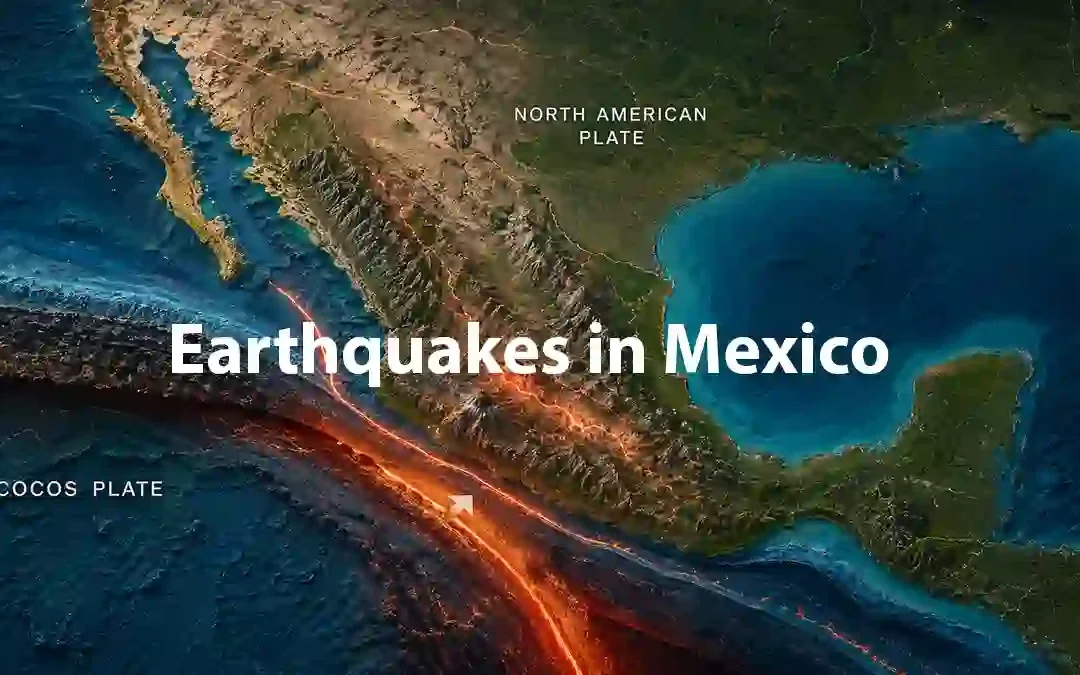
Mexico is one of the most seismically active countries in the Americas — but the reason isn’t obvious until you look beneath the surface.
Most of the country’s strongest earthquakes occur along the Pacific coast, where tectonic plates are constantly interacting. That movement creates a steady pattern of seismic activity that has shaped Mexico’s geology for millions of years.
If you’re new to the topic, it helps to start with the basics — you can explore what is an earthquake to understand how earthquakes form.
Earthquake Risk Zones in Mexico
| Region | Risk Level | Main Cause |
|---|---|---|
| Pacific Coast (Guerrero, Oaxaca) | Very High | Subduction zone |
| Central Mexico | High | Wave amplification & basin effects |
| Baja California | Moderate–High | Fault systems |
| Northern Mexico | Low | Stable crust |
| Yucatán Peninsula | Very Low | Minimal tectonic activity |
To understand how stress builds in these regions, you can explore fault lines
Why Do Earthquakes Happen in Mexico?
Mexico’s earthquakes are mainly caused by the movement of the Cocos Plate beneath the North American Plate.
In simple terms:
- The Cocos Plate moves northeast
- It is forced beneath the North American Plate
- Stress builds up over time
- The energy is released as earthquakes
This process is called subduction, and it’s responsible for many of the world’s largest earthquakes.
For a deeper explanation, see causes of earthquakes
Major Earthquake Zones in Mexico
Pacific Subduction Zone (Highest Risk)
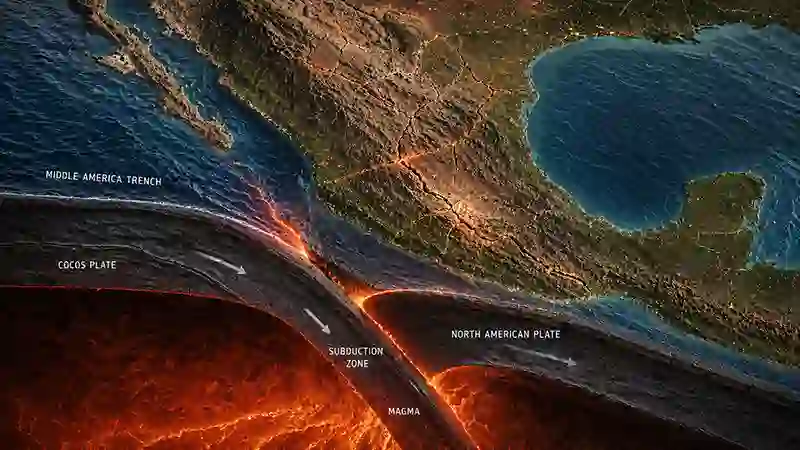
The Pacific coast of Mexico is the most active earthquake zone.
- Frequent large earthquakes
- Located along a major subduction zone
- Potential for tsunami generation
This area is similar to other subduction zones around the world.
You can explore this further in types of earthquakes
Central Mexico (Mexico City Risk)
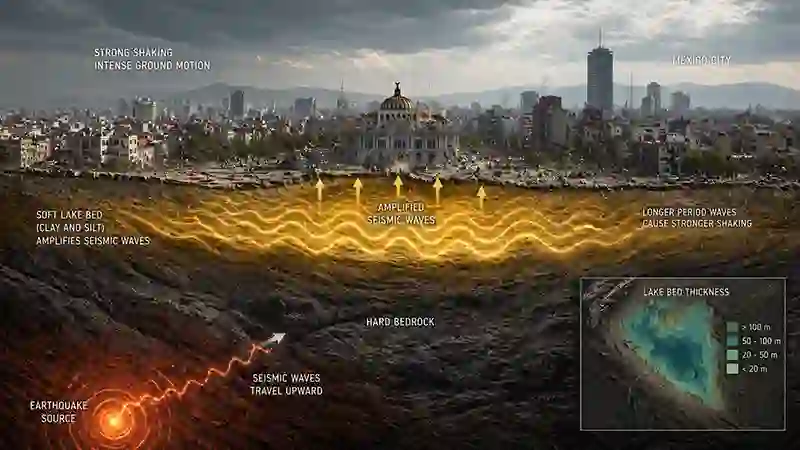
Central Mexico, especially Mexico City, faces a different type of risk.
- Built on an ancient lakebed
- Soft soil amplifies seismic waves
- Even distant earthquakes can cause strong shaking
This is why earthquakes far from the city can still cause damage.
Baja California Fault Systems
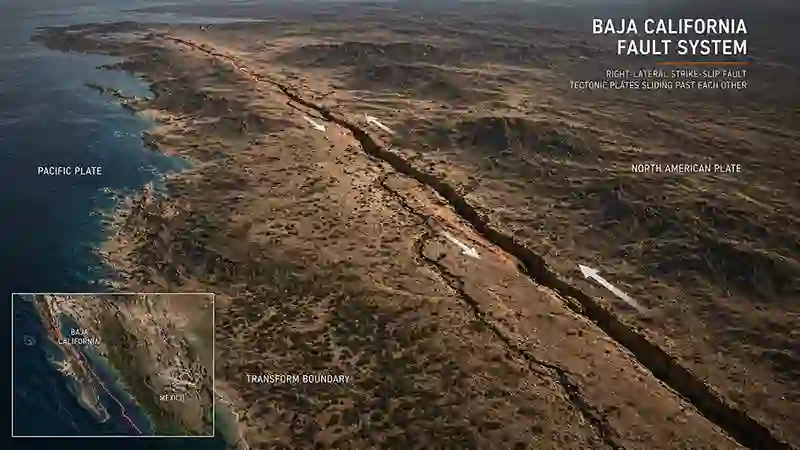
Baja California experiences earthquakes due to fault movement.
- Strike-slip faults
- Similar to California’s system
- Moderate earthquake frequency
This region behaves differently from subduction zones.
Recent Earthquake Activity in Mexico
Mexico experiences frequent earthquakes, especially along its Pacific coastline.
In recent years:
- Strong earthquakes have occurred near Guerrero and Oaxaca
- Offshore earthquakes have triggered tsunami alerts
- Aftershocks often continue for weeks
This ongoing activity reflects the constant movement of tectonic plates.
If you want to understand why earthquakes repeat, explore causes of earthquakes
Notable Earthquakes in Mexico
Looking at past events gives a clearer picture of risk.
- 1985 Mexico City Earthquake (M8.0)
One of the most devastating earthquakes in Mexico’s history. - 2017 Puebla Earthquake (M7.1)
A powerful earthquake that caused widespread damage in central Mexico. - 2022 Michoacán Earthquake (M7.6)
Occurred along the Pacific coast, highlighting ongoing seismic activity.
To understand how magnitude relates to damage, see magnitude vs intensity
Mexico vs Other Earthquake Regions
Mexico’s seismic activity has some unique characteristics.
- Mexico → subduction zone + basin amplification
- Indonesia → subduction + volcanic activity
- Turkey → fault-driven earthquakes
- California → transform faults like the San Andreas Fault
This mix makes Mexico especially complex.
Can Earthquakes in Mexico Be Predicted?
No — earthquakes cannot be predicted precisely.
Scientists can:
- monitor seismic activity
- identify high-risk zones
- issue early warnings
But exact timing is still not possible.
You can explore this further in can earthquakes be predicted
Because of subduction between tectonic plates along the Pacific coast.
The Pacific coastal regions, especially Guerrero and Oaxaca.
Because soft ground amplifies seismic waves.
Yes — especially along subduction zones.
Final Thoughts
Mexico shows how earthquakes are shaped not just by plate movement, but also by local geology.
From coastal subduction zones to inland amplification effects, each region behaves differently.
Understanding these patterns helps explain why earthquakes in Mexico can vary so much in impact.