 Seismographs are scientific instruments used to detect and record earthquakes. They help scientists measure ground motion caused by seismic waves traveling through Earth. When an earthquake occurs: the ground shakes seismic waves spread outward seismographs record the...
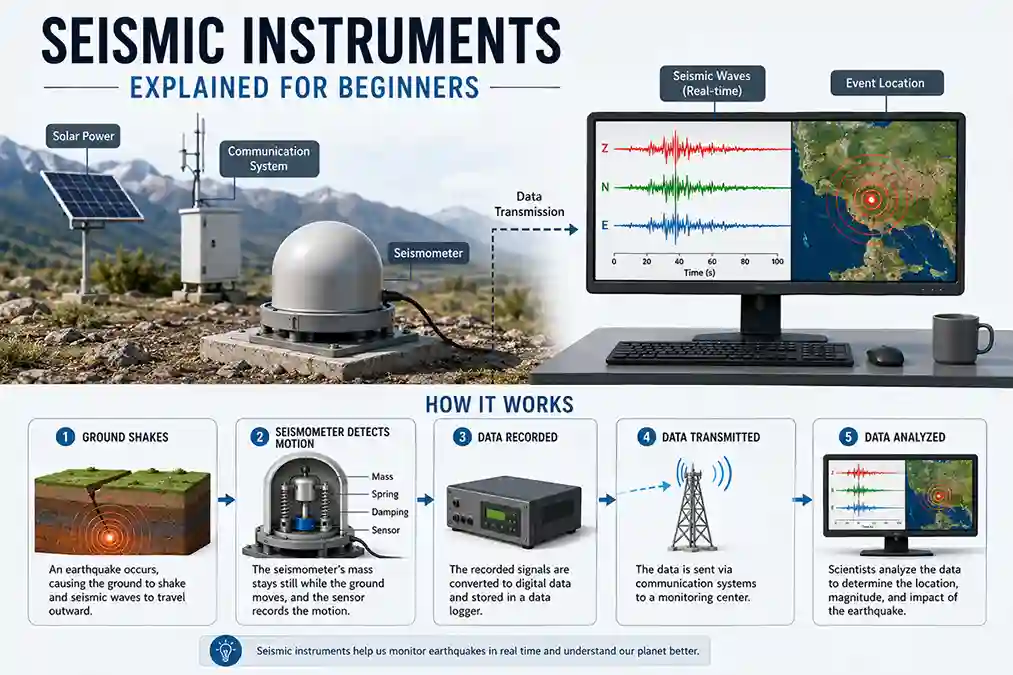 Scientists use seismic instruments to detect, measure, and study earthquakes. These tools record seismic waves traveling through Earth and help researchers understand earthquake location, magnitude, depth, and ground motion. Modern seismic instruments are extremely...
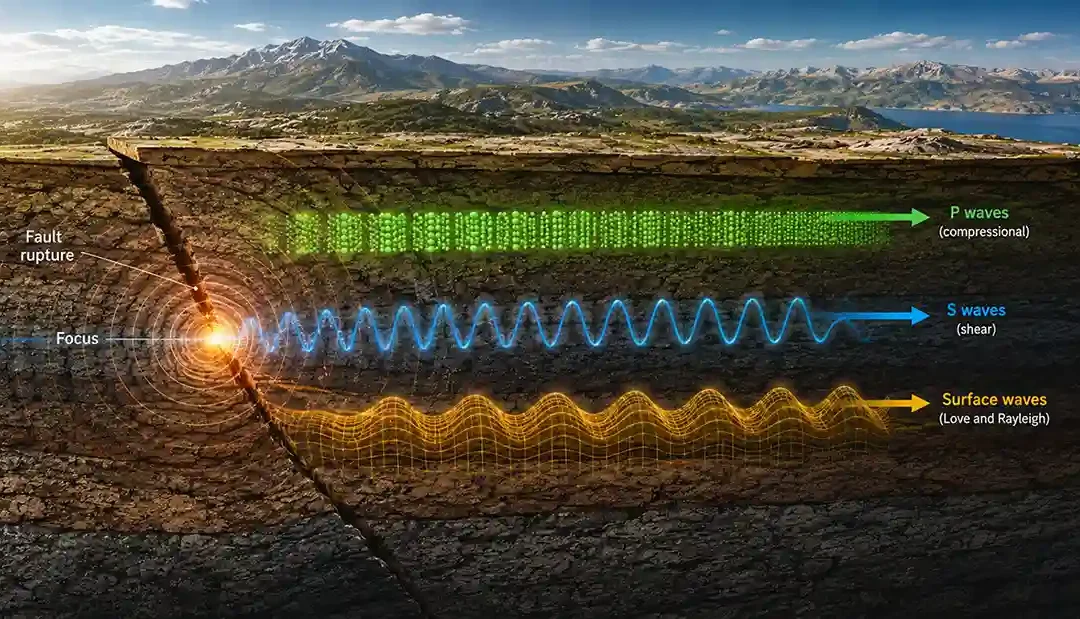 When an earthquake happens, energy travels through Earth in the form of seismic waves. These waves move outward from the earthquake source and create the shaking people feel on the surface. Scientists study earthquake wave types to understand: how earthquakes spread...
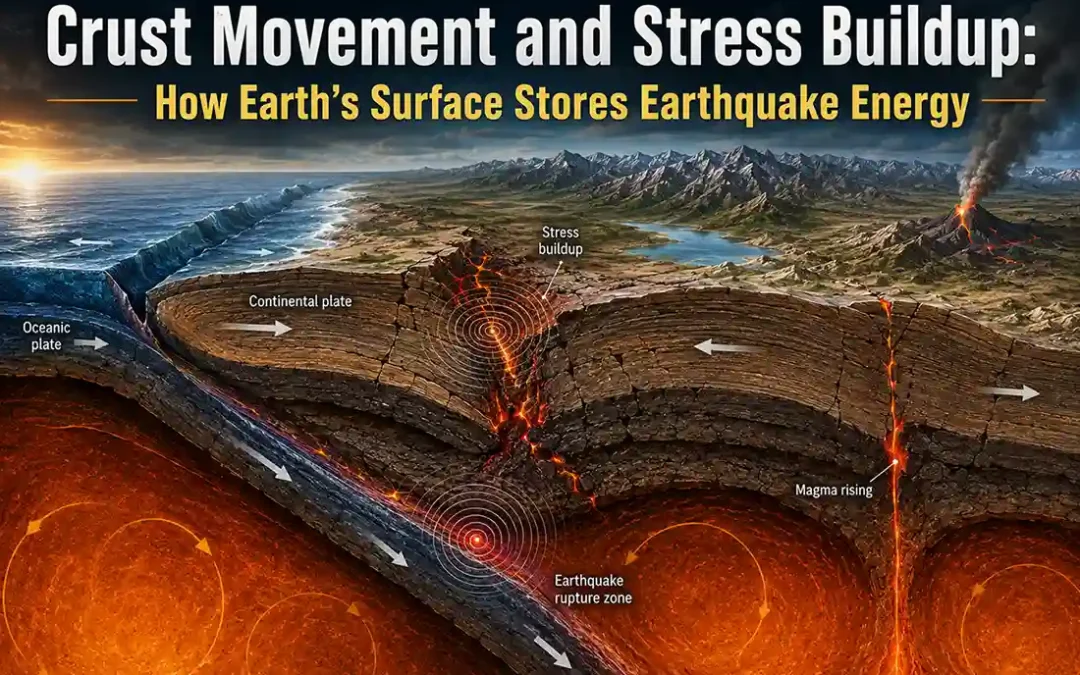 Earthquakes do not happen randomly. Before the ground suddenly shakes, Earth’s crust often spends years — or even centuries — slowly building stress underground. This process begins because tectonic plates are constantly moving. As Earth’s crust shifts: rocks bend...
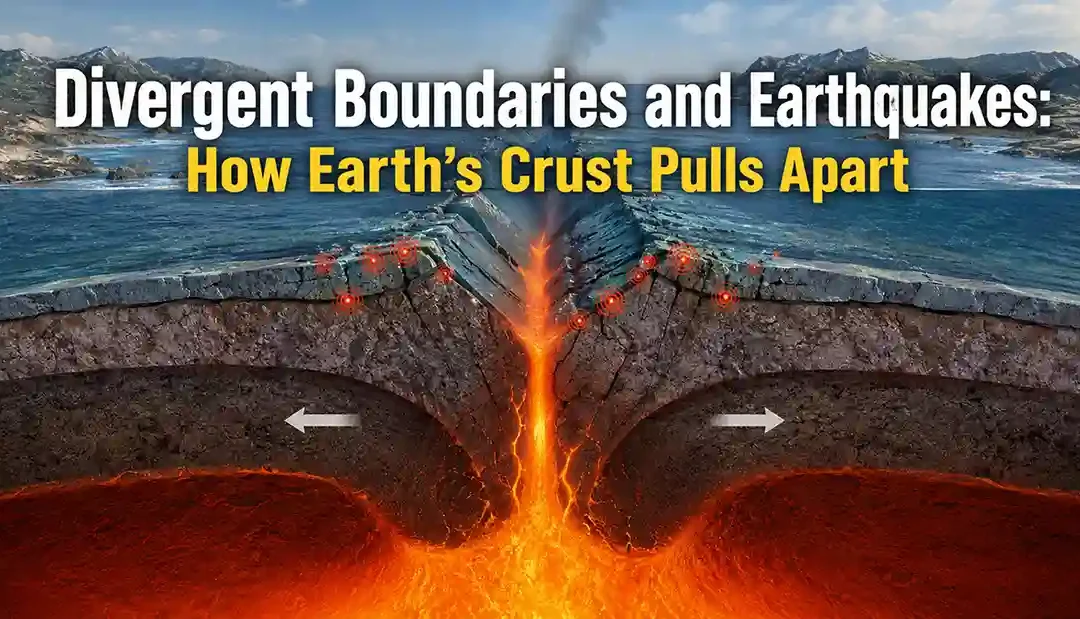 Not all earthquakes happen because tectonic plates collide. Some earthquakes occur because tectonic plates move away from each other. These regions are called divergent boundaries At divergent boundaries: Earth’s crust stretches cracks form underground magma rises...
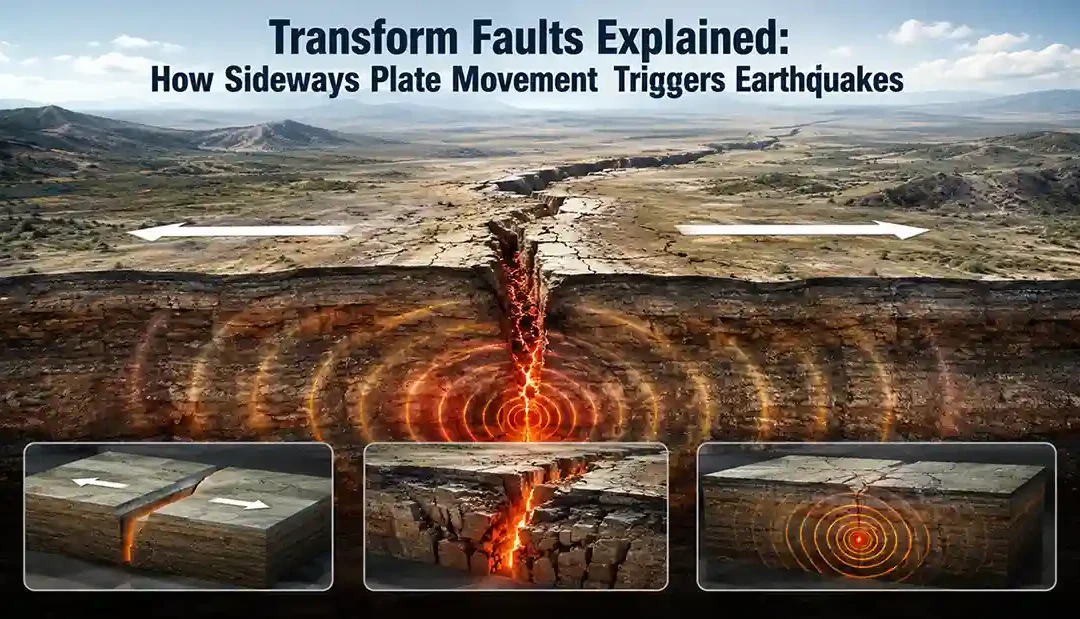 Earth’s outer shell is broken into gigantic, rigid slabs of rock known as tectonic plates. Where these plates collide, they build towering mountain ranges; where they pull apart, they tear open new ocean basins. However, along many boundaries, plates do neither—they...
