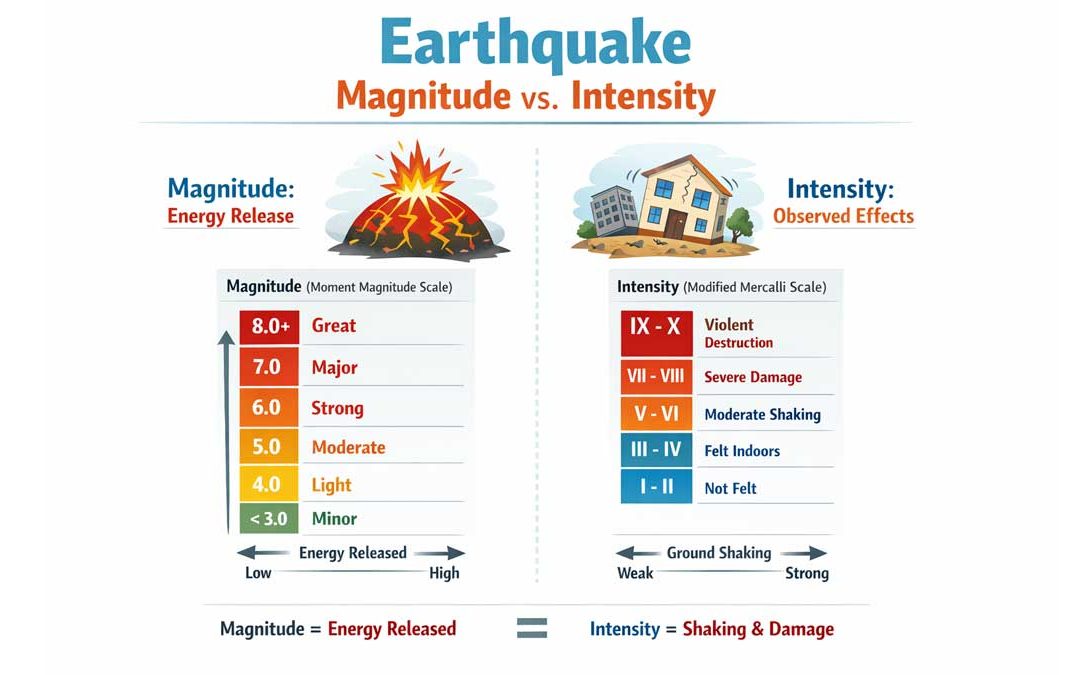
 When an earthquake happens, you may hear two important terms: magnitude and intensity. While they are related, they describe different aspects of an earthquake. Magnitude tells us how much energy an earthquake releases, while intensity describes how strong the shaking...
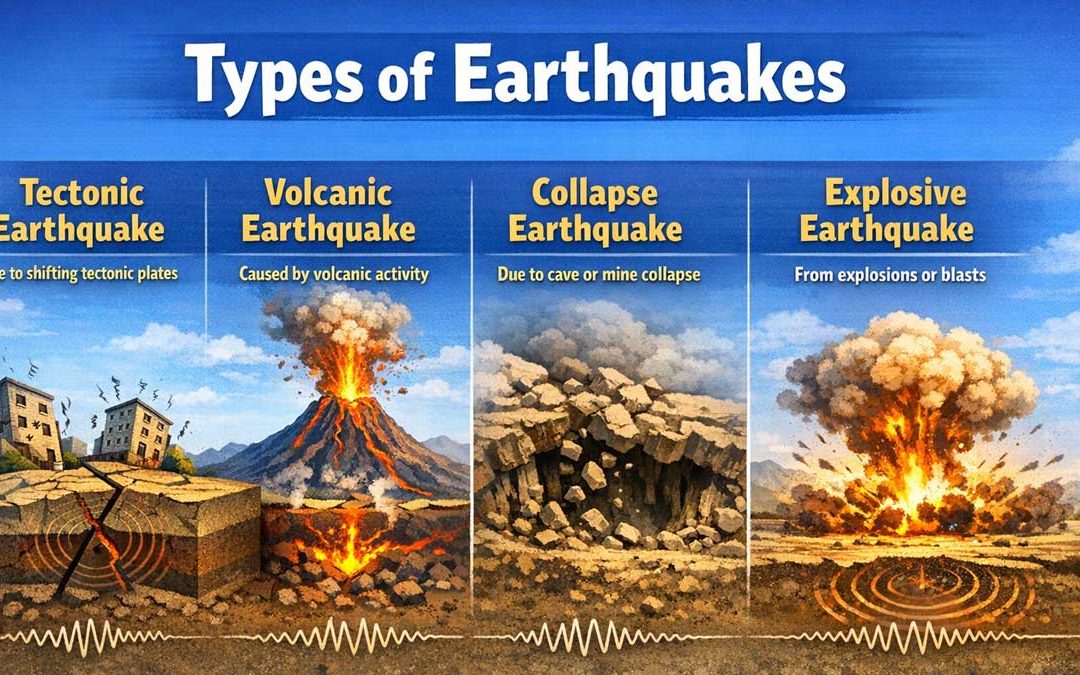 Earthquakes are not all the same. They can occur for different reasons and in different environments. Scientists classify earthquakes into several types based on how they are caused and where they occur. Understanding the types of earthquakes helps us better predict...
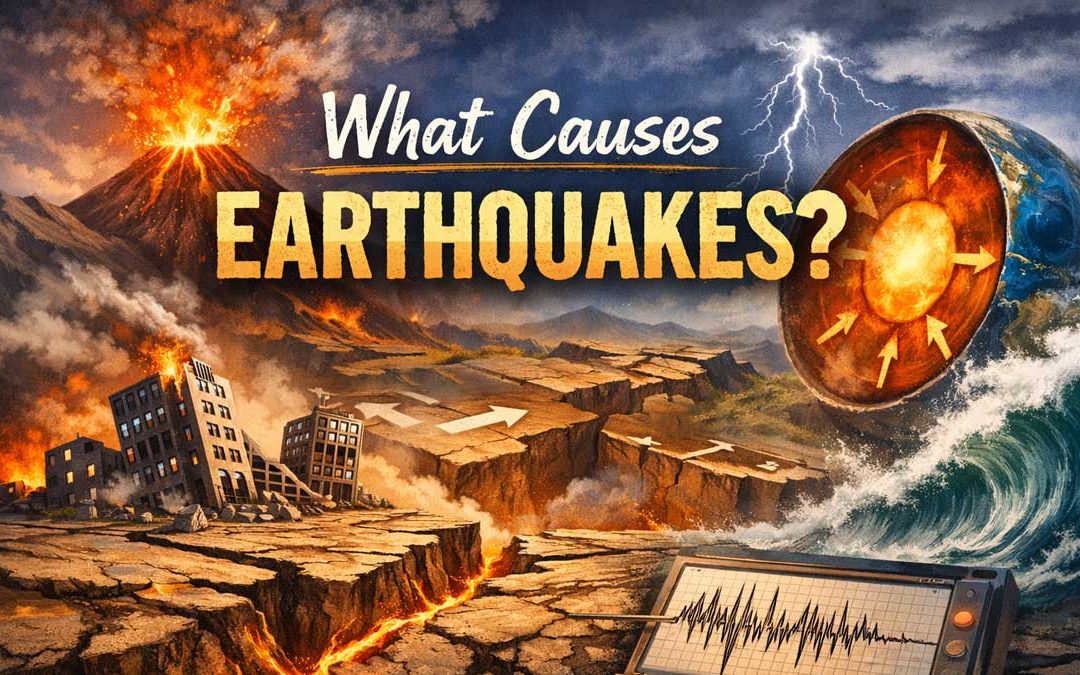 Earthquakes are caused by the sudden release of energy inside the Earth’s crust. This energy builds up over time due to the movement of tectonic plates and is released when rocks break or slip along faults. While most earthquakes are natural, some can also be...
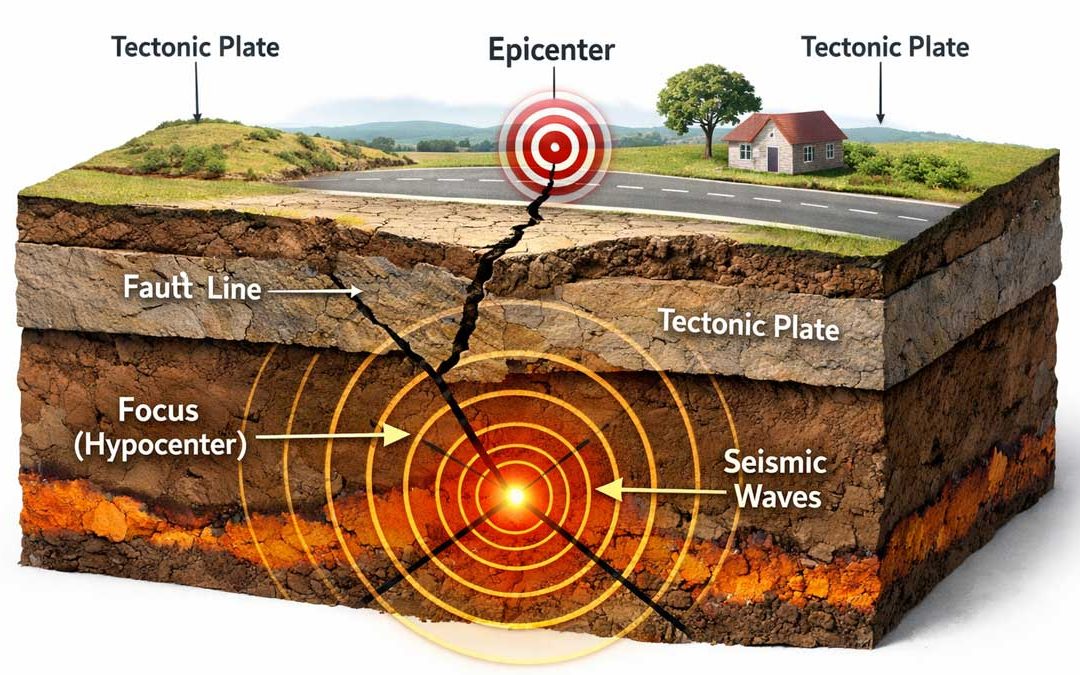 An earthquake is the sudden shaking of the ground caused by the release of energy inside the Earth. This energy usually builds up when rocks in the Earth’s crust are stressed by the movement of tectonic plates. When that stress becomes too great, the rocks break or...
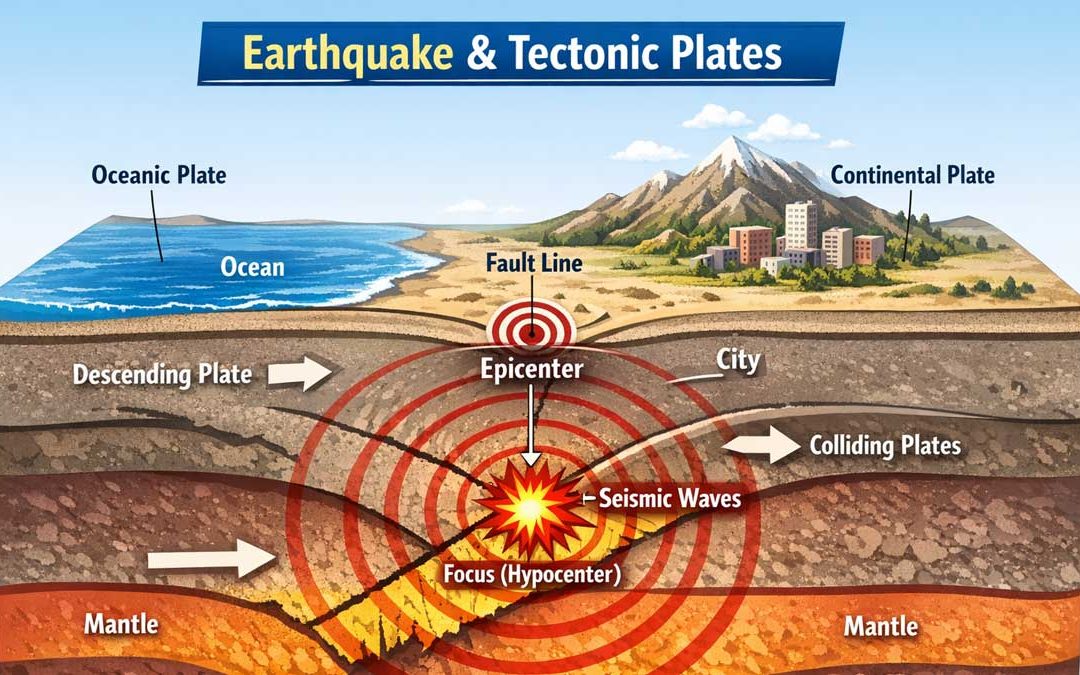 Earthquakes are one of the most powerful natural phenomena on Earth. They occur when energy stored in the Earth’s crust is suddenly released, creating vibrations known as seismic waves. From minor tremors to devastating disasters, earthquakes shape landscapes,...
