
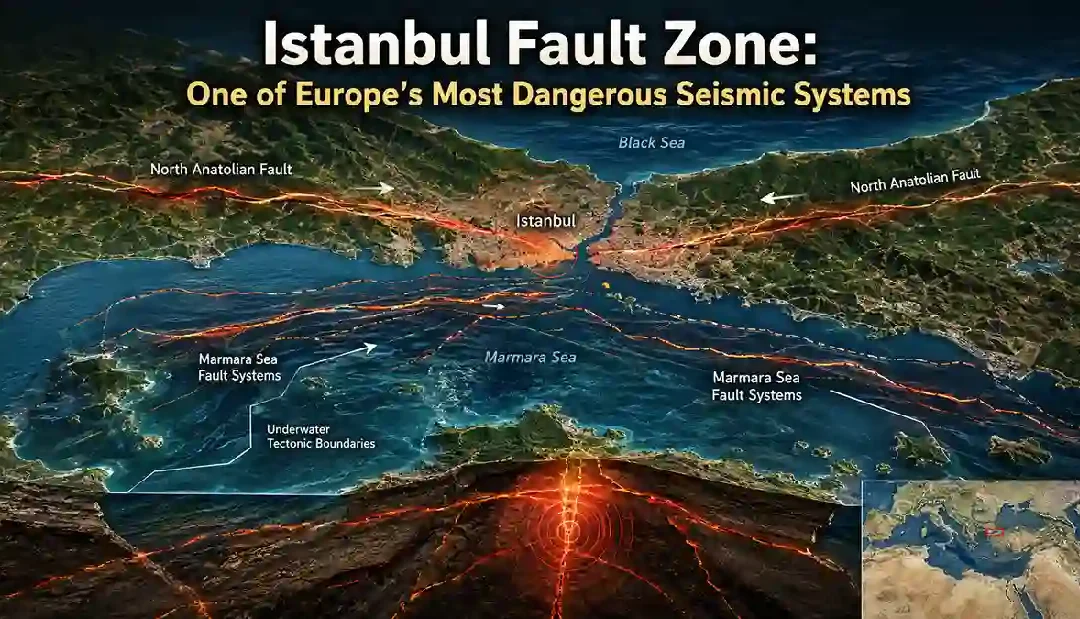
The Istanbul fault zone is considered one of the most closely watched seismic regions in Europe. The main reason is the nearby North Anatolian Fault — a massive transform fault running beneath the Marmara Sea.
This fault system lies dangerously close to Istanbul, a city of millions. Scientists consider the region highly significant because stress continues building beneath the Marmara Sea.
If you’re new to earthquakes, begin here → what is an earthquake
Istanbul Fault Zone Structure
| Fault Segment | Risk Level | Main Feature |
|---|---|---|
| North Anatolian Fault | Extremely High | Major transform fault |
| Marmara Sea Segment | Extremely High | Offshore seismic gap |
| Princes’ Islands Fault | Very High | Near Istanbul coastline |
| Central Marmara Basin | High | Deep tectonic stress |
| Western Marmara Region | High | Active fault interaction |
Multiple connected fault segments increase the complexity of the region. To understand how faults work → fault lines
Why Is the Istanbul Fault Zone So Dangerous?
The Istanbul fault zone lies along a transform plate boundary.
Here’s the simple explanation:
- The Anatolian Plate moves westward
- The Eurasian Plate remains relatively stable
- Stress accumulates along the fault
- Fault segments lock for long periods
- Sudden rupture creates earthquakes
Some segments beneath the Marmara Sea have not ruptured recently, increasing scientific concern.
Learn more → causes of earthquakes
Four Critical Parts of the Istanbul Fault Zone
North Anatolian Fault (Main Seismic System)
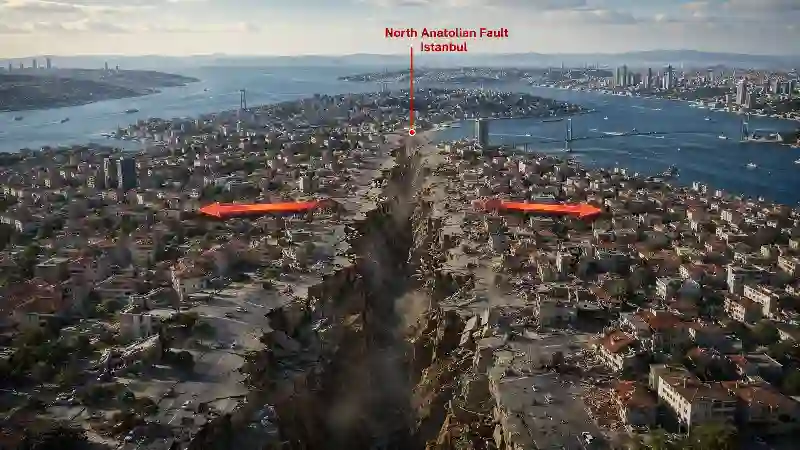
The North Anatolian Fault stretches across northern Turkey.
- Major strike-slip fault
- Similar to California’s San Andreas Fault
- Capable of M7+ earthquakes
Explore earthquake types
Marmara Sea Seismic Gap
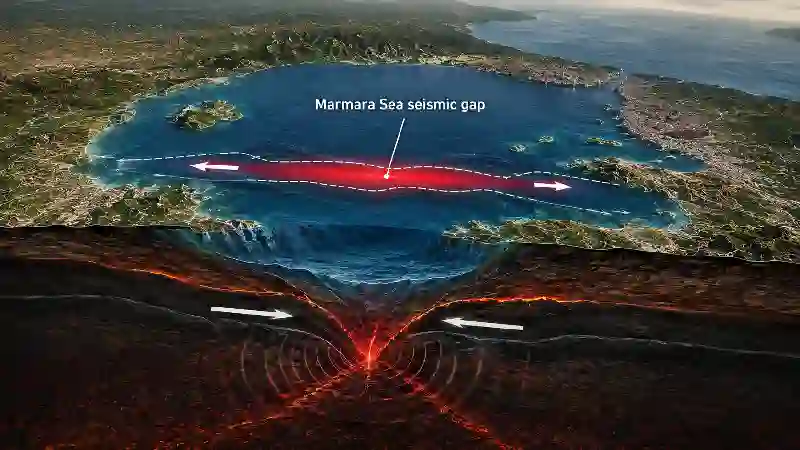
A seismic gap exists beneath the Marmara Sea.
- Fault segment has remained relatively quiet
- Stress continues accumulating
- Scientists expect future rupture potential
This is considered the most concerning part of the fault zone.
Princes’ Islands Fault Segment
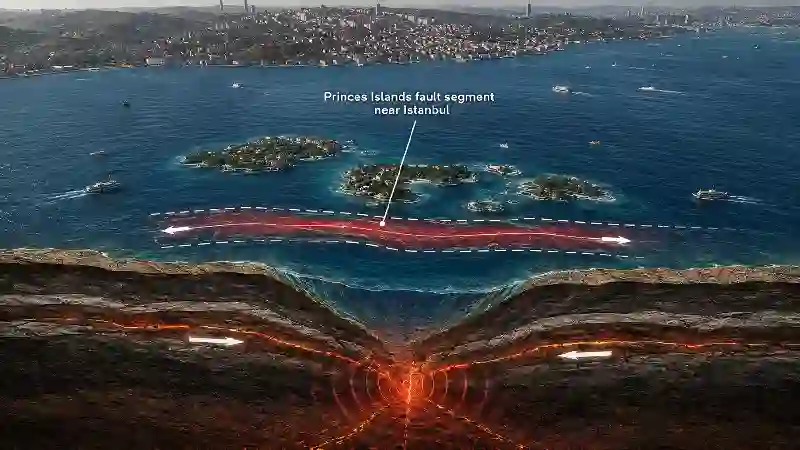
This segment lies very close to Istanbul.
- Near heavily populated areas
- Potential for strong local shaking
- Important for seismic hazard studies
Istanbul Basin Amplification Effects
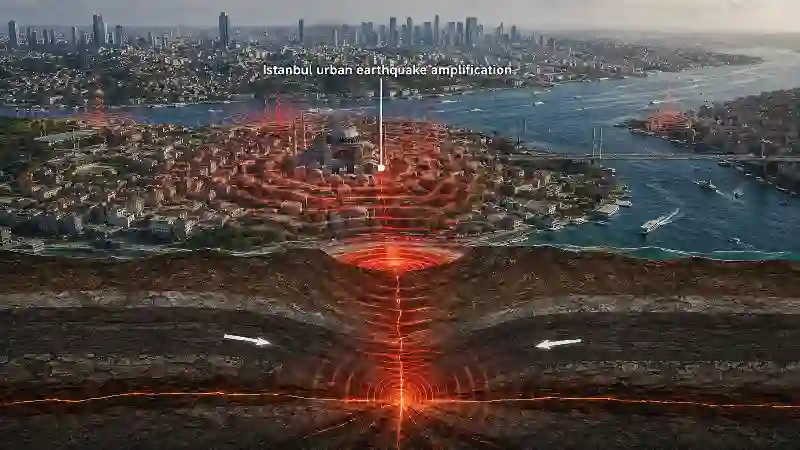
Local geology may intensify shaking in Istanbul.
- Sediment-filled basin zones
- Amplified seismic waves
- Increased urban damage potential
Historical Earthquakes Along the Fault Zone
The Istanbul fault zone has produced devastating earthquakes historically.
- 1999 Izmit Earthquake (M7.6)
A major rupture along the North Anatolian Fault. - 1912 Mürefte Earthquake
Significant western Marmara earthquake. - Historical Istanbul Earthquakes
Several major earthquakes have affected the city over centuries.
Understand magnitude vs impact
Istanbul Fault Zone vs Other Major Fault Systems
This region shares similarities with other transform faults.
- Istanbul Fault Zone → transform fault system
- California → San Andreas Fault
- New Zealand → Alpine Fault system
- Japan → mostly subduction earthquakes
Istanbul’s seismic risk comes from horizontal plate movement beneath a densely populated region
Can the Istanbul Fault Zone Be Monitored?
Scientists cannot predict earthquakes precisely.
However, they can:
- monitor fault movement
- map seismic gaps
- study stress accumulation
- detect small precursor earthquakes
Turkey maintains extensive seismic monitoring networks around the Marmara region.
Learn more → Can earthquakes be predicted
A complex system of active faults near Istanbul, mainly linked to the North Anatolian Fault.
Because major fault segments run beneath it.
A section of a fault that has not ruptured recently and may still store stress.
Yes — scientists consider the region at high seismic risk.
Final Thoughts
The Istanbul fault zone is one of the most important seismic systems in Europe. With active transform faults running beneath the Marmara Sea and directly beside a major city, the region remains under close scientific observation.
Understanding this fault system helps explain how tectonic stress can quietly build beneath densely populated urban areas over long periods of time.