
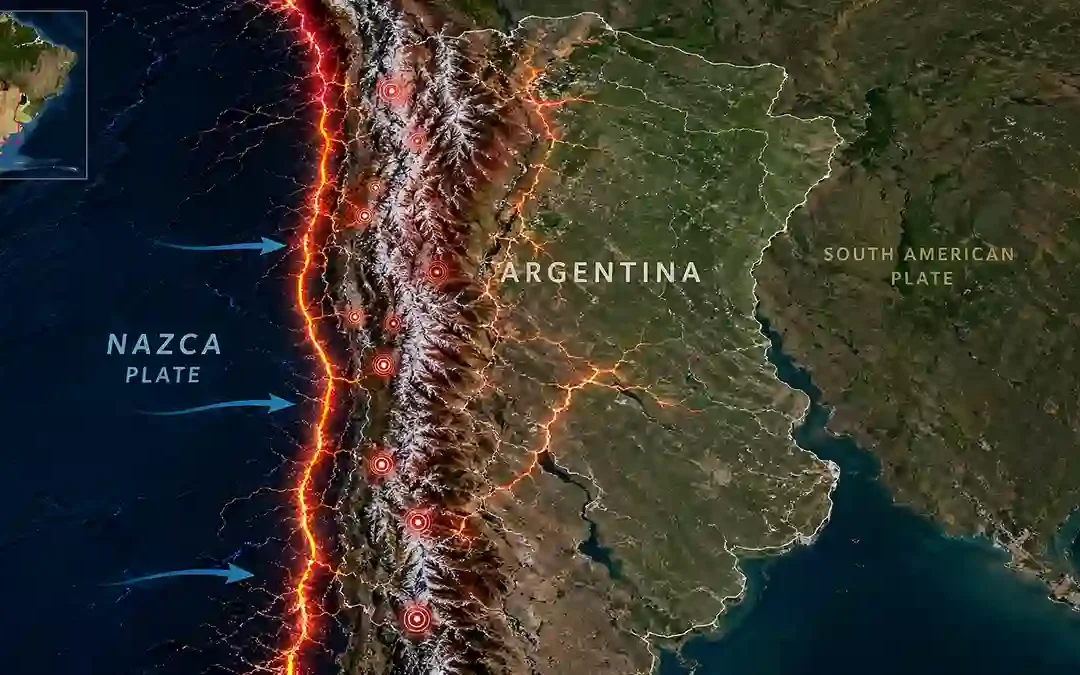
Argentina is not as earthquake-prone as neighboring Chile, but certain parts of the country still experience significant seismic activity. Most earthquakes occur near the Andes Mountains in western Argentina, where tectonic pressure continues to shape the landscape.
What makes Argentina interesting is the contrast between highly active mountain regions and relatively stable eastern areas.
If you’re new to earthquakes, start here → what is an earthquake
Earthquake Risk Zones in Argentina
| Region | Risk Level | Main Cause |
|---|---|---|
| Western Andes Region | Very High | Plate interaction + mountain faults |
| Mendoza & San Juan | High | Crust compression |
| Northwestern Argentina | High | Active tectonic deformation |
| Central Argentina | Moderate | Distributed stress |
| Eastern Argentina | Low | Stable crust |
Most of Argentina’s earthquake activity is concentrated near the Andes
To understand how tectonic stress builds → fault lines
Why Do Earthquakes Happen in Argentina?
Argentina’s earthquakes are mainly linked to the movement of the Nazca Plate beneath the South American Plate.
Here’s the process in simple terms:
- The Nazca Plate moves eastward
- It pushes beneath South America
- The Andes Mountains continue to rise
- Stress builds in the crust
- Earthquakes occur when faults rupture
This process is part of the same tectonic system affecting much of western South America.
Learn more → causes of earthquakes
Main Earthquake Zones in Argentina
Andes Mountain Region
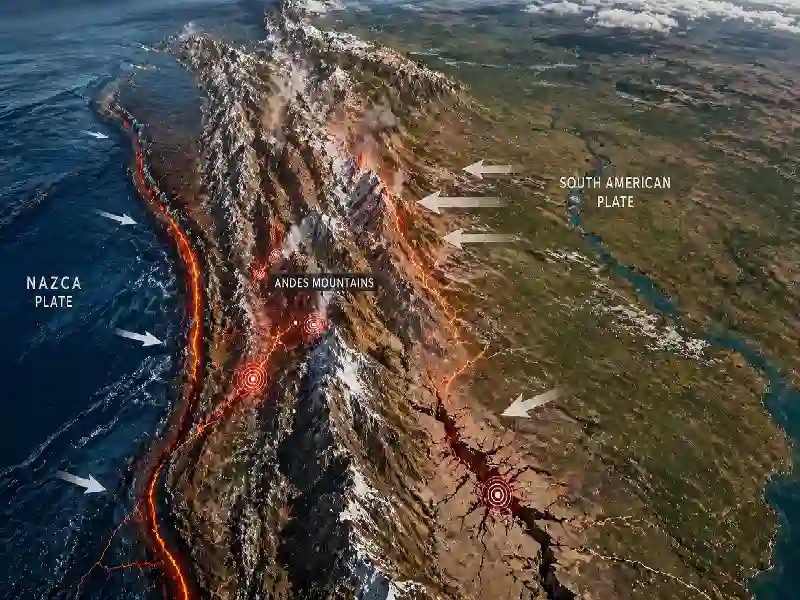
The Andes region is Argentina’s most active seismic zone.
- Continuous crust compression
- Active mountain faults
- Moderate to strong earthquakes possible
This area experiences ongoing tectonic deformation.
Explore earthquake types
Mendoza & San Juan Area
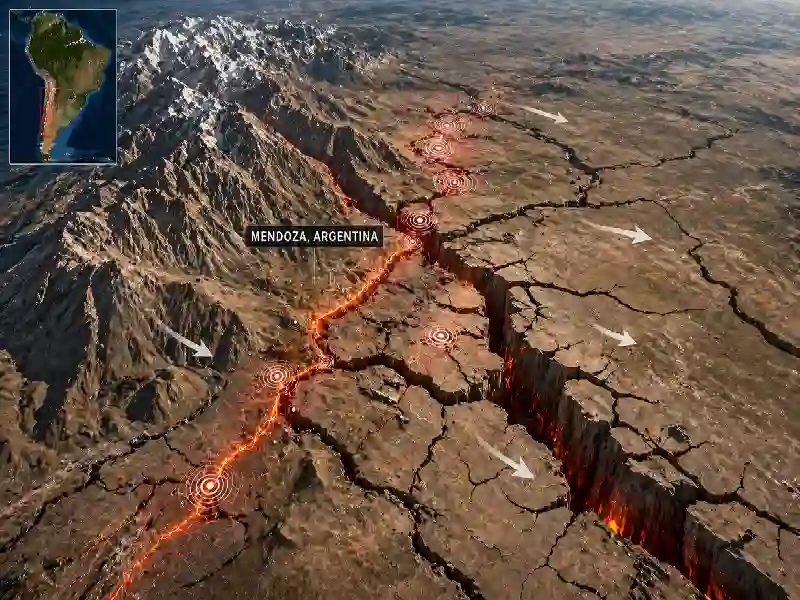
Western Argentina, especially Mendoza and San Juan, has a long history of earthquakes.
- Active crustal faults
- Frequent moderate earthquakes
- Some destructive historical events
Northwestern Argentina
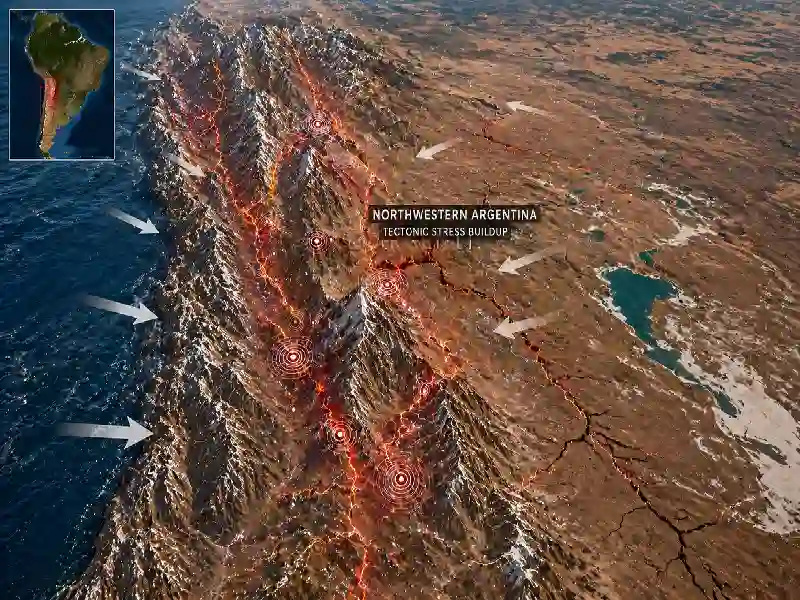
Northwestern Argentina also experiences tectonic stress.
- Fault activity linked to Andes uplift
- Moderate earthquake frequency
- Complex mountain deformation
Recent Earthquake Activity in Argentina
Argentina experiences regular small to moderate earthquakes.
Recent patterns show:
- Frequent activity near the Andes
- Occasional deeper earthquakes
- Aftershocks following stronger events
Most seismic activity remains concentrated in western regions.
Notable Earthquakes in Argentina
Past earthquakes highlight Argentina’s seismic history.
- 1944 San Juan Earthquake (M7.0)
One of the most destructive earthquakes in Argentina’s history. - 1861 Mendoza Earthquake
A major event causing severe damage. - 1977 Caucete Earthquake (M7.4)
A strong earthquake in western Argentina.
Understand magnitude vs impact
Argentina vs Other Earthquake Regions
Argentina’s seismic activity is different from some neighboring regions.
- Argentina → mountain-related tectonic stress
- Chile → stronger subduction earthquakes
- Peru → coastal + mountain seismic activity
- California → transform faults like the San Andreas Fault
Argentina’s earthquakes are more concentrated near the Andes region
Can Earthquakes in Argentina Be Predicted?
No — earthquakes cannot be predicted precisely.
Scientists can:
- monitor seismic activity
- map active faults
- estimate long-term risk
But exact timing remains unknown.
Learn more → Can earthquakes be predicted
Western Argentina near the Andes Mountains.
They are common in western regions but less frequent in the east.
Yes — western Argentina can experience significant earthquakes.
Because it is farther from major tectonic boundaries.
Final Thoughts
Argentina’s earthquakes are closely linked to the forces shaping the Andes Mountains. While much of the country remains relatively stable, western Argentina continues to experience tectonic pressure and active fault movement.
Understanding this pattern helps explain why earthquakes are concentrated in certain regions rather than across the entire country.