
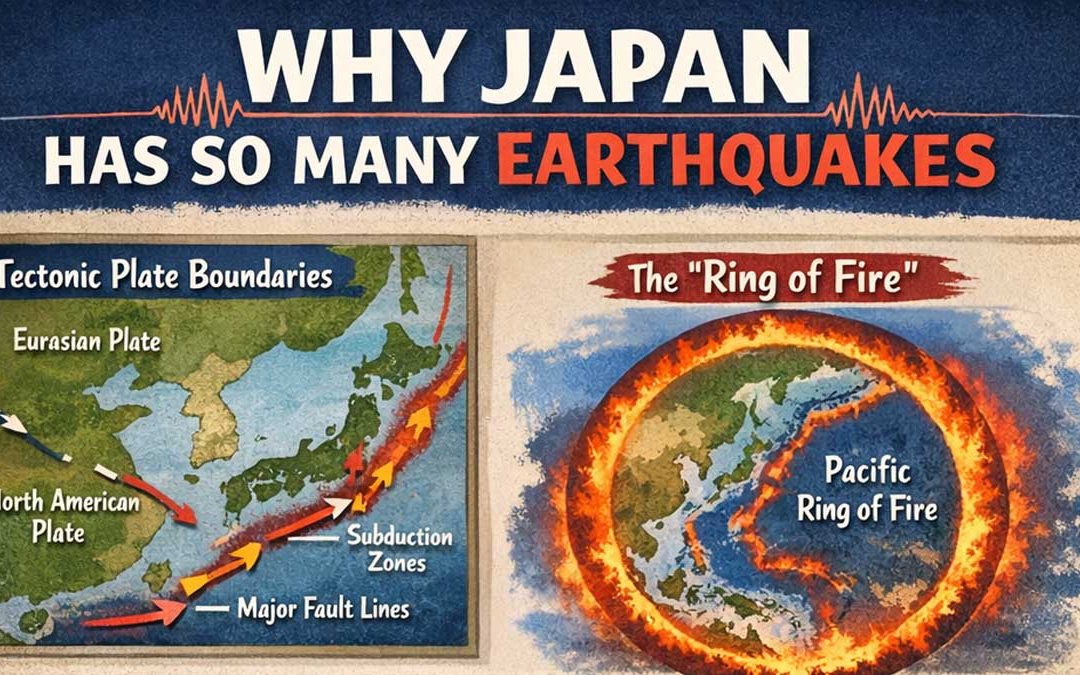
Japan is one of the most earthquake-prone countries in the world — and it’s not by accident.
The country sits at the meeting point of multiple tectonic plates, making it one of the most geologically active regions on Earth.
To understand the basic process, see our guide on what causes earthquakes
The Real Reason: Multiple Plate Boundaries
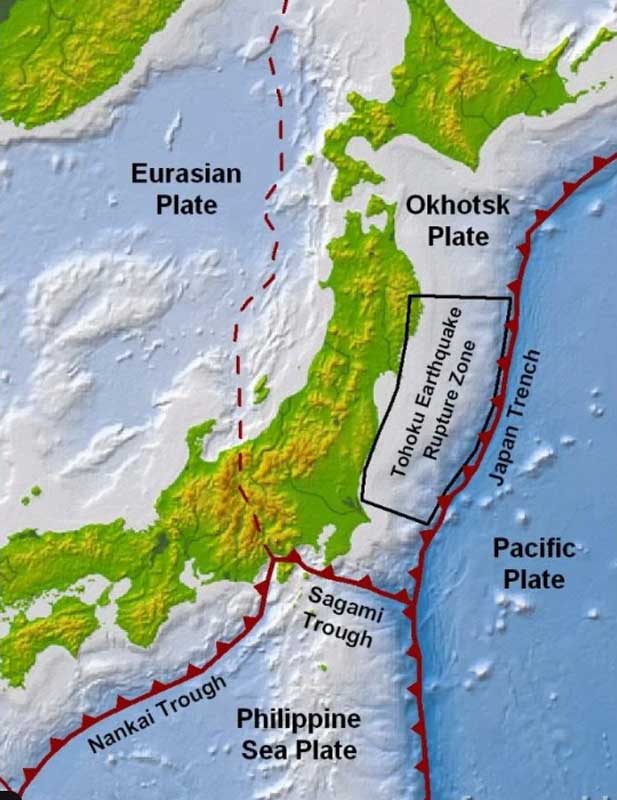
Japan lies where several tectonic plates meet:
- Pacific Plate
- Philippine Sea Plate
- Eurasian Plate
- North American Plate
This creates intense pressure and frequent seismic activity.
Unlike California, where plates mostly slide past each other, Japan sits on subduction zones.
One plate is forced beneath another — building enormous stress over time.
Part of the Pacific Ring of Fire
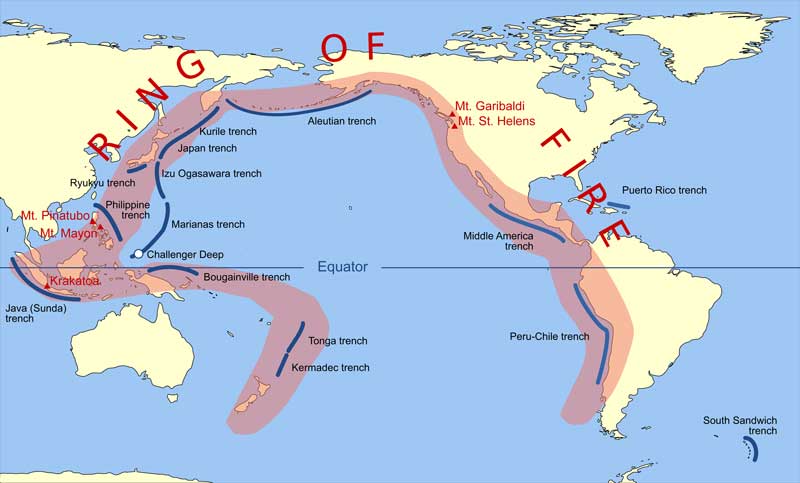
Japan is located along the Pacific Ring of Fire, a region responsible for:
- ~90% of the world’s earthquakes
- most of the world’s volcanoes
This is why earthquakes in Japan are so frequent compared to most countries.
Why Earthquakes in Japan Can Be So Powerful
Several factors make earthquakes in Japan especially intense:
1. Subduction zones
These generate some of the strongest earthquakes on Earth.
2. Deep ocean trenches
Energy builds up over long periods before releasing suddenly.
3. Population density
Even moderate earthquakes can affect millions of people.
Learn how energy travels in our seismic waves guide
Earthquakes and Tsunamis
Japan faces an additional risk:
Tsunamis
Underwater earthquakes can displace huge volumes of water, creating powerful waves that travel across the ocean.
These waves can reach coastal areas within minutes.
Real example:
The 2011 Tōhoku earthquake and tsunami:
- Magnitude: 9.0
- Triggered a massive tsunami
- Caused widespread destruction
This shows how powerful subduction-zone earthquakes can be.
How Japan Prepares for Earthquakes
Japan is one of the most prepared countries in the world.
Measures include:
- strict building codes
- earthquake-resistant structures
- nationwide early warning systems
- regular public drills
Even though earthquakes cannot be predicted, early alerts help reduce damage.
Learn more in our guide on can earthquakes be predicted
How Often Do Earthquakes Happen in Japan?
Japan experiences thousands of earthquakes every year.
- Many are too small to feel
- Some are noticeable
- A few are major events
The country is constantly releasing tectonic stress.
Japan vs California: What’s the Difference?
Both regions experience frequent earthquakes — but for different reasons.
In California:
- plates slide past each other
In Japan:
- plates collide and subduct
This is why Japan often experiences stronger earthquakes.
Compare this with our guide on why California has so many earthquakes
Can Earthquakes Be Predicted in Japan?
No — earthquakes cannot be predicted precisely.
However, Japan has one of the most advanced early warning systems in the world.
Alerts can be sent seconds before strong shaking arrives.
Because it sits on multiple tectonic plate boundaries within the Ring of Fire.
Yes — thousands occur each year, though most are small.
The 2011 Tōhoku earthquake and tsunami is the most powerful recorded.
Japan is highly prepared, but not earthquake-free.