
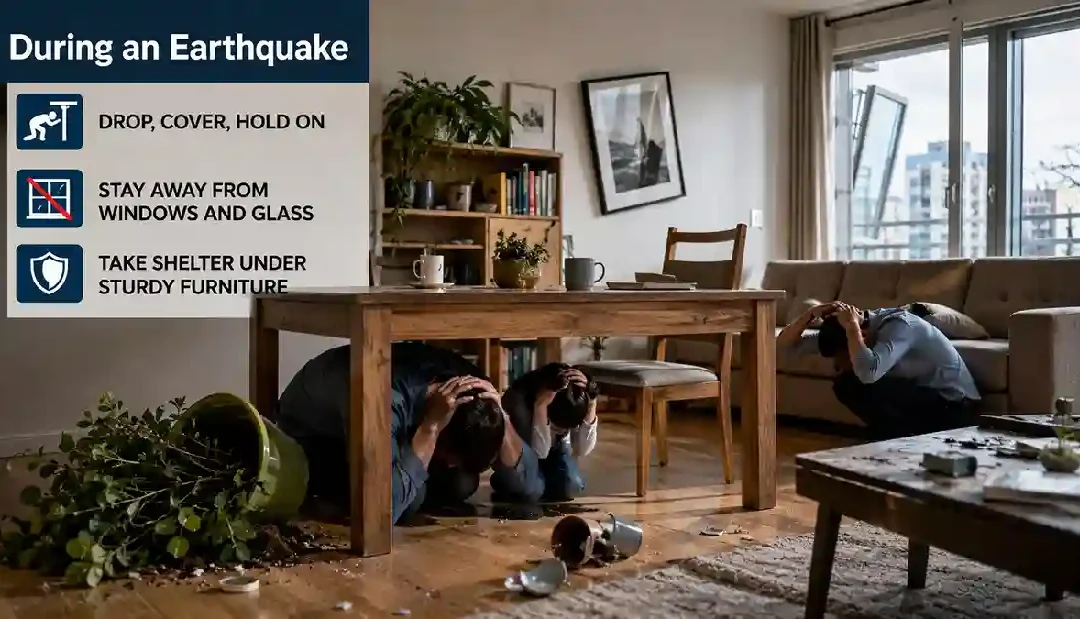
When an earthquake begins, choosing the right location can make a major difference in safety.
During strong shaking:
- glass may shatter
- shelves can collapse
- ceiling materials may fall
- furniture may slide across floors
The safest places are usually locations that:
- protect your head and body
- reduce falling debris risk
- keep you away from glass and unstable objects
Understanding where to take shelter during an earthquake helps reduce injuries and improve survival.
If you’re new to earthquakes, begin here → what is an earthquake
Safest Earthquake Shelter Priorities
Most Important Earthquake Shelter Priorities
Key factors that make locations safer during strong earthquake shaking.
| Priority | Importance |
|---|---|
| Protection from falling debris | 10 |
| Distance from glass | 9 |
| Stable cover | 9 |
| Head and neck protection | 8 |
| Avoiding collapse hazards | 8 |
Safest Place Indoors During an Earthquake
The safest indoor location is usually under sturdy furniture such as:
- strong tables
- heavy desks
- durable workstations
This follows the Drop, Cover, and Hold On method
Why Sturdy Furniture Helps?
Strong furniture can help protect against:
- falling ceiling debris
- broken objects
- collapsing shelves
- flying glass fragments
Important Safety Tip
Protect:
- your head
- neck
- face
Learn more → how to protect yourself during shaking
Safe Areas Inside Homes
Safer indoor locations include:
- under sturdy tables
- beside strong interior walls
- low areas away from windows
Avoid:
- large mirrors
- tall bookshelves
- hanging objects
- unstable furniture
Falling household objects cause many earthquake injuries.
Safe Places in Office Buildings
In offices:
Safer Locations
- beneath desks
- interior workspaces
- areas away from glass walls
Dangerous Areas
- elevators
- large windows
- unsecured shelving
Stay indoors during shaking unless immediate collapse danger exists.
Safe Places in Schools
Students should:
- take cover under desks
- stay away from windows
- protect their heads and necks
Teachers usually guide:
- classroom protection
- evacuation after shaking stops
Learn more → earthquake safety for schools
Safest Places Outdoors
If you are outside, move toward:
- open spaces
- empty fields
- areas away from buildings and power lines
Avoid:
- bridges
- streetlights
- glass structures
- trees with falling branches
Falling debris is the biggest outdoor earthquake danger.
Safest Place While Driving
If driving during an earthquake:
DO:
- pull over safely
- stop away from bridges and overpasses
- remain inside the vehicle
DO NOT:
- stop beneath power lines
- leave the car during strong shaking unless necessary
Vehicles provide some protection from debris.
Safe Locations Near the Coast
After strong coastal earthquakes, move to higher ground if a tsunami risk exists.
Coastal Dangers Include:
- tsunamis
- seawall flooding
- harbor destruction
Tsunamis can arrive minutes after major offshore earthquakes.
Dangerous Places During an Earthquake
| Dangerous Location | Why It’s Unsafe |
|---|---|
| Near windows | Broken glass risk |
| Elevators | Power failure & entrapment |
| Beside tall shelves | Falling objects |
| Under bridges | Collapse danger |
| Near exterior walls | Debris hazards |
Choosing the wrong location increases injury risk significantly.
Why Running Outside Is Often Dangerous
Many people instinctively try to run outdoors. However:
- falling glass
- collapsing facades
- debris from rooftops
can make outdoor areas extremely dangerous during shaking.
In many cases, taking cover indoors is safer.
Countries With Strong Earthquake Safety Education
Countries with frequent earthquakes often teach safe shelter locations through:
- public drills
- school programs
- workplace training
Examples include:
- Japan
- New Zealand
- Chile
- California
Prepared populations react more quickly during emergencies.
Why Interior Areas Are Usually Safer
Interior spaces often provide:
- fewer windows
- less falling glass risk
- more structural protection
Interior shelter locations are usually preferred during strong shaking.
Can Earthquake Warning Systems Help People Reach Safe Areas?
Some regions use:
- earthquake early warning systems
- emergency smartphone alerts
- automated alarms
These systems may provide:
- a few seconds of warning
- enough time to take cover
Learn more → earthquake early warning systems
Under sturdy furniture away from windows.
Usually no — falling debris outside can be very dangerous.
Modern safety guidance usually recommends sturdy furniture instead.
Glass can shatter and cause serious injuries.
Final Thoughts
The safest places during an earthquake are locations that protect people from falling debris, broken glass, and collapsing objects. Quickly choosing safe shelter areas and using Drop, Cover, and Hold On can greatly reduce injuries during strong shaking.
Understanding safe earthquake shelter locations helps people react faster and stay safer during one of nature’s most sudden emergencies.