
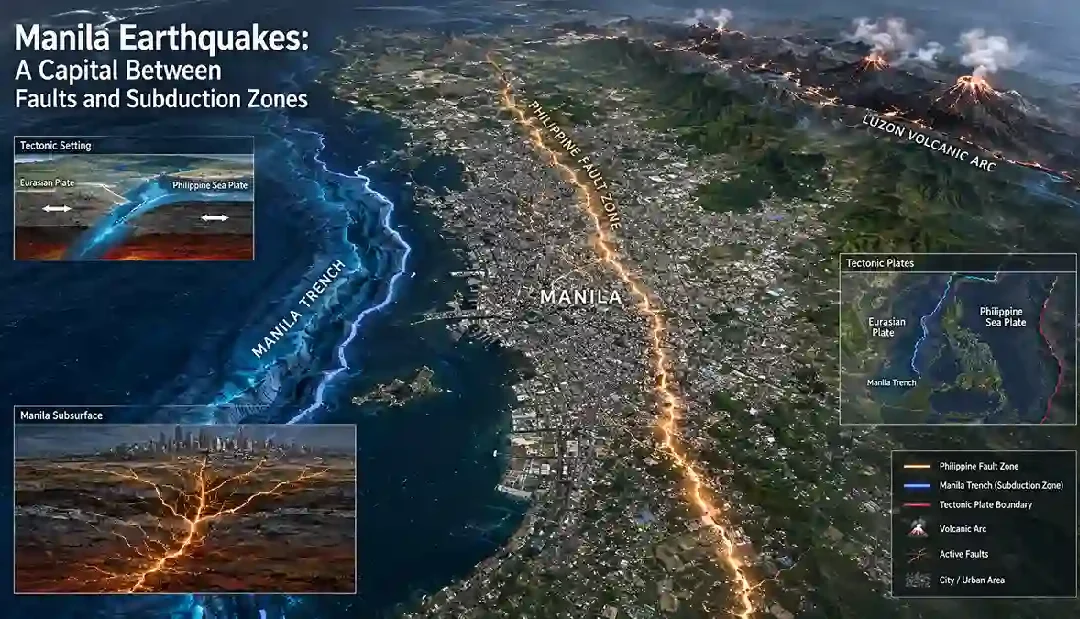
Manila, the capital of the Philippines, sits in one of the most earthquake-active regions on Earth. The country lies within the Pacific Ring of Fire, where tectonic plates constantly interact.
Manila faces a dual earthquake threat:
- inland fault systems
- offshore subduction zones
This combination makes the region highly complex and closely monitored.
If you’re new to earthquakes, begin here → what is an earthquake
Manila Seismic Zones
| Zone | Risk Level | Main Cause |
|---|---|---|
| Philippine Fault Zone | Extremely High | Strike-slip fault movement |
| Manila Trench | Extremely High | Subduction zone |
| West Valley Fault | Very High | Local fault near Manila |
| Luzon Volcanic Arc | High | Magma + tectonic stress |
| Offshore Philippine Sea | Extremely High | Plate interaction |
Manila is affected by both local and distant earthquake sources
To understand how faults work → fault lines
Why Do Earthquakes Happen in Manila?
Manila sits in a region where multiple tectonic processes occur.
Here’s the simple explanation:
- The Philippine Sea Plate interacts with surrounding plates
- Plates collide and slide past each other
- Subduction zones generate large earthquakes
- Inland faults also accumulate stress
- Earthquakes occur when stress is released
This creates frequent seismic activity across the region.
Learn more → causes of earthquakes
Four Major Earthquake Systems Affecting Manila
Philippine Fault Zone (Major Inland System)
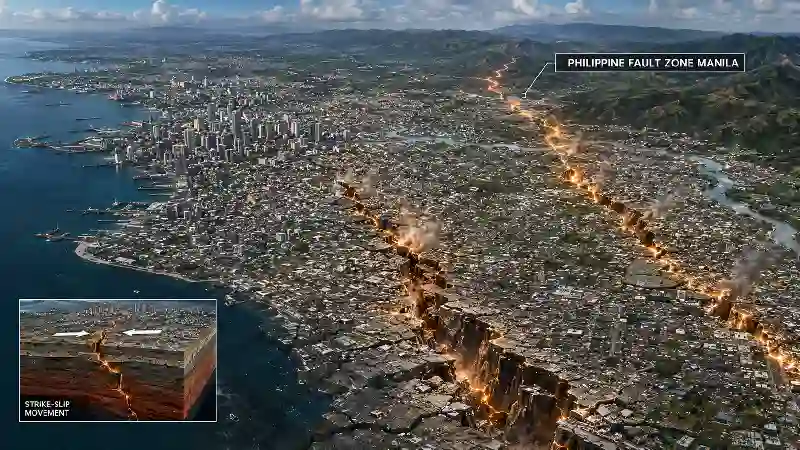
The Philippine Fault Zone is one of the country’s most important faults.
- Large strike-slip fault system
- Capable of strong earthquakes
- Runs across the Philippine islands
Explore earthquake types
Manila Trench Subduction Zone (Offshore Threat)
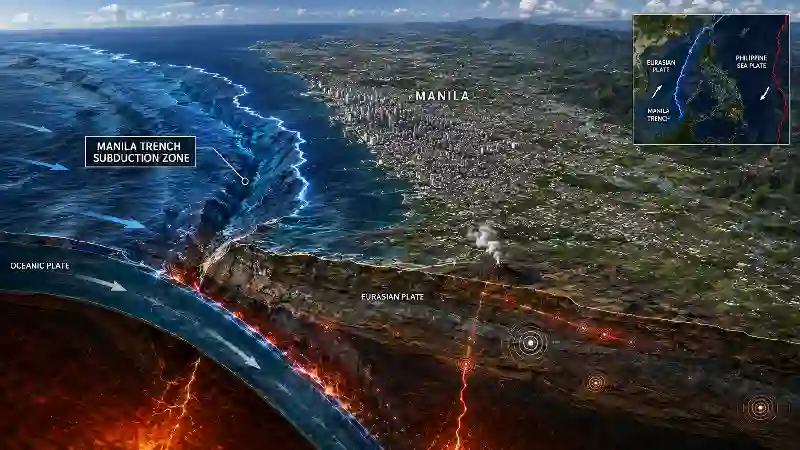
The Manila Trench lies west of the city.
- Subduction zone capable of large earthquakes
- Tsunami risk exists
- Offshore earthquakes can impact Manila
West Valley Fault (Direct City Risk)
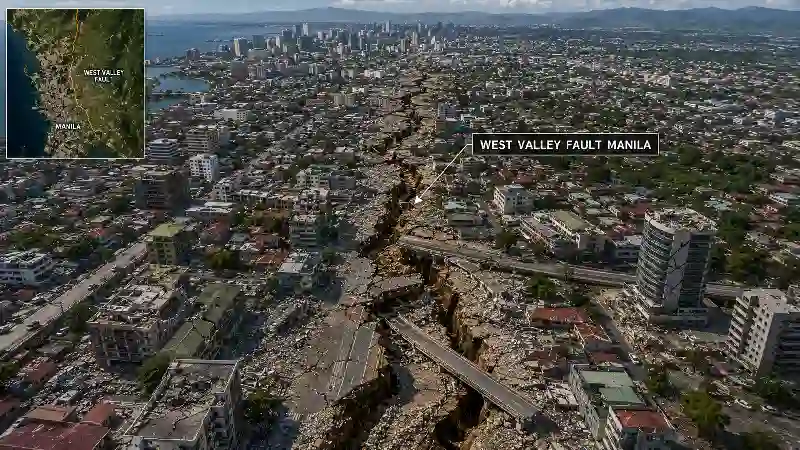
The West Valley Fault runs near Metro Manila.
- High-risk fault
- Capable of strong local earthquakes
- Considered a major threat to the city
Volcanic Arc Earthquakes
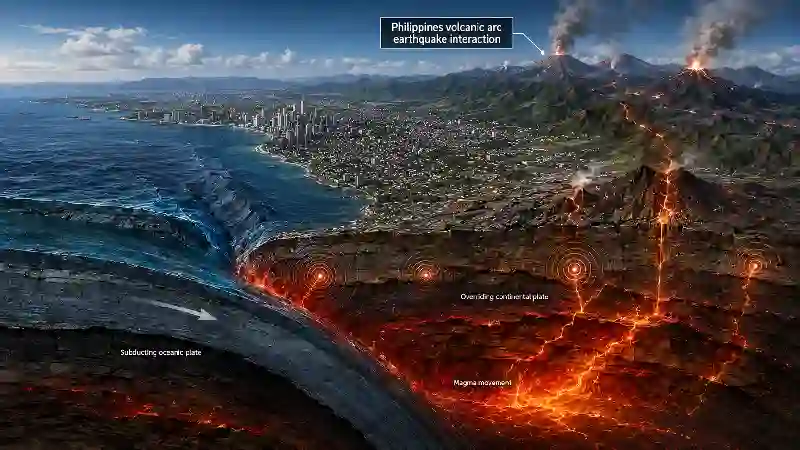
The Philippines is part of a volcanic arc.
- Magma movement contributes to earthquakes
- Frequent seismic activity
- Linked to volcanic systems
Recent Earthquake Activity in Manila
Manila regularly experiences seismic activity.
Recent patterns show:
- Small to moderate earthquakes
- Offshore subduction events
- Ongoing activity along local faults
Scientists monitor the West Valley Fault closely due to its risk.
Notable Earthquakes Affecting Manila
The Philippines has experienced several major earthquakes.
- 1990 Luzon Earthquake (M7.7)
A major earthquake affecting northern Philippines. - Historical Manila Trench Activity
Large offshore earthquakes impacting the region. - West Valley Fault Risk Scenario
Considered one of the most dangerous potential events.
Understand magnitude vs impact
Manila vs Other Earthquake Regions
Manila is among the most complex seismic regions.
- Manila → fault + subduction + volcanic activity
- Jakarta → similar subduction + volcanic system
- Tokyo → multiple plate boundaries
- California → transform fault earthquakes
Manila combines multiple earthquake sources in one region.
Can Earthquakes in Manila Be Predicted?
No — earthquakes cannot be predicted precisely.
Scientists can:
- monitor fault systems
- track tectonic movement
- observe seismic patterns
The Philippines also has earthquake monitoring systems for early detection.
Learn more → Can earthquakes be predicted
Because it sits near multiple tectonic plate boundaries.
The West Valley Fault and Manila Trench.
Yes — small to moderate earthquakes occur regularly.
Yes — a strong earthquake is possible in the future.
Final Thoughts
Manila is one of the most complex earthquake regions in Southeast Asia. With inland faults, offshore subduction zones, and volcanic activity all interacting, the city faces multiple seismic risks.
Understanding Manila earthquakes helps explain how different tectonic systems combine to create one of the world’s most dynamic seismic environments.