
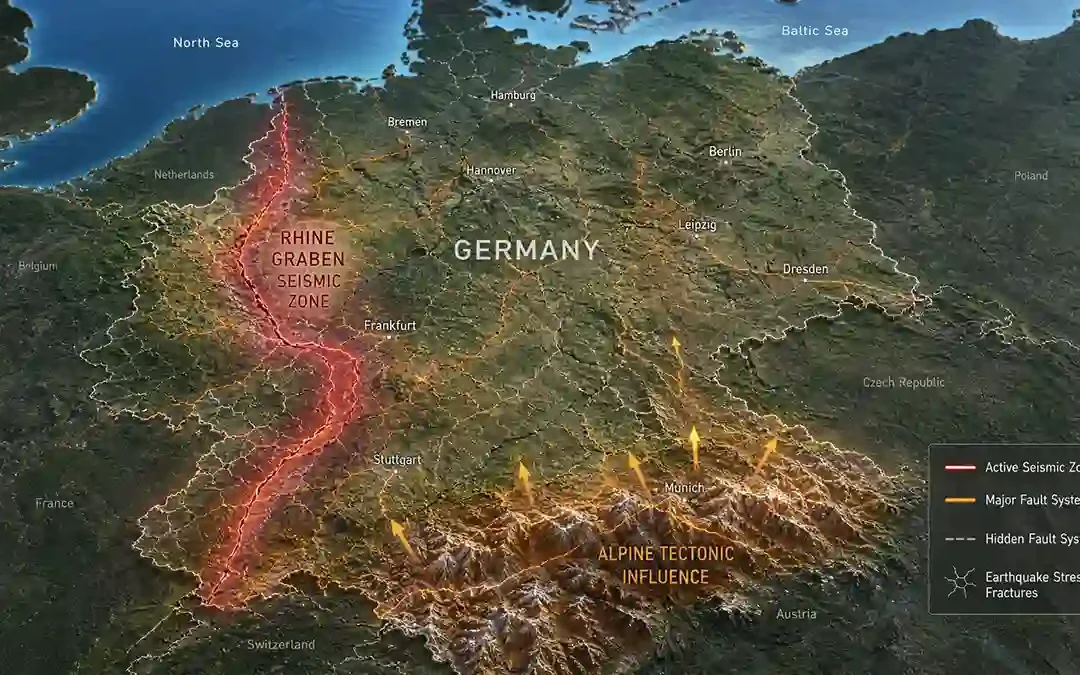
Germany is often seen as geologically stable compared to countries like Italy or Japan. But beneath the surface, several fault systems are still active. Most earthquakes in Germany are small, yet certain regions continue to experience measurable tectonic stress and occasional damaging earthquakes.
What makes Germany interesting is that many earthquakes occur far from major plate boundaries.
If you’re new to earthquakes, begin here → what is an earthquake
Germany’s Main Seismic Regions
| Region | Risk Level | Main Cause |
|---|---|---|
| Rhine Graben Region | High | Crustal extension + fault activity |
| Southern Germany | Moderate–High | Alpine tectonic pressure |
| Western Germany | Moderate | Reactivated faults |
| Central Germany | Low–Moderate | Intraplate stress |
| Northern Germany | Low | Stable crust |
Germany’s earthquakes are mostly linked to older fault systems still under stress.
To understand how tectonic stress builds → fault lines
Why Do Earthquakes Happen in Germany?
Germany’s earthquakes are mainly caused by stress inside the Eurasian Plate rather than direct plate collisions nearby.
Here’s the simplified process:
- Tectonic pressure spreads across Europe
- Older faults remain weak points in the crust
- Stress slowly accumulates underground
- Faults reactivate occasionally
- Earthquakes occur when rocks suddenly move
This is known as intraplate seismic activity.
Learn more → causes of earthquakes
Germany’s Four Main Earthquake Zones
Rhine Graben Region (Germany’s Most Active Zone)
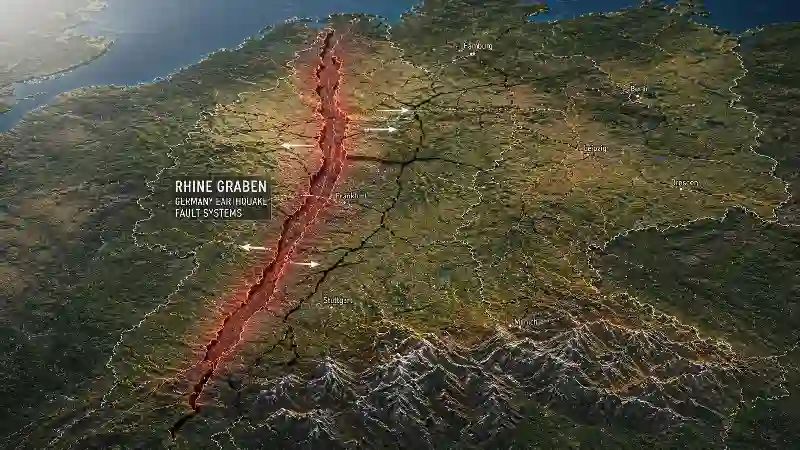
The Rhine Graben is Germany’s most active seismic region.
- Crust slowly stretches apart
- Fault systems remain active
- Small to moderate earthquakes occur regularly
This area extends through western Germany into neighboring countries.
Explore earthquake types
Southern Germany & Alpine Influence
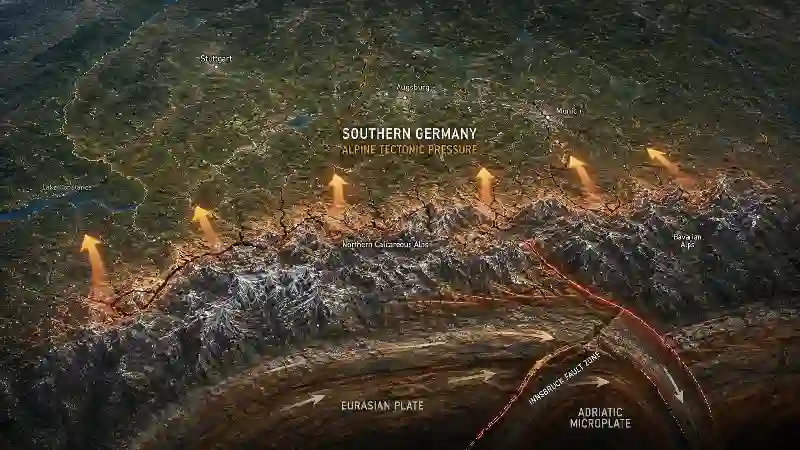
Southern Germany experiences tectonic influence from the Alps.
- Compression-related stress
- Occasional moderate earthquakes
- Mountain-related crust deformation
Western Germany’s Reactivated Faults
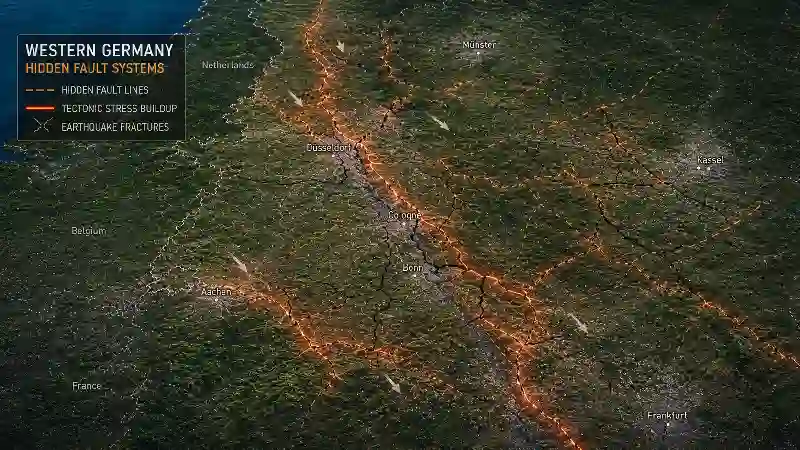
Western Germany contains several older fault systems.
- Ancient faults can reactivate
- Earthquakes remain relatively shallow
- Most events are minor but noticeable
Northern Germany (Very Low Seismic Activity)
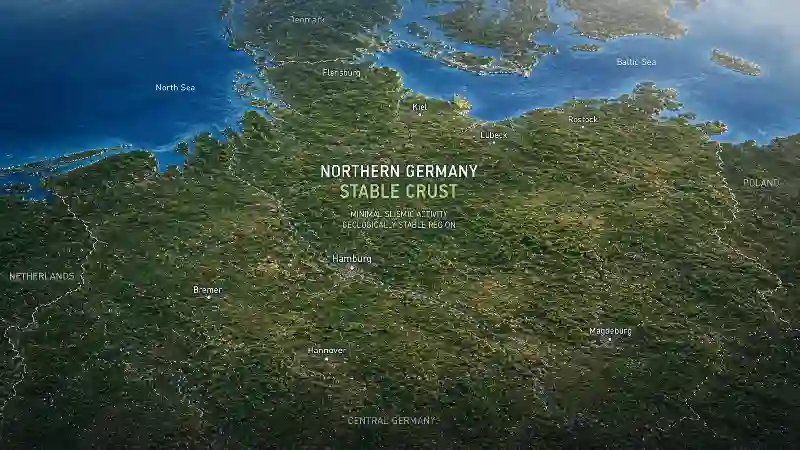
Northern Germany is among the country’s most stable regions.
- Very low tectonic stress
- Rare earthquakes
- Minimal active fault movement
Recent Earthquake Activity in Germany
Germany experiences earthquakes regularly, although most are small.
Recent patterns show:
- Frequent minor earthquakes in western regions
- Occasional seismic swarms
- Small shallow earthquakes felt locally
Most earthquakes are too weak to cause major damage.
Notable Earthquakes in Germany
Germany has experienced several historically important earthquakes.
- 1356 Basel Earthquake
One of Central Europe’s strongest historical earthquakes. - 1992 Roermond Earthquake (M5.3)
A moderate earthquake affecting western Germany and nearby countries. - 1978 Albstadt Earthquake (M5.7)
Significant shaking in southern Germany.
Understand magnitude vs impact
Germany vs Other Earthquake Regions
Germany’s seismic activity is very different from major tectonic regions.
- Germany → intraplate fault reactivation
- Italy → shallow active fault systems
- Iceland → volcanic + tectonic spreading
- California → transform faults like the San Andreas Fault
Germany’s earthquakes are usually weaker but still scientifically important
Can Earthquakes in Germany Be Predicted?
No — earthquakes cannot be predicted precisely.
Scientists can:
- monitor seismic zones
- study fault movement
- estimate long-term risk
But exact timing remains uncertain.
Learn more → Can earthquakes be predicted
Yes — especially in western and southern regions.
The Rhine Graben region.
Most are small, but moderate earthquakes can still occur.
Because older faults inside the Eurasian Plate still reactivate under tectonic stress.
Final Thoughts
Germany may look geologically quiet on the surface, but hidden tectonic stress still affects several regions. From the Rhine Graben to Alpine-influenced areas, the country shows how earthquakes can occur even inside relatively stable continental plates.
Understanding Germany’s seismic activity helps explain that earthquakes are not limited to famous tectonic boundaries — they can also happen deep within continents.