
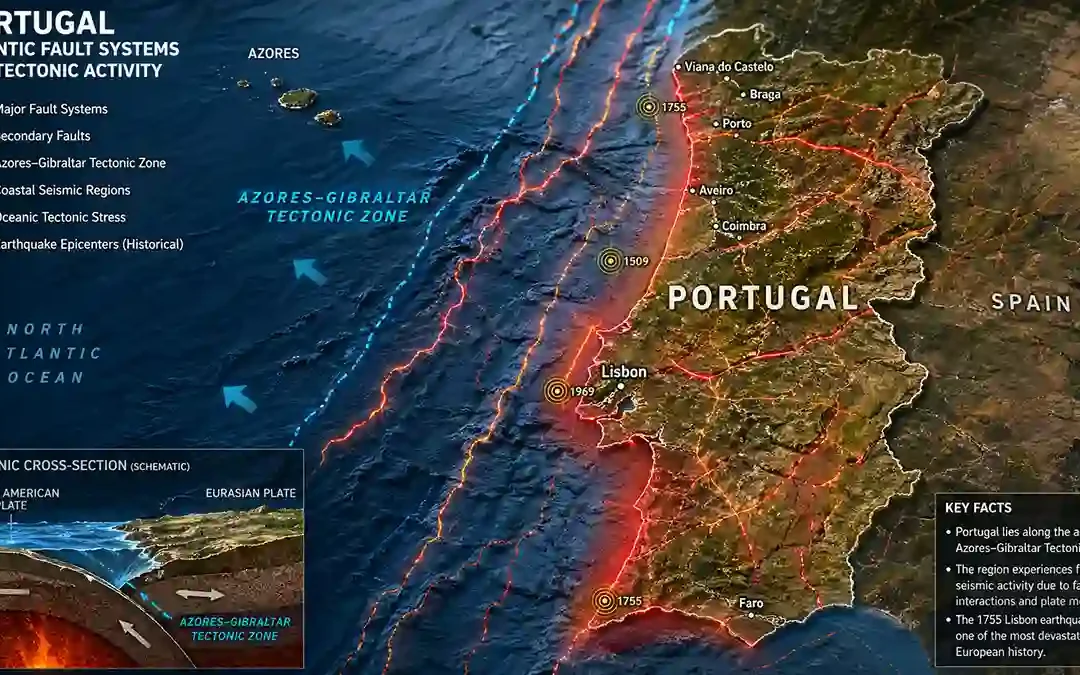
Portugal is not one of Europe’s most active earthquake countries today, but its history tells a very different story. The country sits near an important tectonic boundary in the Atlantic Ocean — and that boundary has produced some of Europe’s most powerful earthquakes.
What makes Portugal unique is that many of its strongest earthquakes begin offshore rather than directly beneath the land.
If you’re new to earthquakes, begin here → what is an earthquake
Portugal’s Main Seismic Regions
| Region | Risk Level | Main Cause |
|---|---|---|
| Southern Portugal | High | Atlantic tectonic interaction |
| Lisbon Region | High | Offshore fault systems |
| Algarve Coast | Moderate–High | Crustal stress |
| Azores Islands | Very High | Volcanic + tectonic activity |
| Northern Portugal | Low | Stable crust |
Portugal’s seismic risk is strongest along the southern and offshore Atlantic zones. To understand how tectonic stress forms → fault lines
Why Do Earthquakes Happen in Portugal?
Portugal’s earthquakes are mainly linked to tectonic movement between the African Plate and Eurasian Plate.
Here’s the simplified process:
- The African Plate slowly moves northward
- Stress builds beneath the Atlantic region
- Offshore faults accumulate pressure
- Earthquakes occur when faults rupture
Much of this activity occurs along the Azores–Gibraltar fracture zone.
Learn more → causes of earthquakes
Portugal’s Four Earthquake Systems
Offshore Atlantic Earthquakes
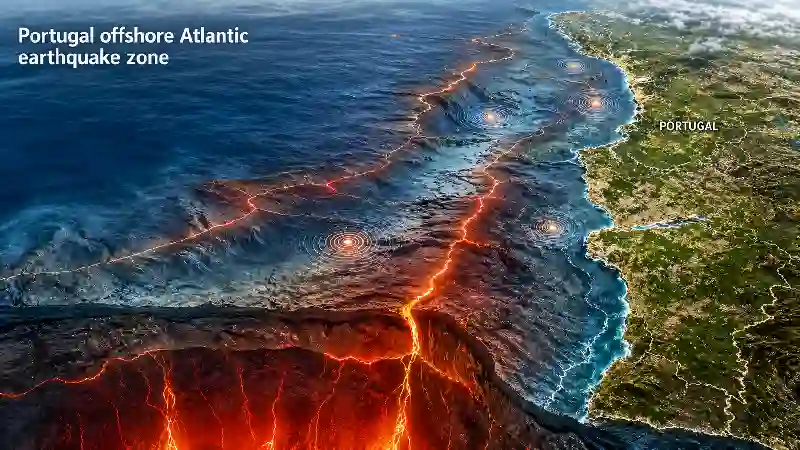
Many of Portugal’s strongest earthquakes begin beneath the Atlantic Ocean.
- Offshore tectonic faults
- Large earthquake potential
- Tsunami risk exists
This makes Portugal different from countries dominated by inland fault systems.
Explore earthquake types
Lisbon Seismic Region
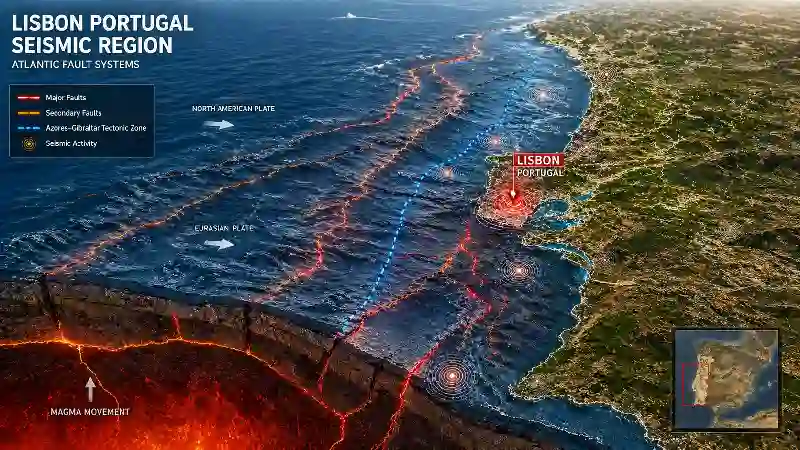
The Lisbon region remains one of Portugal’s most studied seismic areas.
- Historical earthquake damage
- Offshore fault influence
- Strong shaking possible along the coast
The region is closely monitored because of its earthquake history.
Azores Islands (Volcanic & Tectonic Activity)
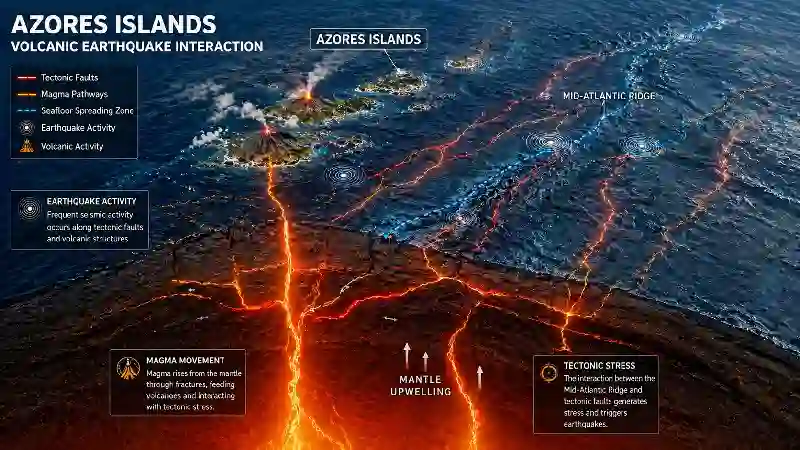
The Azores Islands are geologically very active.
- Volcanic earthquakes
- Plate boundary interaction
- Frequent seismic swarms
This region behaves differently from mainland Portugal.
Inland Portugal (Lower Seismic Activity)
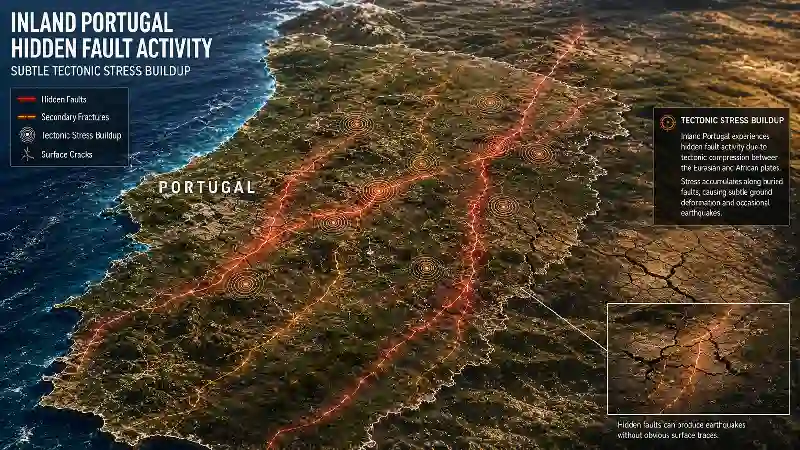
Inland Portugal experiences fewer earthquakes.
- Older fault systems
- Lower tectonic stress
- Small earthquakes still occur occasionally
Recent Earthquake Activity in Portugal
Portugal experiences regular but mostly small earthquakes.
Recent patterns show:
- Offshore Atlantic seismic activity
- Small coastal earthquakes
- Frequent earthquakes near the Azores
Most events are minor, but seismic monitoring remains important.
Notable Earthquakes in Portugal
Portugal’s earthquake history is significant.
- 1755 Lisbon Earthquake
One of the most important earthquakes in European history. - 1969 Portugal Earthquake (M7.9)
A strong offshore Atlantic earthquake. - 1980 Azores Earthquake (M7.2)
A major earthquake affecting the islands.
Understand magnitude vs impact
Portugal vs Other Earthquake Regions
Portugal’s seismic activity has a different pattern from many European countries.
- Portugal → offshore Atlantic earthquakes
- Spain → Mediterranean fault systems
- Iceland → tectonic spreading + volcanoes
- California → transform faults like the San Andreas Fault
Portugal’s strongest earthquakes often originate offshore.
Can Earthquakes in Portugal Be Predicted?
No — earthquakes cannot be predicted precisely.
Scientists can:
- monitor offshore seismic zones
- map active faults
- estimate long-term risk
But exact timing remains uncertain.
Learn more → Can earthquakes be predicted
Because of tectonic interaction between the African and Eurasian plates.
Southern Portugal and offshore Atlantic zones.
Most are small, but stronger earthquakes are possible.
Yes — especially from large offshore earthquakes.
Final Thoughts
Portugal’s earthquakes are closely connected to hidden tectonic activity beneath the Atlantic Ocean. Although the country is quieter than some major seismic regions, offshore fault systems continue to shape earthquake risk along the coast.
Understanding Portugal’s seismic history helps explain why Atlantic tectonics still matter today.