
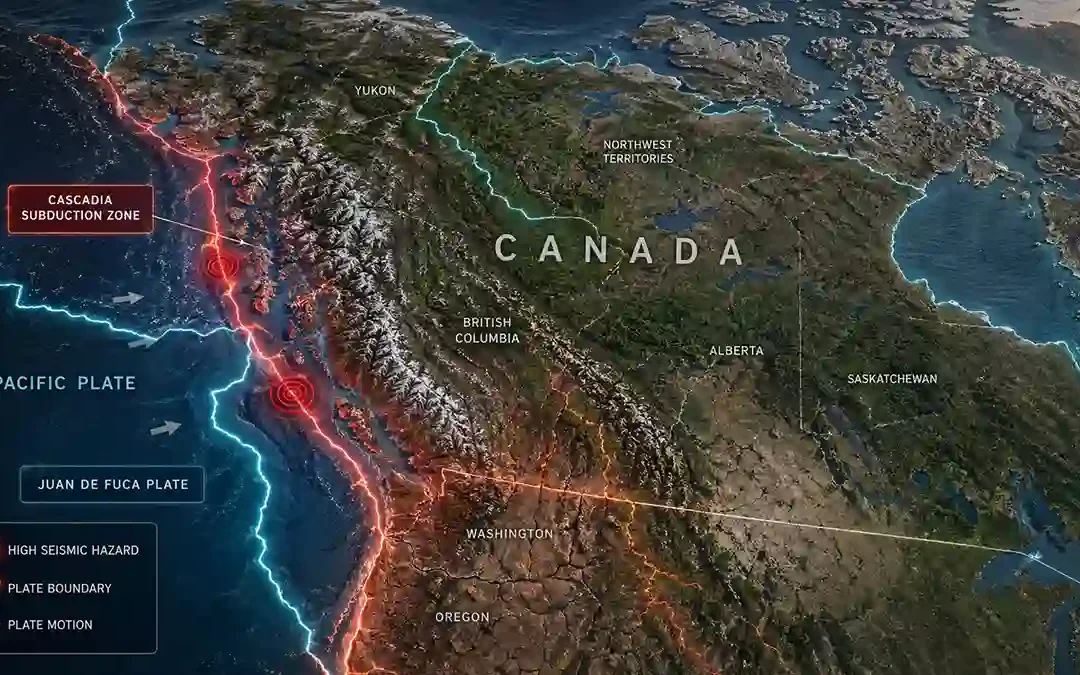
Canada is not usually the first country people think about when discussing earthquakes. But parts of Canada — especially the west coast — are actually located near active tectonic boundaries capable of producing major earthquakes.
At the same time, large areas of the country remain geologically stable, which creates a very uneven earthquake pattern across Canada.
If you’re new to earthquakes, start here → what is an earthquake
Earthquake Risk Zones in Canada
| Region | Risk Level | Main Cause |
|---|---|---|
| British Columbia Coast | Very High | Subduction zone |
| Yukon & Western Canada | High | Active faults |
| Quebec & Eastern Canada | Moderate | Ancient fault reactivation |
| Central Canada | Low | Stable crust |
| Arctic Canada | Low | Minimal tectonic activity |
Most of Canada’s strongest earthquakes occur along the Pacific coast. To understand how tectonic stress builds → fault lines
Why Do Earthquakes Happen in Canada?
Canada’s earthquakes mainly result from tectonic activity along the western edge of North America. The most important system is the Cascadia Subduction Zone, where oceanic plates interact with the North American Plate.
In simple terms:
- Oceanic plates move beneath North America
- Pressure builds over long periods
- Faults store tectonic stress
- Earthquakes release the energy
This process affects Western Canada, especially British Columbia. Learn more → causes of earthquakes
Main Earthquake Zones in Canada
British Columbia & Cascadia Zone
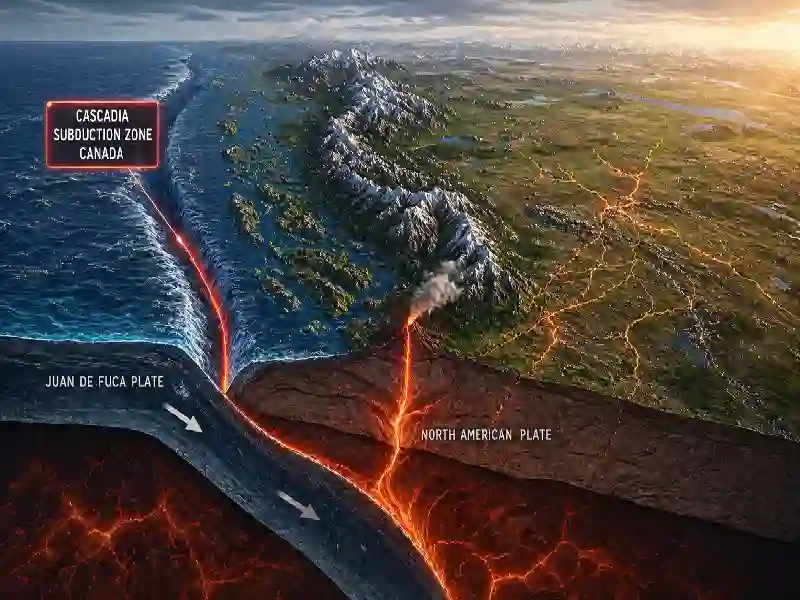
Western Canada is the country’s most active seismic region.
- Located near the Cascadia Subduction Zone
- Potential for large offshore earthquakes
- Tsunami risk exists along the coast
This region is part of the Pacific Ring of Fire.
Explore earthquake types
Yukon & Western Mountain Regions
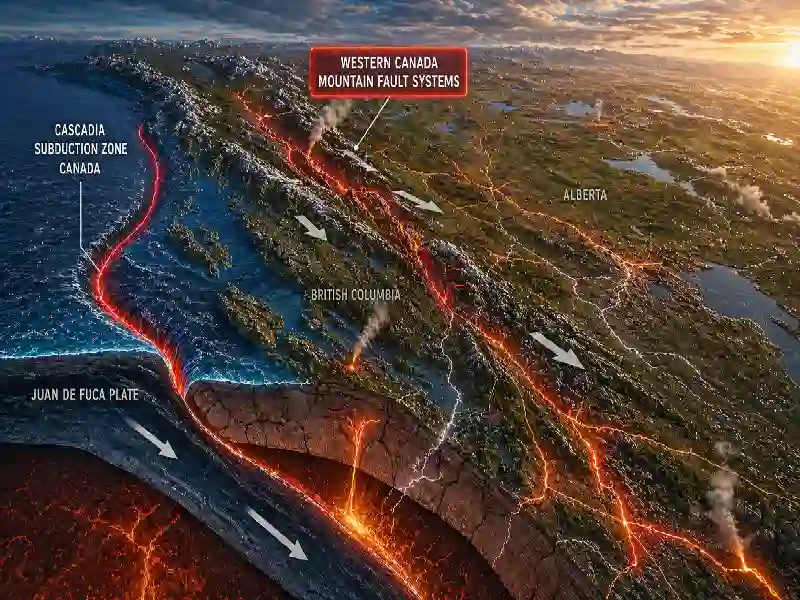
Northern and western Canada also experience fault-related earthquakes.
- Active crustal faults
- Moderate seismic activity
- Mountain tectonic deformation
Eastern Canada (Unexpected Earthquakes)
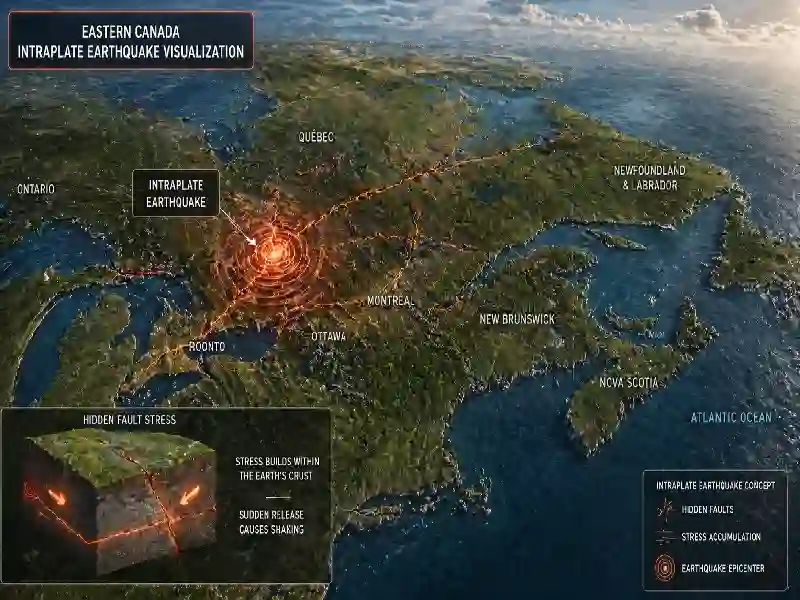
Eastern Canada is less active, but earthquakes still happen.
- Ancient faults can reactivate
- Occasional moderate earthquakes
- Lower frequency than western Canada
This shows that earthquakes can occur far from plate boundaries.
Recent Earthquake Activity in Canada
Canada experiences thousands of small earthquakes each year.
Recent patterns show:
- Frequent small earthquakes in British Columbia
- Occasional moderate events inland
- Offshore seismic activity along the Pacific margin
Most earthquakes are too small to cause damage.
Notable Earthquakes in Canada
Past earthquakes reveal Canada’s seismic history.
- 1700 Cascadia Earthquake (Estimated M9.0)
A massive subduction earthquake affecting the Pacific Northwest. - 1946 Vancouver Island Earthquake (M7.3)
One of Canada’s strongest recorded earthquakes. - 1988 Saguenay Earthquake (M5.9)
A significant eastern Canada earthquake.
Understand magnitude vs impact
Canada vs Other Earthquake Regions
Canada’s seismic activity is very regional.
- Canada → mostly western subduction activity
- Alaska → much stronger and more frequent seismic activity
- California → transform faults like the San Andreas Fault
- Chile → powerful subduction earthquakes along the entire coast
Canada’s earthquake risk is concentrated mainly in the west.
Can Earthquakes in Canada Be Predicted?
No — earthquakes cannot be predicted precisely.
Scientists can:
- monitor seismic activity
- map active faults
- estimate long-term risk
But exact timing remains unknown.
Learn more → Can earthquakes be predicted
British Columbia and the Pacific coast region.
Yes — especially near the Cascadia Subduction Zone.
They are less common, but still possible.
Yes — large offshore earthquakes could generate tsunamis.
Final Thoughts
Canada’s earthquakes may not receive as much attention as those of some other countries, but western Canada remains part of an active tectonic system. From coastal subduction zones to ancient inland faults, the country shows how earthquake risk can vary greatly from region to region.
Understanding these patterns helps explain why some areas remain quiet while others continue to experience seismic activity.