
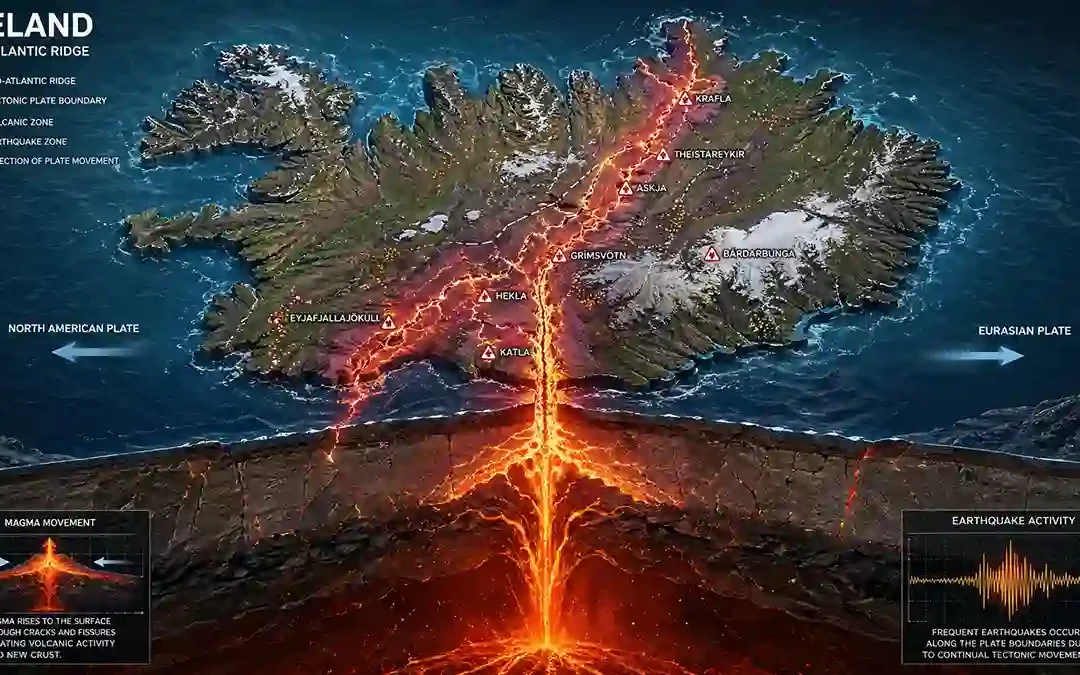
Iceland is one of the few places on Earth where tectonic activity is visible directly on the surface.
Here, earthquakes are closely connected to both:
- moving tectonic plates
- volcanic activity beneath the ground
That combination makes Iceland very different from most earthquake regions.
If you’re new to earthquakes, start here → what is an earthquake
Iceland’s Seismic Zones (Quick Overview)
| Region | Risk Level | Main Cause |
|---|---|---|
| Southwest Iceland | Very High | Plate boundary + volcanic activity |
| Reykjanes Peninsula | Very High | Magma movement + faults |
| South Iceland Seismic Zone | High | Transform fault activity |
| Northern Iceland | Moderate | Tectonic spreading |
| Eastern Iceland | Low–Moderate | Lower seismic activity |
Iceland’s earthquakes are strongly linked to volcanic systems. To understand how faults work → fault lines
Why Do Earthquakes Happen in Iceland?
Iceland sits directly on the Mid-Atlantic Ridge, where the North American Plate and Eurasian Plate slowly move apart.
In simple terms:
- The plates pull away from each other
- Cracks form in the crust
- Magma rises upward
- Stress builds along faults
- Earthquakes occur as the ground shifts
This process is called tectonic spreading.
Learn more → causes of earthquakes
Iceland’s Three Main Earthquake Behaviors (Unique Insight)
Volcanic Earthquakes (Magma Movement)
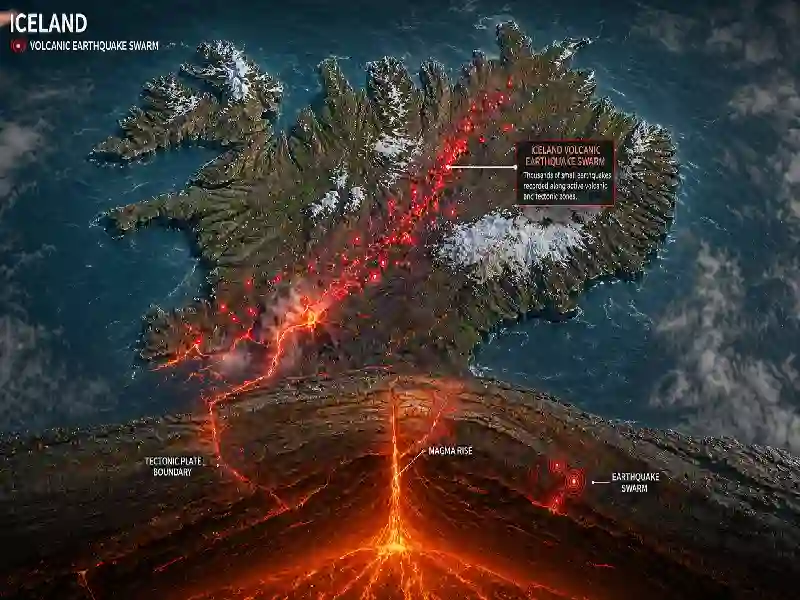
Many earthquakes in Iceland are connected to volcanoes.
- Magma pushes through underground rock
- Pressure creates earthquake swarms
- Activity may increase before eruptions
These earthquakes are often smaller but very frequent.
Explore earthquake types
Transform Fault Earthquakes
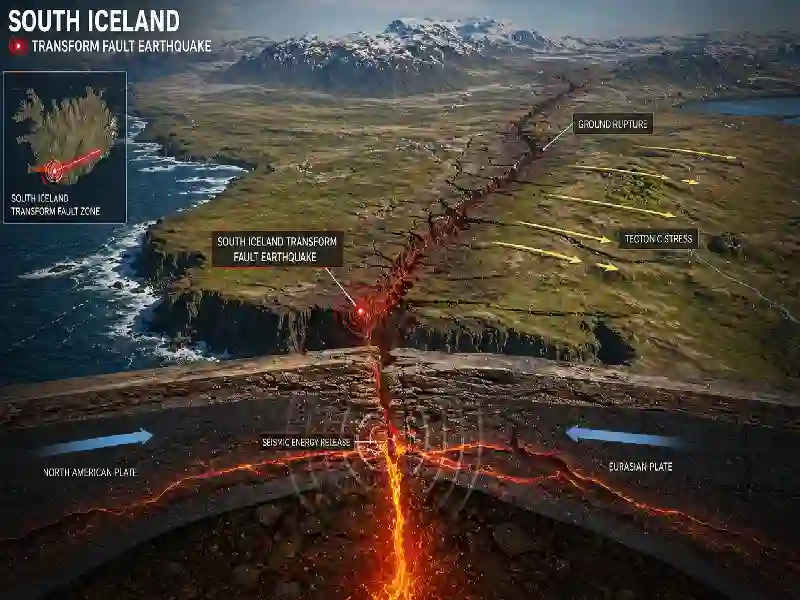
Some Icelandic earthquakes occur when faults slide sideways.
- Transform fault systems
- Sudden stress release
- Stronger ground shaking possible
These are more similar to earthquakes in California.
Rift Zone Activity (Plates Pulling Apart)
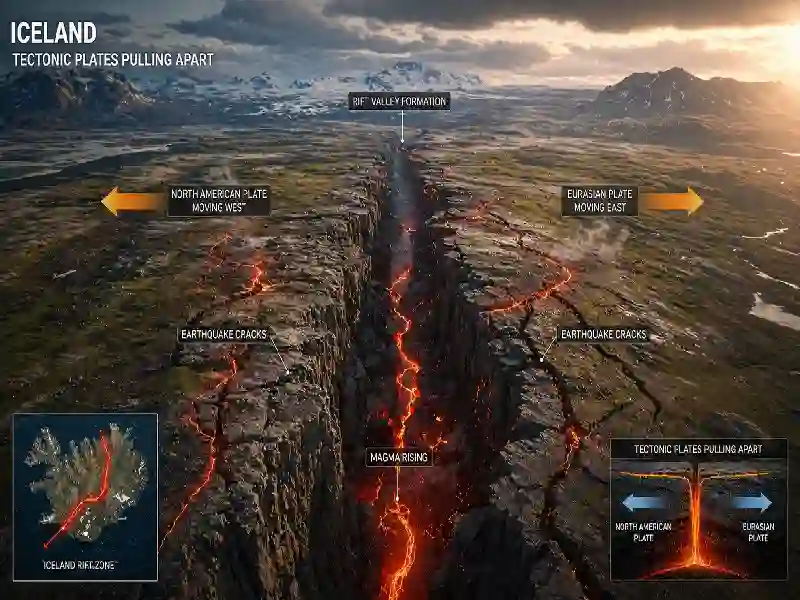
Iceland is one of the best places to observe tectonic spreading.
- The crust slowly separates
- Rift valleys form
- Earthquakes occur during crust movement
This is a rare visible example of plate separation.
Recent Earthquake Activity in Iceland
Iceland experiences earthquakes almost constantly.
Recent patterns show:
- Frequent earthquake swarms
- Increased activity near volcanic systems
- Small to moderate earthquakes along fault zones
Most earthquakes are small, but activity can increase suddenly.
Notable Earthquakes in Iceland
Past events show Iceland’s unique seismic behavior.
- 2000 South Iceland Earthquakes (M6.5)
Significant transform fault earthquakes. - 2021 Reykjanes Seismic Swarm
Large increase in earthquakes before volcanic eruption. - 2008 Iceland Earthquake (M6.3)
Strong shaking affecting populated areas.
Understand magnitude vs impact
Iceland vs Other Earthquake Regions
Iceland’s seismic activity is highly unusual.
- Iceland → tectonic spreading + volcanic earthquakes
- Chile → subduction earthquakes
- Italy → shallow fault earthquakes
- California → transform faults like the San Andreas Fault
Iceland combines earthquakes and volcanoes more directly than most regions
Can Earthquakes in Iceland Be Predicted?
No — earthquakes cannot be predicted precisely.
However, Iceland’s volcanic systems are monitored closely because earthquake swarms can sometimes indicate rising magma.
Scientists can:
- track seismic activity
- monitor magma movement
- estimate volcanic risk
But exact timing remains uncertain.
Learn more → Can earthquakes be predicted
Because it sits on the Mid-Atlantic Ridge where tectonic plates separate.
Yes — many earthquakes are linked to magma movement.
Southwest Iceland and the Reykjanes Peninsula.
Most are small, but stronger earthquakes can still occur.
Final Thoughts
Iceland is one of the clearest examples of Earth’s tectonic forces in action. Few places allow you to see plate movement, volcanic activity, and earthquakes interacting so directly.
That’s what makes Iceland not just geologically active — but scientifically fascinating.