
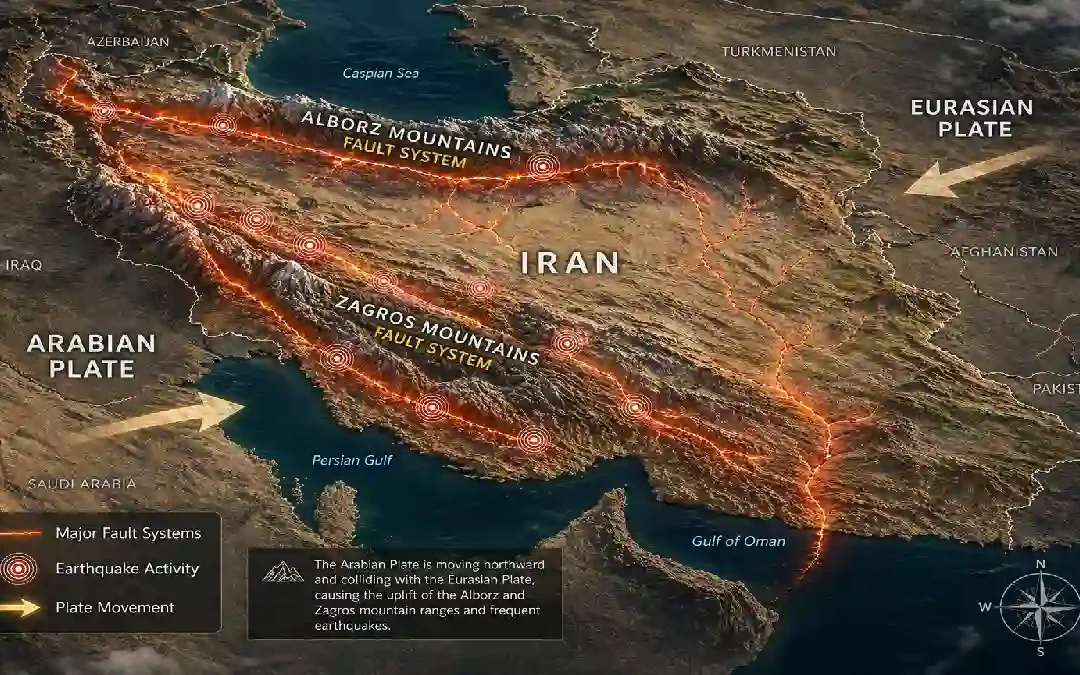
Iran isn’t just earthquake-prone — it sits in one of the most geologically stressed regions on Earth.
The reason is simple but powerful: the country lies where multiple tectonic plates collide, pushing and compressing the land from different directions.
This constant pressure means earthquakes are not rare events — they are part of an ongoing geological process.
If you’re new to earthquakes, you can start with the basics → what is an earthquake
Where the Risk Concentrates (Not Uniform Across Iran)
| Region | Risk Level | Why It’s Active |
|---|---|---|
| Zagros Mountains | Very High | Plate collision & thrust faults |
| Alborz Mountains (North Iran) | Very High | Active fault systems near major cities |
| Eastern Iran | High | Strike-slip & reverse faults |
| Central Iran | Low–Moderate | More stable crust |
| Persian Gulf Region | Low | Relatively stable |
Around 80% of Iran’s earthquakes occur in Zagros and Alborz zones. To understand how these zones form → fault lines
The Real Cause: Continental Collision (Not Subduction)
Unlike places like Chile or Indonesia, Iran’s earthquakes are mostly caused by continental collision, not oceanic subduction.
Here’s what’s happening:
- The Arabian Plate moves north
- It collides with the Eurasian Plate
- The crust compresses and folds
- Faults absorb stress — until they rupture
This collision formed the Zagros Mountains, which are still rising today due to ongoing tectonic pressure.
For a deeper explanation → causes of earthquakes
Iran’s Three Key Earthquake Systems (Unique Breakdown)
Zagros Fold Belt (Compression Zone)
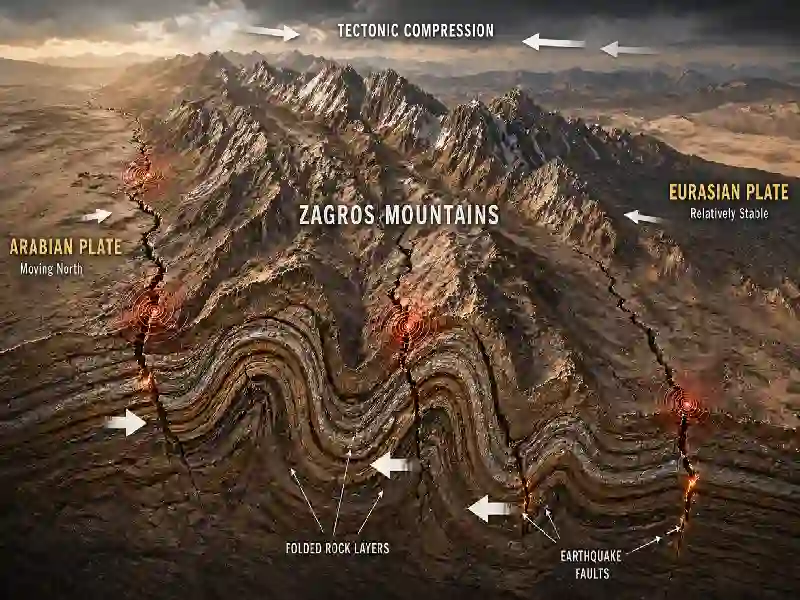
The Zagros Mountains are one of Iran’s most active seismic zones.
- Formed by plate collision
- Dominated by thrust and reverse faults
- Earthquakes often occur below surface layers
This region accommodates a major portion of tectonic pressure.
Alborz Mountains (High-Risk Urban Zone)
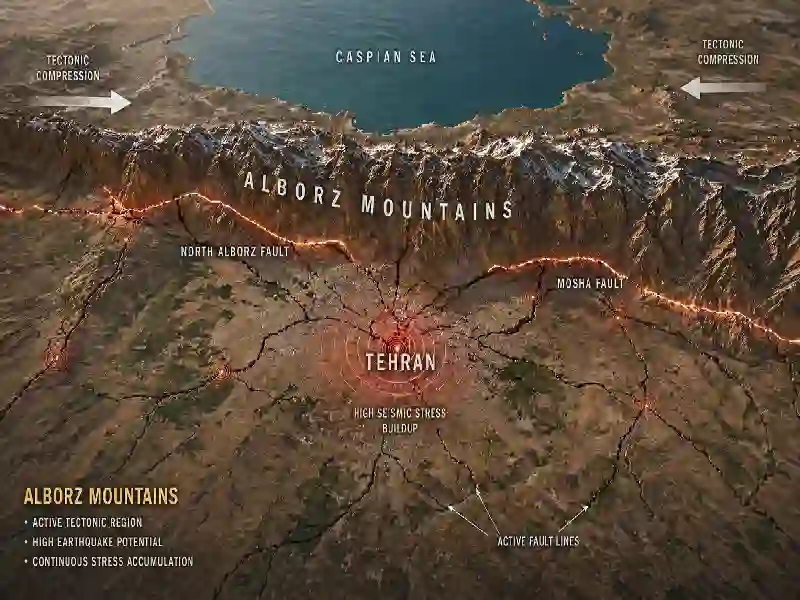
Northern Iran, especially near Tehran, is highly active.
- Dense population + active faults
- Major faults like North Tehran Fault
- High potential for large earthquakes
This makes the region particularly dangerous despite fewer large events.
Central & Eastern Fault Systems
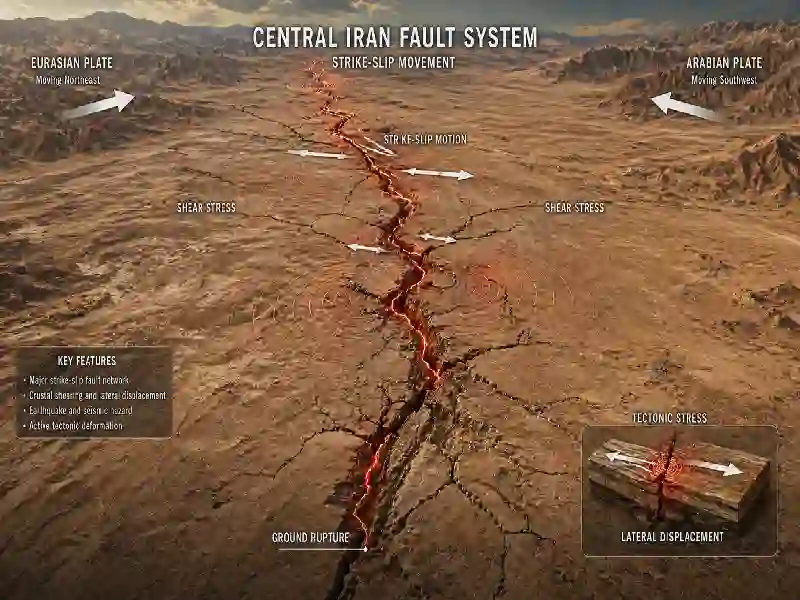
Eastern Iran shows a different pattern.
- Combination of strike-slip and reverse faults
- Less predictable earthquake distribution
- Often produces destructive earthquakes
Recent Earthquake Patterns in Iran
Iran experiences frequent earthquakes, many of them destructive.
Recent observations show:
- Earthquakes occur across multiple regions
- Both shallow and deep earthquakes are recorded
- Activity often clusters along major fault zones
Iran is considered a high-risk seismic region globally due to its tectonic setting.
Notable Earthquakes in Iran
Historical earthquakes highlight the risk:
- 2003 Bam Earthquake (M6.6)
One of the most devastating earthquakes in modern Iran. - 1978 Tabas Earthquake (M7.7)
Caused widespread destruction across eastern Iran - 1990 Manjil–Rudbar Earthquake (M7.4)
A major earthquake in northern Iran.
Iran vs Other Earthquake Regions (Unique Insight)
Iran stands out globally:
- Iran → continental collision + complex faults
- Chile → subduction zone earthquakes
- Philippines → dual subduction + fault systems
- California → transform faults like the San Andreas Fault
Iran’s earthquakes are driven by compression and folding, not just plate sliding.
Can Earthquakes in Iran Be Predicted?
No — earthquakes cannot be predicted precisely.
Scientists can:
- monitor seismic activity
- map active faults
- estimate long-term risk
But exact timing remains unknown. Learn more about can earthquakes be predicted
Because it lies between the Arabian and Eurasian tectonic plates.
The Zagros and Alborz mountain regions.
Yes — due to active fault systems and population density.
Yes — tectonic pressure is still building.
Final Thoughts
Iran is a powerful example of how Earth’s crust responds to constant pressure. Instead of one dominant fault or trench, the country has a network of interacting fault systems, making its earthquakes both frequent and complex. Understanding Iran helps you understand a deeper truth.