
Geology Field Notebooks: Choose the Right Field Journal
Geology field notebooks help students, researchers, and professional geologists record observations directly at a field site. They provide a place to document rock types, mineral characteristics, outcrops, geological structures, sample locations, sketches, and measurements while the evidence is still in front of you.
A good field notebook should be practical to carry, easy to write in, and durable enough for outdoor conditions. Depending on your work, you may need waterproof paper, a compact format, grid pages for sketches, or enough space for detailed geological maps and descriptions.
Explore the geology field notebooks below to compare options for field classes, geological mapping, rock collecting, and professional fieldwork.
Best Geology Field Notebooks for Fieldwork
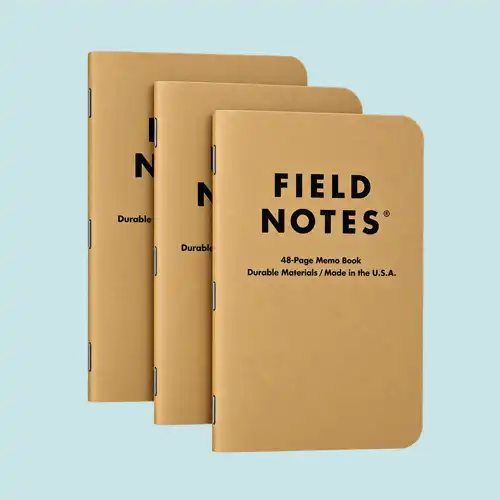
Field Notes: Original Kraft 3-Pack
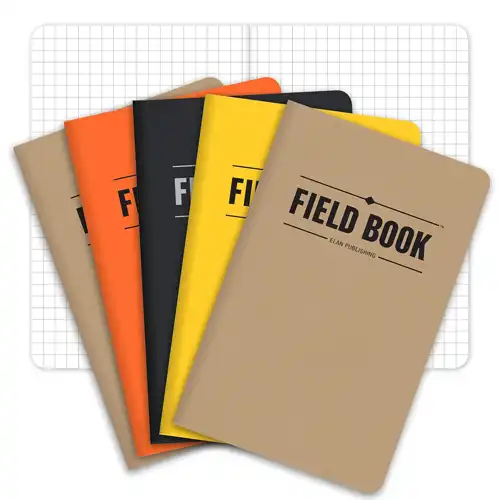
Elan Field Notebook/Pocket Journal

Rite in the Rain Weatherproof Notebook
Affiliate disclosure: As an Amazon Associate, Gelogia earns from qualifying purchases. We may earn a commission when you buy through our links, at no extra cost to you.
How to Choose a Geology Field Notebook
A field notebook is more than a place to write. It becomes a record of what you observed, where you observed it, and how the evidence supports your geological interpretation.
Paper and Water Resistance
Outdoor fieldwork can expose notebooks to rain, humidity, mud, and wet hands. Waterproof paper can be useful in these conditions, particularly when observations must remain readable after exposure to moisture.
Check whether the paper itself is waterproof or whether only the cover resists water. Some synthetic papers also require compatible pencils or pens, so review the product guidance before purchasing.
Notebook Size and Page Layout
A pocket-sized notebook is easy to carry and works well for brief descriptions, coordinates, and quick measurements. Larger notebooks are better suited to extended observations, detailed sketches, and geological mapping.
Plain pages offer flexibility, ruled pages help organize written notes, and grid pages can support scale drawings and simple maps. Choose the format that matches the way you work rather than assuming one layout suits every field task.
Binding and Cover Durability
A notebook used outdoors should open comfortably and remain usable during repeated handling. Strong binding helps prevent pages from loosening, while a durable cover protects the contents from routine wear.
If you regularly work in difficult terrain, consider how easily the notebook fits into your field bag and whether you can hold it securely while standing.
Compatibility With Pens and Pencils
Traditional paper usually works with a wide range of pencils and pens. Waterproof synthetic paper may behave differently, so test the writing tool before relying on it for important observations.
For fieldwork, use writing materials that remain legible and avoid ink that smears easily when wet. Keep a backup pencil or pen available in case your primary writing tool fails.
What Should You Record in a Geology Field Notebook?
Useful field notes capture observations systematically so you can interpret them later without depending on memory.
Consider recording the following information at each field stop:
-
Date and location: Include the date, site name, coordinates when available, and a unique observation or station number.
-
Rock type and composition: Describe visible minerals, grain size, color, texture, and other observable features.
-
Geological structures: Record bedding, joints, faults, folds, fractures, and relevant orientation measurements when applicable.
-
Stratigraphic relationships: Note the order of rock layers, contacts between units, thicknesses, and evidence of changes through a sequence.
-
Sketches and photographs: Draw important relationships and link photographs to the corresponding notebook entry.
-
Samples and measurements: Record sample identifiers, measurement units, collection details, and the reason for collecting each specimen.
-
Interpretations and questions: Separate what you directly observed from your explanation of how the feature formed.
A useful habit is to write the observation first and the interpretation separately. For example, describe a sandstone bed and its visible cross-bedding before concluding what the sedimentary structures suggest about past water or wind movement.
Waterproof vs. Standard Field Notebooks
Both standard paper notebooks and waterproof field notebooks can work well. The best choice depends on environmental conditions, writing preferences, and budget.
| Feature | Standard notebook | Waterproof notebook |
|---|---|---|
| Typical use | Dry conditions, classrooms, routine fieldwork | Wet, humid, or muddy environments |
| Writing experience | Usually compatible with common pens and pencils | Depends on the synthetic paper or coating |
| Moisture protection | Paper can become damaged or unreadable | Designed to resist water, subject to product specifications |
| Cost | Often more economical | May cost more |
| Best consideration | Ease of writing and affordability | Durability when exposed to moisture |
Waterproof paper does not automatically make an entire notebook waterproof. Binding, seams, and covers can still allow moisture inside. Check the product's actual specifications before using it in demanding conditions.
Frequently Asked Questions About Geology Field Notebooks
What is a geology field notebook used for?
A geology field notebook records observations about rocks, minerals, outcrops, geological structures, locations, measurements, and samples. It provides a written record for later analysis, mapping, and reporting.
Do geologists need waterproof notebooks?
Not always. Standard notebooks can be suitable for dry conditions, while waterproof options are useful in rainy, humid, or wet environments. Choose according to the conditions in which you expect to work.
What size notebook is best for geology fieldwork?
A small notebook is convenient for brief observations and measurements. A larger field book offers more space for sketches, geological maps, and detailed stratigraphic logs. The best size depends on the task and how much information you record.
Should geology field notes use graph paper?
Grid pages can help with sketches, measurements, and simplified maps, but they are not essential for every type of fieldwork. Plain or ruled pages may be more convenient for descriptive notes.
What should a geology student write in a field notebook?
Record the date, location, rock type, visible mineral characteristics, geological structures, measurements, sketches, and sample identifiers. Clearly distinguish direct observations from interpretations.
Choose a Field Notebook for Your Geological Work
The best geology field notebook is one that suits your working conditions and makes it easy to record accurate observations. For routine field classes, a durable notebook with a convenient size may be sufficient. For wet environments or detailed mapping, waterproof paper or grid pages may be worth considering.
Compare the available products above, check their specifications, and choose a field notebook that fits your fieldwork requirements.