
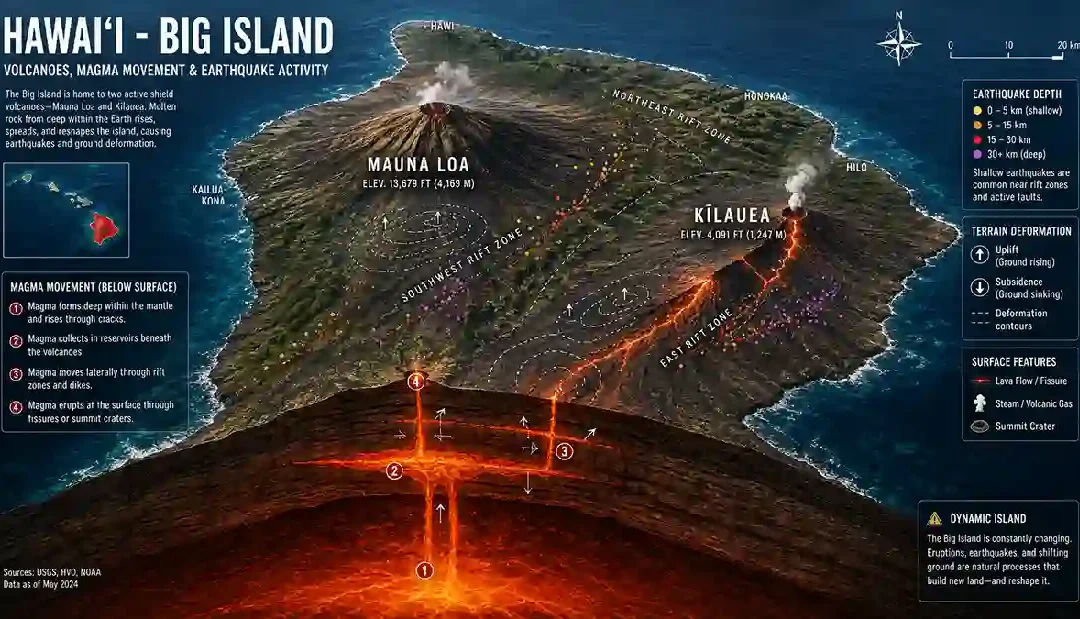
The Big Island of Hawaii is one of the most unique earthquake regions in the world. Unlike most places where earthquakes are caused by tectonic plates colliding or sliding, earthquakes here are mainly driven by volcanoes and magma movement.
The island sits above a hotspot, where molten rock rises from deep within the Earth. This creates constant geological activity beneath the surface.
If you’re new to earthquakes, begin here → what is an earthquake
Big Island Seismic Zones
| Zone | Risk Level | Main Cause |
|---|---|---|
| Kīlauea Volcano | Extremely High | Magma movement |
| Mauna Loa | Extremely High | Volcanic pressure |
| South Flank | Very High | Crust sliding |
| Deep Mantle Region | High | Hotspot activity |
| Northern Big Island | Moderate | Structural stress |
Most earthquakes on the Big Island are directly linked to volcanic activity. To understand how faults work → fault lines
Why Do Earthquakes Happen on the Big Island?
Earthquakes in Hawaii are mainly caused by magma movement and volcanic pressure.
Here’s the simple explanation:
- Hot magma rises from deep within the Earth
- It pushes against surrounding rock
- Pressure builds beneath volcanoes
- The ground cracks and shifts
- Earthquakes occur as magma moves
This process is very different from plate-boundary earthquakes.
Learn more → causes of earthquakes
Four Unique Earthquake Systems on Hawaii’s Big Island
Volcanic Earthquakes (Kīlauea & Mauna Loa)
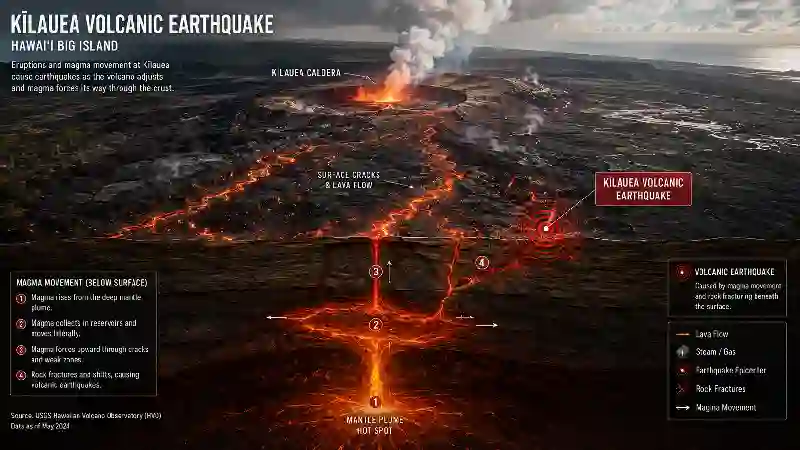
Volcanoes like Kīlauea and Mauna Loa drive most earthquakes.
- Magma movement beneath the surface
- Frequent small earthquakes
- Seismic swarms during eruptions
Explore earthquake types
South Flank Sliding Earthquakes
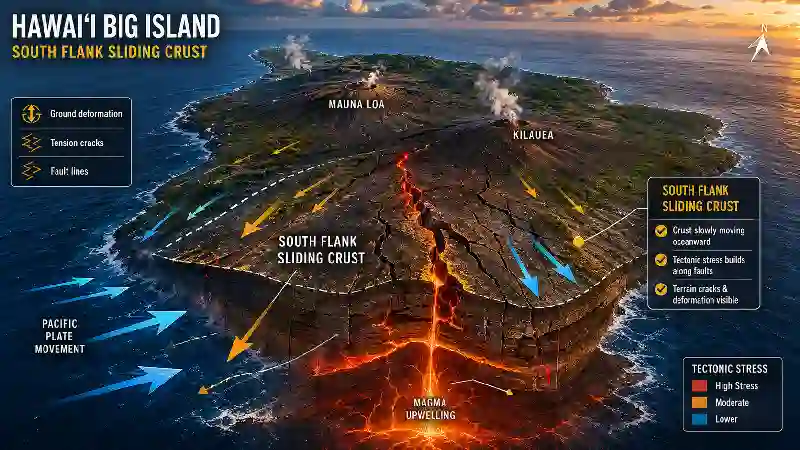
The island’s southern side slowly moves toward the ocean.
- Massive sections of the island shift
- Stress builds along fault zones
- Large earthquakes can occur
This is one of Hawaii’s most important seismic processes.
Deep Mantle & Hotspot Activity
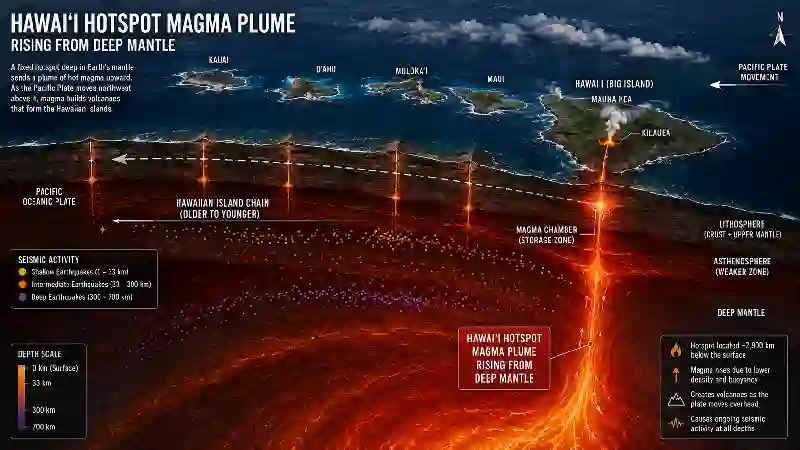
Deep below the island, a hotspot feeds volcanic activity.
- Rising magma from the mantle
- Deep seismic signals
- Continuous geological activity
Offshore Earthquake Activity
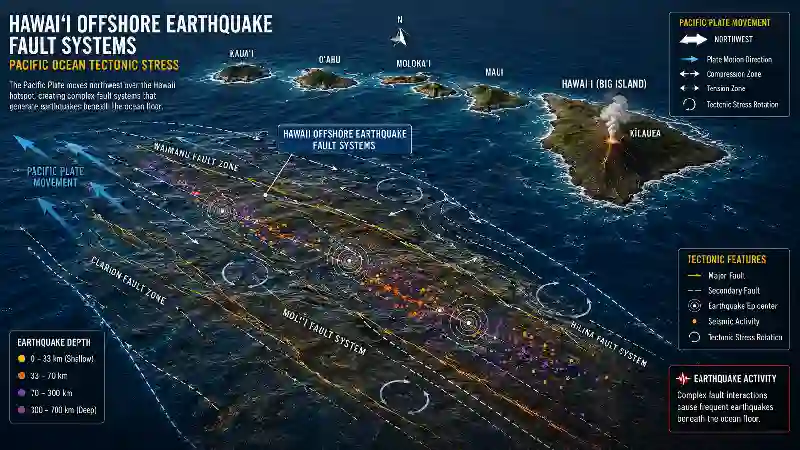
Some earthquakes occur offshore around the island.
- Linked to volcanic and crustal movement
- Can affect coastal areas
- Rare tsunami potential
Recent Earthquake Activity on the Big Island
The Big Island experiences earthquakes almost daily.
Recent patterns show:
- Frequent small earthquakes near volcanoes
- Seismic swarms during volcanic activity
- Occasional stronger earthquakes linked to crust movement
Most earthquakes are small but are important indicators of volcanic activity.
Notable Earthquakes on the Big Island
Hawaii has experienced several important earthquakes.
- 1975 Kalapana Earthquake (M7.7)
A major earthquake linked to south flank movement. - 2018 Kīlauea Eruption Earthquakes
Large number of seismic events during volcanic eruption. - Frequent Seismic Swarms
Continuous activity linked to magma movement.
Understand magnitude vs impact
Hawaii vs Other Earthquake Regions
Hawaii’s earthquakes are very different from most regions.
- Hawaii → volcanic + hotspot earthquakes
- California → transform fault earthquakes
- Japan → subduction zone earthquakes
- Iceland → similar volcanic + tectonic interaction
Hawaii is one of the best examples of volcano-driven earthquakes.
Can Earthquakes in Hawaii Be Predicted?
Not exactly — but volcano-related earthquakes can sometimes be monitored more closely.
Scientists can:
- track magma movement
- monitor volcanic activity
- detect seismic swarms
This helps provide early warnings for eruptions, but not exact earthquake timing.
Learn more → Can earthquakes be predicted
Yes — many earthquakes happen before or during eruptions.
Large earthquakes from south flank movement.
Most are small, but larger earthquakes can still occur.
Final Thoughts
Hawaii’s Big Island is one of the most dynamic places on Earth. Instead of tectonic plate collisions, earthquakes here are driven by rising magma, volcanic pressure, and the slow movement of the island itself.
Understanding these earthquakes gives a unique insight into how volcanic systems shape our planet from deep below the surface.