
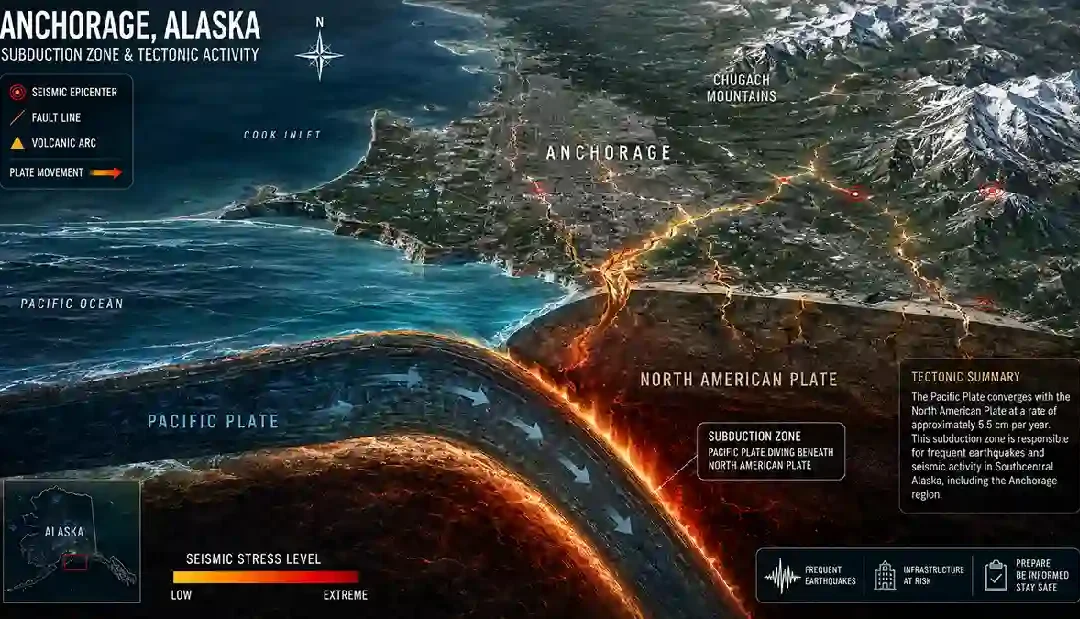
Anchorage, Alaska, is one of the most earthquake-prone cities in the United States. The reason lies deep beneath the ground: a massive subduction zone where one tectonic plate dives beneath another.
Unlike California, where plates slide past each other, Anchorage sits above a system capable of producing some of the most powerful earthquakes on Earth.
If you’re new to earthquakes, begin here → what is an earthquake
Anchorage Alaska Seismic Zones
| Zone | Risk Level | Main Cause |
|---|---|---|
| Alaska Subduction Zone | Extremely High | Plate diving (subduction) |
| Cook Inlet Region | Very High | Fault interaction |
| Anchorage Basin | High | Local fault systems |
| Offshore Gulf of Alaska | Extremely High | Megathrust earthquakes |
| Interior Alaska Faults | Moderate | Crustal stress |
Anchorage sits directly above a powerful tectonic boundary To understand how faults work → fault lines
Why Do Earthquakes Happen in Anchorage?
Anchorage lies along a subduction zone between two major plates.
Here’s the simple explanation:
- The Pacific Plate moves northward
- It dives beneath the North American Plate
- Massive pressure builds underground
- The plates lock together
- When they suddenly slip → a powerful earthquake occurs
These types of earthquakes are called megathrust earthquakes.
Learn more → causes of earthquakes
Four Major Earthquake Systems in Anchorage Alaska
Alaska Subduction Zone (Main Source)
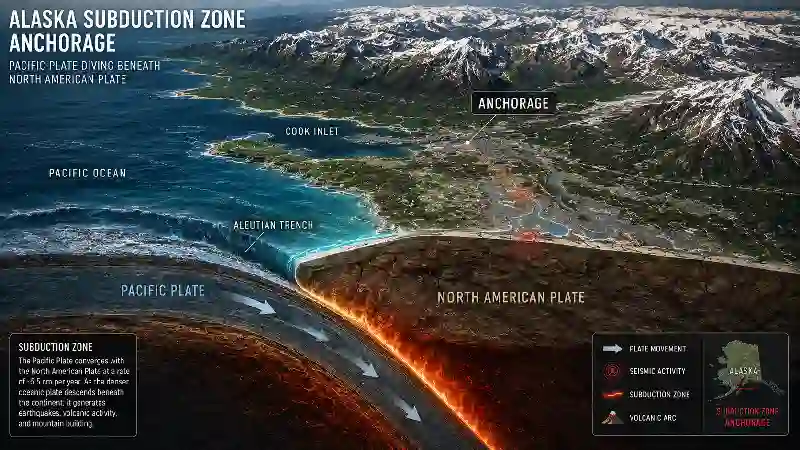
The Alaska subduction zone is the primary source of major earthquakes.
- One plate dives beneath another
- Capable of extremely large earthquakes (M8–M9)
- Tsunami risk is high
Explore earthquake types
Megathrust Earthquakes (Most Powerful Events)
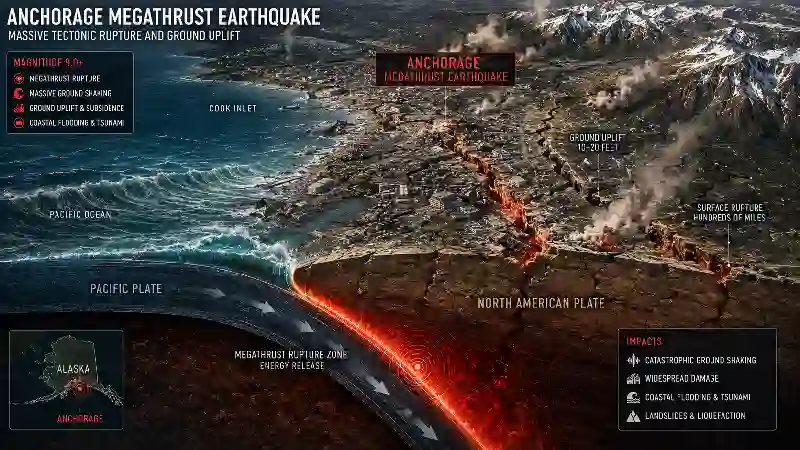
Megathrust earthquakes are the strongest type affecting Anchorage.
- Large rupture areas
- Long-lasting shaking
- Wide regional impact
Anchorage Basin Fault Systems
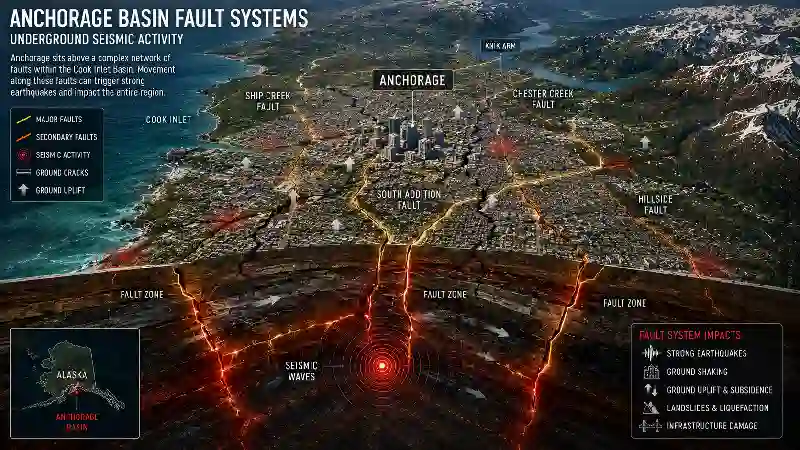
Local faults beneath Anchorage also contribute to earthquakes.
- Shallow earthquakes
- Strong local shaking
- Additional seismic risk
Offshore Gulf of Alaska Seismic Activity
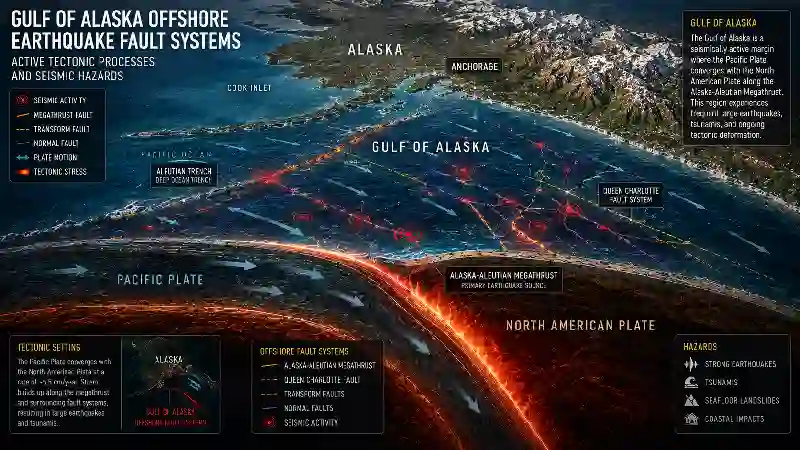
Many earthquakes occur offshore.
- Subduction-related seismic activity
- Tsunami potential
- Strong ocean-based earthquakes
Recent Earthquake Activity in Anchorage
Anchorage experiences frequent seismic activity.
Recent patterns show:
- Regular small earthquakes
- Occasional strong earthquakes
- Continuous tectonic stress buildup
Most earthquakes are small, but large events remain a serious risk.
Notable Earthquakes in Anchorage
Anchorage has experienced some of the most powerful earthquakes in US history.
- 1964 Alaska Earthquake (M9.2)
The strongest earthquake ever recorded in North America. - 2018 Anchorage Earthquake (M7.1)
A major earthquake causing infrastructure damage. - Aftershock Sequences
Frequent smaller earthquakes follow large events.
Understand magnitude vs impact
Anchorage Alaska vs Other Earthquake Regions
Anchorage stands out for its powerful earthquake potential.
- Anchorage → subduction + megathrust earthquakes
- California → transform fault earthquakes
- Japan → similar subduction zone activity
- Chile → large megathrust earthquakes
Anchorage Alaska is one of the most powerful seismic regions in North America.
Can Earthquakes in Anchorage Alaska Be Predicted?
No — earthquakes cannot be predicted precisely.
Scientists can:
- monitor subduction zone movement
- measure tectonic stress
- estimate long-term risk
But exact timing remains uncertain.
Learn more → Can earthquakes be predicted
Because it sits above a subduction zone where one plate dives beneath another.
A megathrust earthquake similar to the 1964 event.
Yes — small earthquakes occur frequently.
Yes — especially from offshore subduction earthquakes.
Final Thoughts
Anchorage is one of the most seismically powerful regions in North America. With a massive subduction zone beneath it, the region is capable of producing some of the largest earthquakes on Earth. Understanding Anchorage’s earthquakes helps explain how megathrust systems work — and why they pose such significant risks.