
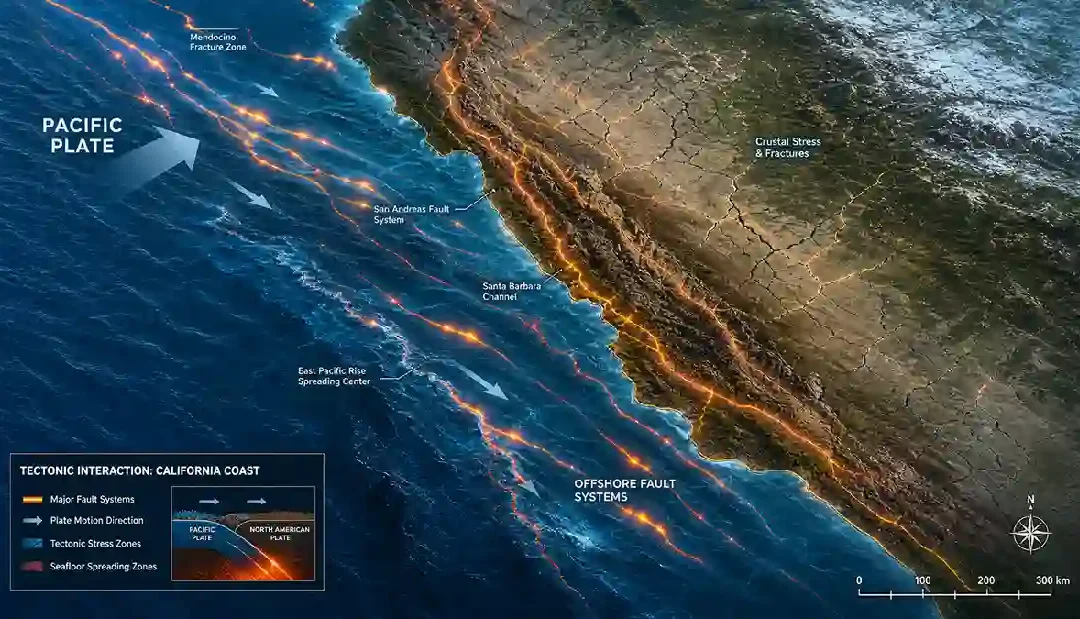
The California coast is one of the most geologically active coastal regions in the world. While most people associate earthquakes with inland faults like the San Andreas Fault, a large amount of seismic activity actually happens offshore beneath the Pacific Ocean.
That makes coastal California a complex mix of land-based and ocean-based earthquake systems.
If you’re new to earthquakes, begin here → what is an earthquake
California Coastal Seismic Zones
| Zone | Risk Level | Main Cause |
|---|---|---|
| Offshore Fault Systems | Extremely High | Plate movement |
| Northern California Coast | Very High | Subduction zone influence |
| Southern California Coast | High | Transform fault systems |
| Central Coast | Moderate–High | Fault interaction |
| Deep Ocean Zones | High | Tectonic stress beneath ocean |
Much of California’s earthquake energy is released offshore. To understand how faults work → fault lines
Why Do Earthquakes Happen Along the California Coast?
The California coast sits at a complex boundary between tectonic plates.
Here’s the simple explanation:
- The Pacific Plate moves northwest
- The North American Plate moves southeast
- Offshore faults absorb much of this movement
- Stress builds beneath the ocean floor
- Earthquakes occur when faults slip
In northern California, a different process also occurs:
Subduction — where one plate dives beneath another.
Learn more → causes of earthquakes
Four Major Earthquake Systems Along the California Coast
Offshore Transform Fault Systems
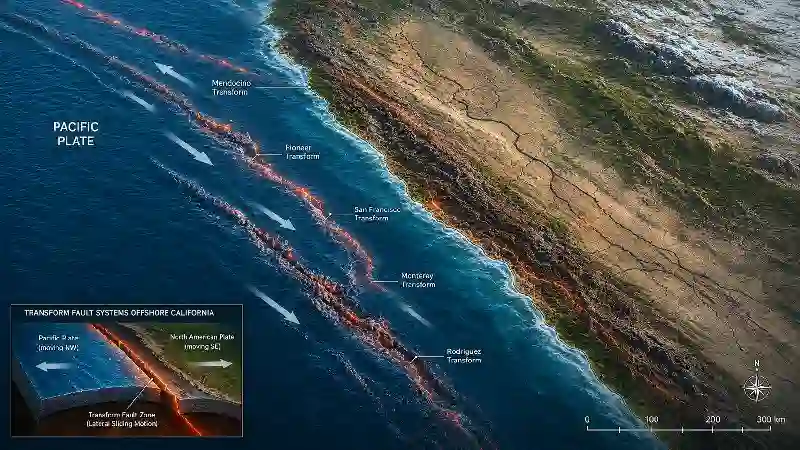
Many faults run parallel to the California coastline beneath the ocean.
- Plates slide past each other
- Earthquakes occur along submerged faults
- Strong shaking can still reach coastal cities
Explore earthquake types
Northern California Subduction Zone
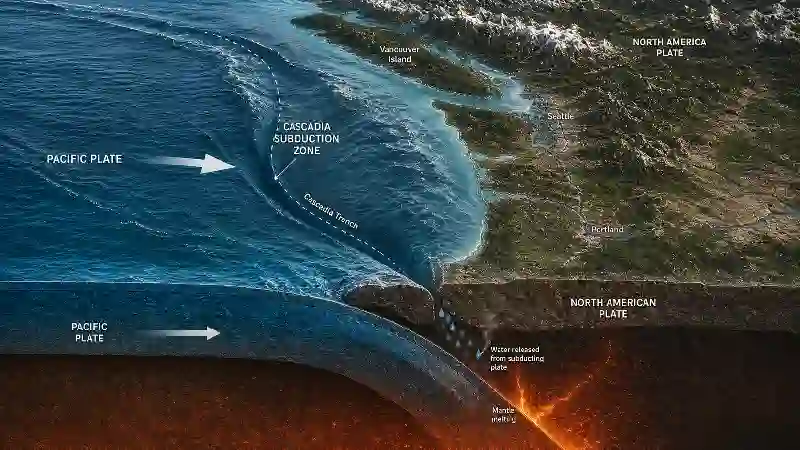
Northern California is influenced by the Cascadia Subduction Zone.
- One plate dives beneath another
- Capable of very large earthquakes (M8–M9)
- Tsunami risk is significant
This is one of the most powerful earthquake systems in North America.
Coastal Fault Networks (Connected to Inland Systems)
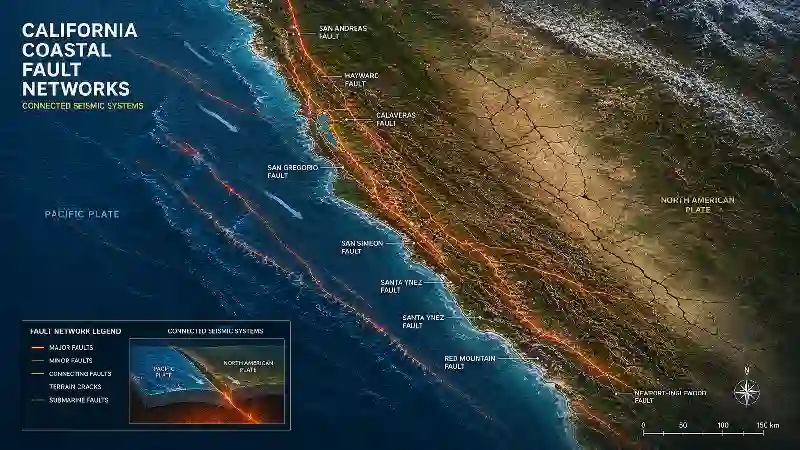
Coastal faults connect with inland systems like the San Andreas Fault.
- Complex fault interactions
- Stress transfers between systems
- Earthquakes can trigger activity in nearby faults
Deep Ocean Seismic Activity
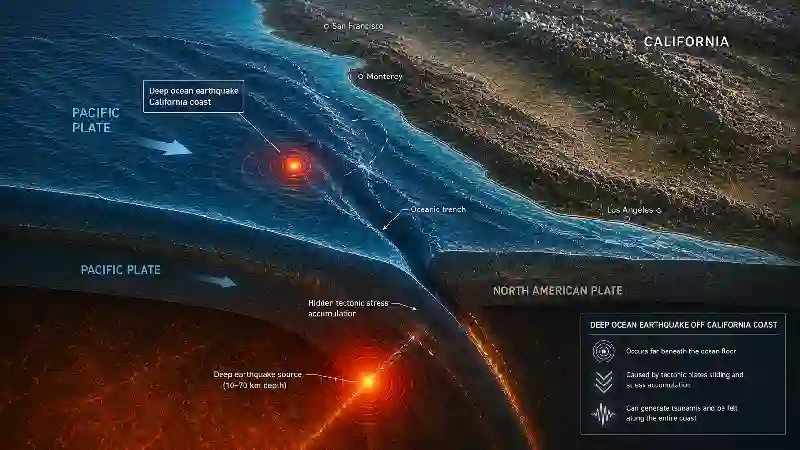
Some earthquakes occur far offshore beneath deep ocean regions.
- Hidden tectonic movement
- Less noticeable on land
- Important for tsunami generation
Recent Earthquake Activity Along the California Coast
The California coast experiences frequent seismic activity.
Recent patterns show:
- Regular offshore earthquakes
- Small to moderate coastal tremors
- Occasional strong earthquakes near fault intersections
Many earthquakes go unnoticed unless they are strong or shallow.
Notable Coastal Earthquakes in California
Several major earthquakes have affected the California coast.
- 1906 San Francisco Earthquake (M7.9)
One of the most famous earthquakes in US history. - 2010 Offshore Northern California Earthquake (M6.5)
A strong offshore seismic event. - Cascadia Megathrust Event (1700)
A massive earthquake that triggered a Pacific-wide tsunami.
Understand magnitude vs impact
California Coast vs Other Earthquake Regions
The California coast combines multiple earthquake systems.
- California Coast → transform + subduction + offshore faults
- Japan → subduction zone earthquakes
- Chile → plate collision earthquakes
- Iceland → tectonic spreading
Few regions combine so many seismic processes in one coastal area
Can Coastal Earthquakes Be Predicted?
No — earthquakes cannot be predicted precisely.
Scientists can:
- monitor offshore faults
- track plate movement
- detect seismic patterns
But exact timing remains unknown.
Learn more → Can earthquakes be predicted
Yes — many occur beneath the Pacific Ocean.
Yes — especially from large offshore or subduction earthquakes.
Northern California due to the Cascadia subduction zone.
Yes — offshore earthquakes can affect wider regions and may trigger tsunamis.
Final Thoughts
The California coast is one of the most complex seismic regions on Earth. With offshore faults, transform boundaries, and subduction zones all interacting, earthquakes here can originate from multiple sources beneath both land and ocean.
Understanding coastal earthquakes is essential for recognizing the full scale of California’s seismic risk — not just on land, but beneath the Pacific Ocean as well.