
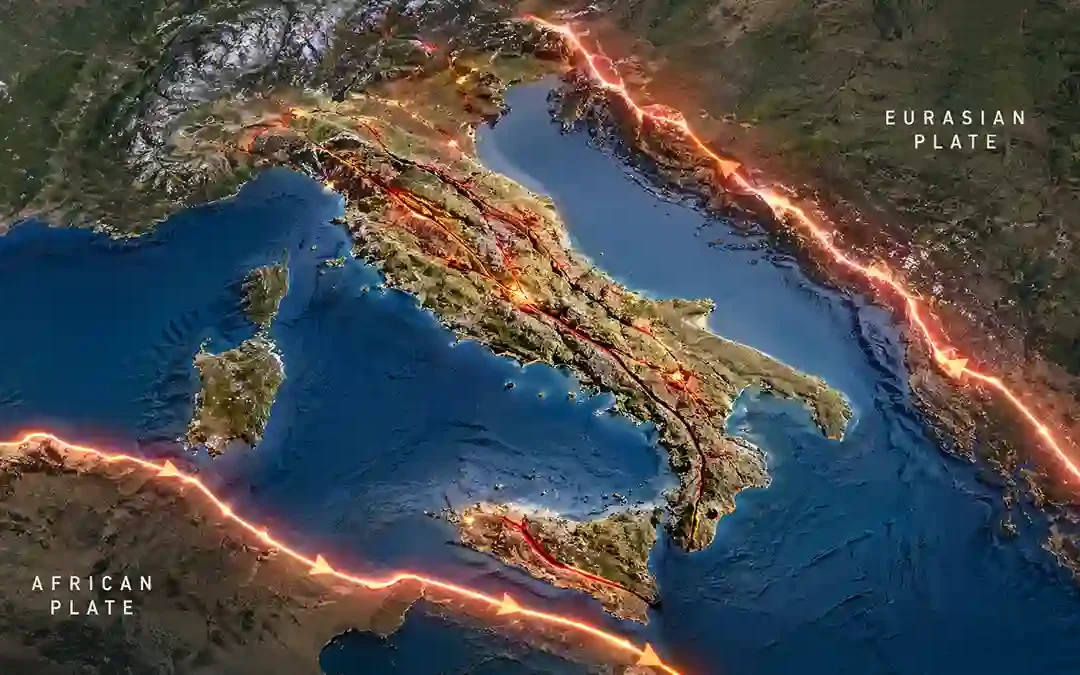
Italy’s earthquakes don’t come from a single massive fault or one dominant plate boundary.
Instead, they come from a network of smaller, shifting blocks of crust — all adjusting under long-term tectonic pressure.
That’s what makes Italy unique. Earthquakes here are often shallower, more localized, and surprisingly destructive, even at moderate magnitudes.
If you’re new to earthquakes, start here → what is an earthquake
Italy’s Seismic Pattern (Not What Most People Expect)
| Region | Risk Level | What’s Happening |
|---|---|---|
| Central Italy (Apennines) | Very High | Crust stretching + faults |
| Southern Italy | High | Complex plate interactions |
| Northern Italy | Moderate | Distant tectonic influence |
| Sicily | High | Volcanic + tectonic activity |
| Sardinia | Low | Stable region |
Italy doesn’t have one dominant zone — it has distributed seismic activity
To understand how this works → fault lines
What’s Actually Causing Earthquakes in Italy?
Italy sits between the African Plate and the Eurasian Plate, but the interaction isn’t simple.
Here’s the interesting part:
- The African Plate pushes north
- The Eurasian Plate resists
- Parts of Italy are actually being pulled apart
This creates extensional faulting, especially along the Apennine Mountains.
So instead of compression, Italy often experiences crust stretching
For a deeper explanation → causes of earthquakes
The Three Earthquake Behaviors of Italy (Unique Insight)
Apennine Fault Belt (Shallow & Destructive)
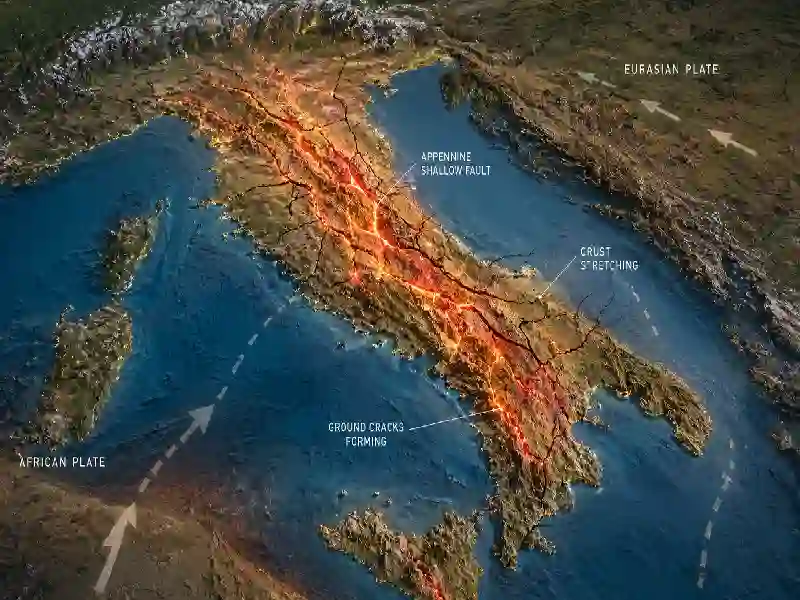
The Apennines run through the center of Italy — and this is where most earthquakes happen.
- Shallow earthquakes (more destructive)
- Active normal faults
- Frequent moderate events
This is why even magnitude 6 earthquakes can cause major damage.
Learn more about earthquake types
Southern Italy & Sicily (Tectonics + Volcanoes)
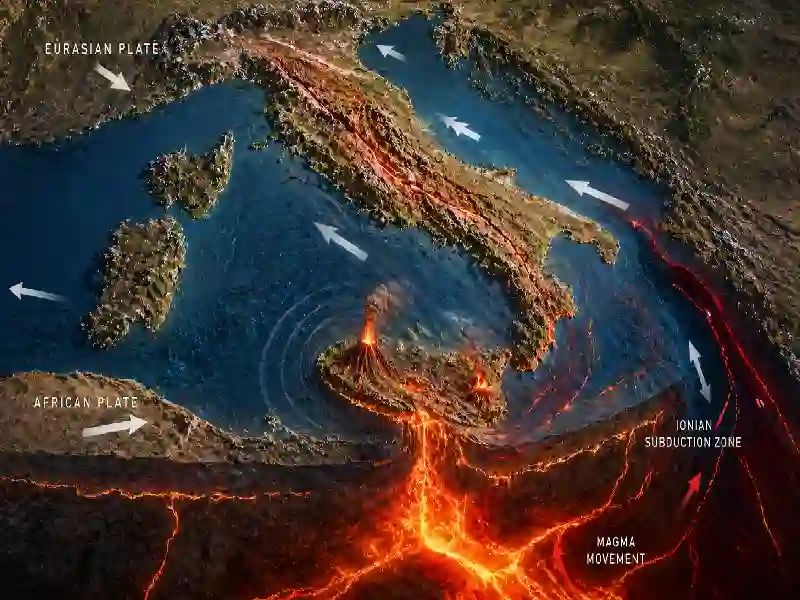
Southern Italy adds another layer of complexity.
- Tectonic stress + volcanic activity
- Earthquakes linked to magma movement
- Regions near volcanoes like Mount Etna
This creates a mixed seismic pattern not seen everywhere.
Northern Italy (Hidden Risk Zone)
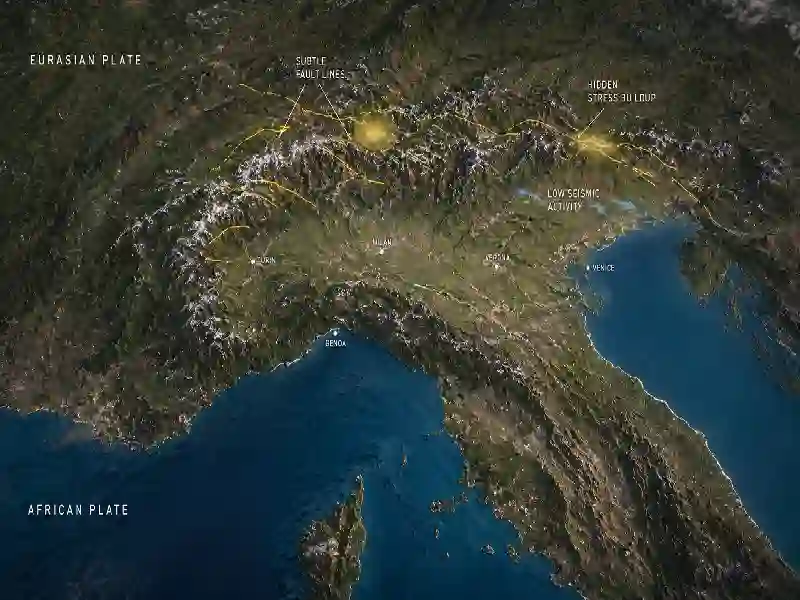
Northern Italy is less active — but not completely safe.
- Less frequent earthquakes
- Some deeper seismic activity
- Risk often underestimated
Recent Earthquake Activity in Italy
Italy experiences frequent small to moderate earthquakes.
In recent years:
- Earthquakes have occurred regularly along the Apennines
- Central Italy has seen repeated seismic sequences
- Aftershocks can continue for months
This pattern shows how stress is released gradually across fault systems.
Notable Earthquakes in Italy
Past earthquakes reveal the real risk.
- 2009 L’Aquila Earthquake (M6.3)
A relatively moderate earthquake with major damage due to shallow depth. - 2016 Central Italy Earthquakes (M6.2–6.6)
A sequence of earthquakes showing how stress releases over time. - 1908 Messina Earthquake (M7.1)
One of the deadliest earthquakes in European history.
Understand magnitude vs impact
Italy vs Other Earthquake Regions
Italy behaves differently from many high-risk regions:
- Italy → shallow, distributed fault earthquakes
- Iran → compression-driven collision earthquakes
- Chile → deep subduction earthquakes
- California → transform faults like the San Andreas Fault
Italy’s danger comes from shallow depth + population density
Can Earthquakes in Italy Be Predicted?
No — earthquakes cannot be predicted precisely.
Scientists can:
- map active faults
- monitor seismic patterns
- estimate long-term risk
But exact timing remains unknown.
Learn more about can earthquakes be predicted?
Because they are shallow and occur near populated areas.
Central Italy along the Apennine Mountains.
Yes — small to moderate earthquakes occur regularly.
Yes — although less frequent, strong earthquakes are possible.
Final Thoughts
Italy’s earthquakes don’t follow a simple pattern — and that’s what makes them so important to understand.
Instead of one major boundary, the country is shaped by a network of shifting crustal blocks, slowly adjusting under tectonic pressure.
That’s why earthquakes here can feel unpredictable — even when the science behind them isn’t.